LIVE DISPATCH
• Foot Prints of British Intelligence Services in the Post Independent Sri Lanka • Arctic Geopolitics: From Frozen Frontier to Global Contest • The Shangri-La Dialogue: Assessing its role in shaping the Indo-Pacific Security Order • Bridging the Fifth-Generation Gap: India's Su-57E Dilemma, AMCA, and Strategic Autonomy • The Quantum–Intelligence Nexus: Exploring the Strategic Interdependence of Quantum Computing and National Security Intelligence — An Indian Perspective • Regulation as Power? The EU, US and China in the Geopolitics of Artificial Intelligence • 16 Years in the Making: What India's Javelin Deal Really Signals • The New Defence Architecture: Deconstructing the India-Belgium Geostrategic Win • Who Gets to Say “We Are the Ocean”? Hau’ofa, the Blue Pacific, and the politics of representation • Beyond Oil: Saudi Arabia's Civil Nuclear Deal with the United States • The Fifth Plenum Resolution and the Distribution of Power in the CPC • The Myth of Mankind's Inheritance: China, the US, and the Battle for the Clarion-Clipperton Zone • Energy Security and European Strategic Autonomy: Has the EU’s Shift Away from Russian Fossil Fuels Strengthened Its Strategic Autonomy? • China's Surveillance Architecture in the Bay of Bengal and Its Strategic Implications • Old Threat, New Currents: Piracy, Narco-Trafficking, and India's Response in the Western Indian Ocean • A Reformer for an Institution in Decline: What does the Next Secretary-General Inherits? • Beyond Rare Earths: Sulphuric Acid and the Hidden Vulnerabilities of Critical Mineral Supply Chains • Silent Depths, Loud Signals: Nuclear Deterrence Infrastructure and the Crisis-Stability Costs of India’s Indo-Pacific Maritime Partnerships • Microplastic Pollution and Marine Environmental Security in the Indo-Pacific: An Indonesian Perspective • Securing India's Digital Frontiers: Cybersecurity Challenges and Strategic Responses in the Age of Hybrid Warfare • Structural Parallels in American Coercive Diplomacy: The US-Cuban and US-Iranian Conflicts • Prism of Dragon’s Maritime Assertiveness: Regional Implications and India’s Strategic Options • Cybersecurity and European Strategic Autonomy: Can Europe Reduce Its Dependence on Foreign Digital Infrastructure? • The Architecture of Cooperation: Navigating East Asia's Geopolitical Landscape • India’s Maritime Ties with Tanzania: Challenges and Opportunities in the Indian Ocean Region • From Civil Nuclear Power to Nuclear Hedging: Saudi Arabia, Iran and the Emerging Nuclear Security Dilemma in the Middle East • Beyond Trade: Japan’s New Quest for Economic Security • The Invisible Front: China-Pakistan Grey-Zone Operations • The Pacific: Strategic Competition and the Return of Power Politics • India's Agentic AI Strategy Needs Authority Budgets before Autonomy Scales • From Physical Borders to Intelligent Borders: The Evolution of India's Border Security Architecture • AI Driven Cyberwarfare and National Security • The Continuing U.S. Regime-Change Toolkit: Color Revolutions, Political Influence, and Vietnam • Digital Pathways to Extremism: An Investigative Study of ISIS and Al-Qaeda's Use of Digital Platforms in India • Strategic Autonomy in the Age of Weaponised Interdependence: India’s Geopolitical Dilemma • China’s Grey-Zone Strategy in the Indian Ocean: Implications for India’s Maritime Security • Europe’s Digital Dependence: Can the EU Achieve Strategic Autonomy? • Cuba’s Economic Crisis and Strategic Relevance: A Peripheral State in Renewed Great Power Competition • Loss and Damage Finance: From COP28 Pledges to Policy Architecture • Beyond Consultation: BIMSTEC's Emerging Role in Regional Intelligence and Security Cooperation • Foot Prints of British Intelligence Services in the Post Independent Sri Lanka • Arctic Geopolitics: From Frozen Frontier to Global Contest • The Shangri-La Dialogue: Assessing its role in shaping the Indo-Pacific Security Order • Bridging the Fifth-Generation Gap: India's Su-57E Dilemma, AMCA, and Strategic Autonomy • The Quantum–Intelligence Nexus: Exploring the Strategic Interdependence of Quantum Computing and National Security Intelligence — An Indian Perspective • Regulation as Power? The EU, US and China in the Geopolitics of Artificial Intelligence • 16 Years in the Making: What India's Javelin Deal Really Signals • The New Defence Architecture: Deconstructing the India-Belgium Geostrategic Win • Who Gets to Say “We Are the Ocean”? Hau’ofa, the Blue Pacific, and the politics of representation • Beyond Oil: Saudi Arabia's Civil Nuclear Deal with the United States • The Fifth Plenum Resolution and the Distribution of Power in the CPC • The Myth of Mankind's Inheritance: China, the US, and the Battle for the Clarion-Clipperton Zone • Energy Security and European Strategic Autonomy: Has the EU’s Shift Away from Russian Fossil Fuels Strengthened Its Strategic Autonomy? • China's Surveillance Architecture in the Bay of Bengal and Its Strategic Implications • Old Threat, New Currents: Piracy, Narco-Trafficking, and India's Response in the Western Indian Ocean • A Reformer for an Institution in Decline: What does the Next Secretary-General Inherits? • Beyond Rare Earths: Sulphuric Acid and the Hidden Vulnerabilities of Critical Mineral Supply Chains • Silent Depths, Loud Signals: Nuclear Deterrence Infrastructure and the Crisis-Stability Costs of India’s Indo-Pacific Maritime Partnerships • Microplastic Pollution and Marine Environmental Security in the Indo-Pacific: An Indonesian Perspective • Securing India's Digital Frontiers: Cybersecurity Challenges and Strategic Responses in the Age of Hybrid Warfare • Structural Parallels in American Coercive Diplomacy: The US-Cuban and US-Iranian Conflicts • Prism of Dragon’s Maritime Assertiveness: Regional Implications and India’s Strategic Options • Cybersecurity and European Strategic Autonomy: Can Europe Reduce Its Dependence on Foreign Digital Infrastructure? • The Architecture of Cooperation: Navigating East Asia's Geopolitical Landscape • India’s Maritime Ties with Tanzania: Challenges and Opportunities in the Indian Ocean Region • From Civil Nuclear Power to Nuclear Hedging: Saudi Arabia, Iran and the Emerging Nuclear Security Dilemma in the Middle East • Beyond Trade: Japan’s New Quest for Economic Security • The Invisible Front: China-Pakistan Grey-Zone Operations • The Pacific: Strategic Competition and the Return of Power Politics • India's Agentic AI Strategy Needs Authority Budgets before Autonomy Scales • From Physical Borders to Intelligent Borders: The Evolution of India's Border Security Architecture • AI Driven Cyberwarfare and National Security • The Continuing U.S. Regime-Change Toolkit: Color Revolutions, Political Influence, and Vietnam • Digital Pathways to Extremism: An Investigative Study of ISIS and Al-Qaeda's Use of Digital Platforms in India • Strategic Autonomy in the Age of Weaponised Interdependence: India’s Geopolitical Dilemma • China’s Grey-Zone Strategy in the Indian Ocean: Implications for India’s Maritime Security • Europe’s Digital Dependence: Can the EU Achieve Strategic Autonomy? • Cuba’s Economic Crisis and Strategic Relevance: A Peripheral State in Renewed Great Power Competition • Loss and Damage Finance: From COP28 Pledges to Policy Architecture • Beyond Consultation: BIMSTEC's Emerging Role in Regional Intelligence and Security Cooperation

Search CeSCube Intelligence Archives

Search Results for “Cold War Geopolitics”

65 total results found
EU’s Hungary Problem
World
Jyot Shikhar Singh • Oct 9, 2023

EU’s Hungary Problem

The purpose of this article is to highlight the increasing problems the European Union is facing from Hungary, especially regarding its national policies and diplomatic stance in global politics. Viktor Orban has been leading the government...

2,223 views
US and Kiribati -The strategic partnership and support
World
Akangsha Joshi • Aug 22, 2023

US and Kiribati -The strategic partnership and support

The United States and Kiribati formally set up conciliatory relations when Kiribati picked up autonomy from Extraordinary Britain in 1979. Full discretionary relations were built up between the United States and Kiribati in 1980. It stamped...

3,437 views
Why Vanuatu is important for US and China?
Military
Shruti Sharma • Jun 25, 2023

Why Vanuatu is important for US and China?

Vanuatu is a nation situated in the southwestern region of the Pacific Ocean, comprising a group of 13 primary islands and numerous smaller ones. It is approximately 500 miles (800 km) to the west of Fiji and 1,100 miles (1,770 km) east of ...

4,761 views
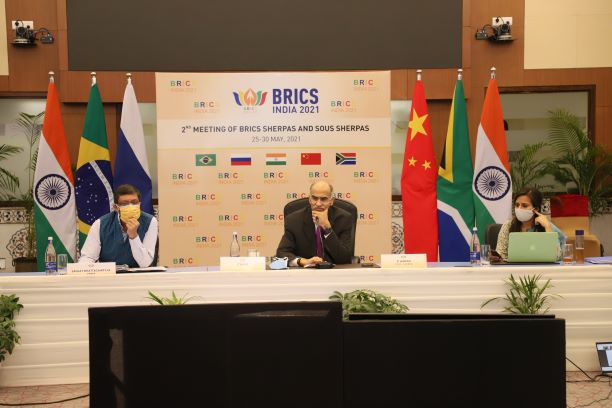
Expanding BRICS- Possibilities and Challenges
Politics
Apoorva Jain • Jan 3, 2023

Expanding BRICS- Possibilities and Challenges

The year 2021 marked two decades since the term "BRICS" was first used by former Goldman Sachs economist Jim O'Neill in the early 2000s to refer to the four rapidly developing nations that appeared most likely to start catching up to the We...

2,687 views
Chinese Ship docking in Sri Lanka
Intelligence
Ridipt Singh • Aug 17, 2022

Chinese Ship docking in Sri Lanka

The suspicions of Hambantota port as a site of a potential threat from China were tested when a Chinese survey vessel was supposed to dock at the port. Yuan Wang 5, a research vessel with missile and satellite tracking capabilities, was due...

12,430 views
QUAD and the agenda for the future
Security
Samikshya Das • Jun 19, 2022

QUAD and the agenda for the future

The Prime Ministers of India, Japan, and Australia, as well as the US President, launched the Indo-Pacific Economic Framework (IPEF) on May 24, a day before the Quad leaders' second in-person Summit in Tokyo, with Indonesia, South Korea, Ma...

1,423 views
Russia- Pakistan Ties: Should India Be Concerned?
Security
Poonam Jindal • Feb 9, 2022

Russia- Pakistan Ties: Should India Be Concerned?

The current year is going to be highly significant for the diplomatic relations between Russia and Pakistan. The top leadership of both the countries were present at the opening ceremony of the Winter Olympics began on the evening of Februa...

2,147 views
Displaying 49 - 60 of 65 results.

Discover more

Geopolitical Focus Areas