Microplastic Pollution and Marine Environmental Security in the Indo-Pacific: An Indonesian Perspective
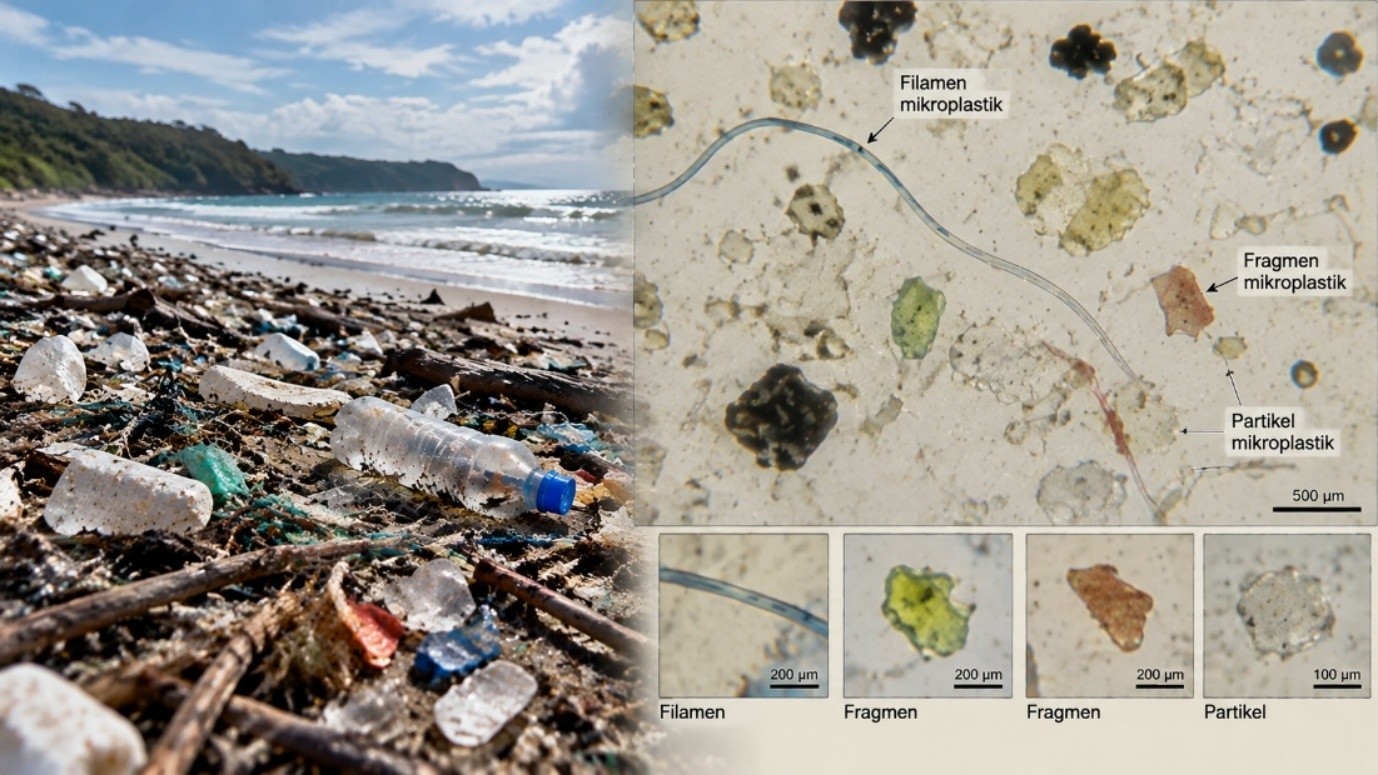
Microplastic pollution has emerged as a growing concern for marine environmental security, ecosystem sustainability, and coastal communities across the Indo-Pacific. Drawing on coastal environmental observations and microscopic examinations of marine sediment samples, this article explores the potential sources and impacts of microplastics in marine environments from an Indonesian perspective. It examines the implications of microplastic pollution for marine ecosystems, fisheries sustainability, food security, and coastal governance. The commentary also highlights the role of higher education, scientific monitoring, and regional cooperation in strengthening evidence-based marine environmental management and protecting the sustainability of the Indian Ocean Region.
The ocean is one of the fundamental pillars of human well-being and long-term sustainability. Marine ecosystems provide food resources, support the livelihoods of coastal communities, maintain ecological balance, and play a vital role in the global climate system. However, increasing human activities on land and in coastal areas have placed growing pressure on the health of marine ecosystems.
One of the major forms of this pressure is plastic pollution. Plastic materials are highly durable and resistant to natural degradation over short periods. Once entering the marine environment, plastics undergo physical and chemical changes due to ultraviolet radiation, wave action, friction, and other weathering processes. These processes cause larger plastic items to fragment into smaller particles, including microplastics [1]. Microplastics are generally defined as plastic particles smaller than 5 millimeters. Their presence has been reported across various marine environmental compartments, ranging from the water surface and water column to coastal sediments and marine organisms [2]. Unlike larger plastic debris, which is relatively easy to identify and collect, microplastics present a more complex challenge. Their small size makes them difficult to observe directly in the environment. These particles can also be transported by water currents, deposited alongside sediments, or interact with marine organisms.
The United Nations Environment Programme (UNEP), through its report From Pollution to Solution: A Global Assessment of Marine Litter and Plastic Pollution, emphasizes that plastic pollution poses a threat to various ecosystems, wildlife, human health, and socioeconomic activities. The report also highlights the importance of an integrated approach that addresses pollution sources on land as well as their impacts on marine environments [3]. Therefore, microplastics should not be viewed merely as a coastal cleanliness issue. Their presence should be understood as part of a broader challenge in marine resource management, closely related to environmental quality, fisheries sustainability, and coastal community resilience.
Coastal Environmental Observations: Understanding the Sources and Potential Impacts of Plastic Pollution
Coastal areas are transitional zones between land and sea characterized by relatively high levels of human activity. Plastic waste found in coastal areas can originate from various sources, including tourism activities, residential settlements, fisheries operations, and waste transported from inland areas through rivers and drainage systems.
Plastic waste left along coastal areas is susceptible to fragmentation due to exposure to sunlight, temperature fluctuations, abrasion, and wave energy. These processes can generate smaller plastic particles that may subsequently be transported into marine waters or accumulate in sediments.
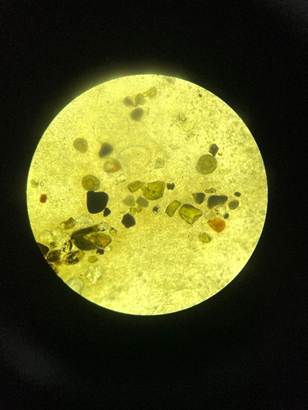
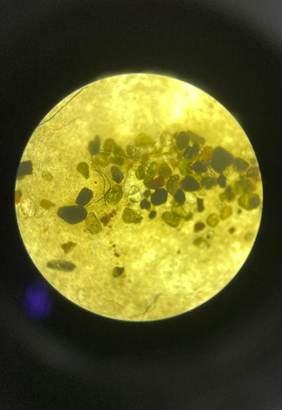
Figure 1. Microscopic observations of particles suspected to be microplastics in marine sediment samples. Source: Personal documentation from a practical session conducted by the Tropical Marine Fisheries Study Program, Faculty of Fisheries and Marine Science, Universitas Padjadjaran. Magnification: 40×.
Documenting plastic waste in coastal areas is important for demonstrating the direct presence of plastic materials in the environment. However, the presence of macroplastic waste does not automatically indicate the level of microplastic pollution in a particular area. These two categories represent different components of the broader marine litter problem. Macroplastic waste can serve as a potential source of microplastics through fragmentation processes, while microplastics may also originate from small plastic products and other sources.
Jambeck et al. (2015) explained that land-based inputs of plastic waste are among the major contributors to global marine pollution [4]. This finding demonstrates that marine litter management cannot rely solely on beach clean-up activities. Pollution control must begin at its source, including through improved waste management in residential areas, reductions in single-use plastics, and greater responsibility for waste generated by human activities.
Pattiaratchi et al. (2022) explained that the distribution of plastic waste in the Indian Ocean is influenced by pollution sources, ocean circulation patterns, monsoon winds, and the geographical characteristics of the region. They also highlighted the limited availability of plastic pollution observation data in the Indian Ocean compared with several other ocean regions [5].
Therefore, observations of plastic waste in coastal areas can serve as an entry point for understanding the relationship between human activities and potential pressures on marine ecosystems. Furthermore, microplastics should be recognized as an environmental issue relevant to broader discussions of non-traditional maritime security.
Microplastics and Marine Environmental Security
Marine environmental security is not limited to protecting maritime areas against physical threats or maritime conflicts. It also encompasses the ability of countries and communities to maintain marine ecosystem quality, protect natural resources, and ensure the sustainability of socioeconomic activities that depend on the ocean.
Research on microplastics has identified various potential interactions between plastic particles and marine organisms. These interactions may involve physical disturbances, chemical exposure, and the transfer of particles through food webs. GESAMP emphasizes that the effects of microplastics depend on their size, shape, composition, surface characteristics, the species of organisms exposed, and environmental conditions [2]. However, the magnitude of their ecological effects at the population and ecosystem levels cannot be determined solely by the presence of particles in environmental samples. Further research is required to assess exposure levels, biological responses, and their ecological consequences.
Food Security and Fisheries Sustainability
Indonesia has a substantial dependence on marine fisheries resources. For coastal communities, the sustainability of these resources is directly linked to income, food availability, and household well-being. The presence of microplastics in aquatic environments is an issue that warrants attention because marine organisms may interact with these particles through ingestion and water filtration processes. This situation highlights the need to understand potential microplastic exposure in fisheries resources, including commercially important marine species.
Nevertheless, the presence of microplastics in water or sediment does not automatically demonstrate that fishery products in a particular area are contaminated or pose specific health risks. Further investigations are required to examine marine organisms, tissues intended for human consumption, polymer characteristics, and exposure levels.
Accordingly, microplastic observations can serve as an initial step toward expanding research on the relationship between marine environmental quality and the sustainability of the fisheries sector.
Economic Security and Coastal Governance
Coastal areas have a strong economic dependence on environmental quality. Marine tourism, capture fisheries, seafood trade, and various community-based businesses all require well-maintained coastal environments. Plastic pollution can reduce the aesthetic quality of beaches, increase cleaning costs, disrupt tourism activities, and place additional burdens on environmental management.
Microplastics present an even more complex challenge because they are difficult to collect once dispersed throughout water and sediments.
Therefore, environmental monitoring, methodological standardization, information exchange, and laboratory capacity-building are essential components of marine environmental security. From this perspective, student activities in coastal areas have broader significance. Practical sessions can serve as one of the foundations for developing evidence-based coastal environmental monitoring systems.
The Role of Students and Higher Education in Microplastic Observations
Practical activities conducted by students of the Tropical Marine Fisheries Study Program, Faculty of Fisheries and Marine Science, Universitas Padjadjaran, involving water and sediment sampling as well as microscopic examination of particles suspected to be microplastics, represent one form of higher education's contribution to establishing an initial database on marine pollution. These observations are also relevant to several Sustainable Development Goals (SDGs), particularly SDG 14 (Life Below Water) [6], SDG 12 (Responsible Consumption and Production) [7], SDG 6 (Clean Water and Sanitation) [8], SDG 4 (Quality Education) [9], and SDG 17 (Partnerships for the Goals) [10].
In the future, these activities have the potential to be developed into periodic microplastic monitoring programs through improved identification methods, database development, and research collaborations among institutions and across countries. Such efforts are aligned with the need to strengthen national marine litter management policies and regional cooperation in addressing marine plastic pollution.
Thus, microplastic observations conducted through academic activities can serve as an initial step toward strengthening Indonesia's contribution to marine ecosystem protection. Scientific evidence generated at the local level has the potential to support regional understanding, knowledge exchange, and international cooperation in advancing sustainable marine environmental security across the Indo-Pacific region.
References:
- Thompson, R. C., Olsen, Y., Mitchell, R. P., Davis, A., Rowland, S. J., John, A. W. G., McGonigle, D., & Russell, A. E. (2004). Lost at sea: Where is all the plastic?. Science, 304(5672), 838. https://doi.org/10.1126/science.1094559.
- Joint Group of Experts on the Scientific Aspects of Marine Environmental Protection (GESAMP). (2015). Sources, fate and effects of microplastics in the marine environment: A global assessment (Part 1). GESAMP Reports and Studies No. 90. International Maritime Organization (IMO), London. Available at: https://www.gesamp.org/publications/reports-and-studies-no-90.
- United Nations Environment Programme (UNEP). (2021). From pollution to solution: A global assessment of marine litter and plastic pollution. Nairobi: United Nations Environment Programme. ISBN: 978-92-807-3881-0. Available at: https://wedocs.unep.org/handle/20.500.11822/36963.
- Jambeck, J. R., Geyer, R., Wilcox, C., Siegler, T. R., Perryman, M., Andrady, A., Narayan, R., & Law, K. L. (2015). Plastic waste inputs from land into the ocean. Science, 347(6223), 768–771. https://doi.org/10.1126/science.1260352.
- Pattiaratchi, C., van der Mheen, M., Schlundt, C., Narayanaswamy, B. E., Sura, A., Hajbane, S., White, R., Kumar, N., Fernandes, M., & Wijeratne, S. (2022). Plastics in the Indian Ocean: Sources, transport, distribution, and impacts. Ocean Science, 18, 1–28. https://doi.org/10.5194/os-18-1-2022.
- United Nations Department of Economic and Social Affairs. (n.d.). Goal 14: Conserve and sustainably use the oceans, seas and marine resources for sustainable development. Sustainable Development Goals. [online]. Available at: https://sdgs.un.org/goals/goal14 [Accessed 30 October 2026].
- United Nations Department of Economic and Social Affairs. (n.d.). Goal 12: Ensure sustainable consumption and production patterns. Sustainable Development Goals. [online]. Available at: https://sdgs.un.org/goals/goal12 [Accessed 30 October 2026].
- United Nations Department of Economic and Social Affairs. (n.d.). Goal 6: Ensure availability and sustainable management of water and sanitation for all. Sustainable Development Goals. [online]. Available at: https://sdgs.un.org/goals/goal6 [Accessed 30 October 2026].
- United Nations Department of Economic and Social Affairs. (n.d.). Goal 4: Ensure inclusive and equitable quality education and promote lifelong learning opportunities for all. Sustainable Development Goals. [online]. Available at: https://sdgs.un.org/goals/goal4 [Accessed 30 October 2026].
- United Nations Department of Economic and Social Affairs. (n.d.). Goal 17: Strengthen the means of implementation and revitalize the Global Partnership for Sustainable Development. Sustainable Development Goals. [online]. Available at: https://sdgs.un.org/goals/goal17 [Accessed 30 October 2026].

Lady Ayu Sri Wijayanti is an Assistant Professor and a Lecturer at the Faculty of Fisheries and Marine Sciences, Universitas Padjadjaran (FPIK UNPAD), Indonesia. Her research expertise lies in marine science, aquatic conservation, planktonology, deep-sea ecology, and aquatic resources management. Her work focuses on marine ecosystem dynamics, especially plankton communities and the interaction between oceanographic conditions and aquatic ecological processes. Her research explores marine biodiversity, ecosystem change, and the sustainable management of aquatic environments through an interdisciplinary approach combining marine ecology, conservation science, and aquatic resource management.