China’s Grey-Zone Strategy in the Indian Ocean: Implications for India’s Maritime Security
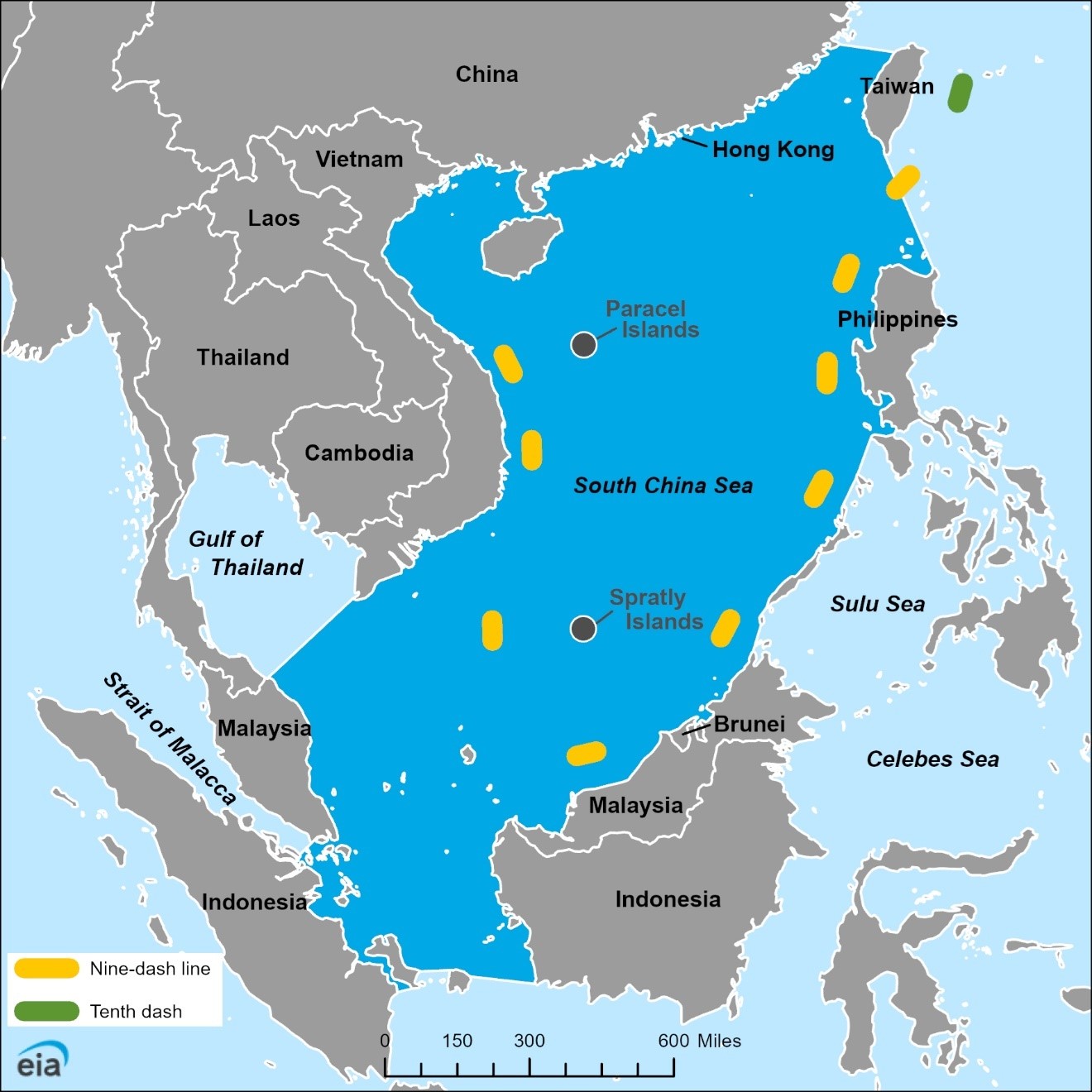
China’s conduct in the south China sea has, over the past decade, followed a fairly consistent script: build on contested feature, reject the legal rulings that go against it, and use coast guard and militia pressure to make its presence a fact on the ground then a matter for negotiations.1 Most of the writing on this behaviors looks at what it means for southeast Asia and for the US role in the region. Less has been said about a quieter but no less consequential trend-the way this same posture is beginning to show up on the other side of the Malacca straits, in waters that India has long treated as its own strategic backyards. This article looks at that spill power: how China expanding survey and India has been adjusting its maritime strategy in response, an examination of how a version of that assertiveness is turning up in the Indian ocean and finally a look at what India has actually done about it.
China’s south China sea assertiveness: A Brief Background
The starting point for the most accounts of this dispute is July 2016, when the permanent courts of Arbitration at the Hague found that China’s sweeping “nine dash line” claim had no basis under the UN convention on the Law of the sea, and that Beijing island-building had infringed on the Philippines sovereign right.2
China rejected the ruling outright, despite being a signatory to the convention ,simply carried on .Several of the artificial islands it had built were subsequently fitted with airstrips, missile systems and naval facilities ,and its coast guard has kept up a steady pattern of pressure on Vietnamese and Philippine vessels operating in the area.3 That pressure has not let up .Clashes round Scarborough shoal and second Thomas shoal still recurring as of mid-2026, and talks on a binding code of conduct remain, as they have for years, essentially stalled.4
What stands out about this pattern is that it rarely crosses into open conflict-it works instead through a steady accumulation of grey-zone pressure. That is arguably the more important takeaway for a paper about the Indian ocean: the south China sea may be less a self-contained dispute than a temple Beijing has already field-tested.
The spillover Mechanism: Chinese presence in the Indian ocean
China has kept a near-continuous presence of vessels in the Indian ocean since 2019, officially registered as civilian oceanographic or geological research ships. The Xiang Yang Hong 06, for instance, spent months at a time surviving large trenches of the ocean floor, deploying underwater gliders and floats along the way that add to China’s picture of undersea environment.5 More recently, the shiyan-6-billed as China’s first dedicated geophysical ocean research vessel-tracked near the ninety east ridge before docking in male, and the shen hai yi hao, which supports the deep-diving jiao long submersible, arrived in the region in late 2025 heading for the same Maldivian port.6 On paper these are scientific missions. But Indian defence observers point out that the instruments involved-sub-bottom profilers, magnetometers, multibeam echo sounders-produce seabed data that is just as useful for submarine navigation and undersea cable routing as it is for research.7 A Canadian Naval Review piece makes much the same point, noting that Chinese vessels in the Indian ocean serviced undersea sensor networks and a senior US naval intelligence official has gone so far as to describe China’s seabed surveying effort as something that directly enables submarine navigation , concealment ,and the positioning of undersea weapon or sensors.8 None of this is new exactly-in 2025 three Chinese research vessels , including the Zhong Shan Da Xue(China's largest oceanographic ship),were already being tracked across the region , raising much the same concerns at the time.9
The survey activity has not happened in isolation. It has run alongside the build-out of supporting infrastructure on China’s own coast: the long naval base on Hainan island, which anchors Beijing’s sea-based nuclear deterrent. India’s answer has been INS Varsha, a base under construction on its eastern seaboard in Andra Pradesh meant to give its own nuclear triad a survivable second-strike option.10 Put together, the pattern looked less like a series of unconnected incidents and more like the south China sea playbook-expanding footprint-showing up, in a modified form, in the Indian ocean.
Implications for the India’s maritime security
What does this mean in practice for India? For one, it means more work for the Indian navy’s information management and analysis centre, which now has to keep continuous satellite and naval watch on foreign research vessels moving near India’s maritime boundary-a monitoring burden that did not exist at this scale a decade ago.11 It also raises the stakes around India’s own undersea awareness ,since the same seabed data that helps with legitimate research also has a bearing on submarine concealment and navigation in waters that carry a large share of India’s energy imports and trade.12 And there is a third layer to it: much of this survey activity has converged on smaller Indian ocean states-Sri Lanka , Mauritius, the Maldives-which suggests China’s approach here leans heavily on access and partnerships with littoral states, not unlike how it has worked its southeast Asian claimants in the south China sea.13
India’s Institutional and Strategic Re calibration
India’s response so far has leaned heavily on institution-building and partnerships, rather than any single dramatic move. In February 2026 it took over the chairmanship of the Indian ocean Naval Symposium for the 2026-2028 cycle-its first turn in the role in sixteen years-and followed that up by hosting a table top exercise in Kochi with twelve member nations, aimed at piracy, maritime terrorism, and illegal trafficking across the region.14
That institutional push has come alongside the operational roll out of the IOS SAGAR 2026 initiative and a broader framework India calls MAHARASHTRA-Mutual and Holistic Advancement for security across the regions-which positions India less as a rival power and more as, in its own framing, the region’s preferred security partner and first responder.15 Outside its immediate neighbourhood, India has also been deepening ties further afield. Quad foreign ministers announced the Ind-pacific, built around satellite data and tracking technology to give real-time visibility into vessel activity, starting with the Indian ocean.16 The July 2026 summit with Australia added to this picture, producing a wide-ranging set of agreements touching maritime security, defence cooperation, and critical minerals.17 There has been a bilateral quieter track running in parallel too. When Prime minister Modi visited Seychelles in June 2026,india agreed to send military advisers back to help with defence planning and operational coordination -letting a country with one of the largest EEZ-to-population ratios in the world keep watch over its waters without having to build up a large military of its own.18On the hardware side, Garden Reach Shipbuilders and Engineers has already delivered three of four planned survey vessels(Large) to the navy, with the fourth due in early 2026, and has separate contracts underway for an ocean research vessel, an acoustic research ship, and coastal research vessels-all pitched explicitly as building India’s own capacity to do this kind of seabed work rather than relying on others.19
There is also a corridor dimension to all this. India’s stake in the India-Middle East Europe economic corridor means that attacks on shipping in the red sea and the persistent tension around the strait of Hormuz are not somebody else’s problems-they expose the same chokepoints and undersea cables India’s own trade depends on .20And Piracy ,often treated as an older, half-solved problem, has crept back: a 2026 US maritime advisory logged four hijackings and seventeen boarding or armed-robbery incidents across the Guld-of-Aden, the Arabian Sea, and the Indian Ocean between March and July alone, with firearms showing up in attacks far more often than before.21
Conclusion
The South China sea and the Indian Ocean can look, at first glance, like two separate stories, but the pattern China has built in the former -militarized islands, a flat rejection of international rulings, steady grey-zone pressure on smaller claimants-is turning up ,in a quieter and more dual-use form, in the latter, through survey vessels, seabed mapping, and the infrastructure built to support them. For India, that spillover is not abstract: it means more monitoring work, more exposure for undersea infrastructure, and added risk to fairly coherent the trade and energy routes it depends on. What India has done in response-taking on leadership roles like the IONS chairmanship, widening surveillance cooperation through the Quad, investing in its own survey fleet, and doing the slower work of capacity-building diplomacy with island states-amounts to a strategy on paper. Whether it is enough to keep pace with a threat that rarely announces itself and almost never looks like a warship is a question that is likely to stay open for sometime.
Endnotes
1.Gilang Kembara, “Artificial Islands, Real Power: Reshaping Maritime Order in the South China Sea”,9DASHLINE, July 2026, https://www.9dashline.com/article/artificial-islands-real-power-reshaping-maritime-order-in-the-south-china-sea.
2.China’s South China Sea Claims, ”Probe international Journal, April 23, 2026, https://journal.probeinternational.org/2026/04/22/chinas-south-china-sea-claims/.
3.Territorial Disputes in the South China sea, “Council on foreign Relations, Global Conflict Tracker, accessed august 14, 2026, https://www.cfr.org/global-conflict-tracker/conflict/territorial-disputes-south-china-sea.
4.Council on foreign Relations, “Territorial Disputes in the South China sea”.
5.South Asia Monitor, “Chinese ‘Research vessels’ in Indian Ocean Red Flags in Indian Maritime Circles,” accessed august 14, 2026, https://www.southasiamonitor.org/indo-pacific-china-watch/chinese-research-vessels-indian-ocean-raises-red-flags-Indian-maritime.
6.Chinese Research Vessel Shi Yan-6 Completes Indian Ocean Survey, Raises Strategic concerns,” Indian Defence News, April 25,2026, https://www.Indiandefencenews.in/2026/04/chinese-research-vessel-shi-yan-6.html.
7.Third Chinese research vessels in the Indian Ocean heighten strategic concerns, “Indian defence news, Nov 25, 2025, https://www.indiandefencenews,in/2025/11/third-chinese-vessels-in.html.
8.Brett Witthoeft, “Chinese research Vessels,” Canadian Naval Review, June 19, 2026, https://www.navalreview.ca/2026/04/chinese-research-vessels/.
9.Chinese research vessels enter Indian ocean, tracked by navy, “The Print, March 3, 2025, https://theprint.in/defence/3-chinese-research-vessels-enter-indian-ocean-tracked-by-navy/2214721/.
10.Sarosh Bana, “Indian ocean primacy, “Indo-pacific Defense FORUM, Feb 2, 2026, https://ipdefenseforum.com/2026/02/indian-ocean-primacy/.
11.Indian defence news, “Third Chinese research vessels in the Indian ocean.”
12.Witthoeft, “Chinese Research Vessels.”
13.The Print, “3 Chinese Research Vessels Enter Indian Ocean.”
14.IONS Maritime exercise 2026,”Drishti IAS, accessed Aug 14, 2026, https://www.drishtiias.com/daily-updates/daily-news-analysis/ions-maritime-exercise-2026.
15.Anchors of Stability: India Advances Maritime Collaboration Amidst Global Upheaval," Eurasia Review, April 2, 2026, https://www.eurasiareview.com/02042026-anchors-of-stability-india-advances-maritime-collaboration-amidst-global-upheaval-analysis/.
16.What Does Quad's New Surveillance Initiative Mean for Indian Ocean Security?," The Diplomat, May 29, 2026, https://thediplomat.com/2026/05/what-does-quads-new-surveillance-initiative-mean-for-indian-ocean-security/.
17.National Maritime Foundation, "India–Australia Maritime Cooperation 2026 — From Strategic Convergence to Operational Cooperation," August 2026, https://maritimeindia.org/india-australia-maritime-cooperation-2026-from-strategic-convergence-to-operational-cooperation-the-modi-effect/.
18.IMPRI, "Island Diplomacy and Maritime Security: Assessing the Implications of India's Renewed Defence Partnership with Seychelles in 2026," July 2026, https://www.impriindia.com/insights/policy-update/island-diplomacy-and-maritime-security/.
19.Cmde Vinith Aerat (Retd.), "How India's Indigenous Research Vessel Development Programme Safeguards Our Sovereignty," The Week, March 17, 2026, https://www.theweek.in/news/maritime/2026/03/17/india-indigenous-research-vessel-programme-guest-grse.html.
20.BESA Center, Greece, Israel, and India: The Emerging Maritime Security Architecture of the IMEC, Perspectives Paper No. 2,394, July 8, 2026, https://besacenter.org/?p=61709.
21.U.S. Maritime Administration, "2026-010—Gulf of Aden, Arabian Sea, Indian Ocean—Piracy/Armed Robbery/Kidnapping for Ransom," Maritime Advisory, August 2026, https://www.maritime.dot.gov/msci/2026-010-gulf-aden-arabian-sea-indian-ocean-piracyarmed-robberykidnapping-ransom.
(The views expressed are those of the author and do not represent the views of CESCUBE)
Image Source: U.S. Energy Information Administration, https://www.eia.gov/international/analysis/regions-of-interest/South_China_Sea

Aarthi DE completed her BA in Defence and Strategic Studies from Erode Arts and Science College, Tamil Nadu. She is currently pursuing an MA in Defence and Strategic Studies at the Central University of Jammu (2025–2027).