The Myth of Mankind's Inheritance: China, the US, and the Battle for the Clarion-Clipperton Zone
The deep sea is emerging as a new frontier in the global struggle for critical minerals, where resource security, technological ambition, and geopolitical power converge. The article examines the contest between China and the United States over the Clarion-Clipperton Zone, a seabed region rich in strategically important polymetallic nodules. Through an analysis of China's mineral strategy, Washington's alternative regulatory pathway, and Nauru's role in advancing commercial deep-sea mining, the article questions the promise of the “common heritage of mankind.” It explores how institutional gaps and competing national interests are reshaping the governance of shared ocean resources.
Introduction:
The critical minerals ecosystem has become indispensable to the 21st century technology landscape. Minerals serve as the core physical components for the global clean energy transition. This includes, batteries & electric vehicles where lithium, nickel, cobalt, manganese, graphite are used for lithium-ion batteries, sodium-ion, and manganese rich cathodes. Copper and aluminium are essential for electricity grids, high-voltage power distribution, and power lines that make renewable energy available to the consumers. In fact, copper is highly valuable for data centres and AI as it aids in power distribution equipment, cooling systems, and network infrastructure. This way critical minerals have fast-tracked into becoming integral strategic drivers of national economic security and self-reliance.
But this ecosystem has been undergoing a crisis that has been garnered by supply-demand unevenness and global conditions that have shook the landscape. For example, in 2025, copper prices were consistently rising due to the implementation of the 50% tariff on semi-finished copper products and copper-intensive derivatives by the US and the weakening of the dollar. China’s retaliatory tariffs disrupted the copper flows which expanded the price gaps between global benchmarks and the US. China was forced to diversify its copper supply sources; earlier its primary supplier was Chile, but since most of Chile’s copper was directed to the US, it failed to satisfy China’s requirement mark, compelling it to diversify to countries like Democratic Republic of Congo, Russia, Zambia. This led to reshuffling of supply chains and volatility in prices which consequently made arbitrage possible.
This critical energy minerals crisis caused by economic and environmental conditions has led to global insecurities and desperation for diversification and/or alternative natural sources of minerals. Deep sea-mining has emerged as a solution to countries seeking to find a resource base that exists outside any single-country’s territory or export-oriented regime. Here, polymetallic nodules have played a significant role.
Geopolitics of Polymetallic Nodules:
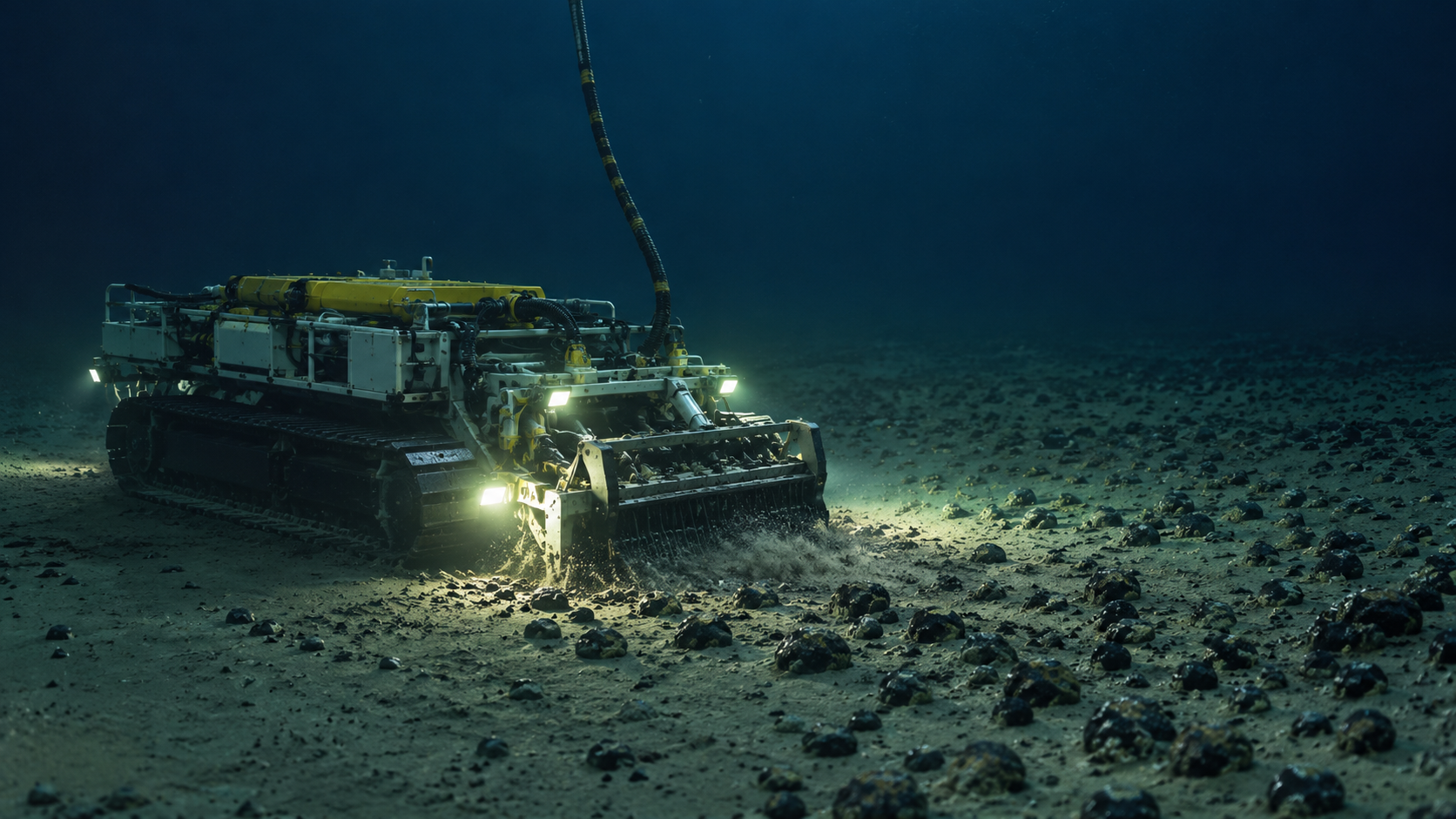
Polymetallic nodules are situated in the Clarion Clipperton Zone of the Pacific Ocean between Hawaii and Mexico. These nodules are especially rich in manganese, cobalt, nickel, and copper which are significantly in demand across the globe at the moment. Considering the seriousness associated with these minerals, the USA and China have shown apparent interest in the deep-sea mining of this region. But the geopolitics of the CCZ, between the two superpowers has been garnered by a chain reaction.
China:
This reaction started when it became evident to the world that China has grown a significant foothold in these four critical minerals. It has played out its strategy in 3 ways. Firstly, it utilised the 2008 Global Financial Crisis (GFC).
Secondly, China has secured a dominant position by securing strategic investments, contracts, and control of production. It has gained control over the DRCs cobalt industry through state-backed financing, strategic acquisitions, and infrastructure-for-resources contracts. In 2016, an American company Freeport-McMoRan sold its controlling 56% stake in the Tenke Fungurume mine (world’s largest cobalt mine), which China Molybdenum Company purchased at $2.65 billion in funding from six Chinese banks. CMOC’s ownership to mine was subsequently raised to 80%. China now owns or holds stakes in 15 of the largest copper and cobalt mines in DRC.
Chinese shareholders control approximately 75% of Indonesia’s total nickel smelting and refining capacity. Two major Chinese conglomerates, Tsingshan Holding Group and Jiangsu Delong Nicklet Industry Co. account for around 70% of the Indonesian refining capability. As for copper, China is the globe’s top copper smelter. It produces approx. 45-50% of global refined copper and imports the other half from Latin America, Africa, etc. Consequently, it supplies 50% of all global capital investments specifically for overseas copper mining projects (Africa, Latin America).
In the manganese sector, instead of owning the mines, China produces the essential alloys that are required for steel manufacturing. China produces approximately 68-70% manganese ferroalloys, inculcating silicomanganese (~11.3 million metric tons) and high-carbon ferromanganese (~2.16 million metric tons).
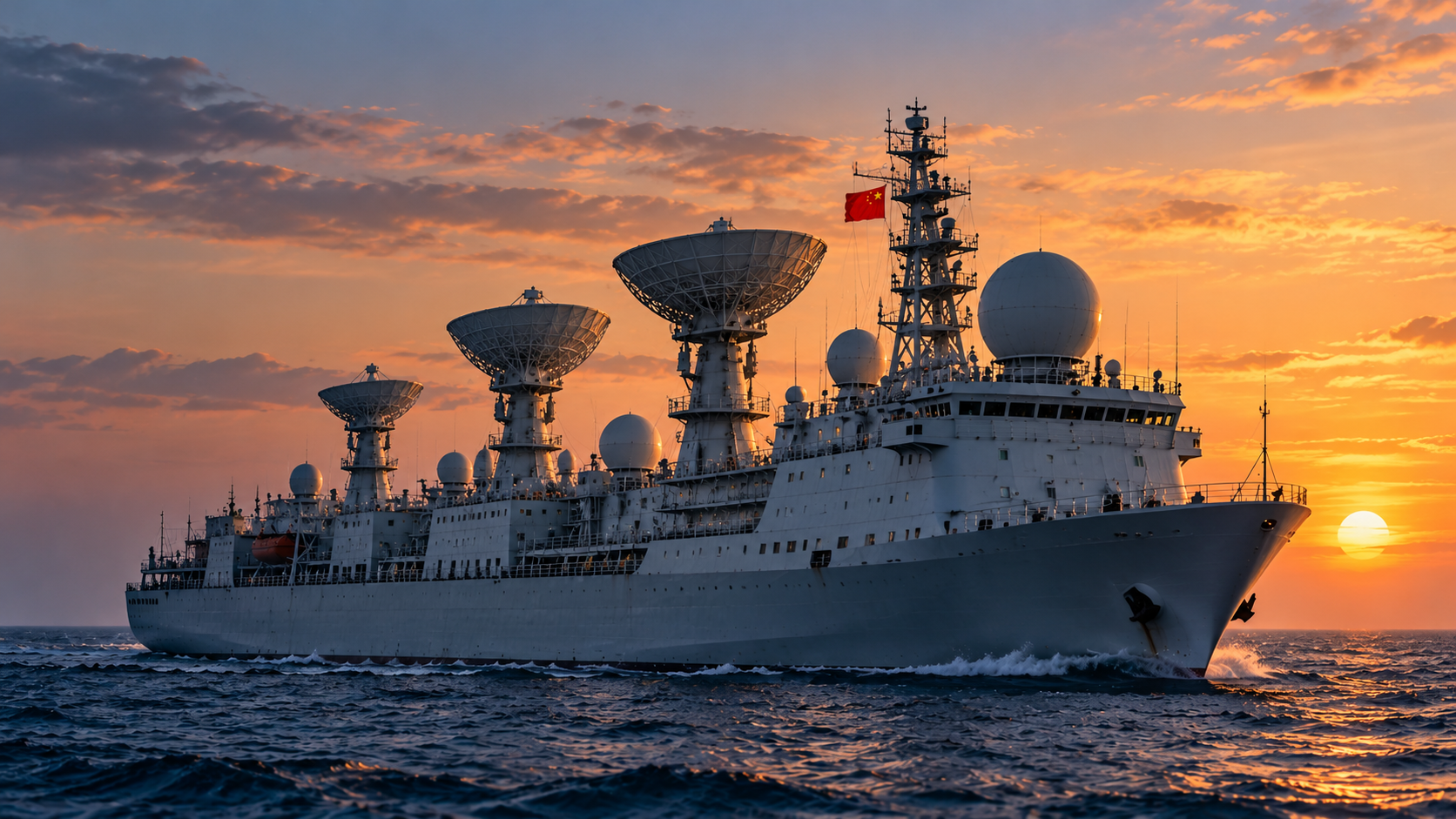
Thirdly, China has effectively used the Law of the Sea (UNCLOS), to mine in the CCZ. Seventeen contracts are associated with the Clarion-Clipperton Fracture Zone out of which China is among the states holding the most contracts in consideration with the International Seabed Authority (ISA).
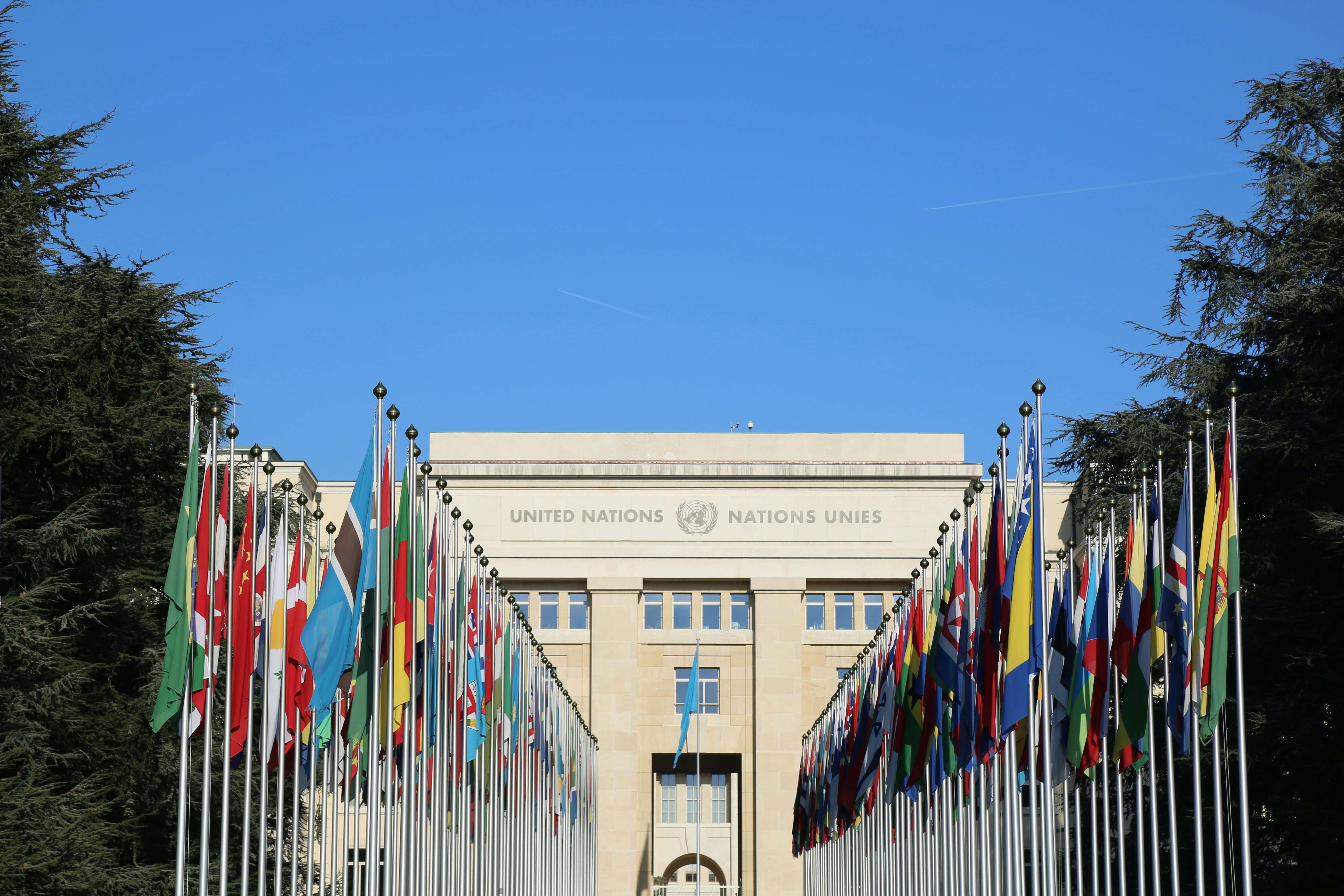
ISA has a “reserved area” under UNCLOS, according to which developed nations applying for deep-sea mining rights contribute equivalent alternative areas to a shared ‘site bank’ for developing countries. When a state/contractor applies for an exploration area, they need to split that prospective area into two equal parts of equal estimated commercial value. The ISA keeps one part as the contractor’s exclusive exploration area and places the other part into the reserved site bank, and the reserved areas are specially kept aside for developing countries and/or the ISA’s own operations. This system is meant to ensure equitable access to deep-sea minerals.
China has utilised this mechanism quite strategically. While COMRA (1991-2001) has acted as a contributor to the reserved area bank, China Minmetals (2014-2017) instead of surveying fresh territory, applied to procure the reserved area that other countries have contributed to over the course of many years. This was possible only because the company was sponsored by China, a ‘developing country’, as registered with ISA. This way, the whole crux to ensuring a balance between the power dynamics of the globe in terms of allocation of resources, is side stepped only because China is registered as a developing state but has the capabilities of a developed one.
The United States of America:
Cumulatively, these three strategies have triggered the USA to push for mining in the CCZ. America’s stance over the mining of this region goes beyond present contexts. It is embedded in the historicity of amending the Part XI of the 1994, Law of the Sea, UNCLOS. President Clinton had sent both the non-amended/original 1982 treaty and the 1994 one to the Senate. But it was never voted upon. So the US signed the patch, but never joined the base treaty. It signed only the 1994 fix, but didn’t actually ratify the underlying treaty.
The ISA only has jurisdiction to issue orders over countries that ratified UNCLOS. Since the US never did, it isn't bound by the ISA's rules and doesn't need its permission to mine.
Alternatively, the US uses another law; the Deep Seabed Hard Mineral Resources Act (DSHMRA). This allows NOAA to approve licenses to American companies for exploration and mining of the seabed on their own, involving no UN body. Passed in 1980, it was only meant to be temporary, considering what the DSHMRA law says itself, which has no rule dedicated to “reserved areas”. Yet, years later, the US still abides by this.
To be precise, TMC USA is not waiting on the ISA, UN, or any other international body. Its permit would only be guaranteed by NOAA, an American domestic regulator, one that would focus not on the goal of the “common heritage of mankind”, but to fulfil the singular aims of the US. The permit-granting authority itself has moved from an international body governing a shared global resource, to a single country's domestic agency governing that same resource as if it were its own.
President Donald Trump issued an executive order in April 2025 to fasten America’s deep-sea mining activities, effectively bypassing the ISA, thus raising concerns about the ambiguities of the existing maritime law and undermining the “collective efforts to manage environmental standards for deep-sea mining under UNCLOS”.
Case Study on Naoero (Previously Nauru):
Comprising only 12,000 people, by population size, Naoero is the world’s 3rd smallest country, and the smallest island country. It is located in the southwestern Pacific Ocean and is significantly relevant to the geopolitics of the uneven power dynamics behind polymetallic nodules in the CCZ. Naoero’s economic failure and historicity is important to understand its participation in this critical minerals rivalry.
The country was one of the world’s richest sources of phosphate rock used for fertilizers, which it interestingly gained due to bird droppings. Mining began as early as 1907 under the Australian administration and consequently Nauruans became some of the highest per-capita income earners in the globe. Mining led to an irreversible environmental impact such that 80% of the island is uninhabitable.
It contributed its phosphate earnings into a national trust fund which was meant to aid it after mining ended. But, a series of negative decisions on investments, mismanagement, and fraud led to a severe financial crisis (1995). The US Department of Treasury designated Nauru as a “primary money laundering concern” (2002).
The country made a 2 pronged pivot. Firstly, it encouraged offshore banking, licensing approximately 400 foreign banks, none of them being physically present on the island. This turned Nauru into a magnet for money laundering such as Russian organised crime, which was later shut down under US and FATF pressures (2003) with blacklist sanctions lifted in 2005. Secondly, it hosted Australian asylum seekers, known as Australia’s “Pacific Solution”.
Since none of the prongs worked, Nauru had to opt for a 3rd pathway, which turned out to be the seabed. It partnered up with DeepGreen Resources (2011) later rebranded into TMC, which Naoero sponsored at the ISA to explore a section at the CCZ. In 2021, Nauru informed the ISA that NORI (a subsidiary of TMC), intended to apply for a full mining license, triggering the two-year rule.
According to this rule, Section 1(15) of the Annex to the 1994 Implementation Agreement of UNCLOS, a member state can notify the ISA that a company that it is sponsoring has the intention to apply for a deep-sea mining exploitation license/permit. This forces the ISA Council to finalize and adopt the necessary regulations and procedures for commercial mining within two years.
If it fails to adopt the Mining Code within the time frame, the Council may ‘consider’ the ‘process’ to review the application. This means, it won’t necessarily approve it, only evaluate the basis upon which it shall be approved. TMC’s CEO in 2024, called this "the world's first application of this kind." Considering the large cost of filing the application, and many ISA member states not being mining friendly, NORI (TMC) kept delaying the application due to the ambiguities it brought.
Moreover, ISA failed to create the Mining Code, which forced TMC to choose a parallel route, which involved DSHMRA and NOAA. So, if NORI triggered the two-year rule in 2021, which ISA failed to fulfil, led TMC to choose another route in 2025 where TMC USA played a greater role; why then did TMC not choose this alternative pathway in the first place?
As per DSHMRA, only US citizens/companies/entities are allowed to apply to NOAA directly. TMC is actually a Canadian company, based in Vancouver. Thus, in order to use this route, it established TMC USA, a new subsidiary, which was qualified enough to apply to NOAA. The reason why TMC did not create this sub-entity in the first place, was because DSHMRA was effectively dead in usage for more than 40 years. Having no expectations of revival, companies didn’t push for using this pathway, and had only ISA as a reasonable alternative, until Trump’s Executive Order in 2025, that revived it. TMC USA established in 2025, applied for a permit within days of DSHMRAs renewal and later in 2026, NOAA established a new set of rules that made this route for the first time, genuinely usable.
Conclusion:
What China, USA, and Naoero teach us is how the idea behind the “common heritage of mankind”, is relatively aspirational than genuine. International institutions, particularly established to prevent the expansion of inequalities between the developing and the developed world, are essentially ill principled themselves. They lack clear rules and regulations, code of conducts, which leads countries to opt for pathways that are less economically and environmentally friendly and are actually tools to reinforce their own power in the globe. ISA lacks a Mining Code forcing companies and countries to opt for the NOAA route, China’s developing state status, and USAs domestic bypass, essentially ignore the idea behind “common heritage of mankind”. In the end, the deep sea may not belong to all of humanity, it belongs to whoever is powerful enough not to wait for permission.
References:
1.Asian Development Bank (ADB). Environmental Assessment Report: Nauru Project. n.d.https://www.adb.org/sites/default/files/linked-documents/45032-001-ea.pdf.
2.Baskaran, G. Building Critical Minerals Cooperation between United States and Democratic Republic of Congo. Center for Strategic and International Studies (CSIS). March 25, 2025.https://www.csis.org/analysis/building-critical-minerals-cooperation-between-united-states-and-democratic-republic-congo.
3.Belisle, C. & Eastwood, N. The United States Reactivation of Deep Seabed Mining under DSHMRA and Executive Order 14285. Solicitors Journal. January 21, 2026. https://www.solicitorsjournal.com/sjarticle/the-united-states-reactivation-of-deep-seabed-mining-under-dshmra-and-executive-order-14285.
4.Congressional Research Service (CRS). Deep Seabed Mining Developments. CRS In Focus IF12608. February 18, 2026.https://www.everycrsreport.com/files/2026-02-18_IF12608_23984447c33d9eb8bd20c4566b096ecea7966513.html.
5.Congressional Research Service. U.S. Interest in Seabed Mining in Areas Beyond National Jurisdiction: Brief Background and Recent Developments. In Focus IF12608. Updated February 18, 2026. https://www.everycrsreport.com/files/2026-02-18_IF12608_23984447c33d9eb8bd20c4566b096ecea7966513.html.
6.C4ADS. Refining Power. February 5, 2025. https://c4ads.org/commentary/refining-power/.
7.Davidson, K. Resolution and agreement relating to the implementation of part IX of the UN Convention on the Law of the Sea: A general assessment - Comment. Vol. 55, 1995, pp. 290–297.https://www.zaoerv.de/55_1995/55_1995_2_c_290_297.pdf.
8.Federal Register. Deep Seabed Mining Regulations. U.S. Department of Treasury. April 18, 2008.
9.Georges, L. U.S. finalizes rule to fast‑track deep‑sea mining in international waters. S&P Global Commodity Insights. January 21, 2026. https://www.spglobal.com/energy/en/news-research/latest-news/metals/012126-us-finalizes-rule-to-fast-track-deepsea-mining-in-international-waters.https://www.govinfo.gov/content/pkg/FR-2008-04-18/pdf/E8-8392.pdf.
10.House Committee on Banking and Financial Services, Money Laundering: Hearing before the Committee on Banking and Financial Services, 106th Cong., 2nd sess., March 9, 2000, https://commdocs.house.gov/committees/bank/hba63312.000/hba63312_0.HTM.
11.International Seabed Authority (ISA). China applies for approval plan of work for exploration of polymetallic nodules. October 17, 2014. https://isa.org.jm/news/china-applies-approval-plan-work-exploration-polymetallic-nodules/.
12.Industrial Info Resources. China outpaces world in aluminum, copper smelting investments. May 28, 2026.https://www.industrialinfo.com/news/article/china-outpaces-world-in-aluminum-copper-smelting-investments--358333.
13.International Seabed Authority (ISA), Exploration Contracts: Polymetallic Nodules, 2026. https://isa.org.jm/exploration-contracts/polymetallic-nodules/.
14.International Seabed Authority (ISA), Exploration Contracts: Reserved Areas, 2019.
15.https://isa.org.jm/exploration-contracts/reserved-areas/.
16.International Energy Agency (IEA). Global Critical Minerals Outlook 2025. May 5, 2025.https://iea.blob.core.windows.net/assets/ef5e9b70-3374-4caa-ba9d-19c72253bfc4/GlobalCriticalMineralsOutlook2025.pdf.
17.International Seabed Authority. Nauru Requests the President of ISA Council to Complete the Adoption of Rules, Regulations and Procedures Necessary to Facilitate the Approval of Plans of Work for Exploitation in the Area. Press Release. June 29, 2021. https://isa.org.jm/news/nauru-requests-president-isa-council-complete-adoption-rules-regulations-and-procedures/.
18.International Seabed Authority (ISA). SG‑COMRA Report. May 11, 2017.
19.https://www.isa.org.jm/wp-content/uploads/2022/07/sg-comra.pdf.
20.International Seabed Authority, “Seabed Authority And Nauru Ocean Resources Inc Sign Contract For Exploration,” press release, July 23, 2011, https://isa.org.jm/news/seabed-authority-and-nauru-ocean-resources-inc-sign-contract-exploration/.
21.International Seabed Authority (ISA). Status of Exploration Activities. February, 2024. https://www.isa.org.jm/wp-content/uploads/2024/03/ISA_Status_of_exploration_activities_Feb_2024.pdf.
22.International Energy Agency (IEA), “The role of critical minerals in clean energy transitions”, (Paris: IEA, 2021).https://iea.blob.core.windows.net/assets/ffd2a83b-8c30-4e9d-980a-52b6d9a86fdc/TheRoleofCriticalMineralsinCleanEnergyTransitions.pdf.
23.Kelly, M.“Senior Lohmann explores Nauru, where environmental future is now,” Princeton Environmental Institute, May 20,2019. https://www.princeton.edu/news/2019/05/20/princeton-senior-lohmann-explores-nauru-where-environmental-future-now.
24.Home, A. “China feels ripple effect of U.S. Copper Tariff Trade,” Reuters, September 3, 2025. https://www.reuters.com/markets/commodities/china-feels-ripple-effect-us-copper-tariff-trade-2025-09-03/.
25.Mallet, G. China’s deep‑sea scramble for critical minerals. The Energy Pioneer, Policy Brief. June 1, 2026.https://theenergypioneer.com/policy-brief-chinas-deep-sea-scramble-for-critical-minerals/.
26.Seeberg-Elverfeldt, Niels-Juergen, and Andreas Kaede. “The Long Road to Exploit Deep Sea Minerals: Call to Adopt the Rules on Deep Seabed Mining in July 2025.” Völkerrechtsblog, July 14, 2025. doi.org.
27.Singh, Pradeep A. “The Invocation of the ‘Two-Year Rule’ at the International Seabed Authority: Legal Consequences and Implications.” The International Journal of Marine and Coastal Law 37, no. 3 (2022): 375–412. doi.org.
28.The Hindu. Nauru, the world’s 3rd smallest country, changes its name to Naoero. August 8, 2024.https://www.thehindu.com/news/international/nauru-the-worlds-3rd-smallest-country-changes-its-name-to-naoero/article71302707.ece.
29.The Metals Company Inc. “Nauru Ocean Resources Inc. (NORI) and the Republic of Nauru Provide Update on Intended Timeline for the Submission of an Application for a Plan of Work for Exploitation.” Exhibit 99.1 to Form 6-K, filed November 12, 2024. Securities and Exchange Commission. https://www.sec.gov/Archives/edgar/data/1798562/000110465924119254/tm2422285d2_ex99-1.htm.
30.The New York Times, “Tiny Pacific Island is facing money laundering sanctions,” December 6, 2001. https://www.nytimes.com/2001/12/06/world/tiny-pacific-island-is-facing-money-laundering-sanctions.html
31.The Print. Chinese firms control around 75% of Indonesian nickel capacity, report finds. February 5, 2025. https://theprint.in/tech/chinese-firms-control-around-75-of-indonesian-nickel-capacity-report-finds/2480487/.
32.U.S. Code. Title 30, §1401. June 28, 1980. https://www.law.cornell.edu/uscode/text/30/1401.
33.U.S. Geological Survey (USGS). Minerals Yearbook 2023: Manganese. 2023.
34.https://pubs.usgs.gov/myb/vol1/2023/myb1-2023-manganese.pdf.
35.Venkitesh, P. Vighnesh. Why did the world’s smallest island nation revise its name? Explained. The Hindu. August 6, 2026.https://www.thehindu.com/news/international/why-did-the-worlds-smallest-island-nation-revise-its-name-explained/article71303782.ece.
36.Vinson & Elkins LLP. A new era for deep‑sea mining: Recent developments and implications, Insights. January 30, 2026. https://www.velaw.com/insights/a-new-era-for-deep-sea-mining-recent-developments-and-implications/.
37.Wood Mackenzie. Securing copper supply: China’s energy transition. August 2024.https://www.woodmac.com/horizons/securing-copper-supply-china-energy-transition/.
(The views expressed are those of the author and do not represent views of CESCUBE)
Image Source: AI Generated

Panishthi Mishra is an undergraduate student pursuing a B.A. (Hons.) in Political Science from Ramjas College, University of Delhi. She takes an interest in Defence, Strategic, and Maritime Studies, with an India-centric approach to understanding International Relations. Her research explores topics such as the Great Nicobar Project and the Strait of Malacca, India’s strategic engagement in the Mediterranean, and emerging geopolitical alliances in the UNGA based on voting patterns. She seeks to critically engage with India’s role in shaping global strategy and contribute to deeper academic and policy discussions.