The Maghreb of States: Identity, Sovereignty, and the Limits of Non-Interference
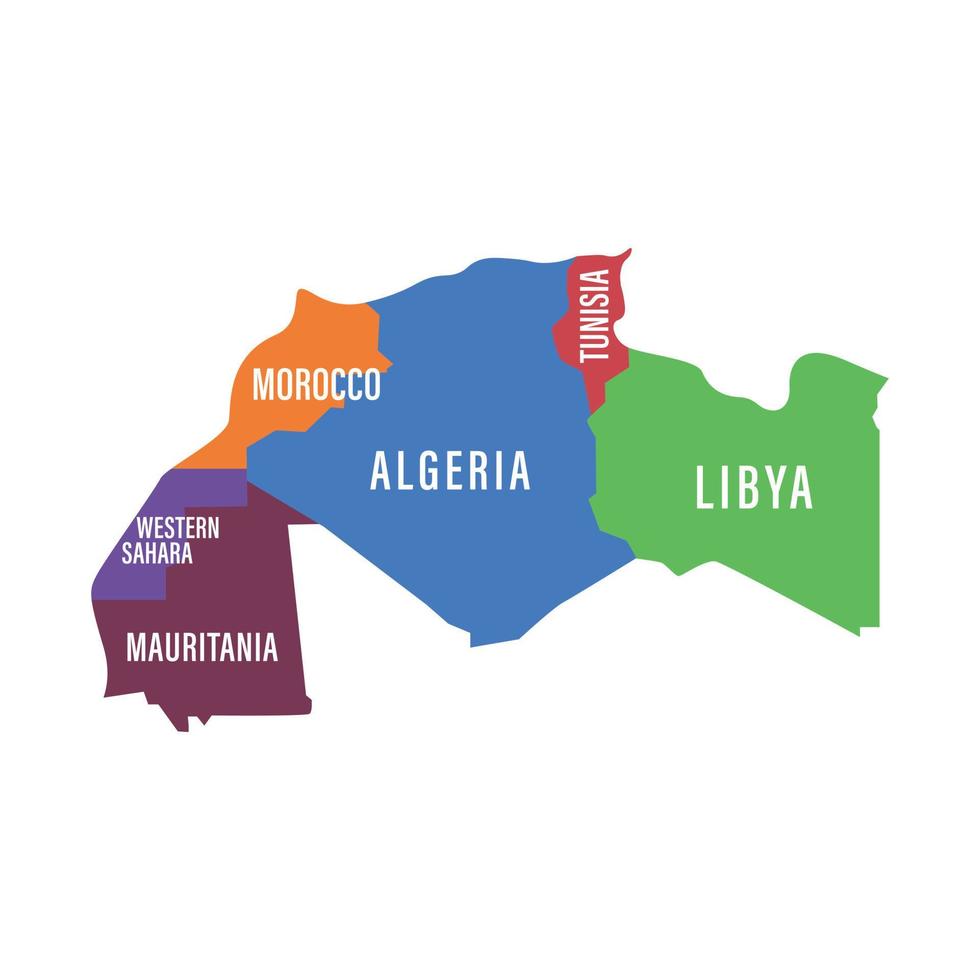
The Maghreb is often treated as a coherent geopolitical region, yet beneath this label lies a complex landscape shaped by colonial legacies, competing national identities, and unresolved questions of cultural recognition. While post-independence governments across North Africa largely embraced Arab-Muslim state identities, the region's indigenous Amazigh communities continue to challenge narratives that marginalise linguistic, ethnic, and cultural diversity. These tensions are not merely domestic issues but increasingly intersect with regional rivalries, diplomatic engagement, and broader geopolitical dynamics.
This article examines how India and China engage with the Maghreb through the lens of sovereignty, diplomacy, and non-interference. It argues that while both countries maintain state-centric approaches that prioritise relations with governments over societal actors, their silences on issues of minority recognition and indigenous identity carry important political consequences. Through an exploration of Amazigh movements, the Kabyle question, and the evolving politics of recognition across Morocco, Algeria, Tunisia, and Libya, the article highlights the limitations of conventional diplomatic engagement in regions where identity politics remains central to governance. Ultimately, it raises a broader question about whether state-to-state diplomacy alone is sufficient to understand and engage with the political realities of contemporary North Africa.
Introduction:
What’s in a name? The Maghreb is, as Moroccan literary critic Abdelkebir Khatibi described, “a crossroad that belongs to the Mediterranean tradition, to the Middle East and Africa, and is a geopolitical and civilizational area.”1 While this captures the complexity of the region, the Maghreb is a name born of an ideology of armed struggle for national liberation, conceived by a line of Maghrebi nationalist leaders as an umbrella term for the three North African countries that were under the French colonial rule: Algeria, Morocco, and Tunisia. What then emerged from that postcolonial project was not, as intended, a unified people’s space but the subsequent failure of regional integration, a “Maghrib al-duwwal” (the Maghrib of states) instead of “Maghrib al-shu'ub” (the Maghrib of the peoples).2 This gap is animated by the region’s contemporary identity struggles.
That gap was produced, in significant part, by the differentiated violence of French colonialism. In Algeria, for instance, the colonial impact was far more intense than in either Morocco or Tunisia. Algeria was under French control the longest, and was considered to be a part of France rather than a colony, “Algérie Française”.3 During the century-long colonization, France contributed enormously toward cultural and religious erasure within Algerian society; at one point, the practice of Islam and the use of the Arabic language were banned. In Morocco and Tunisia, the mode of control was quite different; it preserved local institutions while restructuring power from above.4 The result is that the post-independence governments of each country inherited three distinct relationships between the state and cultural identity, three ink colours to the question of what the nation was supposed to be.
Each government’s answer converged on the same point that the Maghreb would be Arab and Muslim. The AMU (Arab Maghreb Union)’s definition of the Maghreb as an “Arab” area is, in this light, tricky. Although Arabs are an important component of the Maghrebi sociocultural fabric, they remain one of many cultural, linguistic, and ethnic groups that make up the area. The post-independence constitutions suppress the reality that the region’s indigenous population, the Imazighen, had inhabited it before the Arabs; its languages and self-understanding were never subsumed, even after centuries of Arabisation and Islamisation.5 Governments have either entirely silenced the Amazigh language and culture, as in the case of Libya and Tunisia, or repressed it in the case of Algeria and Morocco.
The Amazigh Cultural Movement has nonetheless been dedicated to refiguring the toponymies and traditions of the Amazigh Maghreb.6 The Tamazight language has acquired constitutional status in Morocco and has been recognised in Algeria. Across all Maghrebi countries, the language has added a new level of complexity to the public sphere. But recognition has rarely meant resolution. In Morocco, the Amazigh question has been stated through state co-optation. In Algeria, the Kabyle question was weaponised in inter-state rivalry. When Algeria severed diplomatic relations with Morocco in 2021, it accused Rabat of supporting Kabyle separatist movements, making known that minority recognition and geopolitics in the Maghreb are not parallel. 7
Linguistically, the Maghreb is equally layered. Arabic was introduced and gradually became the dominant language of education, religion, and administration. At the same time, Amazigh languages retained their importance to regional identity. The 19th and 20th centuries witnessed French colonial rule that then retained its grip on higher education and literary production despite the post-independence Arabisation policies that sought to restore what colonialism had suppressed. The result is a creolization of Arabic, French, and Tamazigh, amongst other regional languages. This choice is far from just stylistic; it captures historical legacies, cultural identity, and considerations of readership. Crucially, as El Guabli argues, scholarly frameworks have reproduced this suppression of the Arabic- versus-Francophone dichotomy, which fails to capture the diversity of languages in which the Maghreb is produced and reproduced across the globe, leaving Amazigh literary and cultural production systematically underread and undertheorised.8
Within this layered, contested, irreducible Arab-Islamic frame that post-independence states impose on it, both India and China have extended their presence. Both countries maintain a non-interference posture toward the Maghreb’s internal politics. Through bilateral, state-to-state instruments, they’ve both remained consistently silent on the questions that constitute the region’s governance. While the surface similarity is real, it is wrong to stop there if the aim is to understand what each actor’s engagement actually means and foreclose.
The external actors in this contested space are not neutral. Whether they acknowledge it or not, they take positions on its internal matters through what they fund, recognise, and refuse to engage with. China’s position is embedded in a strategy that makes non-interference a durable, capital-backed service. India’s silence is rooted in managing a multinational, multi-religious state, and complicated by a post-2014 domestic trajectory that simultaneously makes that experience analytically relevant. This article argues that when their positions are read together, against the Maghreb’s landscape, it reveals the palimpsest of indigenous presence, colonial restructuring, and post-independence identity management that no external actor can engage with without, in some sense, taking a position on it.
The Maghreb of Peoples:
The Imazighen people (plural of Amazigh) were present in North Africa long before the Arabs in the seventh century. The number of Arabs who migrated west from Egypt was fairly small; the Arab identity of North African countries was established primarily through Arabisation, which spanned many centuries over predominantly Amazigh populations. Elements of the Amazigh culture were preserved more easily in regions where geography facilitated it, such as the mountain systems and parts of the Sahara. Today, however, dialects of the language are spoken along the Atlantic coast of Morocco. The Amazigh language thus stretches in a geographically discontinuous manner over a vast area of North Africa; this spread is as much political as it is geographical.9 The definition of the Maghreb as a primarily Arab space has had dire effects on the region's indigenous people. With post- independence constitutions across the region officially defined these states as Arab-Muslim societies, which suppresses the plurality that’s part of the social fabric of these states.
In Morocco, although the Amazigh language is officially recognised, it has been suppressed. The Royal Institute of Amazigh Culture was established by royal decree in 2001, as an answer to civil society requests since the 1960s, which called for the recognition of the Amazigh language and culture by the state and its institutionalization in education, the media, culture, and public administration.10 Within the decades to come, Amazigh’s status will shift to being an official language. However, this recognition came with a structural mechanism of control through state-sanctioned frameworks. The state’s mandate to codify the Amazigh graphic system for teaching ends and elaborate general and specialised lexicons positions it as the authoritative arbiter of a language whose speakers had long maintained it independently. As such, given the state’s partial recognition and bounded by the limits of the Makhzen sets, efforts to re-Amazighize the Maghreb have been struggling.11
Algeria, however, presents a more vital configuration. The anti-colonial nationalism that established the independent states of North Africa drew its inspiration from earlier movements of cultural revivalism and Islamic reform; the cultural identity of these new nation-states was thus generally defined by nationalist orthodoxy as "Arabo-Muslim."12 As such, it ignores the Amazigh ancestry. In Algeria, Arabisation wasn’t merely a cultural policy but a founding ideological commitment that had built its legitimacy on a war of national liberation in which Kabyle participation had been central. The result was that Kabyles had contributed disproportionately to the revolution and found themselves defined out of the national identity it produced. The Kabyle identity crisis is as described, “the national crisis in miniature,” born out of the right to recognition.13 This is particularly significant as any external engagement necessitates these questions being answered, too. When Algeria severed diplomatic relations with Morocco in 2021, it explicitly accused Rabat of supporting Kabyle independence movements.14 Making clear that minority politics in the Maghreb is not a domestic matter separable from geopolitics, but a terrain on which geopolitical competition is actively conducted.
Within Tunisia, while the 2014 constitution briefly institutionalised a pluralist framework following the Arab Spring, much of it was reversed in the years to come. The dominant political narrative presented the Maghreb as totally Arab in language and culture, but progress has been contingent on political conditions that have since shifted. 15
In Libya, the question morphs into a different form, where the state's collapse after 2011 dissolved the institutional architecture within which minority claims could even be registered. The 2011 NATO intervention in Libya led to the cantonization of the country, making the Amazigh and tribal-territorial questions inseparable from the more fundamental question of whether a functioning state exists at all.16
When viewed together, this establishes that identity politics in the Maghreb is not peripheral to governance but foundational to it. The terrain on which the Amazigh question, the Kabyle grievance, Tunisia’s constitutional reversal, and Libya’s fragmentation play out is fundamental to geopolitics. Whether external actors engaging the Maghreb acknowledge it or not, they take a position on these questions, through what they engage with and fund.
Two Silences
China and India remain one of the major non-Western actors in Maghrebi politics. While both actors have been silent on minority politics, the question does not end there, but extends to whom each actor recognises as a legitimate political interlocutor and what that recognition yields. The answer centres first around sovereignty, which is foundational to any partnership. The comparison that follows operates from this premise and is an attempt to understand what each actor reveals when placed against a political landscape like the Maghreb.
China’s engagement in the Maghreb is primarily in the form of BRI initiatives, securing critical resource minerals supply chains for green transition and technologies, and accessing African and European markets to address domestic overcapacity in manufacturing. These instruments, be it loans, investments, and contracts, include port development, energy infrastructure, diplomatic academies, and stadium construction, which do not involve any non-state political actor per se.17 As such, China defines the state as the only legitimate interlocutor, and to the Maghrebi governments, this arrangement protects them from normative pressure and allows them to continue managing their politics on their own terms, backed by the material legitimacy of Chinese capital. It enables a dynamic which may not be principled but is strategic. China is the region's fourth-largest trading partner, and that position carries its weight. 18
However, for Amazigh movements, Kabyle activists, and Tunisian civil society, the cumulative silence of non-Western external actors is not simply the absence of support. It enacts a structural isolation where influential actors in the region treat their governments as the only interlocutors’ worth engaging. And the effect that this take is a denial of international visibility that has been important to minority and indigenous rights claims elsewhere.
India's position has this effect too, even though it is an omission rather than an abstention. India has amplified its bilateral engagement with Maghreb countries despite not having a distinct regional policy for North Africa.19 This is underpinned by a commitment to the principle of South-South cooperation. Here, the economic engagement is mainly commodity-driven, where bilateral trade between India and Morocco exceeded US$3.9 billion in 2022,20 driven by India's imports of phosphate; bilateral trade with Algeria reached US$2.45 billion in 2022, with India importing crude oil and exporting pharmaceuticals, vehicles, and food products.21 Indian companies, including Tata, Mahindra, and Kirloskar Brothers, have established operations in Algeria, and 40 Indian companies are present in Morocco.22 Yet these are individual bilateral relationships; India's approach is based on equal partnership, mutual benefits, and non-interference in internal affairs, in contrast to the prescriptive nature of Western cooperation.
What this parallel reveal is that though the two actors share a similar diplomatic position, they’re produced by different logistics. The effect on Amazigh movements and Kabyle activists remains the same.
The Vantage Point
India's position in the Maghreb is made particularly complex. At the same time, China arrives with no equivalent domestic complexity, where its minority policy has been consistently to assimilate, as in Tibet, Xinjiang, and Inner Mongolia. India’s position is, however, structurally different, where the Eighth Schedule languages, the reorganisation of states on linguistic lines, the contested history of Scheduled Tribe classifications, and the reorganisation of constitutional minority protections produce instead a political literacy about what is at stake when a state decides how to institutionalise a minority claim. A constant dialogue around how people could be brought together has had to happen. That experience is directly applicable to what Morocco is doing with IRCAM, what Algeria has done with Kabyle political demands, and what Tunisia attempted and reversed with its constitutional pluralism moment. This is not to say the problem is the same; they are of the same nature. Tracing back India’s connection with North Africa, the Bandung Conference in 1955, and the vocabulary of anti-coloniality have always been common areas. For a while, this gave India a form of relational credibility that was distinct from what Western powers or China could offer, a legibility of shared political experience.
However, a notable strain in vocabulary has been noticed in recent years, as we navigate an internal political context in which pluralism is actively contested at the governmental level. India can still optimise its presence in North Africa by leveraging its approach of South-South cooperation to forge mutually beneficial partnerships; however, this ideology, as it is currently practised, is not designed to engage with identity politics. The Maghreb, as this article establishes, is a region where the political questions that most need engaging are not primarily economic.
Therefore, while India’s omission of the Maghreb’s internal landscape is not deliberate but is the result of a primarily bilateral economic trade relationship where state-to-state diplomacy meets a region that cannot be adequately read through those instruments alone. An open question remains on whether these changes will depend on deepening bilateral relationships in the region or whether India's domestic politics permits it to re-enter the pluralism conversation.
Conclusion
The Maghreb’s landscape makes clear the question of statehood; what is treated as a regional peculiarity, or a specific historical context, is not just a peculiarity but a case of a broader dynamic.
The parallel between China and India, when placed against the Maghreb's actual political terrain, shows that the most influential non-Western actors in the region share a single structural commitment; the state is the only legitimate interlocutor. The international environment available to Amazigh movements, Kabyle activists, and Tunisian civil society is one in which even the actors most ideologically positioned to engage their claims decline to do so. This is not simply an absence of support.
It matters beyond the Maghreb because this is a pattern, the consolidation of state authority over minority recognition. It is visible in the trajectory of minority politics across a range of states, navigating the pressure between national cohesion and internal diversity. What makes the Maghreb especially legible is that the consolidation is visible through Morocco's IRCAM model, Algeria's instrumentalisation of the Kabyle question, Tunisia's constitutional reversal, and Libya's fragmentation. Due to their geographic proximity, they show the range of ways a state can respond to minority claims while keeping those claims from destabilising the political order. The collapse of the official Arab Maghreb Union led to the cantonisation of Maghrebi states, with a rather narrow political imagination. What was imagined as a people’s Maghreb became a system of states whose governments manage identity claims internally. These states together represent not a unity but a set of sovereign governments managing their internal diversity. The problem is that of finding insulation from the political consequences of that management.
The question this raises is not whether external actors should interfere. It is if non-interference, as currently practised, is adequate for a region where the political terrain cannot be read through state-to-state instruments alone. The Amazigh people, the Kabyle identity, Tunisia's constitutional reversal, and Libya's fragmentation are not complications to Maghrebi politics, but are foundational.
Endnotes:
1. Brahim El Guabli, “Special Section Introduction: Where Is the Maghrib?,” Arab Studies Institute, Vol. 29, No.2 (2021), https://www.jstor.org/stable/27342323.
2. Brahim El Guabli, https://www.jstor.org/stable/27342323.
3. Dr. Mohamed Chtatou, “An Overview Of French Colonialism In The Maghreb – Analysis,” Eurasia Review (2019), https://www.eurasiareview.com/05032019-an-overview-of-french-colonialism-in-the-maghreb-analysis/.
4. Peter Schlotter, “The Political and Economic Situation in the Maghreb Countries.” Peace Research Institute Frankfurt (1999), http://www.jstor.org/stable/resrep14488.8.
5. Stephen Calleya and Mark Heller, “Sub-regional Cooperation within the EMP.” EuroMeSco Papers (2002), https://www.euromesco.net/wp-content/uploads/2017/10/200207-Working-Group-IV-First-Year-Report-Sub-regional-Co-operation-within-the-EMP.pdf.
6. Brahim El Guabli, https://www.jstor.org/stable/27342323.
7. Peter Schlotter, http://www.jstor.org/stable/resrep14488.8.
8. Brahim El Guabli, https://www.jstor.org/stable/27342323.
9. Dr. Mohamed Chtatou, “The Amazigh Cultural Renaissance,” Washington Institute (2019), https://www.washingtoninstitute.org/policy-analysis/amazigh-cultural-renaissance.
10. Dr. Mohamed Chtatou, “Amazigh Culture in Morocco: Challenges and Future Prospects- Analysis.” Eurasia Review (2026), https://www.eurasiareview.com/13052026-amazigh-culture-in-morocco-challenges-and-future-prospects-analysis/.
11. Dr. Mohamed Chtatou, https://www.eurasiareview.com/13052026-amazigh-culture-in-morocco-challenges-and-future-prospects-analysis/.
12. Emily Gilbert, “Kabyle’s Forgotten Grievance: Implications for Algeria’s Internal Security Outlook.” Georgetown Security Studies Review (2016), https://georgetownsecuritystudiesreview.org/2016/11/07/kabyles-forgotten-grievance-implications-for-algerias-internal-security-outlook/.
13. Akbar Ahmed and Frankie Martin, “The Kabyle Berbers, AQIM and the search for peace in Algeria,” Al Jazeera (2013), https://www.aljazeera.com/opinions/2013/2/24/the-kabyle-berbers-aqim-and-the-search-for-peace-in-algeria/.
14. Emily Gilbert, https://georgetownsecuritystudiesreview.org/2016/11/07/kabyles-forgotten-grievance-implications-for-algerias-internal-security-outlook/.
15. Brahim El Guabli, https://www.jstor.org/stable/27342323.
16. Brahim El Guabli, https://www.jstor.org/stable/27342323.
17. Prithvi Gupta, “The Dragon in the Maghreb: Assessing the BRI in North Africa,” Observer Research Foundation (2024), https://www.orfonline.org/research/the-dragon-in-the-maghreb-assessing-the-bri-in-north-africa.
18. Yahia H. Zoubir, “China in the Maghreb: Forging a New Era of Geopolitical Influence,” Middle East Council of Global Affairs (2025) https://mecouncil.org/publication/china-in-the-maghreb-forging-a-new-era-of-geopolitical-influence/.
19. Jane Hall Lute and Johanna Weaver, “North Africa’s Invisible Partner: India’s political and economic influence in the region,” Observer Research Foundation (2023), https://www.orfonline.org/expert-speak/north-africas-invisible-partner.
20. Ministry of External Affairs, “India- Morocco Bilateral Relations,” (2026), https://www.mea.gov.in/Portal/ForeignRelation/India-Morocco-26.pdf.
21. Embassy of India, Algiers, Algeria, “India- Algeria Relations,” (2026), https://www.indianembassyalgiers.gov.in/page/india-algeria-relations/.
22. Embassy of India, Algiers, Algeria, https://www.indianembassyalgiers.gov.in/page/india-algeria-relations/.
(The views expressed are those of the author and do not represent the views of CESCUBE)
Image Source: Vecteezy
Moumita Arun is a sophomore at Symbiosis School for Liberal Arts, currently double majoring in International Relations and Economics. She situates her research interests at the intersection of these two fields, specifically in terms of cultural studies, gender, and security. She has hands-on experience in research and community engagement, contributing articles to campus publications, moderating international panels, and working on service-learning projects focused on education, gender equity, and access.