
LIVE DISPATCH
AI Driven Cyberwarfare and National Security Great Power Rivalry and the Crisis of the United Nations The Continuing U.S. Regime-Change Toolkit: Color Revolutions, Political Influence, and Vietnam Ten Years After Brexit: Regret, Reform, or Reversal? Digital Pathways to Extremism: An Investigative Study of ISIS and Al-Qaeda's Use of Digital Platforms in India Sports, Strategy and Statecraft of Mega Sporting Events as Geoeconomic Instruments: Qatar 2022 to Saudi Arabia 2034 Strategic Autonomy in the Age of Weaponised Interdependence: India’s Geopolitical Dilemma Hardening the Quad: From Strategic Dialogue to Operational Cooperation China’s Grey-Zone Strategy in the Indian Ocean: Implications for India’s Maritime Security The Maghreb of States: Identity, Sovereignty, and the Limits of Non-Interference Europe’s Digital Dependence: Can the EU Achieve Strategic Autonomy? Beyond the Battlefield: Understanding Unconventional Security Challenges in Contemporary Geopolitics Cuba’s Economic Crisis and Strategic Relevance: A Peripheral State in Renewed Great Power Competition Trapped in Deterrence: Nuclear Stability and the Persistence of Conflict in South Asia Loss and Damage Finance: From COP28 Pledges to Policy Architecture Extended Deterrence Under Strain: Credibility, Assurance, and the Stability-Instability Paradox in the Indo-Pacific Beyond Consultation: BIMSTEC's Emerging Role in Regional Intelligence and Security Cooperation Maritime India: Security, Trade, and Great Power Competition Between the Desert and the Savannah: Conflict and the Political Economy of Instability in the Sahel Beyond Ukraine: Understanding Putin's Vision of Russian Power The Politics of Ali Khamenei's Funeral Silicon Sovereignty: How Semiconductors Are Redrawing Global Power Hierarchies Operation Sindoor and the Changing Dynamics of India–Pakistan Security The Negative Impact of US–Iran War on the Pacific Region Generative AI, Labour Sovereignty, and the Geoeconomics of India's Service Economy BRICS Expansion and the Multipolar Moment: Opportunity or Strategic Contradiction? India's AI Diplomacy and the Future of Strategic Technologies Foot-Dragging as Feminism: Iran, South Korea, and the Ungovernable Body Lethal Autonomous Weapons Systems and the Governance Deficit: Challenges to International Humanitarian Law and Accountability Beyond Proximity: Why the UAE Occupies a Growing Place in Iran’s Strategic Calculus Why Fiji Matters: The New Geopolitics of the Indo-Pacific Islands The Long Shadow of 1953: Understanding the Iran–US Conflict Border Fencing and National security: India’s Strategy along the Bangladesh Border Lingering Effects of the Bush Doctrine on Contemporary US Foreign Policy India’s BRICS 2026 Chairmanship Navigating a tightrope Amidst the Chinese Geopolitical Rise The Control Paradox: How Proxy Warfare Enables Strategic Deniability While Constraining Strategic Control The Return of Unipolarity? U.S Strategic Primacy and the Future of the Global Order Supply Chains and Complicity: The Role of Global Corporations in Forced Labour in Xinjiang The Distant Threat: Is Israel Constructing a Strategic Rival in Pakistan Island Militarisation and Techno-Diplomacy: Turkey’s Eastern Mediterranean Fault Lines Amid India-Greece Alignment AI Driven Cyberwarfare and National Security Great Power Rivalry and the Crisis of the United Nations The Continuing U.S. Regime-Change Toolkit: Color Revolutions, Political Influence, and Vietnam Ten Years After Brexit: Regret, Reform, or Reversal? Digital Pathways to Extremism: An Investigative Study of ISIS and Al-Qaeda's Use of Digital Platforms in India Sports, Strategy and Statecraft of Mega Sporting Events as Geoeconomic Instruments: Qatar 2022 to Saudi Arabia 2034 Strategic Autonomy in the Age of Weaponised Interdependence: India’s Geopolitical Dilemma Hardening the Quad: From Strategic Dialogue to Operational Cooperation China’s Grey-Zone Strategy in the Indian Ocean: Implications for India’s Maritime Security The Maghreb of States: Identity, Sovereignty, and the Limits of Non-Interference Europe’s Digital Dependence: Can the EU Achieve Strategic Autonomy? Beyond the Battlefield: Understanding Unconventional Security Challenges in Contemporary Geopolitics Cuba’s Economic Crisis and Strategic Relevance: A Peripheral State in Renewed Great Power Competition Trapped in Deterrence: Nuclear Stability and the Persistence of Conflict in South Asia Loss and Damage Finance: From COP28 Pledges to Policy Architecture Extended Deterrence Under Strain: Credibility, Assurance, and the Stability-Instability Paradox in the Indo-Pacific Beyond Consultation: BIMSTEC's Emerging Role in Regional Intelligence and Security Cooperation Maritime India: Security, Trade, and Great Power Competition Between the Desert and the Savannah: Conflict and the Political Economy of Instability in the Sahel Beyond Ukraine: Understanding Putin's Vision of Russian Power The Politics of Ali Khamenei's Funeral Silicon Sovereignty: How Semiconductors Are Redrawing Global Power Hierarchies Operation Sindoor and the Changing Dynamics of India–Pakistan Security The Negative Impact of US–Iran War on the Pacific Region Generative AI, Labour Sovereignty, and the Geoeconomics of India's Service Economy BRICS Expansion and the Multipolar Moment: Opportunity or Strategic Contradiction? India's AI Diplomacy and the Future of Strategic Technologies Foot-Dragging as Feminism: Iran, South Korea, and the Ungovernable Body Lethal Autonomous Weapons Systems and the Governance Deficit: Challenges to International Humanitarian Law and Accountability Beyond Proximity: Why the UAE Occupies a Growing Place in Iran’s Strategic Calculus Why Fiji Matters: The New Geopolitics of the Indo-Pacific Islands The Long Shadow of 1953: Understanding the Iran–US Conflict Border Fencing and National security: India’s Strategy along the Bangladesh Border Lingering Effects of the Bush Doctrine on Contemporary US Foreign Policy India’s BRICS 2026 Chairmanship Navigating a tightrope Amidst the Chinese Geopolitical Rise The Control Paradox: How Proxy Warfare Enables Strategic Deniability While Constraining Strategic Control The Return of Unipolarity? U.S Strategic Primacy and the Future of the Global Order Supply Chains and Complicity: The Role of Global Corporations in Forced Labour in Xinjiang The Distant Threat: Is Israel Constructing a Strategic Rival in Pakistan Island Militarisation and Techno-Diplomacy: Turkey’s Eastern Mediterranean Fault Lines Amid India-Greece Alignment
OUR FOUNDER & VISIONARY 07.07.1973 – 20.05.2024

Professor (Dr.) Pankaj Jha

Founding Director, Centre for Security and Strategic Studies (CeSCube)

Professor (Dr.) Pankaj Jha was the Founding Director of the Centre for Security and Strategic Studies (CeSCube) and a distinguished scholar, practitioner, teacher and mentor in the field of security and strategic studies. At O.P. Jindal Global University, Dr. Jha served as Professor & Associate Dean (Research) and Founding Director of the Centre for Security Studies (CSS) at the Jindal School of International Affairs (JSIA).

His professional journey brought together academia, policy research and government experience. This combination shaped the way he approached security and strategic affairs and, eventually, the vision with which CeSCube was established.
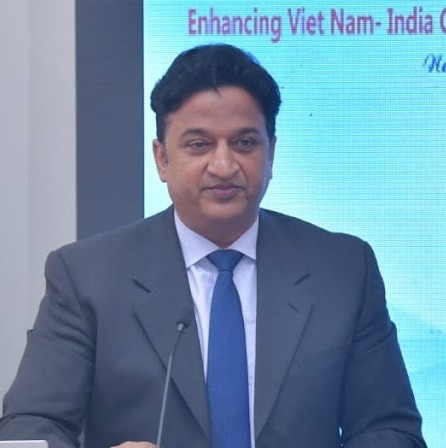
Leadership
Founding Director
NSCS (PMO)
Deputy Director
Late Professor (Dr.) Pankaj Jha
Visionary Leader

Prof. (Dr.) Pankaj Kumar Jha

07.07.1973 – 20.05.2024

Scholar • Strategic Thinker • Beloved Mentor

DISTINGUISHED RECORD

Leadership Across Academia, Government & Policy Think-Tanks

Public Service & Research Record
CeSCube

Founding Director

Centre for Security and Strategic Studies (CeSCube)

Founder & Visionary
Academia

Professor & Associate Dean (Research)

O.P. Jindal Global University (JGU)

2017 – 2024
Think-Tank

Founding Director

Centre for Security Studies (CSS), JSIA, O.P. Jindal Global University

2017 – 2024
Govt of India

Deputy Director

National Security Council Secretariat (NSCS), Prime Minister’s Office (PMO)

2012 – 2013
Foreign Policy

Director of Research

Indian Council of World Affairs (ICWA)

2013 – 2016
Defense Analysis

Associate Fellow

Manohar Parrikar Institute for Defence Studies and Analyses (MP-IDSA)

2005 – 2011
SCHOLARSHIP & PUBLIC SERVICE

A Scholar and Practitioner

From 2005 to 2011, Dr. Jha was an Associate Fellow at the Manohar Parrikar Institute for Defence Studies and Analyses (MP-IDSA). His work during this period contributed to his extensive engagement with questions of defence, national security, Southeast Asian security dynamics, and regional strategic affairs.

He later worked as Deputy Director in the National Security Council Secretariat (2012–2013) of the Prime Minister’s Office (PMO), where he helped formulate and implement key ideas to strengthen India’s defensive and offensive capabilities, regional threat assessments, and security coordination.

From 2013 to 2016, Dr. Jha worked at the Indian Council of World Affairs (ICWA) and served as Director of Research. During his tenure, he spearheaded important publications, track-1.5 strategic dialogues, and encouraged high quality research output from a large team of scholars working on foreign policy themes.

“His experience across these institutions gave him a perspective that went beyond conventional academic scholarship. He understood strategic affairs both as a researcher and as someone who had worked closely with the policy and national security establishment.”

INSTITUTIONAL FOUNDATION

The Idea Behind CeSCube

CeSCube was born from Dr. Jha’s belief that good research should bring together ideas, knowledge and experience.

He strongly believed in creating opportunities for young researchers and giving them the space to think independently, develop their arguments and engage seriously with contemporary questions of security and strategy. For him, young scholars were not simply participants in the research process. They had ideas and perspectives that deserved to be heard, discussed and refined.

This became an important part of the vision behind CeSCube. The Centre was envisioned as a space where young researchers, professionals and experienced scholars could come together, exchange ideas and contribute to meaningful research on security, strategy, geopolitics and international affairs.

DEDICATION TO STUDENTS & SCHOLARS

A Mentor at Heart

Those who worked with Dr. Jha knew that mentorship was an important part of who he was.

He took a genuine interest in the academic and professional development of young researchers. He encouraged students to write, publish, question established arguments and develop their own understanding of strategic affairs. He believed that research became meaningful when knowledge was shared and when younger scholars were given the confidence and opportunity to contribute.

This spirit of mentorship remains closely connected with CeSCube and the work that the Centre continues to undertake today.

THE LIVING LEGACY

Carrying His Vision Forward

Dr. Jha passed away on 20 May 2024, leaving behind a rich body of scholarship and a generation of students, researchers and colleagues who had the opportunity to learn from him.

For CeSCube, his legacy is deeply personal. He was not only its Founding Director. He was the person whose ideas and belief in collaborative research helped shape what the Centre was meant to become.

Today, CeSCube continues to work towards that vision by providing a platform for research, discussion and analysis while creating opportunities for young researchers to work alongside scholars and professionals.

As the Centre grows, we remain committed to the values with which Dr. Jha envisioned it: intellectual curiosity, rigorous research, openness to new ideas, mentorship and a serious engagement with the strategic challenges of our time.

“His absence is deeply felt, but his ideas continue to guide CeSCube and the community he helped create.”