Energy Security and European Strategic Autonomy: Has the EU’s Shift Away from Russian Fossil Fuels Strengthened Its Strategic Autonomy?
The European Union’s shift away from Russian fossil fuels following the 2022 Russia-Ukraine conflict has significantly strengthened its energy security and strategic autonomy. Through REPowerEU, supplier diversification, energy efficiency and renewable energy expansion, the EU has reduced its dependence on Russian energy. However, the transition has also exposed new vulnerabilities in critical raw materials, batteries and clean-energy supply chains, particularly due to China’s dominant position. This article examines the extent to which Europe’s strategic autonomy has improved, arguing that autonomy does not require complete self-sufficiency, but rather the ability to manage dependencies through diversification, domestic capabilities and resilient international partnerships.
Introduction
Energy security has long been a strategic concern for the European Union. Before 2022, the EU relied heavily on Russian fossil fuels, particularly natural gas, making its energy system vulnerable to geopolitical pressure from a major external power. Russia’s full-scale invasion of Ukraine in February 2022 made this vulnerability a major strategic concern for the EU.[1]
The European Commission responded with the REPowerEU plan, launched in May 2022, which aimed to rapidly reduce dependence on Russian fossil fuels while accelerating the transition towards cleaner energy.[2] Over the following years, the EU significantly reduced its reliance on Russian energy. By 2025, Russian gas accounted for around 13 percent of EU gas imports, compared with approximately 45 percent in 2021, while Russia's share of EU crude-oil imports fell from around 27 percent to below 3 percent.[3]
This transformation represents a significant improvement in European energy security. The EU has diversified its suppliers, reduced energy demand and expanded renewable electricity generation. However, the shift away from Russian fossil fuels has also revealed a new dimension of strategic dependence. The technologies required for the green transition rely on critical raw materials, batteries, solar panels and other components whose supply chains remain highly concentrated outside Europe, particularly in China.
This article therefore argues that the EU’s shift away from Russian fossil fuels has strengthened its strategic autonomy to a significant extent, but that this autonomy remains incomplete. Europe has reduced its dependence on a major geopolitical rival, yet the energy transition has created new vulnerabilities in clean-energy supply chains. Strategic autonomy should consequently not be understood as complete self-sufficiency, but as the ability to diversify dependencies, develop domestic capabilities and maintain resilient international partnerships.
Europe’s Dependence on Russian Fossil Fuels
Before the energy crisis, Russia was central to Europe’s energy system. In 2021, Russia supplied approximately 44 percent of EU natural gas imports, 28 percent of extra-EU crude oil imports and around 52 percent of solid fossil fuel imports.[4] This dependence was particularly significant for natural gas because European infrastructure had been developed around long-term pipeline connections with Russia.
Such dependence created more than an economic vulnerability. Energy could also become a source of geopolitical leverage. The concentration of imports from a single major supplier meant that disruptions to Russian supplies could have consequences across European economies and societies. The European Parliament has consequently linked energy security to broader questions of strategic autonomy, as dependence on external energy supplies can increase the EU’s vulnerability to geopolitical disruptions.[5]
Russia’s invasion of Ukraine transformed this structural vulnerability into an immediate strategic concern. The sharp reduction in Russian gas supplies and the subsequent European energy crisis demonstrated how dependence on an external supplier could expose European economies to significant economic and geopolitical risks. Energy security consequently became increasingly connected to the EU’s wider objective of strengthening its strategic autonomy.[6]
The challenge was therefore not simply to find another supplier. Europe needed to reduce the structural vulnerability created by excessive dependence itself.
The EU’s Shift toward Diversification
The EU’s response combined three main strategies: diversifying energy suppliers, reducing energy consumption and rapidly increasing renewable energy production. REPowerEU provided the framework for this transformation, encouraging the EU to replace Russian fossil fuels with alternative sources while accelerating the energy transition.3
Supplier diversification played an immediate role. European countries increased imports from Norway, the United States, North Africa, Azerbaijan and other partners. Liquefied natural gas became particularly important because it allowed European countries to access gas from a wider range of suppliers rather than relying primarily on pipeline imports. At the same time, the EU substantially reduced the absolute volume of Russian gas imports, from approximately 152 billion cubic meters in 2021 to around 36 billion cubic meters in 2025. Russian crude oil imports also fell dramatically, while Russian coal imports were effectively eliminated.3
Demand reduction was another important part of the response. The EU introduced energy-efficiency measures and established a binding target to reduce final energy consumption by 11.7 percent by 2030 compared with the 2020 projections for energy use in 2030.[7] Gas demand also declined substantially, helping reduce the quantity of imported fuel required by European economies.3
Finally, renewable energy expanded rapidly. Renewables accounted for almost half of EU electricity generation in 2024, while wind and solar generation alone were estimated to have avoided around 38 billion cubic meters of gas consumption over a three-year period.3
Taken together, these measures represent a genuine strengthening of European energy autonomy. The EU is less exposed to Russian energy supplies, depends on a broader range of international partners and increasingly meets its electricity needs through domestic renewable generation. Yet this progress raises an important question: what does Europe now depend on to produce this new energy system?
The Green Transition and New Dependencies
The energy transition changes the nature of European dependence rather than eliminating it. Fossil-fuel dependence is increasingly being replaced by dependence on critical raw materials, technologies and industrial supply chains.
Lithium, cobalt, nickel, graphite, rare earth elements, copper and other materials are essential for batteries, electric vehicles, electricity networks, wind turbines and solar technologies. The EU does not currently produce or process sufficient quantities of many of these resources domestically. The European Critical Raw Materials Act therefore seeks to strengthen European extraction, processing and recycling capacity for strategically important materials.[8]
This creates an important distinction between energy autonomy and supply-chain autonomy. Europe can produce electricity domestically through wind and solar power, but the infrastructure required to generate, store and distribute that electricity depends on international industrial networks.
The International Energy Agency has highlighted this vulnerability by showing that critical mineral supply chains are often considerably more concentrated at the processing stage than at the extraction stage. In 2024, the average share of the three largest refining countries for key energy-related minerals reached approximately 86 percent. China was the dominant refiner for 19 of the 20 strategic minerals examined by the IEA.[9]
Consequently, the strategic question is no longer simply whether Europe can obtain enough energy. It is increasingly whether Europe can obtain the materials, components and technologies required to produce that energy without becoming excessively dependent on a small number of external suppliers.
China and the Concentration of Clean-Energy Supply Chains
China occupies a particularly important position in these emerging supply chains. Its role extends across several stages: extraction, refining, processing and manufacturing. This gives China influence over a substantial part of the industrial system supporting the global energy transition.
The IEA estimates that China could retain more than 60 percent of global refined lithium and cobalt production in 2035, while its share of battery-grade graphite and rare-earth processing could remain close to 80 percent. China also dominates the production of lithium-iron-phosphate batteries, with over 98 percent of LFP cathode material and battery cells produced in China.9
This situation differs from the previous European dependence on Russia. Russia was primarily important because it supplied Europe directly with large quantities of fossil fuels. China’s role is broader and more deeply embedded in the technologies and industrial processes required for the energy transition.
This distinction matters for strategic autonomy. Reducing Russian gas imports could be achieved relatively quickly by finding alternative suppliers and reducing demand. Replacing deeply integrated global supply chains is considerably more difficult because they involve mines, processing facilities, manufacturing capacity, technological expertise and industrial ecosystems.
The lesson is therefore broader than simply identifying China as a new source of dependence. Strategic autonomy requires Europe to avoid excessive concentration in any strategic supply chain, regardless of the identity of the dominant supplier.
Batteries, Solar Power, and Strategic Vulnerabilities
Batteries illustrate this challenge particularly clearly. They are essential not only for electric vehicles but also for energy storage, which allows renewable electricity to be integrated into increasingly flexible electricity systems. Yet battery production remains highly concentrated in China. In 2025, China accounted for more than 80 percent of global battery cell production, while China itself represented around 60 percent of global electric-vehicle battery deployment.[10]
Solar photovoltaic technology presents a similar paradox. Solar energy strengthens European energy autonomy because sunlight is a domestic energy resource that does not need to be imported. At the same time, Europe remains heavily dependent on external manufacturing capacity for the panels themselves. China accounts for around 85 percent of global solar PV supply-chain production capacity and around 95 percent of PV wafer production capacity.[11]
The result is a form of strategic paradox: the technologies that reduce Europe’s dependence on imported fossil fuels can simultaneously create new industrial dependencies.
This does not mean that Europe should abandon renewable technologies or attempt to manufacture every component domestically. Rather, it demonstrates that strategic autonomy must include the resilience of the supply chains supporting the energy transition.
From Energy Security to Industrial Resilience
The EU has increasingly recognized this broader dimension of energy security. The Critical Raw Materials Act establishes targets for 2030 under which the EU aims to extract at least 10 percent, process at least 40 percent and recycle at least 25 percent of its annual consumption of strategic raw materials within Europe. It also seeks to prevent excessive dependence on a single third country by ensuring that no single external country accounts for more than 65 percent of the EU’s annual consumption of a strategic raw material at any relevant stage of processing.[12]
The EU has also sought to strengthen domestic clean-technology manufacturing through the Net-Zero Industry Act. Its objective is for European manufacturing capacity in strategic net-zero technologies to approach or reach at least 40 percent of the EU’s annual deployment needs by 2030.[13]
Batteries are another priority. The EU Batteries Regulation establishes requirements covering sustainability, sourcing, manufacturing, use and recycling, while the EU’s 2026 Battery Booster Strategy explicitly links the battery industry to economic resilience, energy security and defense capabilities.[14]
These measures demonstrate an evolution in the meaning of strategic autonomy. It is no longer sufficient for Europe to ask whether it can access enough energy. It must also ask whether it can maintain access to the resources, technologies and industrial capacity necessary to operate its energy system during geopolitical disruptions.
Assessing the EU’s Strategic Autonomy
The EU’s shift away from Russian fossil fuels has clearly strengthened its strategic autonomy, but the improvement is significant rather than complete.
The strongest achievement is the reduction of exposure to Russia. The EU has demonstrated that it can replace a large share of Russian fossil-fuel imports through supplier diversification, lower consumption and renewable energy. This has reduced the capacity of a major geopolitical rival to use energy dependence as a source of leverage.
The EU has also developed a more collective approach to energy security. Rather than allowing individual Member States to manage external energy dependencies independently, the post-2022 response has encouraged common European policies on diversification, energy efficiency, renewable energy and strategic infrastructure.
However, the transition has not eliminated external dependence. It has shifted part of that dependence towards critical raw materials, batteries, solar PV and other clean-energy technologies. China’s dominant position in several of these supply chains demonstrates that Europe could replace one form of concentration with another if it does not diversify its industrial base.
This does not mean that Europe should seek complete self-sufficiency. Such a goal would be economically costly and unrealistic in an interconnected global economy. Strategic autonomy is better understood as the capacity to manage dependence rather than eliminate it.
For the EU, this means pursuing four complementary objectives: diversifying international suppliers, developing European extraction and manufacturing capacity where strategically necessary, strengthening recycling and substitution, and building resilient partnerships with trusted international suppliers.
The objective should therefore not be to produce everything in Europe, but to ensure that no external actor can easily transform control over a critical resource or technology into disproportionate geopolitical leverage.
Conclusion
To a significant extent, the EU’s shift away from Russian fossil fuels has strengthened its strategic autonomy. Europe has reduced its dependence on a major geopolitical rival, diversified its energy suppliers, lowered energy demand and rapidly expanded renewable electricity. The transformation of the European energy system since 2022 demonstrates that strategic vulnerabilities created by excessive dependence can be reduced through coordinated political action.
However, energy autonomy cannot simply mean producing more energy domestically. Renewable technologies themselves depend on global supply chains for critical raw materials, batteries, solar panels and other components. China’s dominant position in several stages of these supply chains illustrates how the green transition can create new forms of strategic vulnerability even as it reduces dependence on fossil fuels.
The EU’s challenge is therefore to move from energy security based on fuel diversification towards broader resilience across the entire energy system. Strategic autonomy will depend on a combination of domestic industrial capacity, diversified international partnerships, recycling and substitution, and reduced concentration in critical supply chains.
The shift away from Russian fossil fuels should consequently be seen as a major step towards greater European strategic autonomy, but not as its completion. Europe has reduced one major vulnerability; the next challenge is ensuring that the technologies and resources underpinning its clean-energy future do not create another.
References:
[1]European Parliament, “EU Strategic Autonomy 2013–2023: From Concept to Capacity.” European Parliament — EU Strategic Autonomy 2013–2023
[2] European Commission, “REPowerEU.” European Commission — REPowerEU
[3]European Commission, “REPowerEU: 3 Years On,” 16 May 2025. European Commission — REPowerEU: 3 Years On
[4]Eurostat, “Shedding Light on Energy in the EU.” Eurostat — Energy in the EU
[5]European Parliament, “Security of Energy Supply.” European Parliament — Security of Energy Supply
[6]European Parliament, “Four Challenges of the Energy Crisis for the EU’s Strategic Autonomy.” European Parliament — Four Challenges of the Energy Crisis
[7]European Commission, “Energy Efficiency Targets.” European Commission — Energy Efficiency Targets
[8]European Commission, “European Critical Raw Materials Act.” European Commission — Critical Raw Materials Act
[9]International Energy Agency, Global Critical Minerals Outlook 2025. IEA — Global Critical Minerals Outlook 2025
[10]International Energy Agency, “Electric Vehicle Batteries,” Global EV Outlook 2026. IEA — Electric Vehicle Batteries
[11]International Energy Agency, “Supply Chain Risks and Industrial Competitiveness,” Energy Technology Perspectives 2026. IEA — Supply Chain Risks and Industrial Competitiveness
[12]European Commission, “European Critical Raw Materials Act.” European Commission — Critical Raw Materials Act
[13]European Commission, “Net-Zero Industry Act.” European Commission — Net-Zero Industry Act
[14]European Commission, “New Law for More Sustainable, Circular and Safe Batteries,” 17 August 2023; European Union, “Battery Booster Strategy,” 2026. European Commission — Batteries RegulationEUR-Lex — Battery Booster Strategy
(The views expressed are those of the author and do not represent views of CESCUBE)
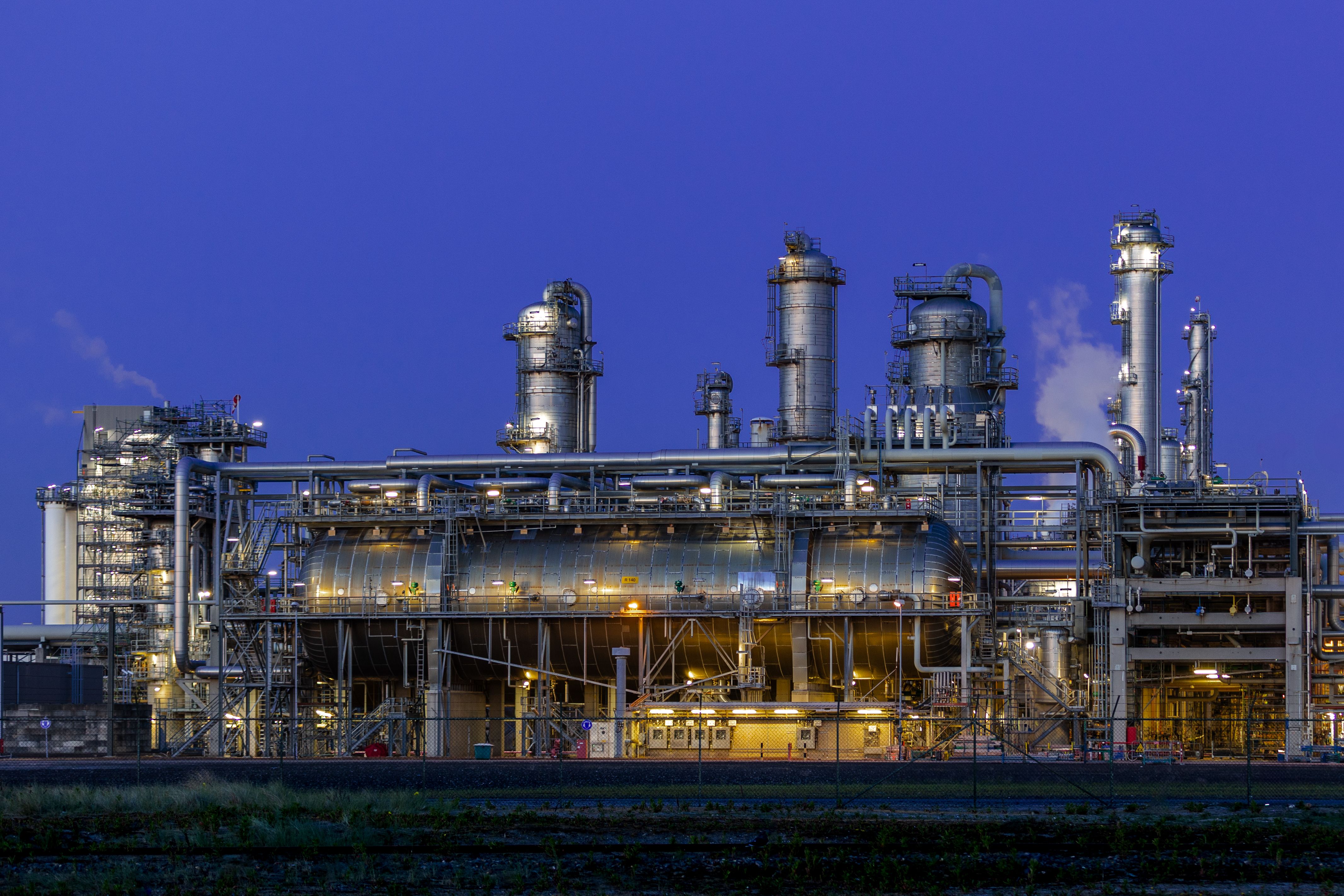
Image Source: Photo by Igor Passchier at Pexels

Chloe Premat is a French graduate student pursuing a Master’s degree in European and Global Studies, specializing in Geopolitical Challenges, at the University of Padua, Italy. Her academic interests focus on international relations, European affairs, strategic autonomy, and emerging geopolitical challenges. At CeSCube, she contributes to research and analytical articles examining contemporary security, political, and technological issues. Through this experience, she aims to strengthen her research and analytical skills while developing a deeper understanding of global strategic dynamics and the challenges shaping Europe’s role in an increasingly interconnected international environment.