Beyond Oil: Saudi Arabia's Civil Nuclear Deal with the United States
The United States-Saudi Arabia civil nuclear agreement marks a significant shift in the geopolitics of energy, technology, and non-proliferation. It examines how the agreement extends beyond civilian nuclear cooperation to encompass strategic influence, energy diversification, and competition with Russia and China. While the deal offers Saudi Arabia an opportunity to reduce its dependence on oil and expand its technological capabilities, questions surrounding uranium enrichment, international safeguards, and the role of the International Atomic Energy Agency remain central to its implications. The article explores whether this partnership can advance energy development without weakening established non-proliferation principles.
One of the strategic geopolitical developments in recent days that made the world turn around was the establishment of a civil nuclear agreement between the United States and Saudi Arabia. This 30-year landmark civil nuclear deal, signed on 22 July 2026, would help this Gulf nation build its nuclear program, with US technologies and expertise facilitating it. The inked deal would also pave the way to reduce Saudi's addiction to oil and broaden its energy base. The central objective of the deal is to assist Riyadh with domestic uranium enrichment on its own soil through the gateway of Washington, with the US aiming to exert its supervision and limit the influence of countries like Russia and China in the Middle East region. The agreement is stated to be worth 10 billion dollars, whose initial discussions were carried out during Joe Biden's tenure, which then sounds like a barter system where there should be reciprocity of geopolitical benefits, thereby Saudi Arabia receiving nuclear technology aid and the US expecting normalization of relations with Israel.
The agreement is officially under section 123 of the U.S. Atomic Energy Act, whereby it requires the congressional assent before implementing it in real time. There are complex areas within the deal that need clarity going forward in the geopolitical arena. The consequences of the deal go beyond the provisions outlined in the framework. When Saudi is granted this level of flexibility, then the other nations too will aspire for similar concessions, considering their national and regional security as a basis. This is also, in a way, widely possible to undermine the real essence of non-proliferation.
From the lens of Washington, civil nuclear exports have been one of the contemporary races amongst the major powers like Russia and China. This deal serves a dual purpose: apart from being viewed as an opportunity to strengthen its domestic industries and create employment opportunities, it is also observed as a medium to reaffirm the nation's presence in the area that is steadily challenged. The agreement also redraws its framework of critical minerals and energy supply chains. The richness of Saudi Arabia's uranium containment would certainly reduce Western dependence on Russia's nuclear fuel and China's broader technologies. Hence, the deal, in simple terms, is not only about nuclear cooperation but also technology transfer, energy chain, and geopolitical influence.
Uncertain Role of International Atomic Energy Agency:
Additional Protocol refers to the added guidelines for strong safeguards. According to the IAEA, it also includes the Additional Protocol for the safe use of nuclear weapons. Regarding the US-Saudi civil nuclear agreement, it does not include the Additional Protocol's provisions in its framework, raising questions about non-proliferation among regional neighbours. This is one of the most important issues that remains unclear and even distinguishes it from the United Arab Emirates’ “gold standard agreement,” under which the UAE has permanently renounced uranium enrichment and reprocessing. It marks a shift in US policy. This also raises questions about the extent to which Saudi Arabia will enrich their uranium containment and the level of usage of American technologies. The deal has narrowed down the involvement of the IAEA on the larger picture, which considered unhealthy by many nations.
Potential Risks and Benefits:
The deal, like every other strategic agreement, has its own merits and demerits in the context of various countries. The crown prince of Saudi Arabia, Mohammad bin Salman, envisioned sweeping away the economic challenges of the nation under his “Vision 2030”. This agreement with the United States will provide a ladder for the nation to develop its nuclear technologies with the assistance of one of the world's largest nations, in turn prompting the country to seek other ways to grow, diversifying beyond its oil resources and expanding the economy. From Israel's perspective, the nation will be happy to have the US in the picture. Rather than opting for public dissent of the agreement, Israel can negotiate with the US administration and suggest stricter supervision. United States' presence in the Gulf region is also considered a positive factor regarding security concerns for the nations in the Middle East. Also, the US will assert its influence and control over Russia and China. On the other side, potential threats also lie underneath. The agreement largely deviates from the principle of nuclear non-proliferation. Many non-proliferation experts and US Congress members say that this diversion weakens American standards. The flexibility provided to Saudi Arabia about its uranium enrichment, even without the Additional Protocol being made compulsory, and the uncertain role of the International Atomic Energy Agency, will bring in a similar idea for other nations to develop nuclear technologies, which, to a large extent, is a threat to the security of the region. Precedent signatories of nuclear agreements with the United States will start questioning the reasons why they have been made to sign with safeguards while Saudi Arabia is given this freedom and might feel it unfair for future nuclear cooperation.
Looking at the pragmatic lens, the operational reality of this deal is in question. Nuclear construction demands high construction costs, strong regulation and supervision, and nearly a decade of operation; in the current scenario of middle east being act as a conflict prone region, these nuclear initiatives would be the target of attack. All these highlighted concerns need to be addressed for this deal to function effectively.
Conclusion:
The US-Saudi civil nuclear agreement is more than just a bilateral engagement for the peaceful development of nuclear technologies and has multi-faceted dimensions attached to it. The inked agreement acts as a cornerstone in the relationship between Washington and Riyadh. Though many parts of the agreement remain uncertain and subject to debate, the real success might lie in how well the economic interests and geopolitical ambitions are balanced in the right way. Nuclear cooperation might act as a weapon of development only if it is accompanied by proper standard measures. As mentioned earlier, the consequences are not merely on the signatories of the agreement; rather it will be on various other geopolitical actors. It could go either way: either as a model for responsible civil nuclear cooperation or as a precursor challenging non-proliferation principle. Therefore, the agreement brings the Middle East to focus and determines the nuclear ambitions of the world.
References:
1.Pekar, Cıgdem. "SAUDI ARABIA'S NUCLEAR ENERGY PROGRAM: CHALLENGES AND CONCERNS IN THE US-SAUDI ARABIA NUCLEAR COOPERATION NEGOTIATIONS." Yönetim Bilimleri Dergisi 21, no. 50 (2023): 1206-1226.
2. Davenport, Kelsey. "US-Saudi Nuclear Deal Said to Loosen Nonproliferation Vows." Arms Control Today 56, no. 2 (2026): 19-20.
3.Council, M. E. P., & Council, M. E. P. (2026, September 4). The future of the US-Saudi Nuclear Pact - Middle East Policy Council. Middle East Policy Council -. https://share.google/cgYW9mfWpJ9EM9CyM
4.The U.S.–Saudi nuclear Agreement: opportunities, risks, and policy recommendations. (2026, July 29). INSS. https://share.google/xc66d4ItgGOTOZSXV
5.Full text, enrichment details emerge on Saudi 123 Agreement. (n.d.). - ANS / Nuclear Newswire. https://share.google/YzuGVJ3awzTU2Jdzx
6.Cook, S. A. (2026, July 23). The U.S.-Saudi nuclear deal set off tremors. Is it still alive? Council on Foreign Relations. https://share.google/C7xRdqoKEbmY7jcry
7.United States and Saudi Arabia reach historic nuclear cooperation agreement. (2026b, July 22). Energy.gov. https://share.google/pUL3xsn8hwUiK95aZ
(The views expressed are those of the author and do not represent views of CESCUBE)
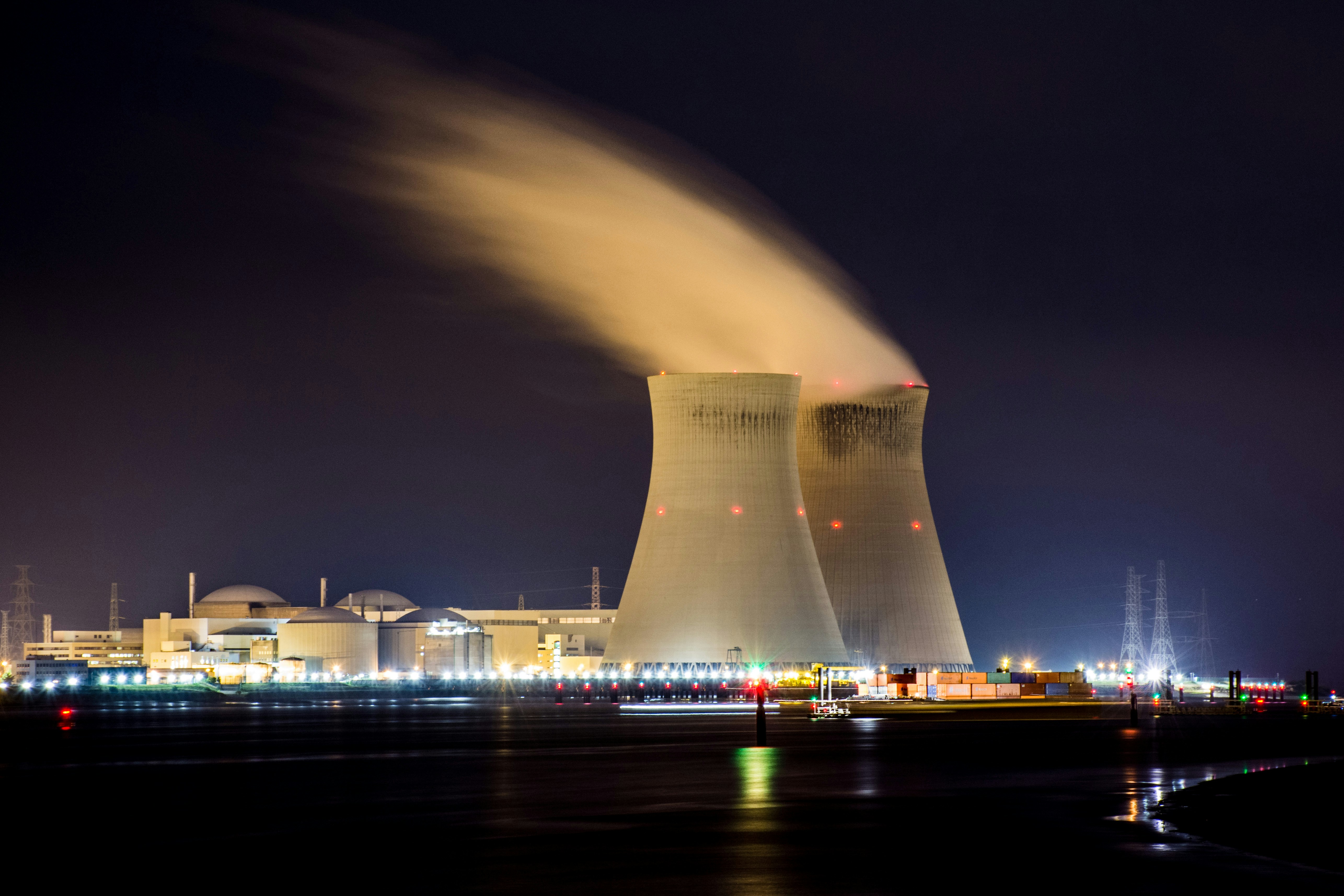
Photo by Nicolas HIPPERT on Unsplash

Sowbarnika Shasikumar is a final-year undergraduate pursuing a Bachelor of Arts in political science, passionate about public policy, governance, and international relations, with research interests. Through academic projects, internships, and leadership roles, she strives to combine analytical thinking with practical experience and aspire to build a career in public service.