Beyond Trade: Japan’s New Quest for Economic Security
Japan has been integrated into the world economy for decades now; industries in the country depend on foreign trade, resource importation, overseas markets and supply chains that span several national boundaries. Such links have enabled the country to develop an industrial economy, but at the same time, left it vulnerable in some areas. The outbreak of the COVID-19 disease has shown some of such vulnerabilities through the shortage and disruptions of supplies within industries across the globe. At the same time, growing tensions between China and the US have added yet another layer of uncertainty, while Japan continues being dependent on other countries for various resources needed by its industries.
From Economic Efficiency to Economic Security
Until quite recently, cost efficiency was one of the key factors taken into account in terms of the choice of suppliers or countries from which companies sourced their materials and components. This made production more efficient and allowed different economies to become closely linked.
Japan has increasingly started to look at these vulnerabilities through the lens of national security. The Economic Security Promotion Act of 2022 was an important step in this direction. It focuses on four areas: stable supplies of critical products, protection of essential infrastructure, support for critical technologies and non-disclosure of certain sensitive patent applications. The Act is important because it brings several economic issues into the national security framework. Manufacturing, infrastructure, research and intellectual property are no longer seen only as economic concerns. Some of them are also considered important for Japan's security.
Japan has also identified several products as critical to its economic security. These include semiconductors, storage batteries, critical minerals, natural gas, permanent magnets, machine tools and industrial robots. The objective is not to produce all of these goods domestically, but to secure stable supplies through a combination of domestic production, diversified supply sources, stockpiling and the development of alternatives.
Securing Critical Supply Chains
Supply chains are therefore at the centre of Japan's economic security policy. Complete self-sufficiency would not be realistic for Japan. Its economy is too closely connected to international markets. The more practical approach is to create alternatives and strengthen the industries that are especially important.
Critical minerals are a good example. They are needed for batteries, electronics and several advanced technologies. However, their production and processing are concentrated in particular countries. Japan has therefore been looking for ways to diversify its sources of supply. Japan’s recent manufacturing policy has also emphasised strengthening domestic manufacturing capabilities and securing the materials needed for critical industries in response to growing geopolitical risks (Ministry of Economy, Trade and Industry, 2026b). Japan's Ministry of Economy, Trade and Industry (METI)
Semiconductors constitute yet another significant sector. Japan already has a competitive advantage in semiconductor materials and equipment sectors. Japan is also seeking to strengthen domestic semiconductor manufacturing while maintaining its strengths in semiconductor materials, equipment and related technologies.
It is not just about manufacturing in individual plants. Japan is also considering the broader manufacturing process, which includes materials, components and logistics. This matters because production can still be disrupted when a single important component or material becomes unavailable, even if the final product can be manufactured domestically (Ministry of Economy, Trade and Industry, 2026b).
Technology as a Security Concern
Economic security also goes beyond physical goods. Advanced technologies can have both civilian and military applications. Their development and transfer can therefore have wider security implications.
The Economic Security Promotion Act includes government support for the development of specified critical technologies. It also allows certain sensitive patent applications to remain undisclosed when their publication could create security concerns.
Japanese companies are also becoming more involved in this process. In 2026, Japan’s Ministry of Economy, Trade and Industry (METI) released its first Economic Security Management Guidelines for companies. The guidelines ask businesses to consider economic-security risks when making long-term decisions, especially when it comes to supply chains and technology (METI, 2026a). Economic Security Management Guidelines (1st Edition) (METI)
This matters because much of the production and technology that Japan depends on is managed by private companies. Decisions about where companies buy materials, invest and set up production can affect the country’s wider economic security. The government can provide policies and support, but businesses also have an important role in deciding how resilient these networks are.
Economic Security in a Competitive East Asia
Japan’s economic-security policy is also closely linked to the wider situation in East Asia. The United States and China remain important economic partners for Japan, even as competition between the two has grown. Japan therefore has to deal with two very different relationships at the same time. The United States is its main security ally, while China remains a major trading partner.
This makes economic security a difficult issue for Japan. Reducing certain risks is important, but completely cutting economic ties is not a realistic option. Instead, Japan has been looking at ways to diversify its sources and build stronger links with other partners.
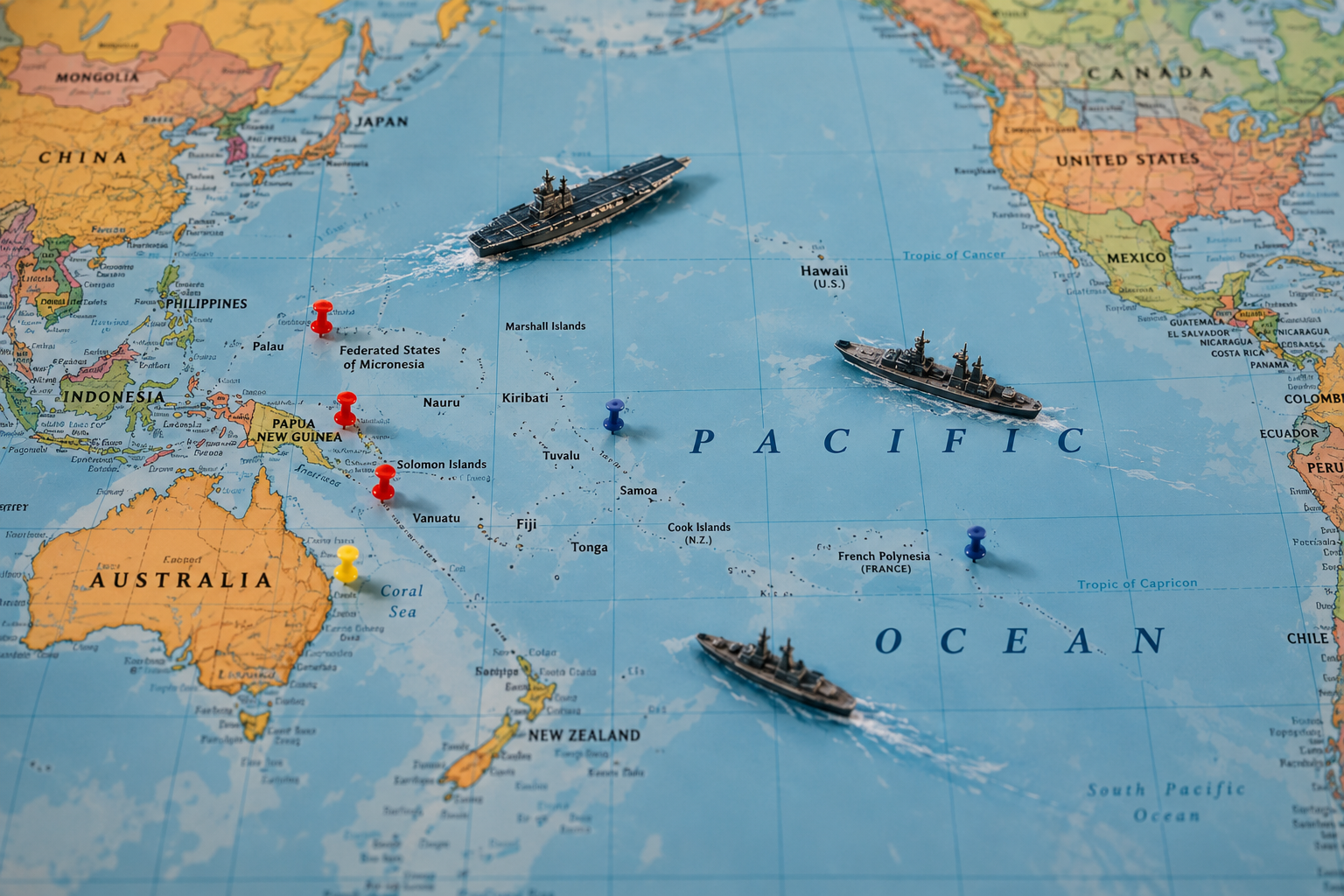
Japan has also expanded economic-security cooperation with partners such as India, Australia and European countries in areas including critical minerals, semiconductors and advanced technologies. Such partnerships give Japan more options while allowing it to remain part of the global economy.
This is also connected to Japan's wider Free and Open Indo-Pacific approach. Japan’s updated FOIP plan in 2026 also placed greater emphasis on resilient economic infrastructure and stable supplies of energy and critical materials as areas for international cooperation (Ministry of Foreign Affairs of Japan, 2026). Ministry of Foreign Affairs of Japan
India as a Partner
India has become an important part of Japan’s wider economic security efforts. The two countries launched the India-Japan Economic Security Dialogue in November 2024. It focuses on issues such as supply-chain resilience, critical infrastructure, strategic trade and technology. Their cooperation also covers semiconductors, critical minerals, pharmaceuticals, clean energy and ICT (Ministry of External Affairs, 2025).
Semiconductors are one area where this cooperation can be seen on the ground. Japanese company Renesas Electronics has partnered with CG Power on a semiconductor assembly and testing facility in Sanand, Gujarat. Tokyo Electron and Tata Electronics have also formed a strategic partnership. These projects bring Japanese technology and experience together with India’s efforts to expand its semiconductor industry (Ministry of External Affairs, 2025). Ministry of External Affairs (MEA) - Fact Sheet : India-Japan Economic Security Cooperation
Critical minerals are another area of interest for both countries. Japan has experience in processing and industrial manufacturing, while India is working to strengthen its mineral sector and develop more downstream manufacturing. Working together can give both sides more options in a sector that is becoming increasingly important for modern industries.
The partnership moved forward again in July 2026, when India and Japan issued a Joint Declaration on Economic Security Cooperation at their summit. They also discussed cooperation in areas such as semiconductors, critical minerals, ICT, clean energy and pharmaceuticals (Ministry of External Affairs, 2026). MEA - India-Japan Joint Declaration on Economic Security Cooperation
Conclusion
Japan’s growing focus on economic security reflects a change in how it looks at its economic relationships. Cost and efficiency still matter, but they are no longer the only things Japan has to consider. The reliability of supply chains has become important as well, particularly in areas such as semiconductors, critical minerals and advanced technologies.
Japan is not moving away from global trade. It is trying to make its economic connections more reliable and less vulnerable to sudden disruptions. In this sense, economic security is less about becoming self-sufficient and more about having enough alternatives when existing supply chains come under pressure.
References
Ministry of Economy, Trade and Industry. (2026a, January 23). Economic security management guidelines (1st edition). https://www.meti.go.jp/english/press/2026/0123_001.html
Ministry of Economy, Trade and Industry. (2026b, April 15). Report on Strengthening the Manufacturing Base by the Study Group on Strengthening Manufacturing Bases in Light of Geopolitical Risks. https://www.meti.go.jp/english/press/2026/0415_001.html
Ministry of External Affairs, Government of India. (2025, August 29). Fact sheet: India-Japan economic security cooperation. https://www.mea.gov.in/bilateral-documents’dtl/40066/Fact_Sheet_IndiaJapan_Economic_Security_Cooperation
Ministry of External Affairs, Government of India. (2026, July 2). India-Japan joint declaration on economic security cooperation.https://www.mea.gov.in/bilateral-documents’dtl/41395/IndiaJapan_Joint_Declaration_on_Economic_Security_Cooperation
Ministry of Foreign Affairs of Japan. (2026). Updated Plan for a “Free and Open Indo-Pacific (FOIP).” https://www.mofa.go.jp/files/101022859.pdf
(The views expressed are those of the author and do not represent views of CESCUBE)
Image Source: AI Generated

Devangi Sandhu is a final-year B.A. (International Relation) (Hons. / Hons. With Research) student at Amity University Uttar Pradesh, Noida with a double major in Defence and Strategic Studies. She has been studying Mandarin for over two years, reflecting her strong interest in East Asian affairs and cross-cultural engagement. Her academic interests include Indo-Pacific geopolitics, maritime security, regional security, and foreign policy. She has contributed to research through internships with policy and international affairs organizations and has authored an opinion piece on Taiwan's international space. Passionate about policy research and global affairs, she is committed to producing evidence-based analysis and contributing to informed discussions on contemporary international issues.