Who Gets to Say “We Are the Ocean”? Hau’ofa, the Blue Pacific, and the politics of representation
Drawing on Epeli Hau’ofa’s Our Sea of Islands, this article examines how the idea of oceanic connectedness has shaped the Blue Pacific framework and its claims of collective regional identity. By placing Hau’ofa’s understanding of the ocean alongside Colin Gray’s geopolitical interpretation of geography, it explores the tensions between connectivity, sovereignty, and political representation. Through the Micronesian states’ threatened withdrawal from the Pacific Islands Forum and the political divisions within Solomon Islands, the article examines how regional unity can coexist with internal hierarchies and marginalisation. It argues that shared oceanic identity does not necessarily translate into equal representation or political authority.
Introduction
Two-thirds through Avatar: The Way of Water, a boat crew corners something enormous in open water. The tulkun is not attacking them or even particularly interested in them. Instead, it seems simply to be moving through an ocean that humans have deemed fit for use. Harpoons cut the air, the animal is killed, and a gland at the base of its skull is cut open for Amrita, a fluid valuable enough to make the hunt worthwhile.
While the violence is the foreground of the scene, what matters just as much is the calculation that precedes it, which views the ocean as somewhere to go and extract from. The scene is designed to make the whole calculation look monstrous but also familiar.1 Long before the film imagined Pandora’s oceans, the Pacific too had been described in remarkably similar terms: a collection of small, isolated islands scattered across an expanse, remote from centres of power and therefore available to be mapped, managed, developed and secured by people elsewhere.
In 1994, the Tongan-Fijian scholar Epeli Hau’ofa objected to this way of seeing the region. In Our Sea of Islands, he turned the conventional map of the Pacific, which viewed the region as small islands separated by enormous distances, into a vast, connected world. Pacific people had crossed those distances for generations, moving for work, maintaining kinship networks, and sending remittances across oceans that colonial administrators and development agencies had treated as barriers. The ocean, in his account, did not isolate Pacific people; instead, it enabled connection.2
Almost thirty years later, that reversal has become a part of institutional language. The Pacific Islands Forum’s 2050 Strategy for the Blue Pacific Continent describes its members not as small individual island states but as eighteen ocean countries and territories brought together as “one Blue Pacific.”3 This shift in vocabulary claims agency; it rejects the scale imposed on the region and instead establishes the ocean as the root of political weight, connection, and agency. Language, thus, travels far beyond the political practices of that time.
The Blue Pacific is visualized as a regional project built around connectedness, collective agency, shared cultural values, and an ocean that unites them all. Yet the question of who gets to speak for that ocean has never been as settled as the phrase suggests. In 2021, Micronesian states came close to leaving the Pacific Islands Forum after a promise of sub-regional rotation and representation was broken. In Solomon Islands, the national government’s decision to switch diplomatic recognition from Taiwan to China in 2019 produced a different but related tension, where a foreign policy decision made at the centre has consequences that are experienced very differently across the provinces.4
Neither episode is adequately explained by treating the Pacific as a backyard for larger powers. Both expose the problem as something that isn’t simply about how outside powers continue to see the Pacific through the language of geography, security and strategic access. It is that the region’s own institutions can reproduce hierarchies over whose geography, interests and voice count.
Within this context, realism becomes a useful lens. Colin Gray’s insistence that geography continues to determine the players, the stakes and the terms of security sits beside Hau’ofa’s insistence that geography does not have a single political meaning.5 One sees the ocean as strategic space. The other views it as a social and political world. The Blue Pacific claims the latter while operating, at times, through institutions still organised around the former.
The question, then, is not whether the Pacific is connected. Hau’ofa answered that decades ago. It is who gets to define what that connectedness means, who gets included within its “we,” and what happens when those claims are made without asking the people they’re meant to represent.
Through his work, Our Sea of Islands, Epeli argued that Pacific islands lived in isolated places, but that isolation became the language through which those places were understood. The contour lines that joined the islands on maps made the distance and the journeys taken out more visible. People left their islands for work, sent remittances, maintained families across borders, and carried obligations that did not end at administrative boundaries. The ocean that appears to separate these communities in fact connects them.
Epeli called this world enlargement. A metaphor that captures how Pacific peoples understood themselves. By pointing to practices that were already taking place and asking what becomes visible when those practices are taken seriously, he was pointing to evidence that the limitations placed upon these peoples were badly described.6
This reversal sits at the heart of the article and stresses time and time again that the sea was not a space between political units but instead part of the social world that the political units belonged to.
The claim, therefore, wasn’t simply that Pacific people felt connected, but an account of how connection is made and then remade through ordinary life. The significance of the ocean here lies in what happens across it and how it brought one place into the social world of another. Connection thus existed before it acquired a political vocabulary.
While this has often become a slogan, he wasn’t just asking the Pacific to imagine itself as larger. He was asking everyone else to notice that Pacific peoples had already been living in a world larger than the one being used to describe them.
To say that only people and money travelled across the ocean is to draw a conclusion without laying out the story. The customs, technologies, beliefs, and ways of understanding where people belonged flowed alongside them. These encounters shaped the Pacific long before anyone tried to describe it. Identity within this scope becomes useful as it treats culture not as something contained within borders but as something produced through movement and contact. The exchanges, while not always equal, brought the Pacific into European culture, alongside the borrowing, adaptation, and mixing that followed.7
This made the Pacific a region where identities and connections could remain distinct while being shaped by the encounters it had; the resulting cultures could carry several inheritances at once. McLaren’s discussion of New Zealand, for instance, locates its identity in its Pacific geography while also tracing the ways Māori history and mythology complicate the country’s inherited European story.8 His larger argument is that cultural identity in the Pacific is difficult to separate from the histories of movement and adaptation that produced it.
However, within this process of cultural exchange lies the truth that adaptation is not the same thing as equality. Referring back to McLaren’s discussion of Australia’s Pacific inheritance, it arrives at the recognition that the culture produced by colonial settlement was shaped by both European and native peoples; often, the cost of that adaptation was borne disproportionately by the latter. The Pacific could therefore be a space of cultural mixing and still mould into a space in which some people possessed considerably more power to decide the terms on which that mixing would take place.
World enlargement does not describe a frictionless Pacific in which movement naturally produces solidarity. It describes a world made larger through contact, and contact can produce exchange as easily as it can produce hierarchy. The ocean connects, but it does not decide the terms of the connection. Those terms are made by people, institutions, and histories that haven’t been distributed evenly.
The significance of Hau’ofa’s argument isn’t in replacing the image of isolated islands with that of a connected ocean. It lies in recognising the plurality that existed within that connection. The Pacific was already a shared world without being a single world, and its cultures had already been changing without becoming synonymous. Any attempt to speak of the region as one therefore inherits both sides of Hau’ofa’s intervention, which writes both the reality of connection and the difficulty of choosing what that connection should mean in the same sentence.
From Oceanic Connectedness to Political Representation: The Blue Pacific
Hau’ofa’s ocean was already connected through the lives being lived across it; the next question is what happens when that connection becomes the basis of a political project. The Pacific Islands Forum’s 2050 Strategy for the Blue Pacific Continent is, in many ways, an institutional answer. Its eighteen countries and territories are presented as “one Blue Pacific”, with the scale of the ocean replacing the smallness traditionally attached to its islands.9 The language is unmistakably Hau’ofian in stating that the region’s strength is located not in the size of its individual states, but in the space and relationships they share.
The Strategy has to translate an ocean of movement and relationships into something states can govern. Its language therefore flows between different understandings of geography. While one sees the ocean as the connective space, the other sees it as something over which borders are drawn, secured, and claimed. Geography thus continues to define the players, terms, and stakes by which territories measure their security; this doubles as a mirror for this understanding. Geography, in Gray’s account, is not simply where political life unfolds but a part of what determines the political possibilities available to states.10 The disagreement, then, is not over whether geography matters, but over what geography does. For Hau’ofa, it can describe relationships, movement and social worlds; for Gray, it structures the strategic possibilities and constraints available to states. The Blue Pacific needs both understandings at once.
The 2050 Strategy lays out its Peace and Security commitments, which include finalising maritime boundaries in response to sea-level rise in order to ensure “legal certainty, sovereignty, and resource protection.” The concern is practical, but the language reveals the shift that takes place when the ocean moves from being a social world to a political theatre. The same water that connects communities also contains resources that have to be protected, boundaries that have to remain legally recognisable, and territory whose ownership has to survive the changing geography of climate change.
This posits that states cannot simply abandon borders because their societies have crossed them. The difficulty arises when the ocean becomes the basis for a regional political identity necessitating connection to be organised. Someone has to decide what counts as a shared interest, whose security is collective, which boundaries matter and, eventually, who gets to speak in the name of the whole.
Here’s where the cultural becomes politically significant. The Pacific was never one because its peoples became culturally identical but because it remained connected while remaining plural, despite unequal histories of contact.11 The Blue Pacific’s “we” therefore carries a problem that the language of regional unity can easily conceal. To speak collectively is not simply to recognise an existing connection. It exercises authority over how that connection is represented. Connection establishes a relationship; representation determines who speaks for that relationship; authority determines whose interpretation of it prevails.
This tension lies between two ways of understanding what geography does, while Hau’ofa positions geography as something used to make the Pacific appear smaller than the world its peoples inhabited. For Gray, geography remains a material condition of political power. The Blue Pacific, in turn, attempts to enlarge the region politically through its oceanic scale while operating through the territorial and strategic geography of sovereign states. Its difficulty, therefore, is not necessarily that it abandons Hau’ofa’s argument, but that translating an oceanic conception of community into institutional politics introduces questions of sovereignty, representation and hierarchy.
It is worth examining what the Blue Pacific is connected by and whether there’s a unanimous “we” which can accommodate the distinct worlds that connection has always contained. The larger the political “we” becomes, the more important the question of who gets to constitute that “we” becomes. The cases that follow operate at different scales, but both ask what happens when a political centre claims to represent a connected whole without fully resolving how authority is distributed within it.
The “doctrine of unity” arrived in writing, just months after it had nearly collapsed. In 2021, the Federated States of Micronesia, Kiribati, the Marshall Islands, Nauru and Palau, and the entirety of the Pacific Islands Forum’s Micronesian membership announced their intention to leave the organisation over a single vote.12 Henry Puna’s appointment as the Secretary-General had passed 9-8, breaking a decades-old “gentleman’s understanding” that the position would rotate among the Forum’s three sub-regions: Melanesia, Polynesia and Micronesia.13 While it’s easy to assume that great-power rivalry fuelled a proxy contest, with Puna backed by one bloc of interests, his rival by another, and Washington and Beijing somewhere offstage adjusting their bets, it’s not a perspective that includes what the Micronesian states themselves were saying. Their grievance wasn’t about who Puna answered to, but about a pattern of being passed over within the very institution that claimed to speak for all of them.14
While negotiation brought the walkout back into the organisation, sixteen months later, in July 2022, the same Forum endorsed its 2050 Strategy for the Blue Pacific Continent,15 the document that gave the region its language of oceanic unity: “one Blue Pacific”, with eighteen countries and territories bound by a shared identity.16
The issue of an asymmetric distribution of say and power is not a novel phenomenon. The civil conflict that engulfed the Solomon Islands from 1998 to 2003, termed simply “the Tension”, has its roots in a history of migration from Malaita into Guadalcanal, disputes over land ownership on Honiara’s expanding urban population, and a pool of unemployed young men that were “traded” between islands to be armed. Guadalcanal’s grievance, in turn, was against a capital that seldom treated its people as full partners in the nation being built around them.17
The Regional Assistance Mission to Solomon Islands arrived in 2003 to restore order, but the underlying imbalance between Malaita and the capital it orbits remained standing once the peacekeepers had left.18 This shows how a later dispute over foreign policy didn’t just emerge but was rooted in much deeper tensions within an otherwise settled relationship between the province and state.
Manasseh Sogavare’s 2019 decision to switch diplomatic recognition from Taiwan to China disturbed this imbalance rather than Beijing alone. The switch was made in Honiara, announced to the country, and landed hardest in the province with the longest memory of decisions made in Honiara on its behalf. Malaita’s then premier, Daniel Suidani, refused to accept Chinese aid administered through the national government and kept his province aligned with Taiwan in open defiance of his capital.19 However, within global media outlets this was widely discussed in the vocabulary of great-power competition.
Scott Morrison, Australia’s prime minister during this period, called the pact a “red line”, while both the US and Australia spent the months that followed treating Solomon Islands’ foreign policy as something that could be corrected. This framing not only operates within the boundaries of the hegemony of power but also obscures the Aimela Rally, which occurred days before Honiara went up in flames in November 2021, at which the province’s resistance was articulated as a province with a long-standing account to settle with its own government, rather than as a space over which larger powers contest.20
The riots that followed targeted government buildings and Chinatown alike, which is a detail that resists a linear narrative. This, read against 1988 and 2022, makes the throughline clearer. The point is not that Malaita and Micronexit represent the same institutional problem. Malaita concerns provincial authority within a sovereign state, while Micronexit concerns sub-regional representation within a regional organisation. At different scales, however, both raise the question of what happens when a political centre claims to represent a connected whole without fully resolving how authority is distributed within it.21
Who gets to say “we are the ocean”?
If Gray’s claim that geography is fixed and power belongs to whoever reads its terms correctly is mixed with Hau’ofa’s claim that the ocean’s meaning is transient, and for much of the twentieth century its standing had been denied to the very people living on it, the disagreement is not simply between geography and connectivity. It is between different political meanings assigned to geography.
We can see the Blue Pacific was supposed to resolve the difference by giving Pacific islanders a platform where the region’s capitals can collectively decide what the ocean would mean through Hau’ofa’s vocabulary of connection and development. Yet turning that vocabulary into an institutional project also changes the question. Connection does not by itself determine representation, and representation does not by itself settle authority.
However, that doctrine has claimed authority without extending it horizontally across regions, as the last two sections have posited. The Blue Pacific speaks for the region to specific countries in the language of a single connected ocean, and yet within that ocean, the Forum falters in its inability to retain its own Micronesian members. Rejecting an external geography of isolation does not automatically eliminate internal geographies of political marginalisation.
These two breaks, though not identical, reveal the same representational problem at a different scale, where a centre that claims the right to speak for a whole seems to not consult it. The sea of islands is spoken for by its capitals and forums claiming a connectedness that does not necessarily equalise the people within it. Connectivity creates the possibility of political community, but it does not determine whether that community will be equal.
Hau’ofa, through his seminal work, gave the region a language to challenge the map imposed upon it. Thirty years later, what remains is the question of who gets to exercise the authority that his language made possible.
Avatar’s tulkun at the beginning of this article moves through an ocean already claimed by others as a resource.22 The Pacific presents the problem of an ocean being reclaimed as a space of connection without becoming a space of equal representation. Micronexit and Malaita show how that tension appears at different scales, as regional and national centres attempt to speak for worlds whose connections do not erase their internal differences.
The argument is necessarily limited by the comparison it makes. Their selection foregrounds disputes over representation and may therefore overstate how consistently the Blue Pacific produces these tensions. The political settings also mean that some of their context cannot be carried from one case to the other. What they do show, however, is that the question is no longer simply whether the Pacific is connected, but whether the institutions speaking in its name can make that connection representative. The scene from Avatar therefore returns with a different meaning: the problem is not only who claims the ocean, but who gets to decide what the ocean is for.
Notes:
1.Joni Adamson, “Indigenous Literatures, Multinaturalism, and Avatar: The Emergence of Indigenous Cosmopolitics,” American Literary History, Vol. 24, No. 1 (2012), https://www.jstor.org/stable/41329631.
2.Epeli Hau’Ofa, “Our Sea of Islands,” The Contemporary Pacific, Volume 6, Number 1 (1993), https://scholarspace.manoa.hawaii.edu/server/api/core/bitstreams/77265cd6-ddfd-469d-a96b-04ace31ea67c/content.
3.“2050 Strategy for the Blue Pacific Continent,” https://forumsec.org/2050
4.Kerryn Baker, “History repeats itself in 2021 for the Pacific Islands,” East Asia Forum (2022), https://eastasiaforum.org/2022/01/15/history-repeats-itself-in-2021-for-the-pacific-islands/
5.Colin S. Gray, “A Debate on Geopolitics: The Continued Primacy of Geography,” Orbis (1996), https://www.sciencedirect.com/science/article/pii/S0030438796900630.
6.Epeli Hau’Ofa, “Our Sea of Islands,” The Contemporary Pacific, Volume 6, Number 1 (1993), https://scholarspace.manoa.hawaii.edu/server/api/core/bitstreams/77265cd6-ddfd-469d-a96b-04ace31ea67c/content.
7.John McLaren, “Australians’ Pacific Identity,” Antipodes, Vol. 7, No. 1 (June 1993), https://www.jstor.org/stable/41956424.
8.John McLaren, “Australians’ Pacific Identity,” Antipodes, Vol. 7, No. 1 (June 1993), https://www.jstor.org/stable/41956424.
9.“2050 Strategy for the Blue Pacific Continent,” https://forumsec.org/2050
10.Colin S. Gray, “A Debate on Geopolitics: The Continued Primacy of Geography,” Orbis (1996), https://www.sciencedirect.com/science/article/pii/S0030438796900630.
11.Sharryn Kasmir and Lesley Gill, “No Smooth Surfaces: The Anthropology of Unevenness and Combination,” Current Anthropology, Volume 59, Number 4, https://doi.org/10.1086/698927.
12.Bernadette Carreon and Ben Doherty, “Pacific Islands Forum in Crisis as One-Third of Member Nations Quit,” The Guardian (February 8, 2021), https://www.theguardian.com/world/2021/feb/09/pacific-islands-forum-in-crisis-as-one-third-of-member-nations-quit.
13.Richard Herr, “Micronesia's Exit from the Pacific Islands Forum,” ASPI Strategist, Australian Strategic Policy Institute (February 8, 2021), https://www.aspistrategist.org.au/micronesias-exit-from-the-pacific-islands-forum/.
14.Joshua McDonald, “Rift Among Pacific Islands Deals Blow to Regional Unity, Stokes Fears China Will Benefit,” South China Morning Post (February 9, 2021), https://www.scmp.com/week-asia/politics/article/3121067/rift-among-pacific-islands-deals-blow-regional-unity-stokes.
15.Pacific Islands Forum Secretariat, 2050 Strategy for the Blue Pacific Continent (Suva: Pacific Islands Forum Secretariat, July 2022); cited in Genevieve Donnellon-May, “Reimagining Peace-Making in the Pacific,” Raisina Files 2025, Observer Research Foundation, April 2, 2025.
16.Pacific Islands Forum Secretariat, 2050 Strategy for the Blue Pacific Continent, 3–5.
17.Ben Hall, “The Rise of the Anglican Orthodox Church in Solomon Islands.” Deakin University, https://scispace.com/pdf/the-rise-of-the-anglican-orthodox-church-in-solomon-islands-2smcz94niu.pdf.
18.Dominique Frase, “ASPI Note: Understanding the Protests in the Solomon Islands” (December 10th, 2021), https://asiasociety.org/policy-institute/aspi-note-understanding-protests-solomon-islands.
19.Edward Cavanough, “When China came calling: inside the Solomon Islands switch” (December 7th, 2019), https://www.theguardian.com/world/2019/dec/08/when-china-came-calling-inside-the-solomon-islands-switch.
20.Pacific Islands Forum Secretariat, 2050 Strategy for the Blue Pacific Continent (Suva: Pacific Islands Forum Secretariat, July 2022); cited in Genevieve Donnellon-May, “Reimagining Peace-Making in the Pacific,” Raisina Files 2025, Observer Research Foundation, April 2, 2025.
21.Pacific Islands Forum Secretariat, 2050 Strategy for the Blue Pacific Continent (Suva: Pacific Islands Forum Secretariat, July 2022); cited in Genevieve Donnellon-May, “Reimagining Peace-Making in the Pacific,” Raisina Files 2025, Observer Research Foundation, April 2, 2025.
22.Joni Adamson, “Indigenous Literatures, Multinaturalism, and Avatar: The Emergence of Indigenous Cosmopolitics,” American Literary History, Vol. 24, No. 1, https://www.jstor.org/stable/41329631.
(The views expressed are those of the author and do not represent views of CESCUBE)
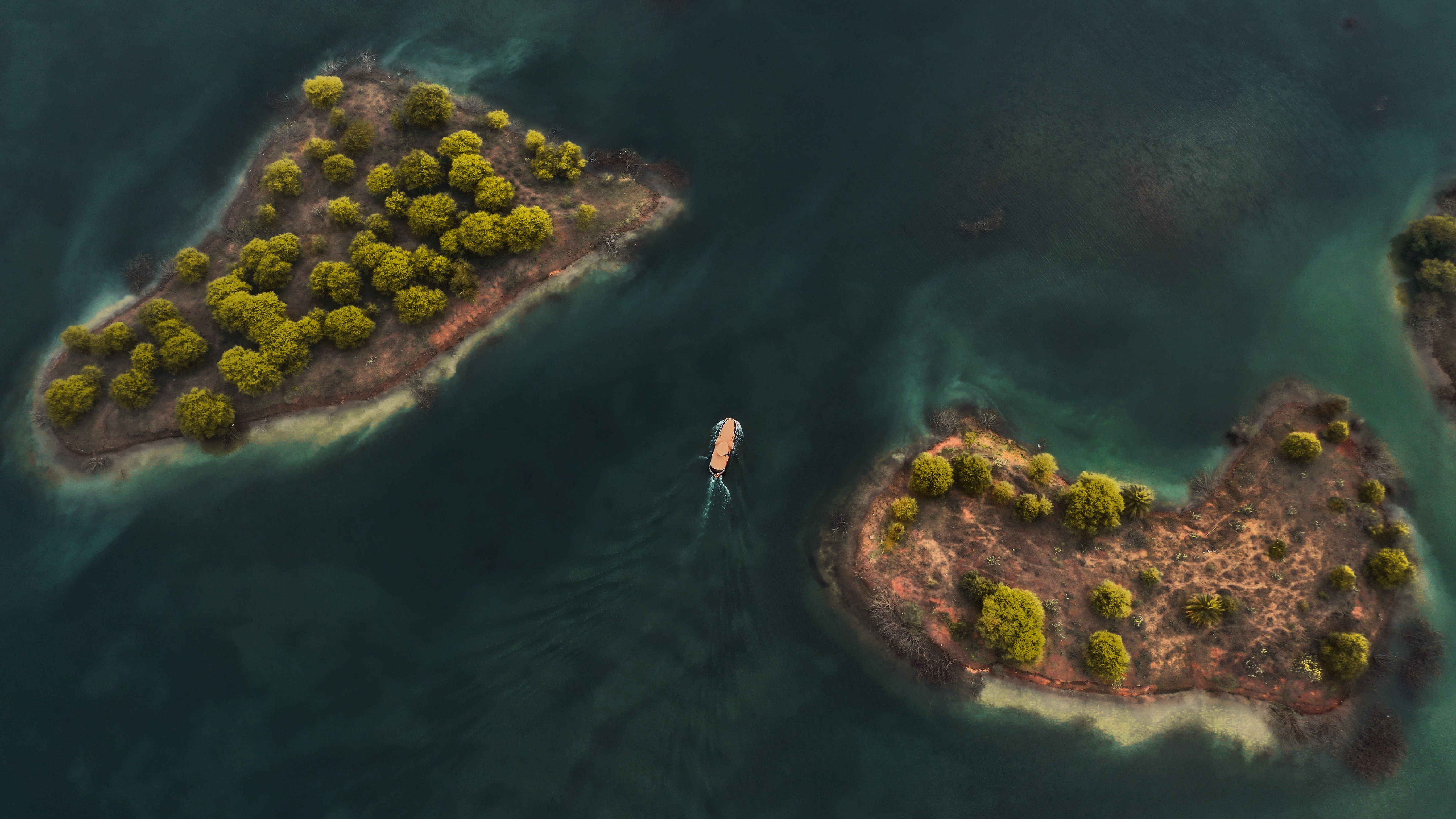
Image Source: Photo by Sanat Anghan on Pexels

Moumita Arun is a sophomore at Symbiosis School for Liberal Arts, currently double majoring in International Relations and Economics. She situates her research interests at the intersection of these two fields, specifically in terms of cultural studies, gender, and security. She has hands-on experience in research and community engagement, contributing articles to campus publications, moderating international panels, and working on service-learning projects focused on education, gender equity, and access.