Regulation as Power? The EU, US and China in the Geopolitics of Artificial Intelligence
Artificial intelligence is emerging as a defining arena of geopolitical competition, shaped by technological capabilities, regulatory influence, and competing national priorities. This article examines how the United States, China, and the European Union pursue distinct pathways to AI power. While Washington draws strength from its innovation ecosystem and China combines technological development with state coordination, the EU seeks global influence through regulatory reach and market power. Analysing the opportunities and limitations of the EU AI Act, the article argues that regulation alone cannot overcome technological dependence. Europe's strategic challenge is to transform regulatory influence into lasting geopolitical leverage by strengthening its own technological capabilities.
Artificial intelligence is rapidly becoming a source of economic, technological and geopolitical power. The ability to develop and deploy advanced AI increasingly depends on access to computing infrastructure, investment, research and technological ecosystems, concentrating influence among a relatively small number of actors. In 2025, industry produced more than 90 percent of notable AI models, while the United States attracted $285.9 billion in private AI investment, more than 23 times the $12.4 billion invested in China.i At the same time, the technological gap between the two leading AI powers has narrowed considerably, with US and Chinese models repeatedly competing for the lead on major benchmarks.ii
This concentration of technological capabilities contrasts with the position of the European Union. While Europe remains comparatively less prominent in frontier AI development, it has sought to exercise influence through a different instrument: regulation. The Artificial Intelligence Act, adopted in 2024, established the world's first comprehensive legal framework for artificial intelligence based on a risk-based approach.iii Its provisions have been introduced progressively, with the AI Act becoming broadly applicable from 2 August 2026, while certain obligations entered into force earlier and some high-risk provisions will apply later.iv
The emerging global landscape therefore reflects three different approaches to AI power. The United States derives much of its AI influence from a powerful private-sector and investment ecosystem; China combines technological development with stronger state coordination; and the European Union has sought to convert its regulatory and market power into international influence. This raises a central geopolitical question: to what extent can the EU's regulatory power compensate for its technological gap with the United States and China?
This article argues that regulation can provide the EU with significant geopolitical influence by shaping markets, corporate behaviour and international standards. However, it cannot substitute for technological capabilities. European regulatory power can therefore compensate for part of the EU's technological disadvantage at the level of geopolitical influence, but not at the level of technological sovereignty. Its greatest strategic value lies in becoming a multiplier of technological power, rather than an alternative to it.
Understanding the Different Sources of AI Power
The geopolitical competition over artificial intelligence is not organised around a single model of technological development. The United States, China and the European Union have developed different sources of influence, reflecting broader differences in their economic structures and relationships between markets and the state.
The United States: Technological and Corporate Power
The United States' position in AI rests above all on the strength of its private-sector ecosystem. Companies such as OpenAI, Google, Microsoft, Anthropic, Meta and Amazon are at the forefront of frontier AI development, while Nvidia occupies a critical position in the hardware infrastructure required to train and operate advanced models. In 2025, US private AI investment reached $285.9 billion, compared with $12.4 billion in China. US-based institutions also produced 59 notable AI models, compared with 35 in China. The infrastructure supporting this ecosystem is similarly concentrated: the United States hosts 5,427 AI-related data centres, more than ten times the number in any other country.v
The US government is not absent from this ecosystem. Federal policy increasingly treats AI as a strategic technology linked to economic competitiveness and national security. However, the current American approach places considerable emphasis on maintaining technological leadership through private-sector innovation, investment and a comparatively less restrictive federal regulatory environment.vi American AI power therefore derives primarily from the ability of companies, researchers and investors to develop and commercialise technology at scale.
This creates a fundamental contrast with the EU. Where Europe seeks influence by shaping the rules governing AI, the United States possesses influence because it hosts many of the actors building it.
China: State-Coordinated Technological Power
China represents a different model, although the distinction between the Chinese and American systems should not be overstated. Chinese technology companies such as Baidu, Alibaba, Tencent and Huawei play major roles in AI development, but they operate within a state that has explicitly identified AI as a strategic national priority.
China's 2017 New Generation Artificial Intelligence Development Plan called for the country to seize the strategic opportunity presented by AI, strengthen its technological capabilities and become a world leader in science and technology. More recently, China's 2025 “AI Plus” policy has sought to integrate AI across science, industry, consumption, public services and governance while strengthening computing power, data, models and talent.vii
The result is therefore not a purely state-driven model, but a system in which private firms remain essential while technological development is more deliberately coordinated with national industrial objectives. China has also built substantial research capabilities. In 2025, it led the world in AI publication volume, citations and patent grants, even as the United States retained an advantage in notable model development and higher-impact patents.viii China's growing capabilities demonstrate an important point for the European debate: regulatory influence is only one possible route to geopolitical power.
The European Union: Regulatory and Market Power
The European Union has comparatively less influence over frontier AI development, but it possesses a different strategic resource: its internal market and regulatory capacity. Regulation is therefore the EU's distinctive source of geopolitical influence, even though it is increasingly being combined with policies designed to strengthen European technological capabilities.
The AI Act embodies this approach through a risk-based framework that distinguishes prohibited practices, high-risk systems and transparency obligations, imposing stronger requirements according to the potential risks associated with different applicationsix. Its significance is not simply that the EU has created rules for its own market. The Act also creates obligations for certain actors outside Europe, giving the Union regulatory reach beyond its territorial borders.x
This reflects what political scientist Anu Bradford has described as the “Brussels Effect”: the ability of the EU to influence global markets because multinational companies may extend European standards beyond the Union rather than maintain entirely separate systems for different markets.xi In AI, this creates a potential source of geopolitical influence that does not depend on Europe producing the world's most advanced models. The EU's distinctive resources are therefore not technological dominance, but regulatory reach.
From Regulatory Reach to Geopolitical Power
If technological power derives from the capacity to develop and control advanced technologies, regulatory power operates differently. It derives from the ability to shape the conditions under which technologies are developed, deployed and accessed. For the European Union, this influence rests on three interconnected mechanisms: market power, standard-setting and the ability to shape corporate behaviour.
Market Power as Regulatory Leverage
The first source of influence is the size and attractiveness of the European market. The AI Act applies not only to providers established within the EU, but also to certain providers and deployers located in third countries, including where AI systems or general-purpose AI models are placed on the Union market or where the output of an AI system is used in the Union.xii
This gives the EU regulatory reach beyond its territorial borders. For multinational companies, maintaining separate technical and compliance systems for different jurisdictions can create additional costs. Where the European market is sufficiently important, it may therefore be more efficient for firms to apply European requirements more broadly than is strictly necessary for legal compliance. The EU can consequently transform access to its market into regulatory leverage.
This is the potential foundation of the Brussels Effect in the AI sector: the EU does not need to control technology directly if it can influence the conditions under which technology reaches one of the world's largest markets. Regulatory influence, however, is not automatic. Its strength depends on the importance of the European market, the cost of adapting products and the extent to which firms can maintain separate regulatory approaches elsewhere.
Standards as a Source of International Influence
The second mechanism is the ability to influence the standards by which AI is understood and governed internationally. The AI Act embeds requirements concerning safety, transparency, accountability and fundamental rights in the European market. Through technical standards and codes of practice, these requirements can also become practical benchmarks for companies operating internationally.
The EU's General-Purpose AI Code of Practice illustrates this broader influence. Its development involved nearly 1,000 stakeholders from industry, academia, civil society and other groups, demonstrating that European regulation can also become a forum in which international expectations about responsible AI are negotiated.xiii
Standards can therefore extend regulatory influence beyond formal legal jurisdiction. If companies, governments and international organisations begin to treat European requirements as reference points, European regulatory power can shape technological development even when EU law does not formally apply.
Regulation and Corporate Behaviour
Finally, regulation can influence the behaviour of companies that the EU does not own or directly control. The implementation of the AI Act provides an emerging example. Anthropic has announced that future Claude models will incorporate machine-readable text watermarking and that the measure will initially be applied globally rather than only to European users, explicitly linking its introduction to compliance with the EU AI Act.xiv
The significance of this example lies less in individual technology than in the mechanism it illustrates. Brussels does not need to control Anthropic to influence its product design. If a company considers it economically or operationally preferable to apply a European requirement globally, European regulation can produce effects far beyond the territory in which it is legally enforced. This is the distinctive characteristic of EU regulatory power: Europe can influence the conditions under which technological power is exercised even when it does not possess that technological power itself.
The Limits of Regulatory Power:
The EU's regulatory strategy can generate significant international influence, but its geopolitical value has a fundamental limit: regulation can shape technological activity, but it cannot by itself create technological capacity.
Regulation Cannot Substitute for Technological Capacity
A regulation does not manufacture GPUs, build data centres, train frontier models or create researchers and venture capital. The scale of investment required to remain at the frontier illustrates the challenge. In 2025, private AI investment in the United States reached $285.9 billion, while investment in generative AI alone exceeded the combined investment of China and Europe by a wide margin.xv
Infrastructure reinforces this imbalance. The United States possesses an extensive ecosystem of technology companies, cloud providers, semiconductor firms and data centres supporting frontier AI development. Europe, by comparison, remains dependent on external providers for important parts of the AI value chain, particularly in areas such as advanced computing and foundational AI infrastructure.xvi
This creates a fundamental distinction between regulatory sovereignty and technological sovereignty. A state may be able to determine how AI systems can legally be used without possessing the capacity to develop the systems themselves.
The geopolitical consequence is significant. European institutions may determine the conditions under which AI systems are deployed while relying on foreign companies for the underlying models, cloud infrastructure and computing hardware. Regulation can therefore increase European influence over AI governance without necessarily giving Europe control over the technological foundations of AI.
The distinction can be expressed simply: the power to regulate a technology is not the same as the power to produce it.
Can Regulation Become a Constraint?
There is also a more contested concern: regulation may impose costs on European companies themselves. Compliance can require investment in documentation, risk assessment, testing and monitoring. These costs may be proportionally more difficult for smaller European developers to absorb than for large technology companies with substantial legal, technical and financial resources.
Implementation has also revealed practical difficulties. In an AI Pact survey of 44 organisations, 75 percent of respondents reported ambiguity or insufficient guidance, while 52.5 percent reported delays in standardisation. These findings suggest that uncertainty over regulatory requirements and technical standards can complicate implementation, although the small and self-selected sample does not support generalising the results to European businesses.xvii
This does not demonstrate that the AI Act is harming European competitiveness. Common rules can also reduce regulatory fragmentation, create greater predictability and facilitate access to a single European market. The strategic question is therefore one of balance. If compliance costs become disproportionately burdensome for European firms while those firms remain dependent on foreign models, computing and infrastructure, regulation could reinforce rather than reduce existing technological asymmetries.
The central limitation is therefore not that regulation is ineffective. It is that regulatory power and technological sovereignty are different forms of power. The EU can exercise considerable influence without controlling the technologies themselves, but that influence remains structurally constrained if critical technological capabilities lie elsewhere.
Regulation as a Multiplier of Technological Power
The preceding analysis suggests that the choice between regulatory power and technological power is misleading. For the European Union, the more consequential question is how the two can reinforce one another. Regulation can give Europe influence over technologies developed elsewhere, but technological capacity determines how much leverage that regulation can ultimately provide. Meaningful geopolitical power therefore requires regulation and technological capability to operate as complements rather than substitutes.
The EU increasingly recognises this distinction. Its AI strategy has expanded beyond regulating AI towards building the infrastructure required to develop and deploy it. The AI Continent Action Plan combines regulation with investment in computing infrastructure, data, talent and AI adoption, including AI Factories and plans for large-scale AI Gigafactories.xviii
This marks an important evolution in the European model. The old caricature of “Europe regulates while America innovates” is becoming increasingly incomplete. The emerging strategy is closer to “Europe regulates while attempting to build the capacity to innovate.” Recent developments illustrate this shift. On 31 August 2026, the EuroHPC Joint Undertaking signed a €387.8 million procurement contract for LUMI-AI, a new AI-optimised supercomputer in Finland designed to support large-scale AI workflows and provide computing resources to European researchers, start-ups and SMEs. The system is expected to become available to users in 2027.xix
The development of AI Gigafactories represents an even broader attempt to address Europe's computing deficit. In July 2026, the Commission launched a call to establish up to seven AI Gigafactories across Europe, supported by up to €10 billion in EU and national funding and expected to unlock at least €20 billion in private investment.xx Rather than merely regulating foreign AI systems, the EU is seeking to create the infrastructure necessary for European actors to train and develop increasingly advanced models themselves. This does not mean that Europe has closed its technological gap. Building computing infrastructure takes time, and infrastructure alone does not guarantee competitive companies, frontier models or a self-sufficient semiconductor ecosystem. Nevertheless, these policies reveal a significant change in the European approach.
Regulation can create leverage; technological capacity can turn that leverage into power. If Europe succeeds in combining its regulatory influence with stronger domestic capabilities, its regulatory reach could become considerably more consequential. European companies would be better positioned to benefit from the standards established by the EU, while foreign companies would continue to face incentives to comply with European rules because of the importance of the European market. In this sense, technological development does not make regulation less important. It makes regulation more powerful.
The Extent and Limits of Regulatory Compensation
To what extent, then, can the European Union's regulatory power compensate for its technological gap with the United States and China?
Only partially. The extent of this compensation depends on what is meant by ‘compensate’: regulation can partially offset Europe's technological weakness in terms of geopolitical influence, but not in terms of technological sovereignty.
The EU has demonstrated that regulation can constitute a genuine source of geopolitical influence. Through the size of its internal market, the standards embedded in its legislation and its ability to influence corporate behaviour, Europe can shape how AI is developed and deployed beyond its borders. The AI Act therefore gives Europe a form of international power that does not depend entirely on technological leadership. Yet this influence has clear structural limits. Rules cannot substitute for frontier AI models, computing infrastructure, semiconductor capabilities, investment, research or a competitive industrial ecosystem. As long as European actors remain dependent on technologies and infrastructure developed primarily outside the Union, regulatory sovereignty cannot amount to full technological sovereignty.
The comparison with the United States and China highlights the distinction. American influence is grounded largely in technological and corporate leadership. Chinese influence combines technological development with significant state coordination. Europe's distinctive strength lies instead in its ability to shape the regulatory environment in which these technologies operate. The most effective European strategy is therefore not to choose between regulation and technological development, but to combine them. Regulatory power should not be understood as an alternative to technological power, but as a multiplier of it.
Europe does not need to become identical to the United States or China to possess geopolitical influence in AI. But it does need enough technological capacity to ensure that the rules it sets are backed by capabilities it can rely upon. The ultimate measure of European AI power will therefore not be whether Europe regulates more effectively than the United States or China. It will be whether the power to set the rules can be combined with the capacity to build the technology.
Conclusion
The EU's regulatory power has become a genuine source of geopolitical influence in artificial intelligence, but it cannot compensate fully for Europe's technological gap. Regulation allows Europe to shape markets, establish standards and influence corporate behaviour beyond its borders. Yet it cannot replace the computing infrastructure, investment, research, semiconductors and companies required to build and control advanced AI.
The strategic challenge is therefore to combine regulatory reach with technological capacity. European regulation can create leverage, but stronger domestic capabilities can make that leverage more consequential. Regulation can compensate for part of Europe's technological weakness. It cannot substitute for technological power. Its greatest geopolitical value lies in becoming a multiplier of that power.
References:
i Stanford Institute for Human-Centered Artificial Intelligence, The 2026 AI Index Report (Stanford University, 2026), “Economy” and “Research and Development.” https://hai.stanford.edu/ai-index/2026-ai-index-report
ii Stanford Institute for Human-Centered Artificial Intelligence, The 2026 AI Index Report, “Research and Development” and “Technical Performance.” Research and Development Technical Performance
iii European Parliament and Council of the European Union, “Regulation (EU) 2024/1689 of the European Parliament and of the Council of 13 June 2024 Laying Down Harmonized Rules on Artificial Intelligence (Artificial Intelligence Act),” Official Journal of the European Union, 2024. Regulation (EU) 2024/1689 — EUR-Lex
iv European Commission, “AI Act,” Shaping Europe's Digital Future, updated 2026; European Parliament and Council of the European Union, Regulation (EU) 2024/1689, Article 113. European Commission — AI Act Regulation (EU) 2024/1689 — Article 113
v Stanford Institute for Human-Centered Artificial Intelligence, The 2026 AI Index Report, “Economy,” “Research and Development,” and relevant data-centre/infrastructure data. 2026 AI Index Report — Economy 2026 AI Index Report — Research and Development
vi The White House, “Executive Order 14409—Promoting Advanced Artificial Intelligence Innovation and Security,” June 2, 2026. Executive Order 14409 — The White House
vii State Council of the People's Republic of China, “New Generation Artificial Intelligence Development Plan,” July 8, 2017; National Development and Reform Commission of the People's Republic of China, “Interpretation of the Opinions on Deeply Implementing the ‘Artificial Intelligence Plus’ Action,” August 26, 2025. New Generation Artificial Intelligence Development Plan — English translation
viii Stanford Institute for Human-Centered Artificial Intelligence, The 2026 AI Index Report, “Research and Development” and “Technical Performance.” Research and Development Technical Performance
ix European Parliament and Council of the European Union, Regulation (EU) 2024/1689, 2024. Regulation (EU) 2024/1689 — EUR-Lex
x European Parliament and Council of the European Union, Regulation (EU) 2024/1689, Article 2. Regulation (EU) 2024/1689 — EUR-Lex
xi Anu Bradford, The Brussels Effect: How the European Union Rules the World (Oxford: Oxford University Press, 2020). The Brussels Effect — Oxford University Press
xii European Parliament and Council of the European Union, Regulation (EU) 2024/1689, Article 2. Regulation (EU) 2024/1689 — EUR-Lex
xiii European Commission, “Drawing-up a General-Purpose AI Code of Practice,” Shaping Europe's Digital Future, updated June 25, 2026. European Commission — General-Purpose AI Code of Practice
xiv Anthropic, “How Claude's Text Watermark Works,” August 14, 2026. Anthropic — How Claude's Text Watermark Works
xv Stanford Institute for Human-Centered Artificial Intelligence, The 2026 AI Index Report, “Economy.” 2026 AI Index Report — Economy
xvi Mario Draghi, The Future of European Competitiveness: In-depth analysis and recommendations, European Commission, September 2024, Part B, Section 1, Chapter 3, “Computing and AI.” The Future of European Competitiveness — Part B, Section 1, Chapter 3
xvii European Commission, Commission Staff Working Document SWD(2025) 836 final, November 19, 2025, 71, “AI Pact signatories’ survey.” SWD(2025) 836 final — European Commission
xviii European Commission, “The AI Continent Action Plan,” Shaping Europe's Digital Future, updated June 30, 2026; European Commission, “AI Factories,” updated August 12, 2026. AI Continent Action Plan AI Factories
xix European High Performance Computing Joint Undertaking (EuroHPC JU), “EuroHPC JU Signs Contract to Deploy the LUMI-AI Supercomputer,” August 31, 2026. EuroHPC JU — LUMI-AI Supercomputer
xx European Commission, “EU Launches AI Gigafactories Call to Boost Europe's Computing Capacity and Unlock More Than €30 Billion in Investment,” July 30, 2026. European Commission — AI Gigafactories Call
(The views expressed are those of the author and do not represent views of CESCUBE)
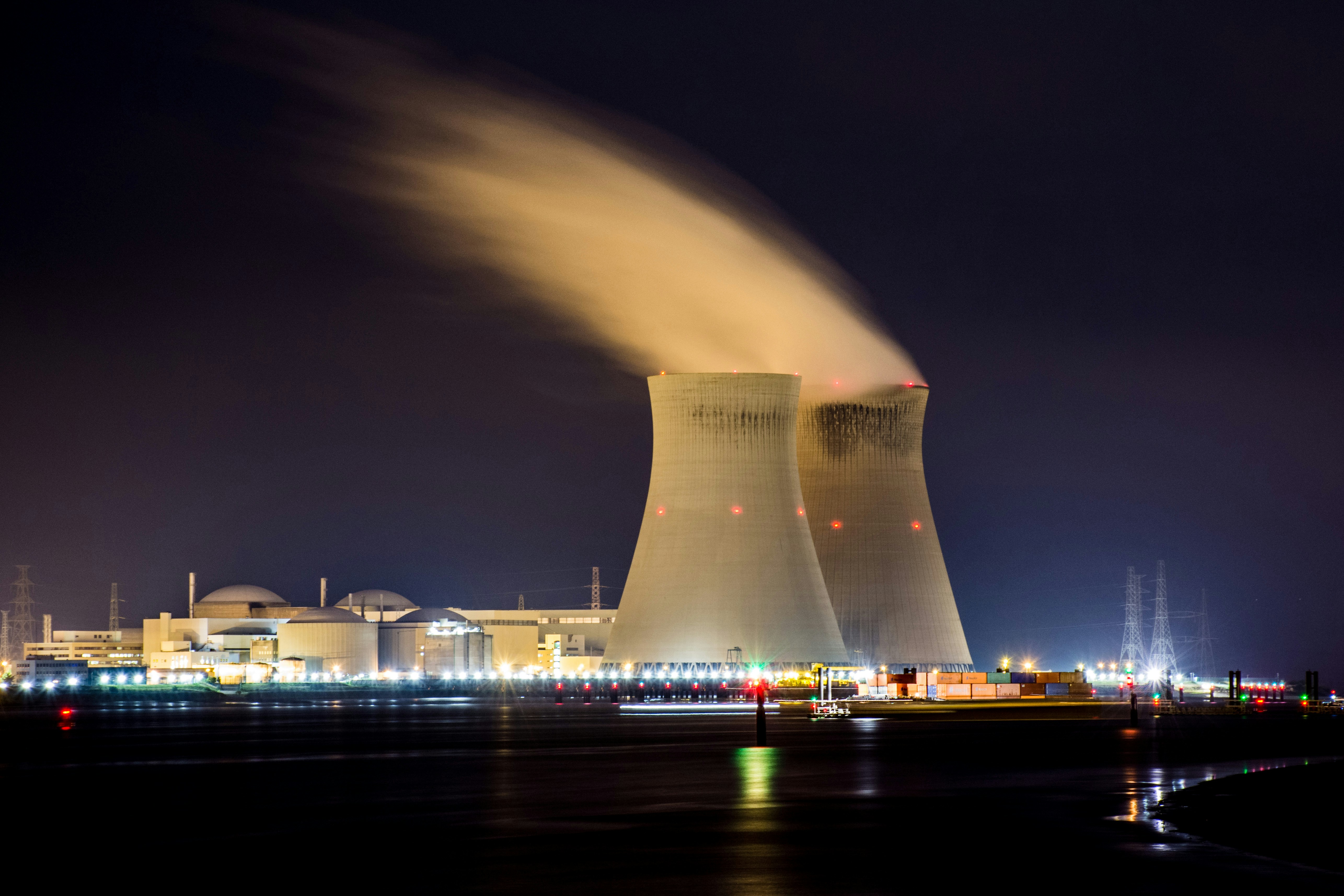
Image Source: Photo by Immo Wegmann on Unsplash

Chloe Premat is a French graduate student pursuing a Master’s degree in European and Global Studies, specializing in Geopolitical Challenges, at the University of Padua, Italy. Her academic interests focus on international relations, European affairs, strategic autonomy, and emerging geopolitical challenges. At CeSCube, she contributes to research and analytical articles examining contemporary security, political, and technological issues. Through this experience, she aims to strengthen her research and analytical skills while developing a deeper understanding of global strategic dynamics and the challenges shaping Europe’s role in an increasingly interconnected international environment.