The New Defence Architecture: Deconstructing the India-Belgium Geostrategic Win
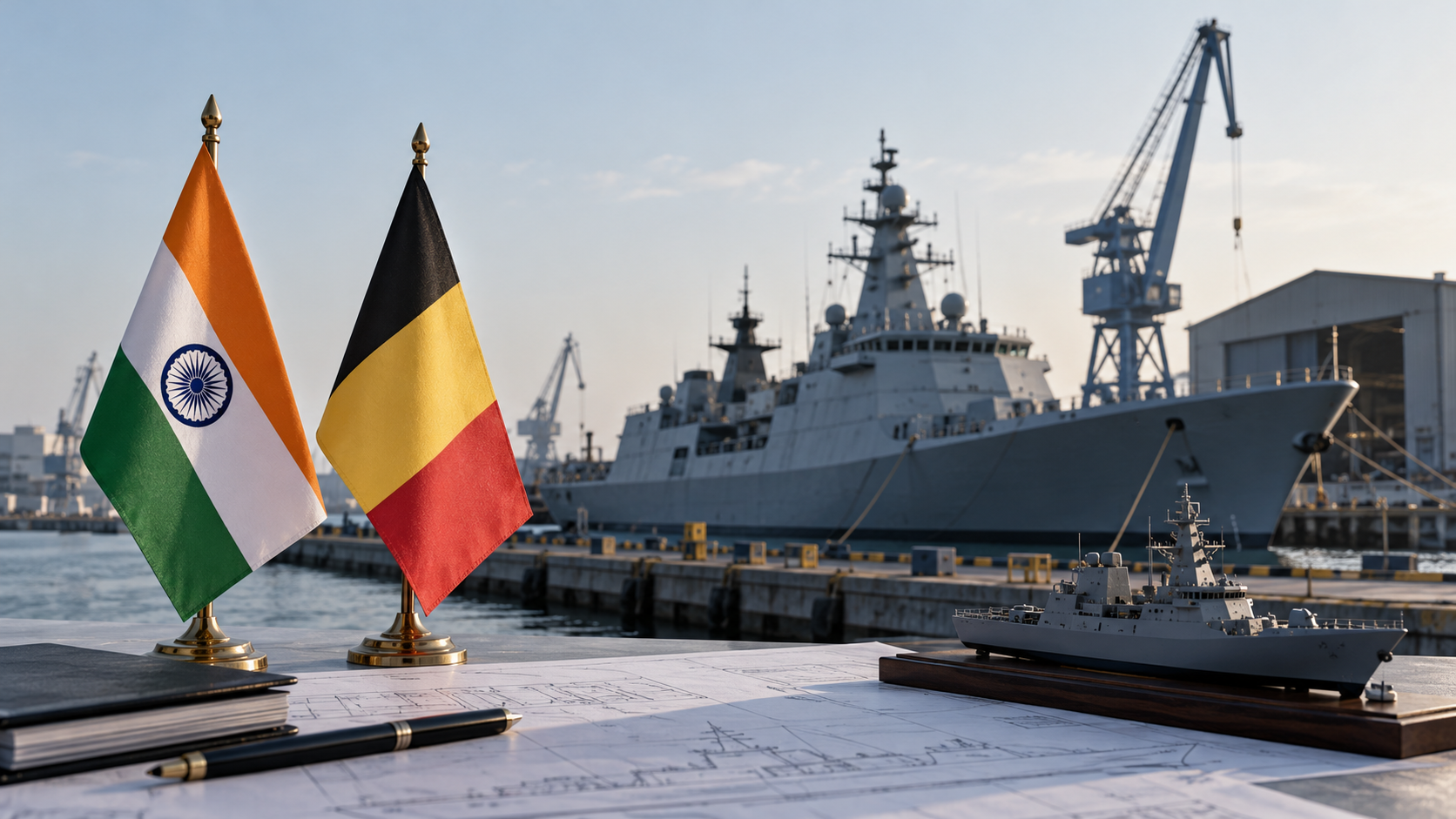
The evolving India-Belgium defence partnership reflects a broader transformation in the strategic relationship between Europe and the Indo-Pacific. It examines how defence-industrial cooperation, technology transfer, and co-production are creating new opportunities for both countries amid shifting global power dynamics. Moving beyond conventional buyer-seller arrangements, the partnership highlights India's growing manufacturing capabilities and Belgium's interest in diversifying defence supply chains. It explores the maritime dimension of this engagement, the role of the Make in India initiative, and the challenges of aligning industrial standards and security requirements. Ultimately, it considers the partnership's potential to strengthen strategic autonomy and resilience.
Introduction: A Pivotal Strategic Reset
On September 3, 2026, the arrival of Belgian Prime Minister Bart De Wever in New Delhi marked more than a routine diplomatic encounter; it signaled a fundamental pivot in the architecture of Euro-Indian relations. This historic state visit- the first by a Belgian head of government in two decades formally transitioned the bilateral relationships from its traditional foundations in the diamond trade toward a high stake strategic and defence alliances. I view this summit as a calculated effort to marry Belgium’s specialized, high-tier technological ecosystem with India’s immense manufacturing scale. This is not merely a buyer-seller arrangement; it is the establishment of a “New Strategic Frontier” intended to secure technological sovereignty for both nations in an increasingly fragmented global order.
In the contemporary era of shifting global alliances and fragmented security architectures, the defense cooperation agreement between India and Belgium stands out as a landmark development. Far more than a standard bilateral treaty, this partnership represents a profound shift in how middle powers and emerging giants interact. By analyzing the core pillars of this deal ranging from maritime security to the "Make in India" initiative, it becomes clear why this agreement is being heralded as a geostrategic win for both nations and a significant pivot in global politics
Defining the Geostrategic Win
To grasp the title of the agreement as a "geostrategic victory," it is necessary to examine the wider picture of the power relations in the 21st century. Defense procurement was traditionally a matter of choosing between Western (NATO-oriented) or Soviet technologies. Nevertheless, the deal between India and Belgium changes this pattern. It can be regarded as a "victory" by establishing a new channel of cooperation that connects the EU and the Indo-Pacific region
From the point of view of geopolitics, the agreement enables India to enter the European defense sector that was known to be practically closed until then. For Belgium, one of the NATO founders and "the heart of Europe," it provides the diversification of supply chains that has a great impact on global geopolitics by demonstrating that European countries are taking interest in the Global South as a source of reliable partners in defense and are generally moving away from dependence on superpowers.
The Logic of "Why India?": Capacity, Scale, and Reliability
Researchers have posed one question on Belgium's preference of India for acquiring weapons as compared to other countries producing weapons. The solution lies in the situation with the current state of the European Defense Industrial Base (EDIB). After the long conflict in Ukraine, the European capacities for manufacturing have reached their limit. This means that Belgium found itself in a position, same as that of many other countries in Europe, that it was unable to supply arms and ammunitions on a mass scale or the cost would too be high to be affordable.
Another thing concerns India. India has spent decades building a state-backed defense system. The logic of import from India is that there are economies of scale. In other words, it is cheaper and faster for India to produce munitions of good quality, and thus India becomes not only a supplier of military equipment, but also a prominent "safety net" for the needs of European security.
The Maritime Dimension: The Heart of the Project
India and other countries are increasing their cooperative military capability through naval exercises and defense industry alliances. The EU has worked together with India to improve maritime security, and Belgium has taken a step ahead in its relationship with India by appointing its first-ever defense attaché and concluding a Letter of Intent for collaboration in defense cooperation. These initiatives include joint military exercises, intelligence sharing agreements, and co-production in key areas such as light tanks and ammunition. In addition, the two countries have extended their bilateral cooperation to trade, semiconductors, fintech, and renewable energy for sustainable global supply chains. Thus, all these partnerships verify the intent of both countries to support rules-based order across Europe and the Indo-Pacific.
"Make in India": The Philosophy of Co-Production
The incorporation of “Make in India” in this arrangement indicates a strategic shift from other defense contracts. Most international contracts normally consist of “buy-sell” processes; this contract involves the transfer of technology and co-production.
In this case, India seeks to demonstrate that it is no longer just a technology user but the one that contributes to technology. This is important for Belgium because it allows for the establishment of a model of “distributed manufacturing.” In the case of a regional conflict in Europe, the establishment of a manufacturing facility in India as an allied country would guarantee an uninterrupted supply of necessary defense elements. This means the transition from "Just-in-Time" logistics to "Just-in-Case" resilience.
Understanding the Benefits: Belgium and the Global Community
While India’s achievements serve it well in terms of development and growth, the benefits for Belgium are equally impressive. Through cooperation with India, Belgium gains access to a great pool of engineering talent and the possibility of manufacturing at lower costs, making the defense budget of the country work better. Moreover, it grants Belgium a “strategic opening” to the Indo-Pacific, giving a small nation an extraordinary power in one of the most vital chessboards of the global politics.
Moreover, this agreement is advantageous for international society, since it results in the appearance of a more multi-polar defense marketplace. When a greater number of countries can produce and trade defense instruments, the world becomes less prone to the political caprices and production obstacles of one superpower.
Why the Delay?
The issue concerning the cause of the delayed agreement is often raised in complex defense negotiations. Various factors usually contribute to such timeframes:
Conformity: Indian manufacturing processes must be adapted to NATO's specifications, which is a long and complicated process.
User Monitoring: Making sure that the sensitive technologies produced by joint efforts in the framework of Make in India are secure entails very complex legal arrangements.
Yet, the delay cannot be regarded as a sign of failure; on the contrary, it demonstrates the seriousness and complexity of the deal. An agreement that is made "quickly" is one of a superficial nature.
Conclusion:
The India-Belgium defense pact is a fine example of 21st-century diplomacy. It provides both immediate solutions in terms of arms and ammunition and a comprehensive approach to maritime safety and cooperation in the industrial sector. The “Make in India” program also helps to move both countries from the old relationship of donor/recipient into the new relationship of equal partners.
As this deal is developed further, it may serve as a model for European countries which are trying to tackle challenges of the 21st century in the field of security and defense. The “strategic victory” is not limited to the hardware produced but involves achieving in both states’ geostrategic independence.
(The views expressed are those of the author and do not represent views of CESCUBE)
Image Source: AI Generated

Mahek Dhar is a B.Sc. Defence and Strategic Studies student at Rashtriya Raksha University, currently pursuing her 1st semester. Her academic interests lie in International Relations, geopolitics, and contemporary global developments. She is particularly interested in understanding evolving geopolitical dynamics, international affairs, strategic interactions among states, and emerging developments shaping the contemporary international order. Her interests reflect a broader curiosity about global affairs and the strategic factors influencing relations between nations.