Old Threat, New Currents: Piracy, Narco-Trafficking, and India's Response in the Western Indian Ocean
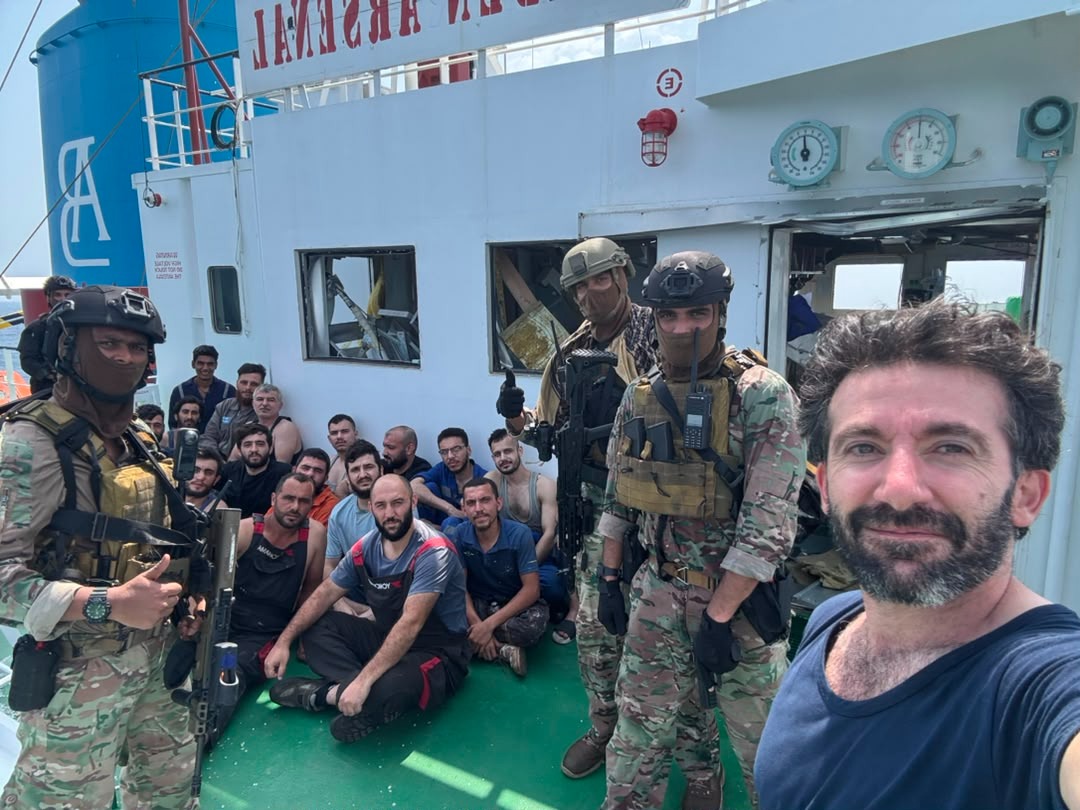
Piracy and narcotics trafficking in the Western Indian Ocean have re-emerged as interconnected maritime security challenges, operating through shared routes, networks, and vessels. This article examines the renewed threat of Somali piracy alongside illicit narcotics flows from the Makran coast and the Gulf towards East Africa. It analyses India's response through Operation Sankalp, naval deployments, maritime interdiction, and cooperation with multinational task forces. The article highlights how India's maritime security approach has evolved from episodic crisis management towards sustained regional maritime governance, while underscoring the importance of maintaining a continuous naval presence amid a changing regional security environment.
Introduction
Piracy off the Horn of Africa is typically discussed in the past tense; a menace that the international community has, for the most part, put to bed with the anti-piracy patrols of the early 2010s bringing Somali hijackings from a crisis to a rarity. This framing does not age well, however, as a 2026 advisory from the US Maritime Administration reported four hijackings and seventeen boarding or armed-robbery incidents across the Gulf of Aden, Arabian Sea and Indian Ocean in just five months, with firearms being far more common in attacks than in the quieter years following the original crackdown.1 Running concurrently and through the same shows as the re-emergence of Somali piracy, but typically in the same waters and with an increasing frequency, is the illicit narcotics trade from the Makran coast and the Gulf to East Africa and beyond; a trade that Indian naval and customs authorities have increasingly identified as a security concern in its own right and not merely as a policing adjunct. This article examines how these two threats have become inextricably linked in the Western Indian Ocean, and examines how India, through the aegis of Operation Sankalp and through its overall naval posture, has attempted to address both.
A Threat that never Fully Went Away
Somali piracy was never eradicated so much as subdued, and that requires a continued naval presence in the region, functioning coastal governance in Somalia, and the economic incentives that drove so many young men to hijackings in the first place, none of which are permanent conditions.2 Whenever any of those pieces gives way, the numbers rise. The uptick in 2026 has coincided with growing instability in the Red Sea and Gulf of Aden region, and watchers of the area have noted that opportunistic piracy can often resurface when naval attention is diverted elsewhere, in this case, the shipping disruptions caused by Houthi attacks farther north.1 Piracy in these waters has rarely occurred in vacuum from other illicit maritime activities. The same networks, routes, and small craft employed to intercept merchant shipping have long been used for arms and narcotics smuggling, and the seizure of three foreign boats last year in 2021 carrying the weapons, ammunition, and drugs found on the Lakshadweep coast were linked to drug trafficking funding of anti-national activities Indian security agencies have taken seriously since.2
The Narcotics Route Through India's Backyard
The Western Indian Ocean serves as one of the world's major maritime drug trafficking routes, connecting Afghan and Pakistani production centers through the Arabian Sea to East Africa and beyond. India's Navy has increasingly found itself in the vanguard of efforts to intercept this illicit commerce, both due to its patrols in this region and the fact that many of those patrols are now made in conjunction with the Combined Maritime Forces, an international coalition that operates under the framework of Combined Task Force 150. In March 2025, the frigate INS Tarkash, having been alerted to suspicious activity by a P-8I maritime patrol aircraft, changed course to intercept and board a suspicious dhow in the Western Indian Ocean using a specialist team and marine commandos. They discovered over 2,500 kilograms of narcotics, including 2,386 kilograms of hashish and 121 kilograms of heroin, spread out across several of the dhow's holds.3 The frigate had in fact been operating under CMF guidelines as part of Task Force 150 since its arrival in January 2025, and the seizure was said to be among the largest such hauls in recent memory.4 It followed India's first drug interdiction as a full-fledged CMF member the year before, when INS Talwar had in April 2024 seized 940 kilograms of methamphetamine, hashish, and heroin from a dhow in the Arabian Sea.5 A review of the Navy's 2025 operations later observed that, while these interdictions represented significant quantities of illicit drugs, they were nevertheless becoming an increasingly routine feature of its regional operations rather than an aberration.6
India's Institutional Response: Operation Sankalp and Beyond
India's primary institutional response to both threats is Operation Sankalp, launched in June 2019 following a spate of attacks on commercial shipping in the Gulf of Oman and the Strait of Hormuz, and since expanded into a standing maritime security presence in the Gulf of Aden, the Arabian Sea, and the waters off the Horn of Africa.7 The operation blends continuous frigate and destroyer deployments with maritime surveillance aircraft and MARCOS special forces on call for boarding operations, and is now supported by a dedicated legal framework, the Maritime Anti-Piracy Act of 2022, which for the first time provided Indian authorities with domestic legislation to criminalize and prosecute piracy rather than relying on ad hoc application of older laws.7 The scale of the operation bears out: since its inception, Sankalp-linked deployments have escorted hundreds of merchant vessels laden with millions of tonnes of cargo, protecting trade routes that carry the majority of India's oil imports through the Persian Gulf.7 The operation has also been instrumental in some of the more prominent rescue operations of the past two years, most notably the joint Indian Air Force and Navy operation that used a C-17 to airdrop marine commandos and rigid raiding craft into the Arabian Sea to aid in the recapture of the hijacked bulk carrier MV Ruen from Somali pirates near Socotra Island.8 With the Navy inducting new warships at a rapid pace through 2026 and using events such as the International Fleet Review and MILAN-26 to showcase this expanding capability, the trajectory suggests that India intends to treat sustained anti-piracy and counter-narcotics presence as a permanent fixture of its Indian Ocean posture.9
Conclusion:
Piracy and narcotics trafficking in the Western Indian Ocean are not two separate problems that happen to share a map. They share the same waters, the same dhows and often the same networks, and treating them as unconnected risks missing how each sustains the other. India's response, centered around Operation Sankalp's continuous naval presence, a dedicated anti-piracy legal framework and the mounting pattern of interdictions carried out in concert with multinational task forces, has evolved from episodic crisis management into something closer to routine maritime governance - though whether that presence is durable will be determined by India's ability to maintain the increased tempo of patrols within a wider regional security environment where attention across the Indian Ocean basin is increasingly being drawn in multiple directions at once.
References:
1. U.S. Maritime Administration, "2026-010—Gulf of Aden, Arabian Sea, Indian Ocean—Piracy/Armed Robbery/Kidnapping for Ransom," Maritime Advisory, August 2026 https://www.maritime.dot.gov/msci/2026-010-gulf-aden-arabian-sea-indian-ocean-piracyarmed-robberykidnapping-ransom
2. "India's Maritime Security Operations – What Does India Gain?," SPRF https://sprf.in/indias-maritime-security-operations-what-does-india-gain/
3. "Operation Sankalp: Indian Navy Maritime Security Mission in the Strait of Hormuz," Insights on India, March 4, 2026 https://www.insightsonindia.com/2026/03/04/operation-sankalp-2/
4. "The Indian Navy After 2025: Taking Stock and Setting Course for 2026," Eurasia Review, January 5, 2026 https://www.eurasiareview.com/05012026-the-indian-navy-after-2025-taking-stock-and-setting-course-for-2026-analysis/
5. "Indian Navy's INS Tarkash Seizes over 2,500 kg of Narcotics in Western Indian Ocean," All India Radio News, April 2, 2025 https://www.newsonair.gov.in/indian-navys-ins-tarkash-seizes-over-2500-kg-of-narcotics-in-western-indian-ocean/
6. "Indian Navy's Tarkash Seizes over 2,500 kg Narcotics in Anti-Smuggling Raid," The Print, April 2, 2025 https://theprint.in/india/indian-navy-boosts-regional-security-as-ins-tarkash-seizes-over-2500-kg-narcotics/2575090/
7. Combined Maritime Forces Public Affairs, "Indian Navy Carries Out First Drug Interdiction as CMF Member," April 16, 2024 https://www.globalsecurity.org/military/library/news/2024/04/mil-240416-usn01.htm
8. "Indian Navy Plans to Induct a Warship Every Six Weeks," Sunday Guardian Live, January 4, 2026 https://sundayguardianlive.com/news/top-5/indian-navy-plans-to-induct-a-warship-every-six-weeks-163304/
(The views expressed are those of the author and do not represent views of CESCUBE)
Image Source: Press Information Bureau, https://www.pib.gov.in/PressReleasePage.aspx?PRID=2280434®=3&lang=1

Aarthi DE completed her BA in Defence and Strategic Studies from Erode Arts and Science College, Tamil Nadu. She is currently pursuing an MA in Defence and Strategic Studies at the Central University of Jammu (2025–2027).