The Invisible Front: China-Pakistan Grey-Zone Operations
Introduction
In May 2026, Punjab Police dismantled two surveillance modules positioned near Indian defence installations across Punjab, Haryana, Rajasthan, and Jammu and Kashmir. The equipment included Chinese-manufactured SIM-enabled cameras, a Shenzhen-registered cloud platform called EseeCloud, and data centres in China through which ISI handlers accessed the live feeds. The infrastructure for collecting intelligence against Indian military targets had been assembled over a decade through commercial contracts, concessional financing, and bilateral agreements, each of which carry a plausible civilian justification when examined in isolation.
This example is not a counterintelligence anomaly, but is the output of the grey-zone architecture that China and Pakistan have been building incrementally since the China-Pakistan Economic Corridor (CPEC) was formally launched in April 2015 with a $62 billion investment commitment.
The article argues that the architecture operates across three interconnected layers:
1.a debt and infrastructure layer that has progressively reduced Pakistan's capacity for independent strategic decision-making while extending Chinese physical presence along routes relevant to Indian security;
2.a dual-use surveillance layer that routes Chinese commercial technology into sustained intelligence collection against India;
3.and an information operations layer that coordinates Chinese and Pakistani narrative campaigns against Indian interests, consistently documented across multiple incidents.
The argument here is not that a formal joint command between Beijing and Islamabad exists, but that the three layers reinforce each other in ways that conventional institutional lenses alone do not adequately explain.
I. Debt Architecture and the Infrastructure Layer
The financing structure of CPEC is the foundation of the grey-zone architecture, because it determines how much room Pakistan has to act independently of Chinese preferences. AidData estimated Pakistan's outstanding public and publicly guaranteed debt to China at $67.22 billion as of 2023, approximately 20 percent of GDP, with 98 percent of Chinese development financing delivered as loans rather than grants. The IMF projected annual debt repayments to Beijing at $4.5 billion from 2024 onward, giving Beijing the position of a creditor holding leverage of massive scales. The Baloch Liberation Army's sustained campaign against CPEC infrastructure, including the March 2024 Besham convoy attack that killed five Chinese engineers and the March 2025 Jaffar Express hijacking shows that Pakistan's relationship with CPEC carries significant domestic costs. They are tactical rather than structural, because Pakistan's dependence on Chinese financing for IMF programme management and debt rollover means that distancing from intelligence cooperation that Beijing values is not a realistic option, regardless of what Islamabad might prefer on any specific question.
Gwadar is the best example of the military dimension of the CPEC’s economic architecture. The port handled under 100,000 tonnes of cargo annually in the early 2020s, against Karachi's 41 million tonnes, yet Chinese investment continued without treating that commercial underperformance as a reason for reappraisal. The 2022 inauguration of the 19-kilometre East Bay Expressway and the August 2025 approval of a 13.8-kilometre extension linking the New Gwadar International Airport to the port, 95 percent financed through Chinese grant-in-aid and built by China Harbour Engineering Company, reflect investment decisions whose rationale is strategic rather than commercial. Grant financing is the exception within CPEC's loan-dominated structure, and its concentration at Gwadar marks the port as a priority that sits outside the commercial logic governing the corridor's other nodes.
In October 2024, DropSite News published a report based on leaked documents from Pakistan's 2+2 Dialogue with China, establishing that Islamabad had agreed in principle to PLA Navy vessel deployment at Gwadar not as a future contingency but as a design requirement for the port's logistics infrastructure. The planned facility, as documented, would accommodate 16 to 20 warships and two submarine pens across three construction phases, extending PLA Navy reach into the Arabian Sea and positioning Chinese assets along India's western maritime approaches. Grant financing for a port with negligible commercial throughput, whose planned design incorporates a foreign navy's operational requirements, requires no further interpretive work.
The debt and infrastructure layer matters beyond its own terms because it is the condition that makes the layers described below possible. The Huawei Safe City deployments, the fiber optic cable, and the Pakistan Internet Exchange were all financed through the same concessional loan structure that underwrites CPEC. The surveillance and communications infrastructure that enables ISI collection against Indian targets was built on the same debt foundation that forecloses Pakistani defection from the arrangement. The three layers are not running in parallel, and each is built on the one before it.
II. The Dual-Use Surveillance Layer
The communications infrastructure came first, with the 820-kilometre Phase I Pakistan-China Fiber Optic Cable, operational from Rawalpindi to Khunjerab by July 2018, giving Pakistan's military and intelligence services an alternative communications backbone that bypasses international submarine cable systems, including the access points where foreign signals intelligence is conventionally concentrated. In January 2024, Pakistan signed an agreement with China to route Chinese internet traffic through Pakistani territory, inaugurating the Pakistan Internet Exchange (PIE), enabling Chinese-controlled data filtering and surveillance within Pakistani cyberspace. This telecommunications infrastructure is the channel through which intelligence products from the collection mechanisms described below are transmitted, and through which the information operations distribute content across South Asian audiences.
Huawei's Safe City deployments in Lahore, Islamabad, and Peshawar, completed between 2016 and 2018 under Chinese concessional financing, form the aggregation layer sitting above that communications backbone. These systems brought together facial recognition, licence-plate tracking, social media monitoring, and emergency case management into centralized command centres with direct access to national data repositories, including Pakistan's Criminal Record Management System, NADRA database, and Foreigner Registration System. In 2021, court filings before the United States District Court for the Central District of California alleged that Huawei had established backdoor access from China into Lahore's Safe City infrastructure, making those aggregated national security databases accessible from Chinese territory. Chinese state-linked firms have built and continue to operate the command layer of Pakistan's surveillance infrastructure, with data aggregation capacity that serves both Pakistani and Chinese intelligence requirements, routed over the telecommunications infrastructure that earlier CPEC phases built.
The EseeCloud network dismantled earlier in May is where this architecture produced operational output against Indian targets. ISI collection against Indian defence installations required no specially developed technical capability because the Chinese commercial surveillance infrastructure already embedded in Pakistan's institutional systems provided the routing, processing, and aggregation layer as a standing condition. Chinese-manufactured cameras, a Shenzhen-registered routing platform, data passing through Chinese territory, and ISI handlers accessing the resulting intelligence product constitute a collection chain in which every link is attributable to a commercial or bilateral agreement and no link requires a joint operational instruction to function. Each component is commercially defensible in isolation, and the intelligence collection function appears only at the level of the whole chain. Punjab Police's May 2026 forensic investigation, resulting in confirmed arrests and a nationwide advisory establishes that function as an operational reality rather than mere inference.
III. The Information Operations Layer
China's Three Warfares doctrine, codified in the 2003 revision of the PLA's Political Work Regulations and institutionalized through the Strategic Support Force (SSF) established in 2015, directs the PLA and affiliated state organs to conduct public opinion warfare, psychological warfare, and legal warfare as coordinated instruments of strategic competition, including during periods of nominal peace. The SSF's establishment coincided with CPEC's launch without a direct connection, but both reflect a turn toward grey-zone instruments for which the infrastructure described above provides direct operational support: the Pakistan Internet Exchange and the fiber optic backbone are the distribution channels through which Chinese information operations reach South Asian audiences, and the Safe City command layer produces data on domestic Pakistani opinion that sharpens audience targeting. Pakistan's Inter-Services Public Relations operates an analogous function within Pakistani strategic communications. ORF's October 2025 assessment documented coordinated hashtag campaigns, bot-amplified networks, and AI-generated content deployed across Urdu and English media ecosystems, with framing consistency across platforms indicative of centralized coordination.
The June 2020 Galwan Valley clash is the incident where the convergence of the two countries' information operations is most concretely documented. Within hours of the clash, CCTV broadcast a documentary portraying Indian troops as having crossed the Galwan river first, and CGTN accounts amplified that framing internationally. Within the same news cycle, Pakistani state media and ISI-linked Urdu outlets directed identical framing at South Asian domestic audiences. Chinese state media handled the international information space; Pakistani Urdu-language outlets handled South Asian domestic perception of the same event. CSEP's August 2023 analysis of Chinese external messaging during India-China border crises documented these concurrent amplification patterns. Indian fact-checkers subsequently identified coordinated networks on Facebook and Twitter consistent with external direction. Language-segmented targeting of distinct audience blocs within hours of a military incident is not a pattern that spontaneous, independent activity by two separate states produces.
The same pattern has appeared across subsequent India-Pakistan flashpoints. DFRAC's May 2025 analysis documented synchronized negative coverage of India across CGTN, Global Times, and China Military, running at the same time as Pakistani bot-amplified hashtag campaigns, with consistent framing across platforms and languages. ORF's August 2025 assessment documented Chinese-origin SIGINT tools, satellite phones, and applications in the hands of Pakistani proxy groups in Kashmir. The Takshashila Institution's January 2026 assessment of China-Pakistan military interoperability, drawing on sourced reporting from Indian and Pakistani security establishments, characterized ISI-MSS cooperation as having developed into a structured, agency-to-agency collaboration that includes shared assessments of Indian military capabilities and joint early-warning mechanisms against Indian force movements. Across Galwan in 2020 and the flashpoints documented through 2025, the convergence of framing, the segmentation of target audiences by language, and the documented sharing of tools between ISI and Chinese state actors form a pattern that independent parallel activity does not explain.
Conclusion

Figure 1: China and Pakistan's coordinated grey-zone strategy operates across three interdependent layers: debt and infrastructure, dual-use surveillance, and information operations.
China and Pakistan have built a grey-zone architecture whose strategic effect becomes visible only when all its components are read together. The debt, the communications infrastructure, and the surveillance layer each carry commercial justification sufficient to deflect individual scrutiny. Commercial plausibility is the architecture's defining operational feature, not an incidental quality of its design. Frameworks that assess these components separately will miss the design, which is precisely the condition the design was built to exploit. India's assessment posture will need to account for a partnership that has been accumulating institutional depth since 2015 and whose outputs are visible only when all three layers are read together.
(The views expressed are those of the author and do not represent the views of CESCUBE)
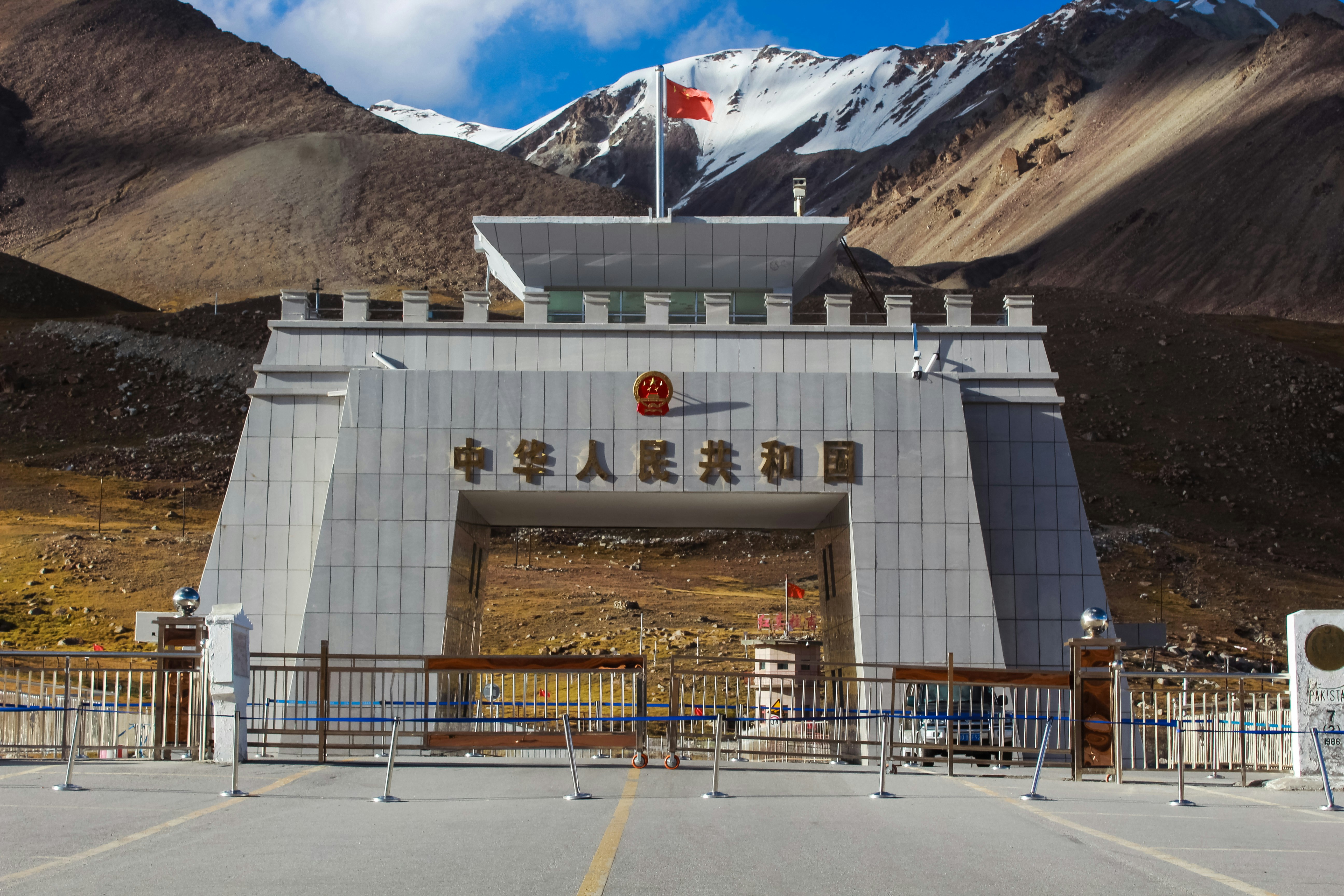
Photo by Hasan Shaukat on Unsplash

Venkatakrishnan Asuri is an undergraduate student at the Indian Institute of Technology Madras. His research spans South Asian security, Chinese strategic affairs, India's neighbourhood, and the dynamics of the Indo-Pacific, with a particular focus on strategic affairs, defence, and foreign policy. He is fluent in English, Tamil, and Hindi, with working proficiency in Russian.