Critical Technologies and the Quad
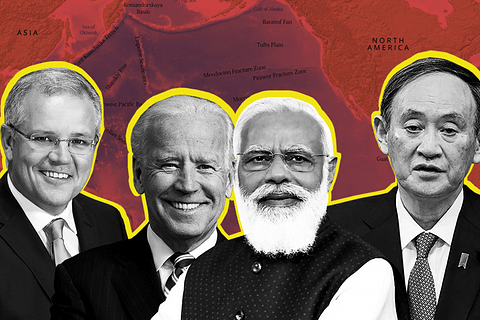
On 12 March 2021, the Quad group conducted its first-ever virtual Quad leadership summit which became an important milestone in broadening its focus. The four nations 'quad' has issued a joint statement titled- 'The spirit of the quad' for ensuring the idea of "free, open, inclusive and resilient Indo pacific". This historic engagement has committed the four democratic countries "to promoting a free, open rules-based order, rooted in international law, to advance security and prosperity and counter threats to both in the Indo-Pacific and beyond" as well as supporting "the rule of law, freedom of navigation and overflight, peaceful resolution of disputes, democratic values, and territorial integrity." Shaped by the challenging times, it has diversified its scope with the establishment of three working groups. Quad Vaccine Experts Group, the Quad Climate Working Group, and the Quad Critical and Emerging Technology Working Group are the three prominent groups formed considering the contemporary global situation.
The 'Quad' group of countries involving the USA, India, Japan, and Australia have primarily come together to challenge the growing Chinese power in the international order. With the aim to exert economic and military power in the Indo pacific region, this like-minded group has acquired considerable momentum. In 2019, the quad group has elevated its talks to ministerial level with foreign ministers of all the four democratic countries holding a meeting on the sidelines of the United Nations general assembly session in 2020. The incursion of Australia in Malabar exercises after a gap of 13 years signifies its collective military weight against China. For a long time, security and military concerns like South China Sea encroachment, North Korea nuclear issue have dominated the meetings of this Indo pacific alliance. Thus, the establishment of these three working groups will launch a landmark partnership to further strengthen their commitment and to cope up with the contemporary challenges.
The USA along with the other three countries has decided to work closely with complex financing vehicles and delivery mechanisms to increase substantial production of vaccines, up to a billion by 2022. Quad partners have prioritized the Covid 19 facilities in India, which seems as its response to diplomatic points gained by made in China vaccine in the developing world. Further, it is also expected to form a senior-level quad expert group. With more institutionalization of Quad, these four countries have recognized the importance of regional security, peace, and prosperity. The summit has also discussed to work on climate change. During the era of the trump government, the USA became the first nation in the world to withdraw from the Paris agreement. However, within few weeks of Biden coming to power, the USA rejoined the agreement. The quad group has identified the significance of climate change and has decided to strengthen the implementation of the Paris agreement. They have committed to work together on climate mitigation, adaptation, climate finance and will advance low emission technology solutions to support emission reduction.
Considering the growing advancement in technology and artificial intelligence, the quad has also initiated to govern and operate critical and emerging technology according to the shared interests and values of the four nations. It has established the Quad Critical and Emerging Technology Working Group to facilitate coordination on technology standards development, encouraged cooperation on telecommunication deployment, and will focus on the development of critical and emerging technology as the fact sheet said. The 14 five-year Plan of China has prioritized the development of technology. It has two sections that pertain to technology, which are titled as "Major Industries in the Digital Economy" and "Frontiers of Science and Technology". These sections promote technological innovations, works to upgrade cloud operating systems, build artificial intelligence, development of quantum information, and many other projects related to technology. The joint statement by Quad on technology and vaccine production indirectly specifies the desire of quad groups to address the outline of China's five-year plan. It seems that quad wishes to constrain China's rapidly rising technological power and ambitious industrial strategy by establishing a specific working group on critical and emerging technology.
Technology cooperation and collaboration are the dire need of time. One of the prime goals of this initiative is to bolster cybersecurity via multilateral regional engagement. The recent increase in the cyber-attack incidents from both state and non-state actors has led to the establishment of the new cyber working group of the quad countries. Further, the group has looked into the supply chain question of critical materials, pursue 5G technology as an alternative to untrusted vendors, and collaborate on R&D infrastructure via partnership. It is certainly a political collaboration among the four democracies after tightening up restrictions for Huawei's 5G equipment. Moreover, the increasing relevance of space technology in a variety of fields creates fertile ground for mutual collaboration and investment by the quad group. ISRO has started initiating space ties with the other three space agencies of quad group for providing high-rate communication subsystem, air quality monitoring, satellite navigation, would monitor movements in orbit, and desires to explore other opportunities for space collaboration. Within the ambit of joint NASA-ISRO SAR (NISAR), ISRO has shipped the S-Band SAR to the United States space agency NASA on 8 March 2021. On March 11, ISRO and Japan Aerospace Exploration Agency (JAXA) has even signed an 'implementing arrangement' for collaboration on rice crop area and air quality monitoring. The four nations have even acknowledged the significance of quantum technology in reshaping future economies, strategic competition, and its position in the global order. they have started taking interest in the development of quantum technology. Quad partners (LLC) have agreed to invest in the quantum global holdings ("quantum IT") to enhance its product development and support its global customer acquisition. In February 2020, India has also joined the 'global quantum race' by launching the national mission on quantum technologies and application (NM-QTA) and allocated around $1.2 billion for the development of quantum technologies.
The Indo pacific quad alliance has also joined hands to break China's monopoly on rare earth metals. China possesses around 70% of the world's rare earth reserves, the most in the world, says natural resource expert Sean Brodrick. To counter the dominance of China in such crucial elements, quad has decided to develop refining technologies as the rare earth veins contain a large amount of radioactive waste. Further, they have planned to provide syndicate loans to the refining and other related business through government-affiliated financial institutions. By collaborating all along the chain, these like-minded countries can influence their rise in rare earth materials.
It must be acknowledged that critical technologies are not value-neutral, they are largely affected by socio-cultural factors, context, and legal traditions. It also raises the issue of universal ethical principles and the framework for human rights. Thus, the quad group must entail and design an approach to human rights and ethical governance of critical technologies before engaging more in this sector.
Pic Courtsey-https://swarajyamag.com/
(The views expressed are those of the author and do not represent views of CESCUBE.)

Mahima Chouhan is a Postgraduate student of Politics with Specialization in International Studies at Jawaharlal Nehru University. Her area of interest lies in the cultural and political aspects of West Asia, Central Asia and the challenges of Internally Displaced people and refugees.