Trade Wars and Critical Minerals: Why India must act before it is too late
Today’s global trade wars are being fought not just with tariffs, but with tonnes of critical minerals. China’s recent decision to restrict exports of key critical minerals to the United States is a sharp reminder that geopolitical leverage now lies beneath the ground. As the U.S. and China deepen their trade standoff, India must urgently recognise its own mineral vulnerabilities. The future of energy, technology, and security may very well depend on what minerals countries can extract, process, and refine.
The 2025 Flashpoint
In April 2025, tensions escalated dramatically when the United States imposed sweeping tariffs on Chinese products including electric vehicles, solar panels, semiconductors, and batteries. These new levies included a minimum additional tariff of 145%, layered on top of existing duties from the Trump’s first term and Biden administration measures, which ranged from 25% to 100%.[i] In retaliation, Beijing announced export controls on seven of Rare Earth Elements (REEs) including scandium, terbium, yttrium, dysprosium, gadolinium, lutetium, and samarium. These minerals are vital for the manufacturing of electric motors, wind turbines, electric vehicles (EVs), and advance defence systems.[ii] The export curb also includes permanent magnets and other products along with the mined critical minerals which can be difficult to replace.
This is not the first time that China has exerted its resource dominance as a strategic tool. In 2010, during a maritime dispute, China cut off REEs exports to Japan, triggering global supply chain alarms as the prices increased ninefold.[iii] In 2024, after the US President Joe Biden’s announcement of restrictions on the sale of semiconductors, China restricted the exports of antimony, gallium, and germanium to the US. These minerals are extensively used in manufacturing semiconductor chips and electronics.[iv] The 2025 move, however, marks an escalation as it directly targets the world’s largest economy and highlights how important these minerals have become to geopolitical competition.
China’s Supply Chain Chokehold
China has long understood the strategic potential of controlling the supply chain of critical minerals. It accounts for about 60% of global rare earth mining and 90% of global rare earth processing.[v] Moreover, it dominates the supply chains for lithium-ion batteries, high-performance magnets, and several rare and strategic metals essential for renewable energy and defence applications.
Beijing’s dominance is not merely industrial, it is geopolitical. In 1987, Deng Xiaoping, the former Chinese leader, said that while “the Middle East has oil, China has rare earth”.[vi] China’s rare earth weapon could do real damage to the US’s renewable energy transition and defence manufacturing base. There is a growing sense of urgency among the dependent countries to “de-risk” from Chinese mineral dependence, but building new supply chains is expensive, slow, and politically & environmentally fraught.
India’s Strategic Vulnerabilities
In terms of Energy Security, India finds itself in a particularly precarious position. Despite its ambitious renewable energy goals and aspirations for global leadership in electric mobility and green hydrogen, it remains critically dependent on mineral imports. The country lacks a comprehensive ecosystem for critical minerals. Unlike petroleum sector, where New Delhi boasts a globally competitive refining sector, it has limited domestic capabilities in mineral extraction, processing, or value addition. Most lithium, cobalt, and rare earth imports come through Chinese intermediaries or allied partners. Domestic exploration is still at a nascent stage, and while India holds potential deposits in states like Odisha, Kerala, Gujarat, Maharashtra, Tamil Nadu, and Andhra Pradesh, they remain largely untapped.[vii]
The absence of a national stockpiling strategy, lack of midstream processing infrastructure, and overreliance on global markets exposes India’s energy transition to enormous risk. A disruption in rare earth supply could stall everything from solar panel, wind turbine manufacturing, EV battery production to defence manufacturing and exports.
The Way Forward: Building Resilience
India needs a robust national strategy to build strategic reserves of critical minerals, like Japan.[viii] The government should accelerate geological surveys, map untapped mineral belts, and incentivise domestic exploration through public-private partnerships. In a significant step forward, the Government of India launched the National Critical Minerals Mission (NCMM) in April 2025 to institutionalise this process.[ix] The mission includes dedicated funding for strategic stockpiling, domestic exploration, and research, laying the groundwork for long-term resource security.
India must deepen cooperation with like-minded partners through forums like the Quad and Indo-Pacific Economic Forum (IPEF). The critical minerals partnership with Australia must be expanded beyond MoUs into operational mining, processing, and technology-sharing frameworks. African, and Latin American countries also possess resources and can be utilised to build secure supply chains through bilateral and multilateral agreements.
To move up the value chain, India must develop its own rare earth processing, and refining capacity. Special economic zones focused on battery materials, high-performance magnets, and rare earth separation technologies should be prioritised. Policy instruments like Production-Linked Incentives (PLI) must be expanded to cover the entire green technology supply chain from mineral to market. A dedicated National Critical Minerals Board should be established to coordinate efforts across ministries and facilitate long-term planning. This body should work closely with industry, research institutions, and international partners to drive innovation, investment, and policy coherence.
Conclusion
India cannot afford to sleepwalk through the critical mineral crisis. If the last century was shaped by oil politics, this will be shaped by access to rare earths and strategic minerals. With the global energy transition accelerating and new geopolitical flashpoints emerging, India must safeguard its future by securing the resources that will define its future. China’s trade weapon is sharp and proven. India’s best defence is preparedness, and the time is running out.
Footnotes:
[ii] https://www.reuters.com/world/china-hits-back-us-tariffs-with-rare-earth-export-controls-2025-04-04/
[iii] https://www.sundayguardianlive.com/news/china-rare-earth-minerals-nuclear-options
[v] https://www.bbc.com/news/articles/c1drqeev36qo
[vii] https://pib.gov.in/PressReleasePage.aspx?PRID=1914305
[ix] https://static.pib.gov.in/WriteReadData/specificdocs/documents/2025/apr/doc202549537601.pdf?
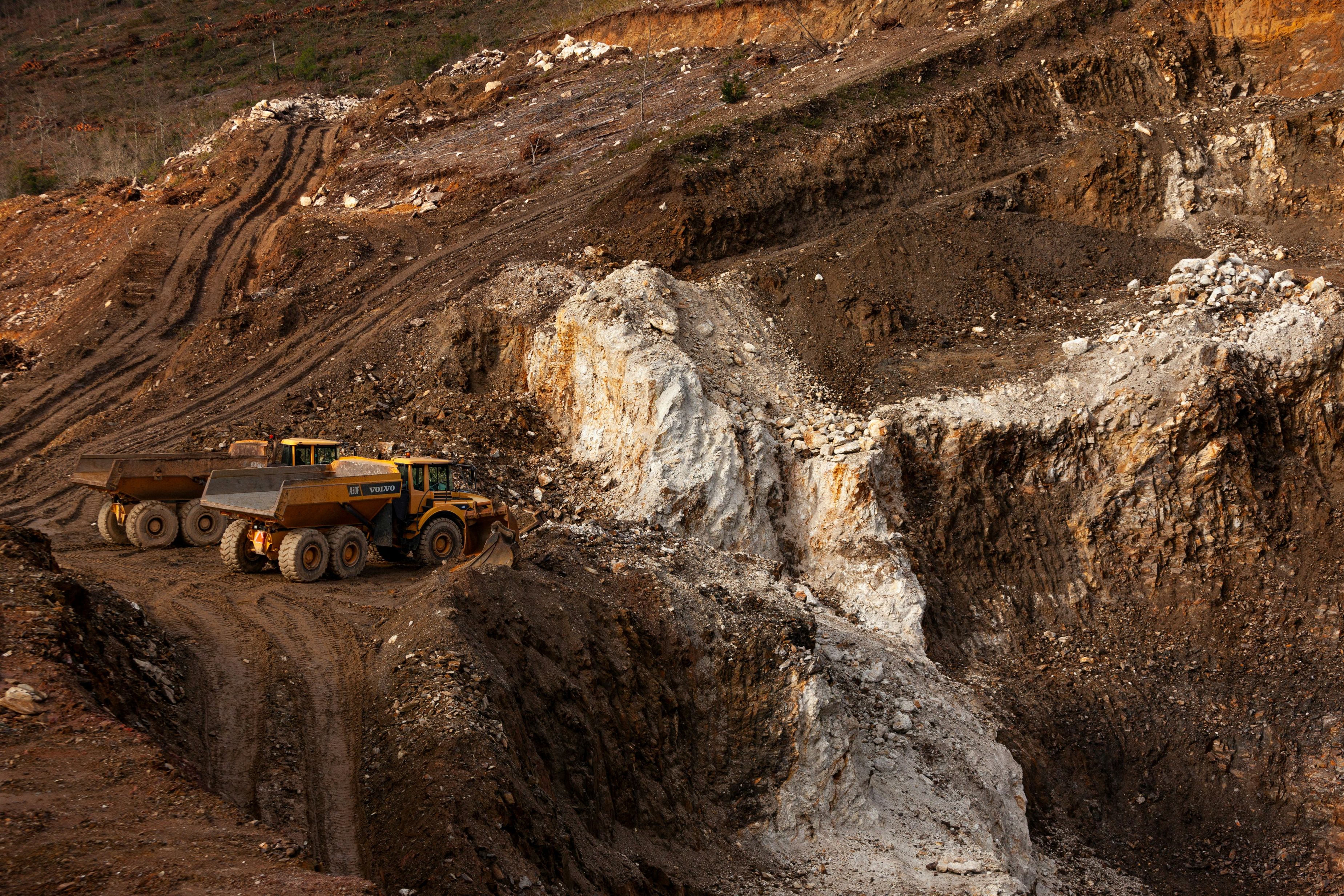
Pic Courtesy- Photo by MiningWatch Portugal on Unsplash
(The views expressed are those of the author and do not represent the views of CESCUBE.)

Nikita Vats is the Managing Editor at the Centre for Security and Strategy Studies (CeSCube). She is the co-founder of the Centre for New Age Warfare Studies (CNAWS). She is a PhD candidate at the Jindal School of International Affairs, O.P. Jindal Global University, India. She previously served as a Research Associate at the National Maritime Foundation, where she contributed to maritime and strategic policy research. She holds a B.Sc. (Hons.) in Chemistry from the University of Delhi and an M.Sc. in Chemistry from Panjab University. She also holds a Master's degree in Political Science and International Relations. Her research interests span traditional and non-traditional security issues and strategic affairs.