
LIVE DISPATCH
• Arctic Geopolitics: From Frozen Frontier to Global Contest • From Physical Borders to Intelligent Borders: The Evolution of India's Border Security Architecture • Bridging the Fifth-Generation Gap: India's Su-57E Dilemma, AMCA, and Strategic Autonomy • AI Driven Cyberwarfare and National Security • Regulation as Power? The EU, US and China in the Geopolitics of Artificial Intelligence • The Continuing U.S. Regime-Change Toolkit: Color Revolutions, Political Influence, and Vietnam • The New Defence Architecture: Deconstructing the India-Belgium Geostrategic Win • Digital Pathways to Extremism: An Investigative Study of ISIS and Al-Qaeda's Use of Digital Platforms in India • Beyond Oil: Saudi Arabia's Civil Nuclear Deal with the United States • Strategic Autonomy in the Age of Weaponised Interdependence: India’s Geopolitical Dilemma • The Myth of Mankind's Inheritance: China, the US, and the Battle for the Clarion-Clipperton Zone • China’s Grey-Zone Strategy in the Indian Ocean: Implications for India’s Maritime Security • China's Surveillance Architecture in the Bay of Bengal and Its Strategic Implications • Europe’s Digital Dependence: Can the EU Achieve Strategic Autonomy? • A Reformer for an Institution in Decline: What does the Next Secretary-General Inherits? • Cuba’s Economic Crisis and Strategic Relevance: A Peripheral State in Renewed Great Power Competition • Silent Depths, Loud Signals: Nuclear Deterrence Infrastructure and the Crisis-Stability Costs of India’s Indo-Pacific Maritime Partnerships • Loss and Damage Finance: From COP28 Pledges to Policy Architecture • Securing India's Digital Frontiers: Cybersecurity Challenges and Strategic Responses in the Age of Hybrid Warfare • Beyond Consultation: BIMSTEC's Emerging Role in Regional Intelligence and Security Cooperation • Prism of Dragon’s Maritime Assertiveness: Regional Implications and India’s Strategic Options • Between the Desert and the Savannah: Conflict and the Political Economy of Instability in the Sahel • The Architecture of Cooperation: Navigating East Asia's Geopolitical Landscape • The Politics of Ali Khamenei's Funeral • From Civil Nuclear Power to Nuclear Hedging: Saudi Arabia, Iran and the Emerging Nuclear Security Dilemma in the Middle East • Operation Sindoor and the Changing Dynamics of India–Pakistan Security • The Invisible Front: China-Pakistan Grey-Zone Operations • Generative AI, Labour Sovereignty, and the Geoeconomics of India's Service Economy • India's Agentic AI Strategy Needs Authority Budgets before Autonomy Scales • India's AI Diplomacy and the Future of Strategic Technologies • Lethal Autonomous Weapons Systems and the Governance Deficit: Challenges to International Humanitarian Law and Accountability • Great Power Rivalry and the Crisis of the United Nations • Ten Years After Brexit: Regret, Reform, or Reversal? • Sports, Strategy and Statecraft of Mega Sporting Events as Geoeconomic Instruments: Qatar 2022 to Saudi Arabia 2034 • Hardening the Quad: From Strategic Dialogue to Operational Cooperation • The Maghreb of States: Identity, Sovereignty, and the Limits of Non-Interference • Beyond the Battlefield: Understanding Unconventional Security Challenges in Contemporary Geopolitics • Trapped in Deterrence: Nuclear Stability and the Persistence of Conflict in South Asia • Extended Deterrence Under Strain: Credibility, Assurance, and the Stability-Instability Paradox in the Indo-Pacific • Maritime India: Security, Trade, and Great Power Competition • Arctic Geopolitics: From Frozen Frontier to Global Contest • From Physical Borders to Intelligent Borders: The Evolution of India's Border Security Architecture • Bridging the Fifth-Generation Gap: India's Su-57E Dilemma, AMCA, and Strategic Autonomy • AI Driven Cyberwarfare and National Security • Regulation as Power? The EU, US and China in the Geopolitics of Artificial Intelligence • The Continuing U.S. Regime-Change Toolkit: Color Revolutions, Political Influence, and Vietnam • The New Defence Architecture: Deconstructing the India-Belgium Geostrategic Win • Digital Pathways to Extremism: An Investigative Study of ISIS and Al-Qaeda's Use of Digital Platforms in India • Beyond Oil: Saudi Arabia's Civil Nuclear Deal with the United States • Strategic Autonomy in the Age of Weaponised Interdependence: India’s Geopolitical Dilemma • The Myth of Mankind's Inheritance: China, the US, and the Battle for the Clarion-Clipperton Zone • China’s Grey-Zone Strategy in the Indian Ocean: Implications for India’s Maritime Security • China's Surveillance Architecture in the Bay of Bengal and Its Strategic Implications • Europe’s Digital Dependence: Can the EU Achieve Strategic Autonomy? • A Reformer for an Institution in Decline: What does the Next Secretary-General Inherits? • Cuba’s Economic Crisis and Strategic Relevance: A Peripheral State in Renewed Great Power Competition • Silent Depths, Loud Signals: Nuclear Deterrence Infrastructure and the Crisis-Stability Costs of India’s Indo-Pacific Maritime Partnerships • Loss and Damage Finance: From COP28 Pledges to Policy Architecture • Securing India's Digital Frontiers: Cybersecurity Challenges and Strategic Responses in the Age of Hybrid Warfare • Beyond Consultation: BIMSTEC's Emerging Role in Regional Intelligence and Security Cooperation • Prism of Dragon’s Maritime Assertiveness: Regional Implications and India’s Strategic Options • Between the Desert and the Savannah: Conflict and the Political Economy of Instability in the Sahel • The Architecture of Cooperation: Navigating East Asia's Geopolitical Landscape • The Politics of Ali Khamenei's Funeral • From Civil Nuclear Power to Nuclear Hedging: Saudi Arabia, Iran and the Emerging Nuclear Security Dilemma in the Middle East • Operation Sindoor and the Changing Dynamics of India–Pakistan Security • The Invisible Front: China-Pakistan Grey-Zone Operations • Generative AI, Labour Sovereignty, and the Geoeconomics of India's Service Economy • India's Agentic AI Strategy Needs Authority Budgets before Autonomy Scales • India's AI Diplomacy and the Future of Strategic Technologies • Lethal Autonomous Weapons Systems and the Governance Deficit: Challenges to International Humanitarian Law and Accountability • Great Power Rivalry and the Crisis of the United Nations • Ten Years After Brexit: Regret, Reform, or Reversal? • Sports, Strategy and Statecraft of Mega Sporting Events as Geoeconomic Instruments: Qatar 2022 to Saudi Arabia 2034 • Hardening the Quad: From Strategic Dialogue to Operational Cooperation • The Maghreb of States: Identity, Sovereignty, and the Limits of Non-Interference • Beyond the Battlefield: Understanding Unconventional Security Challenges in Contemporary Geopolitics • Trapped in Deterrence: Nuclear Stability and the Persistence of Conflict in South Asia • Extended Deterrence Under Strain: Credibility, Assurance, and the Stability-Instability Paradox in the Indo-Pacific • Maritime India: Security, Trade, and Great Power Competition
PUBLISHING FELLOWS & ANALYSTS

Authors & Contributing Fellows

Discover the strategic analysts, academic scholars, military veterans, and domain specialists publishing policy papers, commentaries, and threat dispatches at CeSCube.

Showing 133 - 144 of 167 Active Authors & Fellows

Abhijeet Nehra is a M.A. International Relations from University of Sheffield and has done his graduation in Global Affairs from Jindal School of International Affairs, O P Jindal Global University . He was research associate with CESCUBE.

39 Published Articles View Papers

Navjit Kumar Singh is a graduate from Delhi University in Political Science(Hons.) with a minor in International Relations and Economics. He is going to pursue a Diploma in International Affairs and Diplomacy from the Indian Institute of Governance and Leadership. His area of interest includes India's foreign policy, International Democracy and Political Systems, Conflicts in the Indo-Pacific.

2 Published Articles View Papers

Irfa Puspitasari is a student of IR. She wrote and doing research on topics: migration, diaspora, climate change & IR, IR in South Asia, and maritime political economy. She can be reached via irfa.puspitasari@fisip.unair.ac.id

1 Published Articles View Papers
A

Aditya Gupta

Author

Aditya Gupta is Post graduate student from Jindal School of International Affairs.

1 Published Articles View Papers

Ragini Kashyap is a graduate from Delhi University and is currently pursuing Masters in Politics with specialisation in International Relations from Jawaharlal Nehru University, New Delhi. Her research area includes global political economy, Indo-China Relations and Emerging politics in the Indo-Pacific.

8 Published Articles View Papers

Aishwarya Tiwari is a graduate from O.P Jindal University, and holds a bachelor’s in International Relations. Over the course of her under-graduation she has worked in areas related to Indian foreign policy, Chinese foreign policy and diplomacy, and Jewish history and society. She has also extensively engaged consular work at The Embassy of People’s republic of China. Foreign Policy, cultural politics, social history and Chinese philosophy and diplomacy are some of her areas of interest. She is currently associated with CESCUBE as a research intern.
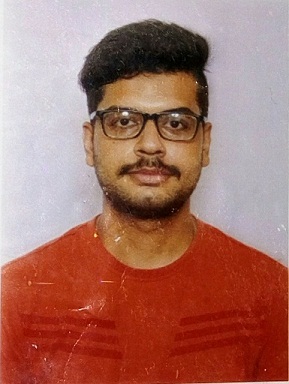
0 Published Articles View Papers

Mohit Vashisth is a Doctoral Research Fellow at Jindal School of International Affairs, O.P. Jindal Global University, Haryana, India. He was earlier associated with Max Security Solutions as a coordinator at Global Security Operations Centre (GSOC). At MAX, he was responsible for intelligence gathering, analysis, travel & security operations, and risk mitigation on a global scale during routine and emergency. He also has three years of experience working in the renewable energy sector. He is an engineering graduate with a major in Electronics and Communications and holds a Master’s degree in Political Science and International Affairs. His research areas are critical and disruptive defence technologies, counter-terrorism and Open-Source Intelligence (OSINT). He can be reached at https://www.linkedin.com/in/mohit-vashisth-29a4501b1/

15 Published Articles View Papers
Nikita Vats

Nikita Vats

Author

Nikita Vats is the Managing Editor at the Centre for Security and Strategy Studies (CeSCube). She is the co-founder of the Centre for New Age Warfare Studies (CNAWS). She is a PhD candidate at the Jindal School of International Affairs, O.P. Jindal Global University, India. She previously served as a Research Associate at the National Maritime Foundation, where she contributed to maritime and strategic policy research. She holds a B.Sc. (Hons.) in Chemistry from the University of Delhi and an M.Sc. in Chemistry from Panjab University. She also holds a Master's degree in Political Science and International Relations. Her research interests span traditional and non-traditional security issues and strategic affairs.

17 Published Articles View Papers

Dr. Sanghamitra Sarma is independent strategic analyst and former Research Fellow, Indian Council of World Affairs, New Delhi.

1 Published Articles View Papers
S

Sagar N

Author

Sagar N is Masters Student at Jindal School of International Affairs, OP Jindal Global University.The views expressed are personal.

1 Published Articles View Papers

Paritosh Tengshe is student of BA in Global Affairs at Jindal School of International Affairs, O P Jindal University, India

1 Published Articles View Papers

Shreya Johar, is a third year, undergraduate student at O.P Jindal Global University pursuing B.A (Hons) Global Affairs. Being from the forces background one got intrigued with subjects pertaining to defence and military strategy, South Asian and South East Asian politics and security, Maritime affairs and conflict and peace studies. While in college one interned for Defstrat, a defence magazine which further kindled my interest in the constantly changing military and security scenario globally given the complexities arising through constantly shifting political climate around the world. In a shrinking world, where national interests seem to dominate international requirements it is difficult to identify singular independent international interests. Studying subjects that relate to the ever-changing structure of interconnected communities, strategizing today’s requirement is of grave importance. She is research Intern with CESCUBE

2 Published Articles View Papers
Displaying 133 - 144 of 167 results.
SUBMISSIONS & GUIDELINES

Interested in Publishing Policy Research at CeSCube?

We welcome analytical papers, policy briefs, and expert commentaries from scholars, defense analysts, and domain specialists.

Author Guidelines & Submissions