Supply Chains and Complicity: The Role of Global Corporations in Forced Labour in Xinjiang
The Xinjiang Uyghur Autonomous Region occupies a central position within contemporary global supply chains, particularly in sectors such as cotton, textiles, and polysilicon production. As international scrutiny over alleged human rights violations and forced labour practices in the region has intensified, global corporations have increasingly faced questions regarding their direct and indirect exposure to labour governance systems embedded within Xinjiang’s political economy. This article examines the structural relationship between state policy, international legal frameworks, and corporate supply chain practices in Xinjiang. It argues that the complexity and opacity of modern production networks create conditions in which multinational corporations may become implicated in systems associated with coercive labour practices, even without direct operational involvement. Through an analysis of international labour law, corporate due diligence frameworks, and global trade interdependencies, the paper highlights the growing challenges of balancing economic integration with human rights accountability in an increasingly interconnected global economy.
Introduction: Xinjiang in Global Political Economy
The Xinjiang Uyghur Autonomous Region (XUAR), located in the northwestern part of the People’s Republic of China (PRC), occupies a position of significant geopolitical and economic importance. Rich in natural resources, including oil, gas, and minerals, and strategically positioned along major transnational trade routes, Xinjiang has become central to China’s domestic development strategy and its broader integration into global markets. At the same time, the region has been the subject of sustained international scrutiny due to allegations of widespread human rights violations affecting Uyghur and other predominantly Muslim minority populations.
Within the contemporary global political economy, supply chains operate across multiple jurisdictions, linking production sites to international markets through layered networks of suppliers, subcontractors, and logistical infrastructures. In this context, Xinjiang’s role as a major producer of raw materials particularly cotton and polysilicon have drawn attention to the potential intersection between global consumption and localized systems of labour governance.
This paper asks: To what extent are global corporations implicated, directly or indirectly, in forced labour practices in Xinjiang through their integration into global supply chains? In addressing this question, the analysis adopts a structural and legal approach, examining how state policies, international legal norms, and corporate practices interact within a complex system of economic production.
Background: State Policy and Labour Governance in Xinjiang
State policy in Xinjiang has been shaped by a combination of security-oriented and developmental approaches. Initiatives such as the “Strike Hard” campaigns, first introduced in the 1990s, have focused on countering what the state defines as threats related to separatism, extremism, and terrorism. These policies have been accompanied by extensive surveillance systems and expanded administrative control over social, religious, and cultural practices.
Parallel to these measures, the “Western Development” policy has aimed to accelerate economic growth in China’s western regions, including Xinjiang, through infrastructure investment, resource extraction, and industrial expansion. While these policies have contributed to economic integration, they have also been associated with significant demographic and labour market transformations.
Reports by the United Nations Office of the High Commissioner for Human Rights, Human Rights Watch, and Amnesty International have raised concerns regarding the existence of large-scale detention facilities, restrictions on religious and cultural expression, and the implementation of labour transfer programs. These reports suggest that certain forms of labour mobilization may not meet internationally recognized standards of free and voluntary employment.
International Legal Frameworks and State Responsibility
The evaluation of labour practices in Xinjiang must be situated within the framework of international law. The prohibition of forced labour is a well-established principle, reflected in conventions developed by the International Labour Organization, which define forced labour as work performed involuntarily under threat of penalty.
In addition, broader human rights protections are articulated in instruments such as the Universal Declaration of Human Rights (UDHR), the International Covenant on Civil and Political Rights (ICCPR), and the Convention Against Torture (CAT). While the PRC has ratified certain treaties, including CAT, it has signed but not ratified the ICCPR, creating a complex legal position with respect to enforcement and accountability.
Global Supply Chains and Corporate Exposure
Xinjiang plays a significant role in global supply chains, particularly in sectors such as textiles and renewable energy. The region is estimated to produce a substantial share of the world’s cotton and is a major hub for polysilicon, a key component in solar panel manufacturing. These materials are integrated into global production networks through multiple tiers of suppliers.
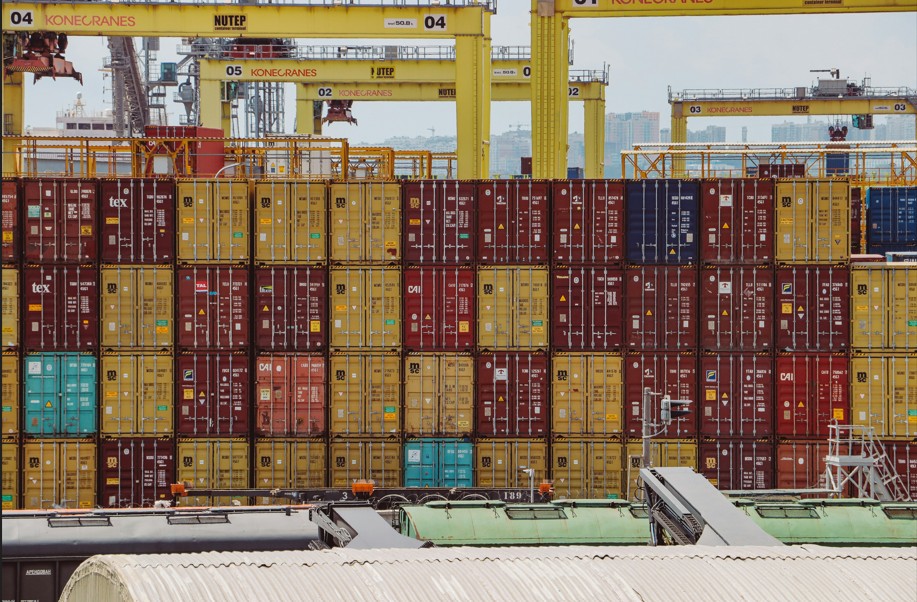
Modern supply chains are characterized by their complexity. Corporations often engage directly only with first-tier suppliers, while production processes further upstream involve second- and third-tier entities that may operate with limited transparency. This structural opacity makes it difficult to fully trace the origins of raw materials and labour conditions.
As a result, even corporations that do not directly operate in Xinjiang may be indirectly linked to the region through intermediate suppliers. This raises important questions regarding corporate due diligence and the effectiveness of existing monitoring mechanisms. While many multinational firms have adopted Environmental, Social, and Governance (ESG) frameworks, the ability of these frameworks to address deeply embedded structural risks remains limited.
Structural Labour Disparities and Economic Transformation
Economic development in Xinjiang has been accompanied by significant changes in labour markets and demographic composition. Policies encouraging migration and industrialization have contributed to shifts in employment patterns, with different groups occupying distinct positions within the economic hierarchy.
Some studies have identified patterns in which local populations are disproportionately represented in lower-wage or labour-intensive sectors, while higher-skilled and administrative roles are more frequently occupied by migrant workers. Labour transfer programs, often framed as poverty alleviation initiatives, have been scrutinized for the degree to which participation is voluntary and consistent with international labour standards.
Within this context, the relationship between economic development and labour governance becomes central. The integration of Xinjiang into national and global markets cannot be understood solely in terms of growth indicators; it must also be analyzed in terms of the conditions under which labour is organized and deployed.
Detention Systems and Labour Programs
A significant body of reporting has focused on the establishment of detention facilities described by the state as vocational education and training centers. According to various international organizations, these facilities have been associated with restrictions on movement, limited legal recourse, and structured programs aimed at ideological and vocational training.
Accounts collected by research institutions and advocacy organizations describe a range of experiences within these systems, including regulated daily routines, restricted communication with family members, and participation in work-related activities. While the state maintains that such programs are intended for rehabilitation and skills development, critics argue that the conditions under which they operate raise concerns under international legal definitions of arbitrary detention and forced labour.
Given the limited access for independent verification, assessments of these systems rely on a combination of satellite imagery, leaked documents, and testimonial evidence, all of which contribute to an evolving but contested body of knowledge.
Infrastructure, Trade, and the Political Economy of Integration
Xinjiang’s integration into global trade networks has been facilitated by extensive infrastructure development, including highways, railways, and energy pipelines connecting the region to Central Asia and beyond. These projects form part of broader efforts to enhance connectivity and economic exchange.
From a political economy perspective, infrastructure serves not only as a tool for development but also as a mechanism for consolidating state presence and enabling resource flows. The expansion of logistics networks supports both domestic industrialization and international trade, linking local production to global markets.
In this framework, global corporations benefit from access to raw materials and production capabilities, while also becoming embedded indirectly in the institutional environment that shapes those resources. This does not necessarily imply intentional complicity but highlights the structural interdependencies that characterize contemporary supply chains.
Corporate Responsibility and Governance Challenges
The question of corporate responsibility in Xinjiang is closely tied to broader debates on business and human rights. The United Nations Guiding Principles on Business and Human Rights establish that corporations have a responsibility to conduct due diligence to identify, prevent, and mitigate adverse human rights impacts.
However, implementing these principles in contexts characterized by limited transparency and restricted access presents significant challenges. Auditing mechanisms may be constrained, supply chain disclosures may be incomplete, and external verification may be difficult.
As a result, corporate responses have varied, ranging from public commitments to disengagement from certain suppliers to continued operations with enhanced monitoring frameworks. The effectiveness of these strategies remains uncertain, particularly when structural conditions limit the availability of reliable information.
Conclusion
The analysis presented in this paper demonstrates that the relationship between global corporations and labour practices in Xinjiang cannot be understood in isolation from the broader political, legal, and economic context. Supply chains linking Xinjiang to global markets operate within a framework shaped by state policy, international legal norms, and corporate governance structures.
While direct evidence of corporate intent may be limited, the structural characteristics of global production networks create conditions in which exposure to regions associated with labour rights concerns becomes difficult to avoid. This raises important questions regarding the adequacy of existing regulatory frameworks and the capacity of corporations to effectively manage human rights risks.
Addressing these challenges requires a multi-level approach involving stronger international coordination, enhanced transparency mechanisms, and more robust enforcement of due diligence standards. As global supply chains continue to expand, the intersection between economic integration and human rights will remain a critical area of inquiry for scholars and policymakers alike.
End Note
1. Lehr, Amy. "Addressing forced labor in the Xinjiang Uyghur autonomous region." Center for Strategic & International Studies Brief: Washington, DC, USA (2020).
2. Donohue, Samuel. "Combating Forced Labor in Global Supply Chains Through Modern Technology: A Case Study of Uyghurs in Xinjiang." (2025).
3. Kriebitz, Alexander, and Raphael Max. "The Xinjiang case and its implications from a business ethics perspective." Human Rights Review 21, no. 3 (2020): 243-265.
4. Murphy, Laura. "Laundering cotton: How Xinjiang cotton is obscured in international supply chains." (2021)
Image Source: Photo by Khristina Sergeychik on Unsplash
(The views expressed are those of the author and do not represent the views of CESCUBE)

Jiyaa is a second-year student at Christ University pursuing a BA in Liberal Arts with a specialization in Political Science and Global Governance. She is passionate about international relations, global policy, and social justice, and is particularly interested in how international institutions address complex global challenges. She has participated in academic exchange programs, including a summer program at the American University in Cairo (AUC), where she explored global perspectives on development and policy. She has also worked with the Rajiv Gandhi Foundation, engaging in policy discussions, storytelling, and community-focused initiatives. Through these experiences, she aims to build a career in international relations and public policy.