
LIVE DISPATCH
• Arctic Geopolitics: From Frozen Frontier to Global Contest • From Physical Borders to Intelligent Borders: The Evolution of India's Border Security Architecture • Bridging the Fifth-Generation Gap: India's Su-57E Dilemma, AMCA, and Strategic Autonomy • AI Driven Cyberwarfare and National Security • Regulation as Power? The EU, US and China in the Geopolitics of Artificial Intelligence • The Continuing U.S. Regime-Change Toolkit: Color Revolutions, Political Influence, and Vietnam • The New Defence Architecture: Deconstructing the India-Belgium Geostrategic Win • Digital Pathways to Extremism: An Investigative Study of ISIS and Al-Qaeda's Use of Digital Platforms in India • Beyond Oil: Saudi Arabia's Civil Nuclear Deal with the United States • Strategic Autonomy in the Age of Weaponised Interdependence: India’s Geopolitical Dilemma • The Myth of Mankind's Inheritance: China, the US, and the Battle for the Clarion-Clipperton Zone • China’s Grey-Zone Strategy in the Indian Ocean: Implications for India’s Maritime Security • China's Surveillance Architecture in the Bay of Bengal and Its Strategic Implications • Europe’s Digital Dependence: Can the EU Achieve Strategic Autonomy? • A Reformer for an Institution in Decline: What does the Next Secretary-General Inherits? • Cuba’s Economic Crisis and Strategic Relevance: A Peripheral State in Renewed Great Power Competition • Silent Depths, Loud Signals: Nuclear Deterrence Infrastructure and the Crisis-Stability Costs of India’s Indo-Pacific Maritime Partnerships • Loss and Damage Finance: From COP28 Pledges to Policy Architecture • Securing India's Digital Frontiers: Cybersecurity Challenges and Strategic Responses in the Age of Hybrid Warfare • Beyond Consultation: BIMSTEC's Emerging Role in Regional Intelligence and Security Cooperation • Prism of Dragon’s Maritime Assertiveness: Regional Implications and India’s Strategic Options • Between the Desert and the Savannah: Conflict and the Political Economy of Instability in the Sahel • The Architecture of Cooperation: Navigating East Asia's Geopolitical Landscape • The Politics of Ali Khamenei's Funeral • From Civil Nuclear Power to Nuclear Hedging: Saudi Arabia, Iran and the Emerging Nuclear Security Dilemma in the Middle East • Operation Sindoor and the Changing Dynamics of India–Pakistan Security • The Invisible Front: China-Pakistan Grey-Zone Operations • Generative AI, Labour Sovereignty, and the Geoeconomics of India's Service Economy • India's Agentic AI Strategy Needs Authority Budgets before Autonomy Scales • India's AI Diplomacy and the Future of Strategic Technologies • Lethal Autonomous Weapons Systems and the Governance Deficit: Challenges to International Humanitarian Law and Accountability • Great Power Rivalry and the Crisis of the United Nations • Ten Years After Brexit: Regret, Reform, or Reversal? • Sports, Strategy and Statecraft of Mega Sporting Events as Geoeconomic Instruments: Qatar 2022 to Saudi Arabia 2034 • Hardening the Quad: From Strategic Dialogue to Operational Cooperation • The Maghreb of States: Identity, Sovereignty, and the Limits of Non-Interference • Beyond the Battlefield: Understanding Unconventional Security Challenges in Contemporary Geopolitics • Trapped in Deterrence: Nuclear Stability and the Persistence of Conflict in South Asia • Extended Deterrence Under Strain: Credibility, Assurance, and the Stability-Instability Paradox in the Indo-Pacific • Maritime India: Security, Trade, and Great Power Competition • Arctic Geopolitics: From Frozen Frontier to Global Contest • From Physical Borders to Intelligent Borders: The Evolution of India's Border Security Architecture • Bridging the Fifth-Generation Gap: India's Su-57E Dilemma, AMCA, and Strategic Autonomy • AI Driven Cyberwarfare and National Security • Regulation as Power? The EU, US and China in the Geopolitics of Artificial Intelligence • The Continuing U.S. Regime-Change Toolkit: Color Revolutions, Political Influence, and Vietnam • The New Defence Architecture: Deconstructing the India-Belgium Geostrategic Win • Digital Pathways to Extremism: An Investigative Study of ISIS and Al-Qaeda's Use of Digital Platforms in India • Beyond Oil: Saudi Arabia's Civil Nuclear Deal with the United States • Strategic Autonomy in the Age of Weaponised Interdependence: India’s Geopolitical Dilemma • The Myth of Mankind's Inheritance: China, the US, and the Battle for the Clarion-Clipperton Zone • China’s Grey-Zone Strategy in the Indian Ocean: Implications for India’s Maritime Security • China's Surveillance Architecture in the Bay of Bengal and Its Strategic Implications • Europe’s Digital Dependence: Can the EU Achieve Strategic Autonomy? • A Reformer for an Institution in Decline: What does the Next Secretary-General Inherits? • Cuba’s Economic Crisis and Strategic Relevance: A Peripheral State in Renewed Great Power Competition • Silent Depths, Loud Signals: Nuclear Deterrence Infrastructure and the Crisis-Stability Costs of India’s Indo-Pacific Maritime Partnerships • Loss and Damage Finance: From COP28 Pledges to Policy Architecture • Securing India's Digital Frontiers: Cybersecurity Challenges and Strategic Responses in the Age of Hybrid Warfare • Beyond Consultation: BIMSTEC's Emerging Role in Regional Intelligence and Security Cooperation • Prism of Dragon’s Maritime Assertiveness: Regional Implications and India’s Strategic Options • Between the Desert and the Savannah: Conflict and the Political Economy of Instability in the Sahel • The Architecture of Cooperation: Navigating East Asia's Geopolitical Landscape • The Politics of Ali Khamenei's Funeral • From Civil Nuclear Power to Nuclear Hedging: Saudi Arabia, Iran and the Emerging Nuclear Security Dilemma in the Middle East • Operation Sindoor and the Changing Dynamics of India–Pakistan Security • The Invisible Front: China-Pakistan Grey-Zone Operations • Generative AI, Labour Sovereignty, and the Geoeconomics of India's Service Economy • India's Agentic AI Strategy Needs Authority Budgets before Autonomy Scales • India's AI Diplomacy and the Future of Strategic Technologies • Lethal Autonomous Weapons Systems and the Governance Deficit: Challenges to International Humanitarian Law and Accountability • Great Power Rivalry and the Crisis of the United Nations • Ten Years After Brexit: Regret, Reform, or Reversal? • Sports, Strategy and Statecraft of Mega Sporting Events as Geoeconomic Instruments: Qatar 2022 to Saudi Arabia 2034 • Hardening the Quad: From Strategic Dialogue to Operational Cooperation • The Maghreb of States: Identity, Sovereignty, and the Limits of Non-Interference • Beyond the Battlefield: Understanding Unconventional Security Challenges in Contemporary Geopolitics • Trapped in Deterrence: Nuclear Stability and the Persistence of Conflict in South Asia • Extended Deterrence Under Strain: Credibility, Assurance, and the Stability-Instability Paradox in the Indo-Pacific • Maritime India: Security, Trade, and Great Power Competition
PUBLISHING FELLOWS & ANALYSTS

Authors & Contributing Fellows

Discover the strategic analysts, academic scholars, military veterans, and domain specialists publishing policy papers, commentaries, and threat dispatches at CeSCube.

Showing 61 - 72 of 167 Active Authors & Fellows

Mr. Pinku Jha is an Assistant Professor of Political Science at Vivekananda Global University, Jaipur, with research expertise in Indic studies, the Mahabharata, and Indian political thought. He has been a Fellow at the Impact and Policy Research Institute (IMPRI) and has edited Welfare and Development, Vol. I & II. His Ph.D. at The Maharaja Sayajirao University of Baroda explores ideas of welfare in the Mahabharata and their influence on modern Indian thinkers, blending classical texts with contemporary political discourse. Dr. Nidhi Shendurnikar has a doctoral degree in Political Science from The Maharaja Sayajirao University of Baroda, Gujarat. She has close to a decade of teaching and research experience in media and communication studies having supervised over sixty postgraduate dissertations. At present, she is an independent media educator and researcher working freelance on documentation, consultancy and research projects.

1 Published Articles View Papers

Sibani is an OSINT-trained geopolitical risk analyst with over a year of experience in real-time threat monitoring, intelligence reporting, and regional security analysis across Asia, Africa region. Her academic background in International Relations, supported by certifications in OSINT and intelligence analysis, has enabled her to deliver time-sensitive, evidence-backed assessments. She has worked with ICWA, CEAS, and Geostrata, using tools like satellite imagery and social media to monitor geopolitical risks. She is particularly interested in China's regional behavior, border tensions, and maritime strategies.

2 Published Articles View Papers

Anvi Srivastava is a Political Science student at Lady Shri Ram College for Women, with deep interests in international relations, public policy, and the intersections of gender and politics. An avid writer with a strong inclination toward research, she is also deeply committed to social justice, gender equality, and civic leadership. Her work aims to reflects a blend of academic inquiry and grassroots engagement, with a focus on creating inclusive and intersectional approaches to governance and public discourse.

2 Published Articles View Papers
Aarushi Verma

Aarushi Verma

Author

Aarushi is a fourth-year undergraduate at Ashoka University, pursuing a BA (Hons.) in History and International Relations with a minor in Political Science. She is currently writing her undergraduate thesis on the strategic use of diplomacy in curating and enabling conflict. Her academic interests lie at the intersection of strategic culture, conflict analysis, ethics of war, and the role of deception, espionage, and narrative construction in modern statecraft. She is particularly drawn to questions of power and strategy in shaping the security landscape of Asia and Europe. She may be contacted via LinkedIn at https://www.linkedin.com/in/verma-aarushi/

1 Published Articles View Papers
N

Nikita Vats

Author

Contributing Fellow at Centre for Security & Strategic Studies.

0 Published Articles View Papers

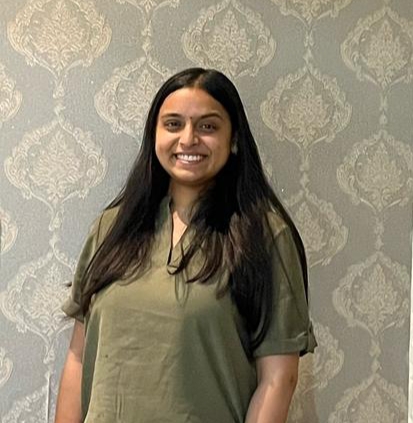
Navodita Kumari is a Research Scholar in International Relations at the Department of Political Science, University of Allahabad, Prayagraj, India. Her research primarily focuses on the evolving dynamics of India-United Arab Emirates relations and their broader geopolitical implications for India’s engagement with the Gulf region. She has deep interest in the ever-changing political scenario of the West Asia and North Africa (WANA) region and is committed to exploring its shifting realities. Her interest areas include Indian Foreign Policy, India-UAE relations, GCC countries, India-Israel relations, Israel and the Arab World, North-western Indian Ocean. A recipient of Junior Research Fellowship, she actively participates in academic seminars and conferences, contributing to scholarly discussions on international politics.
4 Published Articles View Papers
Sanighdha

Sanighdha

Author

Ms. Sanighdha is currently a Doctorate Junior Research Fellow (UGC-JRF), pursuing her Ph.D. in A.I. and National Security Laws at the Department of Laws, Panjab University, Chandigarh. Having pursued her graduation  in the field of law, she is an enrolled advocate, and has her Masters in the field of constitutional and administrative laws. She is a published poet with her two publications "The Musings of My Heart" and "My Reflective Contemplations", with the Bookleaf Publishing Agency, and additionally a published legal author with the Allahabad Law Agency, of a book titled "Indian Constitutionalism: Originalism, Living Constitutionalism and Transformative Theories", co-authored with Prof. Rattan Singh (VC, Punjab State Open University, Patiala). Additionally, she is a regular fortnightly contributing columnist to a premier defense magazine, "Life of Soldiers", and contributes to ETLegal World as well. Apart from this, she has numerous research paper publications to her credit and has presented her research papers touching socio-legal issues across international/national conferences/seminars in India. She has immense interest in issues touching upon India's defense sector and national security issues. 

3 Published Articles View Papers

Shashank Semwal has completed his Master's from the Jindal School of International Affairs in Diplomacy, Law and Business. He is currently working as an Assistant Manager at OP Jindal Global University. His research interests mainly include Chinese foreign policy.

1 Published Articles View Papers

Alakshendra Singh is currently in his third year of the BA (Global Affairs) program at the Jindal School of International Affairs, O.P. Jindal Global University, Sonipat. His academic interests lie in the fields of defence, security, and strategic studies. He is an aspiring China specialist with A1 level proficiency in the Mandarin language.

2 Published Articles View Papers
Tanveer Malik

Tanveer Malik

Author

Tanveer Malik is a writer and geopolitical analyst with a keen interest in Asia’s emerging strategic partnerships, economic resilience, and global supply chain dynamics. His work often explores the intersection of international relations, trade, and security. Tanveer aims to offer fresh perspectives on India’s global engagements and the broader Indo-Pacific landscape.

1 Published Articles View Papers

Shagun Thapliyal is a Research Associate with South Asia Foresight Network, The Millennium Project. She has completed her Masters in Diplomacy, Law and Business from OP Jindal Global University with a special interest towards the Indo-Pacific, Soft Power Diplomacy and often unexplored aspects of Geopolitics.

1 Published Articles View Papers

Divyashree Jha holds a BA (Hons) in Global Affairs from Jindal School of International Affairs. Her research interest is in the fields of governance, conflict, and development.

1 Published Articles View Papers
Displaying 61 - 72 of 167 results.
SUBMISSIONS & GUIDELINES

Interested in Publishing Policy Research at CeSCube?

We welcome analytical papers, policy briefs, and expert commentaries from scholars, defense analysts, and domain specialists.

Author Guidelines & Submissions