
LIVE DISPATCH
• A Reformer for an Institution in Decline: What does the Next Secretary-General Inherits? • Cuba’s Economic Crisis and Strategic Relevance: A Peripheral State in Renewed Great Power Competition • Silent Depths, Loud Signals: Nuclear Deterrence Infrastructure and the Crisis-Stability Costs of India’s Indo-Pacific Maritime Partnerships • Loss and Damage Finance: From COP28 Pledges to Policy Architecture • Securing India's Digital Frontiers: Cybersecurity Challenges and Strategic Responses in the Age of Hybrid Warfare • Beyond Consultation: BIMSTEC's Emerging Role in Regional Intelligence and Security Cooperation • Prism of Dragon’s Maritime Assertiveness: Regional Implications and India’s Strategic Options • Between the Desert and the Savannah: Conflict and the Political Economy of Instability in the Sahel • The Architecture of Cooperation: Navigating East Asia's Geopolitical Landscape • The Politics of Ali Khamenei's Funeral • From Civil Nuclear Power to Nuclear Hedging: Saudi Arabia, Iran and the Emerging Nuclear Security Dilemma in the Middle East • Operation Sindoor and the Changing Dynamics of India–Pakistan Security • The Invisible Front: China-Pakistan Grey-Zone Operations • Generative AI, Labour Sovereignty, and the Geoeconomics of India's Service Economy • India's Agentic AI Strategy Needs Authority Budgets before Autonomy Scales • India's AI Diplomacy and the Future of Strategic Technologies • From Physical Borders to Intelligent Borders: The Evolution of India's Border Security Architecture • Lethal Autonomous Weapons Systems and the Governance Deficit: Challenges to International Humanitarian Law and Accountability • AI Driven Cyberwarfare and National Security • Great Power Rivalry and the Crisis of the United Nations • The Continuing U.S. Regime-Change Toolkit: Color Revolutions, Political Influence, and Vietnam • Ten Years After Brexit: Regret, Reform, or Reversal? • Digital Pathways to Extremism: An Investigative Study of ISIS and Al-Qaeda's Use of Digital Platforms in India • Sports, Strategy and Statecraft of Mega Sporting Events as Geoeconomic Instruments: Qatar 2022 to Saudi Arabia 2034 • Strategic Autonomy in the Age of Weaponised Interdependence: India’s Geopolitical Dilemma • Hardening the Quad: From Strategic Dialogue to Operational Cooperation • China’s Grey-Zone Strategy in the Indian Ocean: Implications for India’s Maritime Security • The Maghreb of States: Identity, Sovereignty, and the Limits of Non-Interference • Europe’s Digital Dependence: Can the EU Achieve Strategic Autonomy? • Beyond the Battlefield: Understanding Unconventional Security Challenges in Contemporary Geopolitics • Trapped in Deterrence: Nuclear Stability and the Persistence of Conflict in South Asia • Extended Deterrence Under Strain: Credibility, Assurance, and the Stability-Instability Paradox in the Indo-Pacific • Maritime India: Security, Trade, and Great Power Competition • Beyond Ukraine: Understanding Putin's Vision of Russian Power • Silicon Sovereignty: How Semiconductors Are Redrawing Global Power Hierarchies • The Negative Impact of US–Iran War on the Pacific Region • BRICS Expansion and the Multipolar Moment: Opportunity or Strategic Contradiction? • Foot-Dragging as Feminism: Iran, South Korea, and the Ungovernable Body • Beyond Proximity: Why the UAE Occupies a Growing Place in Iran’s Strategic Calculus • Why Fiji Matters: The New Geopolitics of the Indo-Pacific Islands • A Reformer for an Institution in Decline: What does the Next Secretary-General Inherits? • Cuba’s Economic Crisis and Strategic Relevance: A Peripheral State in Renewed Great Power Competition • Silent Depths, Loud Signals: Nuclear Deterrence Infrastructure and the Crisis-Stability Costs of India’s Indo-Pacific Maritime Partnerships • Loss and Damage Finance: From COP28 Pledges to Policy Architecture • Securing India's Digital Frontiers: Cybersecurity Challenges and Strategic Responses in the Age of Hybrid Warfare • Beyond Consultation: BIMSTEC's Emerging Role in Regional Intelligence and Security Cooperation • Prism of Dragon’s Maritime Assertiveness: Regional Implications and India’s Strategic Options • Between the Desert and the Savannah: Conflict and the Political Economy of Instability in the Sahel • The Architecture of Cooperation: Navigating East Asia's Geopolitical Landscape • The Politics of Ali Khamenei's Funeral • From Civil Nuclear Power to Nuclear Hedging: Saudi Arabia, Iran and the Emerging Nuclear Security Dilemma in the Middle East • Operation Sindoor and the Changing Dynamics of India–Pakistan Security • The Invisible Front: China-Pakistan Grey-Zone Operations • Generative AI, Labour Sovereignty, and the Geoeconomics of India's Service Economy • India's Agentic AI Strategy Needs Authority Budgets before Autonomy Scales • India's AI Diplomacy and the Future of Strategic Technologies • From Physical Borders to Intelligent Borders: The Evolution of India's Border Security Architecture • Lethal Autonomous Weapons Systems and the Governance Deficit: Challenges to International Humanitarian Law and Accountability • AI Driven Cyberwarfare and National Security • Great Power Rivalry and the Crisis of the United Nations • The Continuing U.S. Regime-Change Toolkit: Color Revolutions, Political Influence, and Vietnam • Ten Years After Brexit: Regret, Reform, or Reversal? • Digital Pathways to Extremism: An Investigative Study of ISIS and Al-Qaeda's Use of Digital Platforms in India • Sports, Strategy and Statecraft of Mega Sporting Events as Geoeconomic Instruments: Qatar 2022 to Saudi Arabia 2034 • Strategic Autonomy in the Age of Weaponised Interdependence: India’s Geopolitical Dilemma • Hardening the Quad: From Strategic Dialogue to Operational Cooperation • China’s Grey-Zone Strategy in the Indian Ocean: Implications for India’s Maritime Security • The Maghreb of States: Identity, Sovereignty, and the Limits of Non-Interference • Europe’s Digital Dependence: Can the EU Achieve Strategic Autonomy? • Beyond the Battlefield: Understanding Unconventional Security Challenges in Contemporary Geopolitics • Trapped in Deterrence: Nuclear Stability and the Persistence of Conflict in South Asia • Extended Deterrence Under Strain: Credibility, Assurance, and the Stability-Instability Paradox in the Indo-Pacific • Maritime India: Security, Trade, and Great Power Competition • Beyond Ukraine: Understanding Putin's Vision of Russian Power • Silicon Sovereignty: How Semiconductors Are Redrawing Global Power Hierarchies • The Negative Impact of US–Iran War on the Pacific Region • BRICS Expansion and the Multipolar Moment: Opportunity or Strategic Contradiction? • Foot-Dragging as Feminism: Iran, South Korea, and the Ungovernable Body • Beyond Proximity: Why the UAE Occupies a Growing Place in Iran’s Strategic Calculus • Why Fiji Matters: The New Geopolitics of the Indo-Pacific Islands

Search CeSCube Intelligence Archives

Search Results for “International Organisations”

107 total results found
ADVERTISEMENT
Terror Groups in Philippines: A Status Report
Terrorism
Krupa Vasani • Oct 12, 2020

Terror Groups in Philippines: A Status Report

On July 2020, the Philippines' President Rodrigo Duterte signed the Anti-Terrorism Act of 2020. The Act was approved by both the Philippines’ Senate and House of Representatives in February and June 2020 respectively. This new legislation w...

2140
India and INSTC: A Critical Appraisal
Economics
Krupa Vasani • Sep 8, 2020

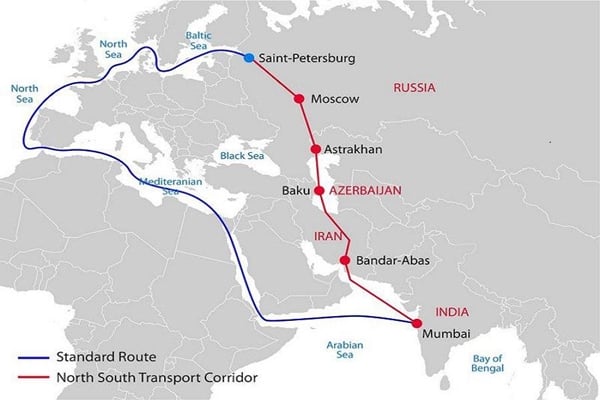
India and INSTC: A Critical Appraisal

International infrastructure projects are not new in the international politics. They have become pivotal in shaping the foreign policies of the states in various sectors of cooperation, both bilaterally and multilaterally. It also promotes...

2903
TAPI Gas Pipeline: Opportunities and Challenges
Economics
Krupa Vasani • Aug 29, 2020

TAPI Gas Pipeline: Opportunities and Challenges

Energy infrastructure has garnered its own place in the international politics discourse. South Asia over the years has become a fertile ground for several hydropower and gas projects. With this, it has brought new conflicts in limelight an...

6048
Islamic State’s influence across Afghanistan
Terrorism
Krupa Vasani • Jul 27, 2020

Islamic State’s influence across Afghanistan

Islamic State (IS) emerged as splinter group from a faction of Al-Qaeda in Iraq, during a chaotic conflict in 2003 after the United States led invasion. The vision, which still remains constant, is to establish an ‘Islamic Caliphate’, cover...

2034
Islamic State expansion in Indonesia
Intelligence

Islamic State expansion in Indonesia

Kritika Karmakar analyses the reasons for increase in Islamic state sympathisers in Indonesia, and why few major religious organisations are subscribing to the concept of Islamic caliphate. Islamic State sympathisers have been on the rise, ...

2053
Displaying 97 - 107 of{' '} 107 results.

Discover more

Geopolitical Focus Areas