The Emerging Maritime Rivalry in the Western Indian Ocean: India’s Response to Extra-Regional Powers
The Western Indian Ocean has emerged as a critical theatre of geopolitical contestation, driven by intensifying competition among regional and extra-regional powers. With China’s expanding maritime footprint, Iran’s strategic assertiveness, and growing Gulf involvement, the region is witnessing a transformation in its security architecture and power dynamics .
Against this backdrop, India is recalibrating its maritime strategy through enhanced naval presence, capacity-building, and deeper partnerships with key actors such as the UAE, Oman, and France. The article examines how New Delhi is navigating these challenges to safeguard its strategic interests while reinforcing a rules-based order in an increasingly contested maritime space.
1. Introduction
The Western Indian Ocean (WIO) is a vital maritime space that plays a crucial role in geographical connectivity, energy security, and global trade. Situated at the crossroads of Asia, Africa, and the Middle East, the WIO houses key maritime chokepoints, such as the Strait of Hormuz, Bab-el-Mandeb, and the Mozambique channel. As per the International Energy Agency (IEA), in 2025, around 20 million barrels of crude oil passed through the Strait of Hormuz (which connects the Persian Gulf with the Arabian Sea), which accounted for nearly 25% of the world’s seaborne oil trade.[i] Similarly, the Bab-el-Mandeb, which connects the Red Sea with the Gulf of Aden, handles around 10-12 percent of global maritime trade, and nearly 9 million barrels of oil per day pass through it.[ii] Therefore, WIO is the strategic heart for global energy and trade security, while at the same time it holds crucial significance for nation-states to strengthen their geostrategic presence in the global maritime landscape.
For India, the WIO is not only crucial for its energy security and trade connectivity but also for ensuring its overall national security. However, the increasing foothold of many regional and extra-regional players in the WIO has intensified naval diplomacy and maritime geopolitics in the region, making it crucial for New Delhi to take proactive steps. The increasing Chinese footprint, Iran’s naval assertiveness, and deepening fragility of the maritime order in the WIO have led New Delhi to recalibrate its maritime strategy by diversifying partnerships, focusing on mission-based deployments, enhancing the maritime presence and resilience of the Indian Navy through modernization, etc.
With this context, this paper aims to explain India’s maritime strategy in the Western Indian Ocean amid the rising presence of China, Iran, and the other Gulf countries and how this affects its partnerships with the UAE, Oman, and France.
Figure 1: The Western Indian Ocean

2. Regional and Extra-regional Powers in the WIO
2.1 China’s Expanding Footprint
Assertive maritime diplomacy has become a defining feature of Beijing’s contemporary foreign policy to emerge as a major player across the Indo-Pacific region. Be it the South China Sea (SCS - Beijing’s primary maritime theatre) or the Indian Ocean Region (IOR - Beijing’s secondary maritime theatre)[iii], People’s Liberation Army Navy (PLAN) has followed a similar approach such as building dual-use infrastructures, deploying submarines, and research or survey vessels emphatically, though it has been less militarily assertive in the IOR as compared to the SCS. However, Beijing has made significant efforts to expand its footprint in the larger IOR, particularly by leveraging its partnership with the WIO littoral states. Disguised in the statement of ‘securing its sea-borne energy supplies,’ Beijing started its operations in the WIO through counter-piracy movements in the Gulf of Aden in 2008.[iv] However, acquiring the Gwadar port in Pakistan provided it with substantial capability and establishing its first overseas naval and military base in Djibouti in 2017 further institutionalized the military presence of Beijing in the WIO. Besides, strategic investments and strengthened diplomatic ties with the East African, West Asian and IOR littoral nations through the maritime component of the One Belt One Road (OBOR) or the Maritime Silk Road Initiative and its strategic ‘string of pearls’ policy, have further bolstered the regional presence of Beijing with grand ambitions (see Table 1). This entangled military and economic foothold of China in India’s expanded neighbourhood has constantly rung alarm bells for the policy makers in New Delhi.
Table 1: Chinese Port investments in the WIO

Source: https://www.gatewayhouse.in/chinas-ports-in-the-indian-ocean-region/
2.2 Iran and the other Gulf Countries in the WIO
The Persian Gulf, the Gulf of Oman and the Strait of Hormuz form a crucial part of the international maritime routes located in the WIO. Their criticality to the stability and safety of the global order is very much visible with the recent Iran-US-Israel war. The Iranian regime and the Islamic Revolutionary Guard Corps (IRGC) have time and again leveraged its strategic location and used the maritime shipping lanes as a geopolitical weapon, turning the region into a maritime theater of conflict whose implications are reverberating across the globe in the form of a severe economic and energy security crisis. Furthermore, this ‘asymmetric hedging’ policy of Iran has brought the conflict even to the broader IOR when the US targeted the Iranian frigate IRIS Dena in the Exclusive Economic Zone (EEZ) of Sri Lanka.[v] The incident has also brought into light the fragility of collective diplomacy and the absence of a collective response by the IOR littoral states. It demands that New Delhi and other responsible nations of the region strengthen organisations like the Indian Ocean Rim Association (IORA), Indian Ocean Naval Symposium (IONS), and the Colombo Security Conclave (CSC), otherwise it might become another battleground for the hegemonic powers and their notorious interests.
With regard to the presence of the other Gulf countries like the UAE and Saudi Arabia in the WIO, it can be said that with the uneven and changing policies of the United States towards the Gulf region, they have invested heavily in strengthening their naval capabilities by building maritime infrastructure and ports in their own territory and along the East African Coast and the Red Sea area. For instance, the UAE has developed ports like Berbera, Bosaso, Assab etc., in the Horn of Africa region and also possess significant control over the Yemeni Island of Socotra.[vi] Although their primary goal has been to limit Iranian influence, they also have the desire to expand their strategic presence as major players in the WIO (Table 2).
Table 2: Primary Players of the Gulf Region and their Ambitions in the WIO

Source: https://www.icwa.in/pdfs/DrsankalpSHP.pdf
3. India’s Maritime Strategy in the WIO and its Partnership with the UAE, Oman, and France
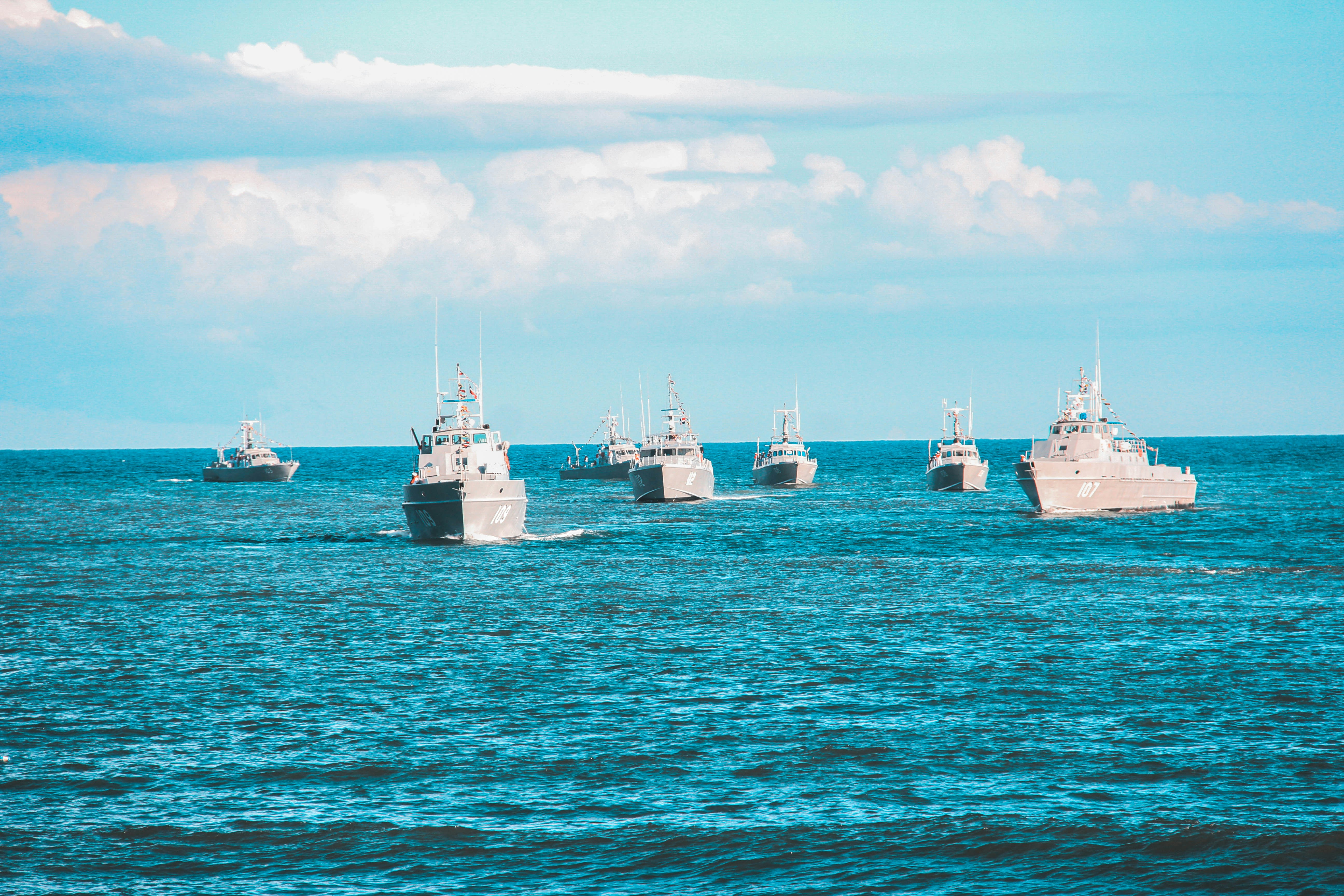
India’s maritime strategy in the WIO has become more proactive in recent years in light of the rising influence of extra-regional powers and its aspiration to become a major security provider in the broader IOR. New Delhi has contributed significantly to regional stability and maritime security in the WIO by actively engaging in anti-piracy operations, humanitarian assistance and disaster relief (HADR) initiatives, and bilateral and multilateral naval exercises.[vii] Besides, the Indian Navy has played a major role in securing the sea lanes of communication, escorting vessels, and above all, enhancing the operational capability of WIO littoral states’ navies through capacity-building programmes.[viii] India has also expanded its own naval capability by acquiring advanced surface and underwater submarines, combatants, and maritime surveillance systems to enhance the maritime domain awareness and make the Indian Navy combat-ready.[ix] Furthermore, New Delhi has also strengthened bilateral ties with like-minded countries to ensure freedom of navigation in the WIO, and France, the UAE, and Oman are some of the crucial among them.
The UAE and Oman are India’s prominent naval counterparts in the WIO. They are the members of the Indian Ocean Rim Association (IORA) and play a crucial role in the Indian Ocean security architecture. Besides, Naseem Al-Bahr (between India and Oman since 1993) and Gulf Waves, formerly known as Zayed Talwar (between India and the UAE since 2021) naval exercises have helped in coordinating bilateral interoperability and maritime interdiction among these countries.[x] Furthermore, the access to the port of Duqm in Oman by the Indian Navy (IN) has become a symbol of strong naval cooperation between the two countries and provides the IN with the key logistics and operational support required for forward deployments in the WIO.[xi]
It is beyond doubt to state that France is a very crucial and strategic partner of India in the WIO. Their shared interests and concerns regarding the freedom and openness of the broader IOR have brought them together bilaterally as well through multilateral initiatives. The release of the ‘Joint Strategic Vision of India-France Cooperation in the Indian Ocean Region’ during the 2018 visit of the French President Emanuel Macron has acted as a guide of maritime cooperation.[xii] At the bilateral level, both countries regularly conduct the joint naval exercise called ‘Varuna,’ joint surveillance and coordinated patrols by both the navies have also enhanced interoperability between them. The IN also has access to the Reunion Islands, a French territory in the IOR, further deepening the naval partnerships. Besides, at the multilateral level, the India-France-UAE trilateral has also emerged as a symbol of an integrated security architecture in the WIO. The platform has the potential to become a major upholder of the ‘free, open, and inclusive IOR’ as all three countries are in close consonance with each other and openly support each other’s values and ideas concerning the IOR.[xiii]
4. Conclusion
For New Delhi, the Western Indian Ocean holds key strategic significance for its energy, economic, and maritime security. Guided by the principles of open seas and rules-based international order, initiatives such as the Security and Growth for all in the Region (SAGAR) have not only established it as a credible naval power in the region but have also reinforced its geographic centrality. The evolving power dynamics in the WIO, such as the persistent presence of extra-regional powers and ripple effects of West Asian conflicts demand a more proactive approach from New Delhi and other responsible powers present in the region. In this scenario, the roles played by India, France, the UAE, and Oman as primary maritime actors will further open the gate for ‘collective maritime response’ in the maritime landscape of the WIO.
Endnotes:
[i] International Energy Agency. 2026. “Strait of Hormuz Factsheet.” February 2026. https://www.iea.org/about/oil-security-and-emergency-response/strait-of-hormuz
[ii] Shukla, Piyush. 2026. “Oil Prices in for More Shock – What could Happen if the Houthis of Yemen Close the Bab-el-Mandeb Strait.” The Economic Times, March 16, 2026. https://economictimes.indiatimes.com/news/international/us/oil-prices-in-for-more-shock-what-could-happen-if-the-houthis-of-yemen-close-the-bab-al-mandab-strait/articleshow/129609085.cms’from=mdr
[iii] Mukherjee, Tuneer. 2020. “Sino-Indian Maritime Competition: Shadow Fighting in the Indian Ocean.” South Asian Voices, June 7, 2020. https://southasianvoices.org/sino-indian-maritime-competition-shadow-fighting-in-the-indian-ocean/#:~:text=China%20and%20India%20have%20progressively,power%20will%20be%20well%2Dmatched.&text=Source:%20Chapter%20Six:%20Asia%20(,:1%2C%20220%2D323
[iv] Pant, Harsh V. “China’s Expanding Footprint in the Indian Ocean Region and the Indian Pushback.” In Indian Foreign Policy and Economic Challenges: Friends, Enemies, and Controversies, edited by Silvio Beretta, Axel Berkofsky, and Giuseppe Lannini. Springer Nature: Switzerland, 2023.
[v] Surjana, Bojapati. 2026. “The War on Iran Comes to the Indian Ocean.” Tricontinental Asia, March 18, 2026. https://thetricontinental.org/asia/war-iran-india/
[vi] Wilson, Michael W. 2025. “Ports, Power, and Proxy Wars: GCC Engagement in the Horn of Africa.” Gulf Research Centre, June 10, 2025. https://www.grc.net/single-commentary/265#:~:text=Economically%2C%20the%20UAE's%20interest%20in,open%20a%20base%20in%20Djibouti.
[vii] Gurjar, Sankalp. 2022. “Geopolitics of the Northwest Indian Ocean: Exploring the Strategic Presence of West Asian States.” Indian Council of World Affairs, October 2022. https://www.icwa.in/pdfs/DrsankalpSHP.pdf
[viii] Ibid.
[ix] Mazzucco, Leonardo Jacopo Maria. 2026. “India’s Quiet Maritime Turn in Middle Eastern Waters.” Observer Research Foundation Middle East, April 7, 2026. https://orfme.org/expert-speak/indias-quiet-maritime-turn-in-middle-eastern-waters/
[x] Ibid.
[xi] Khan, Farhan. 2024. “The Multi-faceted Trajectory of the India-Oman Strategic Partnership.” Manohar Parrikar Institute for Defence Studies and Analysis, May 1, 2024. https://idsa.in/publisher/backgrounder/the-multi-faceted-trajectory-of-the-india-oman-strategic-partnership
[xii] Ministry of External Affairs. 2018. “India-France Joint Statement During State Visit of President of France to India.” March 10, 2018. https://www.mea.gov.in/bilateral-documents.htm’dtl/29596/IndiaFrance_Joint_Statement_during_State_visit_of_President_of_France_to_India_March_10_2018
[xiii] Lawale, S., and T. Ahmad. 2021. “UAE-India-France Trilateral: A Mechanism to Advance Strategic Autonomy in the Indo-Pacific?” Asian Journal of Middle Eastern and Islamic Studies 15 (4): 468–88. doi:10.1080/25765949.2021.2024401. https://www.tandfonline.com/doi/full/10.1080/25765949.2021.2024401#d1e361
Photo by Asael Peña on Unsplash
(The views expressed are those of the author and do not represent the views of CESCUBE)

Navodita Kumari is a Research Scholar in International Relations at the Department of Political Science, University of Allahabad, Prayagraj, India. Her research primarily focuses on the evolving dynamics of India-United Arab Emirates relations and their broader geopolitical implications for India’s engagement with the Gulf region. She has deep interest in the ever-changing political scenario of the West Asia and North Africa (WANA) region and is committed to exploring its shifting realities. Her interest areas include Indian Foreign Policy, India-UAE relations, GCC countries, India-Israel relations, Israel and the Arab World, North-western Indian Ocean. A recipient of Junior Research Fellowship, she actively participates in academic seminars and conferences, contributing to scholarly discussions on international politics.