
Rules as Weapons: India’s Geoeconomic Realism in a Fragmented Global Economy
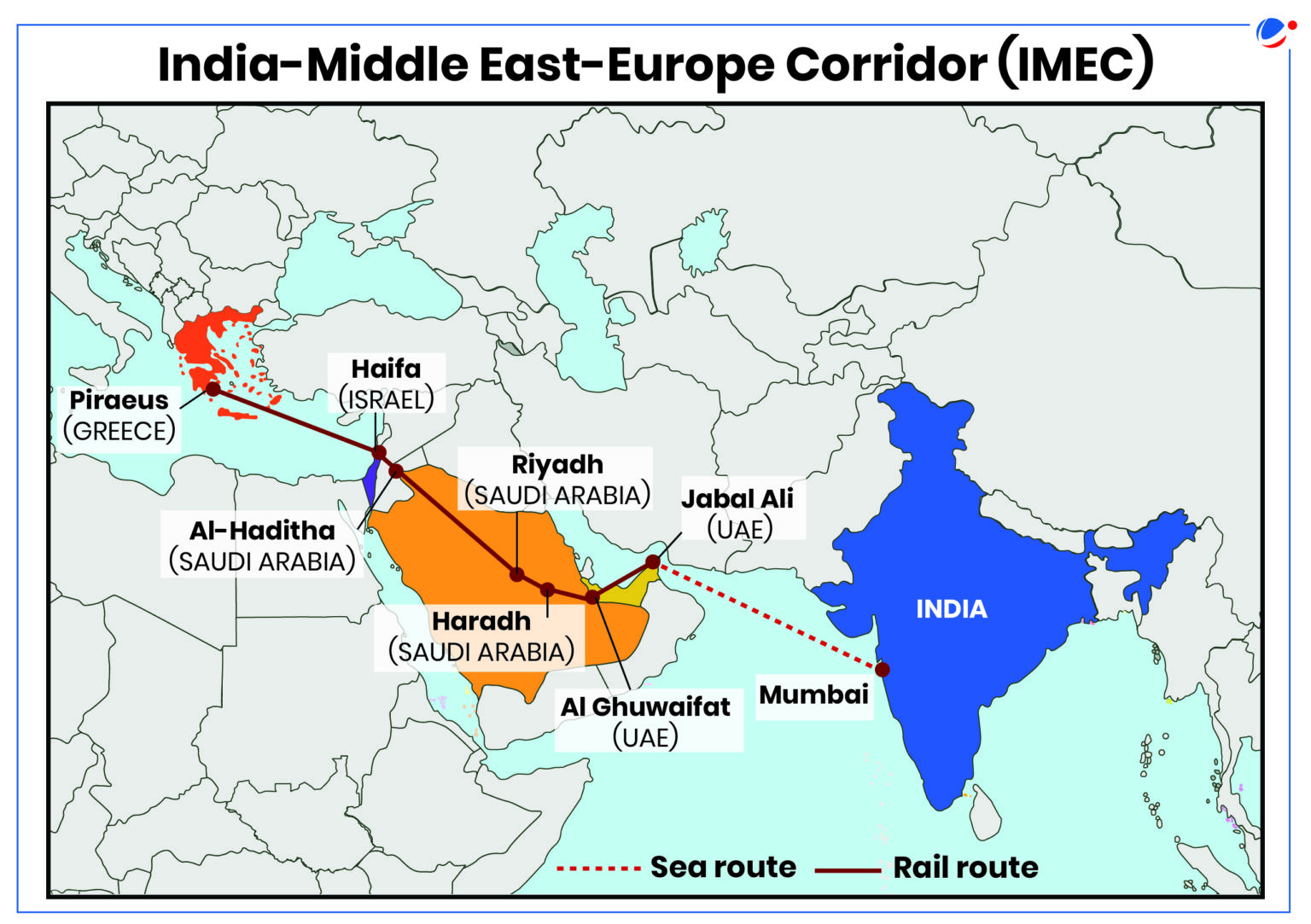
The contemporary architecture of global trade increasingly positions economic regulation as a central instrument of geopolitical power. Within the framework of geoeconomic realism, international competition is progressively articulated through regulatory standards, compliance regimes, and networked economic structures rather than through traditional instruments of military coercion. Mechanisms such as the European Union’s Carbon Border Adjustment Mechanism (CBAM) and the expanding role of ESG-based regulatory frameworks illustrate how market access is increasingly conditioned by rule-density and process-based standards. Under such conditions, power operates not solely through exclusion but through conditional inclusion within hierarchical trade networks, where participation is structured by compliance with externally defined norms. In this evolving environment, India emerges as a connector state, navigating fragmented economic blocs and overlapping regulatory regimes through corridor-based connectivity initiatives such as the 'International North–South Transport Corridor' (INSTC) and the 'India–Middle East–Europe Economic Corridor' (IMEEC). The strategic challenge, therefore, lies not in resisting economic integration but in managing the tension between market-based governance and sovereign autonomy, as norms, standards, and regulatory infrastructures increasingly function as instruments of contemporary geoeconomic statecraft.
Introduction
In early 2026, a shipment of Indian primary-processed steel destined for the Port of Rotterdam in the Netherlands was neither turned away by a naval blockade nor displaced by a cheaper competitor. It was halted by a digital Carbon Border Adjustment Mechanism (CBAM) certificate. Despite being identical in chemical composition to its European counterparts, the product was rendered commercially unviable by a 22 per cent levy on its embedded emissions -a tax imposed on the ‘invisible history’ of its production.
As the European Union’s Carbon Border Adjustment Mechanism entered its definitive phase, the Mumbai-based steel exporter lost a 7,000-tonne order when the new carbon levy added nearly Rs. 6 crore to the transaction cost, effectively pricing the deal out of feasibility. At the same time, multiple Indian consignments remained idle at several European ports, held by incomplete digital emissions declarations, and punished by procedural obstructions.
This Dissertation signals a shift in how economic exclusion is produced in the international system and strengthens the observation that the effective ‘border’ of global trade is increasingly constituted through regulatory compliance rather than physical geography. The effective boundary of global trade is no longer constituted solely by tariffs, quotas, or territorial control, but by regulatory compliance and process-based standards. In such a context, explanations of power that privilege military hardware and territorial control alone struggle to capture the full range of coercive mechanisms at work. If access to markets can be constrained not by fleets or tariffs but by compliance metrics, then the grammar through which global conflict is articulated warrants a closer examination.
2.1 The Inheritance: From Survival to the Grammar of Conflict
From its origins, classical realism conceptualised international politics as a struggle for survival under conditions of anarchy, in which states defined their national interest primarily in terms of power and intent (Morgenthau and Nations 1948). Power, in this tradition, was understood broadly as the capacity to shape outcomes in one’s favour, though the analytical focus remained anchored on military capability and diplomatic manoeuvre. Later, structural realism refined this understanding by shifting attention from intent to constraint. As Waltz famously argued, the anarchic structure of the international system compels states to prioritise security over prosperity and to pursue relative gains to avoid strategic dependence. (Waltz 1993)
Yet the contemporary global state of affairs in trade and connectivity indicates limits to the utility of force among great powers; economic power has become increasingly important in determining the primacy or subordination of states. This shift does not signal the end of rivalry but a transformation in the instruments through which it is pursued. As Edward Luttwak observed in his seminal account on geoeconomics, the concept of the adversarial “logic of conflict” has not disappeared; it has migrated into the “grammar of commerce.” Their strategic objectives (Luttwak 1990).
This phenomenon, however, demands a more precise definition of statecraft that bridges the analytical divide between economics and security. Blackwill provides such clarity by defining geoeconomics as the use of economic instruments to promote and defend national interests and to produce advantageous geopolitical outcomes(Blackwill 2018). Increasingly so, this perspective directly challenges liberal accounts that treat trade as a strictly positive-sum arena detached from power politics. Instead, as Mastanduno demonstrates, the boundary between international political economy and security studies has steadily eroded, revealing how trade policy, investment, and financial flows are routinely mobilised to satisfy security aims and strategic objectives.(Mastanduno 1999) Under these conditions, economic interdependence functions not merely as a pathway to peace but also as a domain of vulnerability and leverage, operating as a functional analogue to coercion under conditions of constraints. For instance, nowhere is this dynamic more visible than in the competition for influence across Eurasia. As Mukhia and Zou argue, the contemporary “New Great Game” in the Heartland is no longer fought with cavalry but with connectivity & corridors such as the International North–South Transport Corridor (INSTC) (Mukhia and Zou 2022). This form of strategic competition affirms Gilpin's (2016)insight that the international division of labour is fundamentally a political act, shaped by the distribution of power and state interests rather than market efficiency alone.
For rising powers such as India, navigating these hierarchical economic relations generates a persistent dilemma between the demands of international integration and the imperative of preserving domestic autonomy. Having established that the logic of conflict increasingly operates through the language of commerce, the next section turns to the specific mechanisms through which states manipulate the architecture of global trade.
2.2 Geoeconomic Realism: Hierarchy in the Market and Conditional Inclusion
Building on the realist inheritance outlined in the previous section, geoeconomic realism is defined here as an analytical framework in which economic instruments are treated as primary mechanisms for achieving geopolitical outcomes. If economics now operates as an instrument of conflict, trade flows cannot be viewed as neutral or purely efficiency-driven. Instead, they encode hierarchy, dependence, and leverage. As Scholvin and Wigell argue, this represents “power politics by economic means”, where the strategic and the economic are no longer analytically separable (Scholvin and Wigell 2018). Mastanduno reinforces this position by showing that economic interdependence is not merely a pathway to mutual prosperity but a domain of vulnerability in which asymmetries can be exploited to impose political outcomes. (Mastanduno 1999)
Within this framework, power is exercised not only through exclusion but through conditional inclusion. Global trade networks are often imagined as flat and rules-based, yet in practice, they are deeply hierarchical. As Farrell and Newman demonstrate, these networks are prone to “weaponisation”, as control over central nodes allows dominant states to impose costs on others (Farrell and Newman 2019).
The ability to set standards, define compliance requirements, or regulate access thus functions as a structural chokepoint. Clayton et al. (2025) formalise that states controlled by a hegemon. Market access, in this sense, is never unconditional; it is granted on terms set by those who occupy privileged positions within the network.
For firms embedded in these structures, hierarchy is not an abstract feature of the international system but a material constraint shaping survival and strategy. Compliance regimes, disclosure standards, and regulatory processes generate differentiated cost structures across firms and sectors. This produces what may be described as heterogeneous exposure to global rules, where actors integrated into different corridors face uneven regulatory burdens. As (Aiyar and Ohnsorge(2024) argue, these dynamics contribute to a broader process of geoeconomic fragmentation, in which economic exchange increasingly occurs within politically aligned blocs, transforming interdependence into an instrument of coercion.
Yet fragmentation also generates structural opportunities. Because no single hegemon can fully internalise or discipline the global system, brokerage spaces emerge. Aiyar and Ohnsorge conceptualise these actors as “connector countries,” states that deliberately cultivate ties across competing blocs to mitigate risk and preserve autonomy. India is conceptualised here as such a structural Pivot State. Its strategic posture reflects a form of institutional bilingualism, allowing it to operate simultaneously within the formal language of WTO legality and the informal signalling of geopolitical alignment. This flexibility is not a diplomatic preference or normative stance, but a structural response to systemic breakdown. Fragmentation precedes agency; India’s room for manoeuvre is produced by the system’s inability to enforce a singular economic order. (Aiyar and Ohnsorge 2024)
This bilingualism is reflected not only in India’s diplomatic positioning but in the uneven regulatory exposure faced by Indian firms across distinct trade corridors. Geoeconomic strategy, in this view, is not simply about trade facilitation or growth, but about converting connectivity itself into an economic base of power (Scholvin and Wigell 2018) With the structural logic of hierarchy and the pivot state established, the analysis now turns to the concrete mechanisms through which India operationalises this strategy across competing economic corridors.
2.3 Normative Leverage: Rule-Density as Power
In this section, the focus is on how geoeconomic power is increasingly exercised through Normative Leverage rather than through direct military or economic threats. Normative leverage operates not through moral persuasion, but through rule-density, understood as the expansion of measurable, auditable, and enforceable standards within the global economy. Environmental, Social, and Governance (ESG) frameworks exemplify this shift. Their influence lies less in ethical agreement and more in their ability to regulate market access and shape capital flows. To understand this mechanism, it is essential to distinguish between intentional coercion and structural discipline.
Intentional coercion refers to targeted and deliberate actions such as sanctions, tariffs, or export controls aimed at altering the behaviour of a specific state or actor. Chachko and Newman (2025) conceptualize economic coercion as measures designed to influence another state’s policy choices through the imposition of costs. Structural discipline, by contrast, functions indirectly and continuously. global economic networks are characterized by asymmetries and “lock-in effects,” where participation requires adherence to the rules set by actors controlling central nodes. In such systems, compliance becomes a condition of connectivity rather than a response to explicit threats (Farrell and Newman 2019).
This logic helps explain why ESG frameworks can be understood as soft sanctions with reputational cover. Traditional sanctions rely on controlling financial chokepoints by restricting access to key hubs. However, Farrell and Newman show that power can also operate through surveillance and information advantages within networks. ESG standards generate a form of continuous visibility, where firms are monitored through disclosure and reporting requirements. This produces clear asymmetries between norm-setters and norm-takers. (Farrell and Newman 2019). Norm-setters, largely located in the United States and the European Union, possess the market size and institutional capacity necessary to design and interpret standards. Park demonstrates how these actors project their regulatory preferences extraterritorially, effectively exporting domestic norms by making compliance a prerequisite for market access. Norm-takers, often in the Global South, must internalize these standards even when they impose significant economic or administrative burdens.(Park 2025)
This framework does not deny the ethical content of ESG norms but clarifies their political effects. Zhang critiques the market-centric design of ESG regulation, arguing that it prioritizes market mechanisms over legal or redistributive interventions and rests on the assumption that socially responsible behaviour aligns with profitability (Zhang 2025). Park further observes that sustainable finance regulation is “sticky,” remaining resilient despite political contestation while still allowing states to pursue strategic interests. In this sense, norms are not external to realism but constitute its contemporary operational form (Park 2025). As Chachko and Newman suggest, this system resembles a form of hegemonic economic coercion with limited input legitimacy. Compliance thus becomes the price of participation in the global economy, transforming markets into sites where sovereignty is constrained by regulatory access. Norms, in this sense, are not external to realism but constitute its contemporary operational form. (Chachko and Newman 2025)
2.4 The ESG–WTO Interface: From Rules to Conditions
This section situates normative leverage within the changing architecture of global trade governance. Rather than interpreting the crisis of the World Trade Organization (WTO) as institutional paralysis or replacement, it is more accurately understood as a process of layering. Traditional instruments such as tariffs and quotas continue to exist, but they are increasingly supplemented by regulatory conditions that shape market access. As Aiyar and Ohnsorge argue, the global economy is undergoing a phase of “geoeconomic fragmentation,” in which trade and investment flows are increasingly confined to politically and ideologically aligned partners. In this context, contestation has shifted away from border measures toward production processes and internal regulatory standards, particularly in high-value and carbon-intensive sectors (Aiyar and Ohnsorge 2024).
This shift is further illustrated by Pokrovskaya et al. (2023), who note that in the current geopolitical environment, Environmental, Social, and Governance (ESG) strategies are no longer voluntary corporate commitments. Instead, they have become structural prerequisites for participation in global markets. Exporting firms are increasingly “forced to comply with ESG principles” as a condition for partner selection, effectively layering non-financial reporting and sustainability standards onto existing trade rules. This supports the view that regulatory density now functions as a primary filter for market access. The European Union’s Carbon Border Adjustment Mechanism (CBAM) represents a critical inflection point in this transition from rules to conditions. Erdogdu (2025) describes CBAM as a “groundbreaking policy” that applies carbon pricing to imports, thereby incentivizing non-EU producers to meet EU environmental standards to retain market access. This marks a shift from rule-based trade, where compliance is negotiated, to condition-based trade, where compliance becomes a prerequisite for entry. Bellora and Fontagné explain that CBAM operates by extending the EU Emissions Trading System (ETS) to imported goods, requiring importers to purchase carbon allowances based on the emissions intensity of production. As a result, regulatory compliance related to production methods directly determines border passage.
CBAM operates in a legal grey zone between WTO compatibility and strategic unilateralism. Bellora and Fontagné (2022) highlight the tension inherent in its design: while the EU seeks formal compliance with WTO principles, CBAM risks violating norms of non-discrimination, exposing a structural conflict between multilateral trade rules and domestic regulatory objectives. Erdogdu reinforces this point by noting that despite its environmental justification, CBAM functions as a geopolitical instrument and is widely perceived by critics as a protectionist measure. Ultimately, regulatory standards increasingly function as de facto border controls. Erdogdu warns that these mechanisms disproportionately burden developing countries, where limited administrative capacity and high compliance costs act as significant barriers to trade. (Erdogdu 2025)
In line with Aiyar and Ohnsorge’s (2024) analysis of geoeconomic fragmentation, this process suggests that global economic relations are becoming defined less by formal WTO rules and more by the ability of states and firms to align with the regulatory preferences of dominant economic blocs.
2.5 Synthesis: Strategic Statecraft in Overlapping Regimes
In sum this article concludes by attempt to bring together geoeconomic realism and normative leverage into a single framework for analysing India’s strategic statecraft. To do so, it is useful to return to some foundational insights in the field from where we began. Several decades ago, Edward Luttwak (1990) argued that as the direct use of military force became more costly and less effective, international competition would increasingly shift into the economic realm. Conflict, he suggested, would not disappear but would be expressed through what he called the “logic of conflict in the grammar of commerce.” In the contemporary period, this grammar has evolved. Power is no longer exercised primarily through tariffs and quotas alone, but through dense systems of standards, regulations, and conditions. As material coercion becomes more inefficient, leverage increasingly migrates into markets and rules, transforming trade from a space of exchange into a space of influence. (Luttwak 1990)
India’s recent connectivity initiatives, such as the 'India–Middle East–Europe Economic Corridor' (IMEEC) and the 'International North–South Transport Corridor' (INSTC), operate within these overlapping regimes. While geopolitics shapes the strategic direction of these corridors, geoeconomics determines their regulatory and commercial viability. This interaction is especially visible in sectors subject to both traditional trade disciplines and process-based regulation, such as the EU’s 'Carbon Border Adjustment Mechanism' (CBAM) and ESG reporting requirements. Firms operating along these routes face cumulative constraints rather than substitutive ones. As Zhang notes, this form of market design embeds political objectives within market mechanisms, subordinating direct legal intervention to the operational logic of capital accumulation. (Zhang 2025)
From this perspective, India’s strategic challenge is not a choice between geopolitics and geoeconomics, but the coordination of the two. This aligns with Aiyar and Ohnsorge’s description of “connector countries,” which maintain economic linkages across ideologically divided blocs. (Aiyar and Ohnsorge 2024). However, this role is not passive. It requires the preservation of normative autonomy, understood as the ability to selectively internalise external standards without undermining domestic development priorities or strategic agency.
At the same time, geoeconomic realism does not imply deterministic outcomes. It highlights structural incentives and rising costs rather than unavoidable paths. As Scholvin and Wigell (2018) argues, states respond differently to similar pressures depending on domestic capacity and strategic orientation. Some pursue resistance through neo-mercantilist policies, while others adapt through institutional alignment. India’s capacity to function as a connector will therefore depend on its ability to mitigate the “chokepoint effects” identified by Farrell and Newman( 2019), while retaining flexibility within global networks.
This synthesis ultimately returns the analysis to a classic tension identified by Robert Gilpin (2016) : the conflict between the logic of the state and the logic of the market. Gilpin observed that states are grounded in territoriality, loyalty, and exclusivity, whereas markets operate through functional integration and contractual relations. Under conditions of normative leverage, this tension reappears in the form of extraterritorial standards that constrain domestic policy autonomy. (Gilpin 2016)
Overall, the analysis in this article has tried to establish that the sustainability of India’s rise depends not on resisting integration but on managing the tension between market-based governance and sovereign control in an era of normative leverage. Coercion has migrated from force to markets, norms and standards have become instruments of power, and fragmented orders increasingly reward states that can navigate overlapping regimes through selective compliance rather than rigid alignment. If geoeconomic realism holds, firms embedded in high-compliance corridors should face systematically higher regulatory exposure than comparable firms operating through lower-density pathways. High-compliance regimes, particularly those shaped by EU standards where non-compliance costs can be prohibitive, stand in contrast to corridors where rule-density remains lower and discretion higher. Corridor choice thus becomes more than a logistical decision; as it functions as an instrument of strategic statecraft.
The question is no longer whether India participates in global value chains, but how it does so, and at what regulatory cost & the point to be examined being whether India is actively navigating the dynamics of “weaponized interdependence” identified by Farrell and Newman (2019), or passively absorbing the compliance burdens imposed by external norm-setters.
Bibliography:
1. Aiyar, S., and F. Ohnsorge. 2024. “Geoeconomic Fragmentation and ‘Connector’ Countries’.” IMF Working Paper.
2. Bellora, C., and L. Fontagné. 2022. “EU in Search of a WTO-Compatible Carbon Border Adjustment Mechanism.”
3. Blackwill, R. 2018. “Indo-Pacific Strategy in an Era of Geoeconomics.” Keynote Speech Delivered at the Japan Forum on International Relations Conference (Tokyo).
4. Chachko, E., and A. Newman. 2025. “Building Norms of Economic Coercion’.” Journal of International Economic Law 28 (3): 542–59.
5. Clayton, C., M. Maggiori, and J. Schreger. 2025. “Putting economics back into geoeconomics.” NBER Working Paper, no. 33681.
6. Erdogdu, E. 2025. “The Carbon Border Adjustment Mechanism: Opportunities and Challenges for Non-EU Countries’.” Wiley Interdisciplinary Reviews: Energy and Environment 14 (1): 70000.
7. Farrell, H., and A. L. Newman. 2019. “Weaponized Interdependence: How Global Economic Networks Shape State Coercion’.” International Security 44 (1): 42–79.
8. Gilpin, R. G. 2016. The Political Economy of International Relations. Princeton University Press.
9. Luttwak, E. N. 1990. “From Geopolitics to Geo-Economics: Logic of Conflict, Grammar of Commerce’.” The National Interest 20: 17–23.
10. Mastanduno, M. 1999. “Economic Statecraft, Interdependence, and National Security: Agendas for Research’.” Security Studies 9 (1–2): 288–316.
11. Morgenthau, H. J., and P. A. Nations. 1948. The Struggle for Power and Peace. Alfred A. Knopf.
12. Mukhia, A., and X. Zou. 2022. “Mapping India’s (Re)Connection to Eurasia’.” Russia in Global Affairs 20 (2): 184.
13. Park, S. K. 2025. “The Sticky, Muddled Geopolitics of Sustainable Finance Regulation’.” Journal of International Economic Law.
14. Pokrovskaya, O., M. Drozdova, P. Kurenkov, S. Vakulenko, and M. Karyshev. 2023. “Current Paradigm of ESG Strategy in a New Geopolitical Situation’.” E3S Web of Conferences 402: 08053.
15. Scholvin, S., and M. Wigell. 2018. “Power Politics by Economic Means: Geoeconomics as an Analytical Approach and Foreign Policy Practice’.” Comparative Strategy 37 (1): 73–84.
16. Waltz, K. N. 1993. “The Emerging Structure of International Politics’.” International Security 18 (2): 44–79.
17. Zhang, K. 2025. “Until We Meet Again: ESG, Law, and Geopolitics’.” Journal of International Economic Law, ahead of print. https://doi.org/10.1093/jiel/jgaf041.
Image Source: India-Middle East-Europe Economic Corridor (IMEEC), https://www.imec.international/about/
(The views expressed are those of the author and do not represent the views of CESCUBE)

Aaditya Dewansh is a postgraduate scholar of International Relations at South Asian University, New Delhi. His research interests include Geoeconomics, Grand Strategy, and the Geopolitics of the Indian Ocean Region. He also holds a Master’s degree in Arts and Aesthetics from Jawaharlal Nehru University. Beyond academia, his wider interests include travel & tourism, world cinema, and global popular culture.