
Just Energy Transitions in Emerging Economies: Managing Growth and Decarbonisation Simultaneously
The growing and emerging nations, whether in the BRICS group (Including the Expanded members) or other economic and geopolitical settings face a dilemma as they balance their path down a tightrope where they have to focus on a steady growth rate in order to catch up with the core nations, while also adhering to the commitments under the Paris Agreement. The Just Energy Transitions (JET) aims at facilitating a shift from fossil fuels to renewable energy sources ensuring the process is equitable, inclusive, and sustainable.
The objectives include introducing green jobs, to uplift the afflicted workers and preserve communities vulnerable to the changing economic conditions, while also incorporating the aspects of equitable energy access and a just process to countries considered peripheral, creating a multidimensional impact rather than merely focusing on a shift in the technological market.
The energy system popularised throughout the last few decades has had a detrimental impact on the climate reflecting in the catastrophic repercussions ranging from extreme regularities in weather conditions to a rising global temperature jeopardising the upcoming generations in ways beyond anticipation. This has been deliberated over various conferences and summits over the years like the UNFCCC Conference of the Parties in the Rio Summit 1992, starting from the Stockholm Summit in 1972, to the landmark Paris Agreement in 2015, followed by the COP 29 or the “Finance COP” in 2024 and COP 30 in 2025 in Belem.
The investment in renewable energy is considered the most pivotal in order to make a critical difference to the current emission practices. Emerging nations incorporate more than 80% of the global population and are responsible for most of the recent emissions. However, most of these countries don’t have access to global energy. The countries also find themselves in a dilemma as coal and gas act as cheap and affordable sources of energy which is pivotal for industrial eminence. However, the commitments under the Paris agreement, working on the decarbonisation to limit the warming to 1.5 degrees Celsius. This coupled with the low energy investments received by the emerging markets requires a proportional adjustment.
The notion of “just” transitions incorporates the concept of equity, considering communities and workers that are vulnerable to these changing conditions, creates green jobs and ensures a just distribution of benefits. This is very similar to the concept of Common but Differentiated Responsibilities (CBDR) where developed nations are encouraged to support considering the national circumstances and promoting growth.
Pivotal Developments in the Recent Past
The Just Energy Transitions Programmes (JETPs) have been expanding, evident in countries like South Africa where the investment has expanded to 8.5 billion dollars from the International Partner’s Group to assist South Africa in reducing their dependency on Coal-Fired Power Plants. South Africa was followed by three other countries who have officially declared intentions to invest in JETPs, namely, Indonesia in COP 27 in November 2022, Vietnam in December 2022, and Senegal in June 2023. There have been discussions going on for a deal in India as well.
Indonesia has worked towards creating a transparent JETP Progress Report with the JETP Secretariat, Working Groups and Stakeholders. The Progress Report of 2025 has worked towards crucial policies including financial decisions, suggestions for a domestic supply chain for renewable energy, decarbonisation, etc.
BRICS Roadmap for Energy Cooperation for the 2025-2030 period shows a roadmap for promoting energy access, encouraging the use of sustainable fuels, just transitions, technological neutrality and a focus on South-South Platform, governance, trade, and investment.
The 2024 reports of IRENA and G20 have incorporated promoting sustainable fuels, energy planning, and risk analysis in emerging markets and developing economies. The IRENA World Energy Transitions Outlook 2024 emphasises electrification, efficiency, and renewable energy as major factors on the 1.5 degrees Celsius pathway.
IRENA Global Landscape of Energy Transition Finance 2025 Report has highlighted a major hike of up to $2.4T in investments in 2024. A record 585 GW of capacity addition has been witnessed with renewable accounting for over 90% of the total power expansions.
Significant Stakeholders
The National Governments or the policymakers in the Emerging Economies and Developing Countries, like India working on their energy growth, South Africa promoting JET investment plans, etc. BRICS Institutions like New Development Banks and other official energy committees for finance and cooperation in sectors like technology. International Partners like the G7 or International Partners Group donors, along with Multinational groupings like the World Bank, G20 and IRENA, assisting in planning and incorporating finance as well. The Private Sectors, which will include the investors in sectors like the E.V., Renewable energy, green hydrogen, along with domestic coal firms. The Civil Society, including Labour Unions and other created communities that ensure the reskilling and protection of the workers.
Assessment
The concept of balancing growth and decarbonisation are attainable especially with contexts set by BRICS. However, the process remains intricate due to an unequal global progress, pertaining structural hindrances, and the volatile geopolitical scenarios. Another major advantage resides in the cost of renewable energy which makes it competitive to the prices of coal, encouraging EMDEs to invest in low carbon systems, evidence of which can be seen in the solar and wind additions in 2025.
However, hindrances in the form of extensive capital costs, weak grids, gaps in regulation, and a firm dependency on fossil fuel for the jobs and baseload power. Moreover, EMDEs, apart from China, Brazil, and India receive only 10-15% of the total global flow. While the JETPs show a path forward, problems like delays, funding cliffs, and reliability on loans create a barrier. Without initiatives like the BRICS led South-South program and risk mitigation, the short-term growth in EMDEs will delay the objectives of the Paris Agreement.
The Upcoming Scenarios
While the best-case scenario will witness Strong Finances, appropriate co-ordination in BRICS initiatives, sources of renewable energy, can lead to high-green led growth, and an inclusive job environment, there is a medium likelihood of the following scenario seeing fruit, if focused on fulfilling the pledges, cost-effective technology, and strengthening the already laden platforms.
The most likely case will witness a pragmatic approach and a limited progress which will be driven by partial inflows, and a focus on national security. The following scenario is also affected by volatility and selective expansion of the JETP and can lead to a moderate growth, a gradual process of decarbonisation, and a threat of persisting risks of inequality.
The worst-case scenario might have to deal with delayed transitions, nations prioritising growth over climate, a shortage in financing, risks increasing, reversals, donor fatigue. Here the growth will be completely dependent on fossil, emissions rising, insecurity.
Implications
The Economic implications revolve around green chains that will create green jobs. However, mismanagement can also lead to higher cost and increasing unemployment. The Social implications can be multifaceted based on the framework and path taken. While an inclusive approach can reduce inequality, a failure to do so can increase the inequality of energy distribution as well as poverty.
The Geopolitical standpoint also deems significant as BRICS tries to push a Global South agenda. While a better energy equality and green-jo environment is on the cards, any mishappening can afflict the objectives of the Paris Agreement and increase the climate risks.
The Environmental implications remain at the centre of the bargain. While a successful transition into an environment of renewables can reduce harmful emissions, any shortcomings or delays would lead to a high-carbon and will threaten the global temperature threshold of 1.5 degrees Celsius.
Recommendations
· Create a BRICS technology sharing platform that deals with the renewables under the 2025-2030 mandate; to share Wind, Solar and Green Hydrogen energy patents and best practices related to the field, with an objective of enhancing the cost-effectives of EMDE deployments by reducing it to at least a 20%.
· Work towards National JET Platforms which are necessary for every country with a unified interface driven by a common investment pathway, inclusive governance and aim at regulatory efficiency, upgrading grid networks and expanding on social investments.
· Launch green bonds and concessions through National Development Banks, which will reduce the costs for the Emerging Markets and Developing Countries, focusing on a renewable and just transition.
· Invest in vocational training programs and create a social safety net for at least 50,000 workers by 2030, encompassing a curriculum on renewables and community funds.
· Create Independent bodies that oversee and regulate the JETPs agreeing upon mandates significant and reasonable to every stakeholder.
Conclusion
Just Energy Transitions are significant where the choice is between an environmentally sustainable future and one which offers an equitable workforce conditions with job security. The JET through various initiatives and JETPs offer a non-zero-sum solution that promotes a sustainable industrial future. A co-ordinated BRICS action, unified national plans and support from both public and private spheres can drive the following transition delivering inclusive development, energy security, and a gradual path towards Paris Agreement Objectives. While immediate success is highly unlikely, a pragmatic approach facilitating equitable conditions will lead to success in the upcoming years.
References
1. BRICS Committee of Senior Energy Officials. Roadmap for BRICS Energy Cooperation 2025-2030. May 17, 2025. http://brics.br/pt-br/documentos/meio-ambiente-clima-e-gestao-de-desastres/roadmap-for-brics-energy-cooperation-2025-2030.pdf/@@download/file.
2. Carnegie Endowment for International Peace. "The Just Energy Transition Partnership Crossroads." October 20, 2025. https://carnegieendowment.org/research/2025/10/the-just-energy-transition-partnership-crossroads.
3. International Renewable Energy Agency (IRENA). Renewable Capacity Statistics 2025. Abu Dhabi: IRENA, 2025. https://www.irena.org/Publications/2025/Mar/Renewable-capacity-statistics-2025.
4. International Renewable Energy Agency (IRENA). World Energy Transitions Outlook 2024: 1.5°C Pathway. Abu Dhabi: IRENA, November 2024. https://www.irena.org/Publications/2024/Nov/World-Energy-Transitions-Outlook-2024.
5. International Renewable Energy Agency (IRENA) and Climate Policy Initiative (CPI). Global Landscape of Energy Transition Finance 2025. Abu Dhabi: IRENA, November 2025. https://www.irena.org/-/media/Files/IRENA/Agency/Publication/2025/Nov/IRENA_CPI_FIN_Global_landscape_energy_transition_finance_2025.pdf.
6. JETP Indonesia Secretariat. JETP Progress Report 2025. December 2025. https://jetp-id.org/news/jetp-reports-2025.
7. Just Energy Transition Partnership (JETP) Knowledge Hub. Various updates on JETP implementation in South Africa and Indonesia, 2025–2026. https://www.jetknowledge.org/.
8. McKinsey & Company. "Renewable Energy in Emerging Markets: Accelerated Uptake in 2025." 2025. (Industry analysis report referenced in deployment trends.)
9. Selvaraju, S. Just-Energy-Transition-Partnership Grants and Country Platforms: Lessons from Indonesia and South Africa. Just Transition Finance, November 2025. https://justtransitionfinance.org/wp-content/uploads/2025/11/Just-Energy-Transition-Partnership-grants-and-country-platforms-lessons-from-Indonesia-and-South-Africa.pdf.
10. UK Government. "12-Month Just Energy Transition Partnership Leaders’ Update 2025." December 9, 2025. https://www.gov.uk/government/news/12-month-just-energy-transition-partnership-leaders-update-2025.
11. World Resources Institute (WRI). "Clean Energy Investment Trends in Emerging Markets." 2025. (Referenced for investment skew data.)
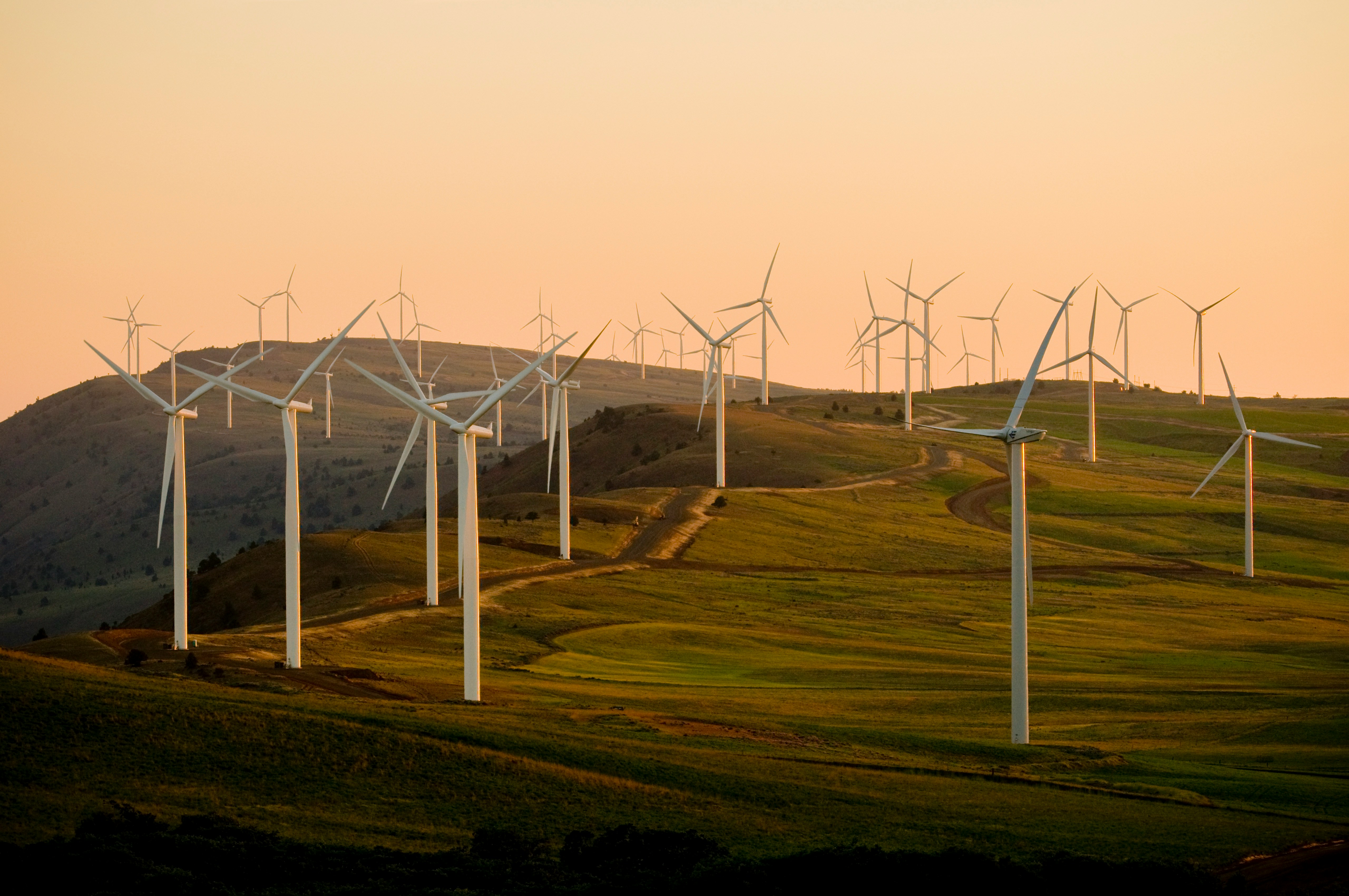
Photo by American Public Power Association on Unsplash
(The views expressed are those of the author and do not represent the views of CESCUBE)

Bhaskar Jha is a master's student in OP Jindal Global University. He is a budding researcher who has prior research experience gained at research centres and think tanks like the The Indian Netizens Co. And Center For Land Warfare Studies. He is a Political Science Gold Medalist and takes keen interest in Geopolitical hedging and Security Studies.