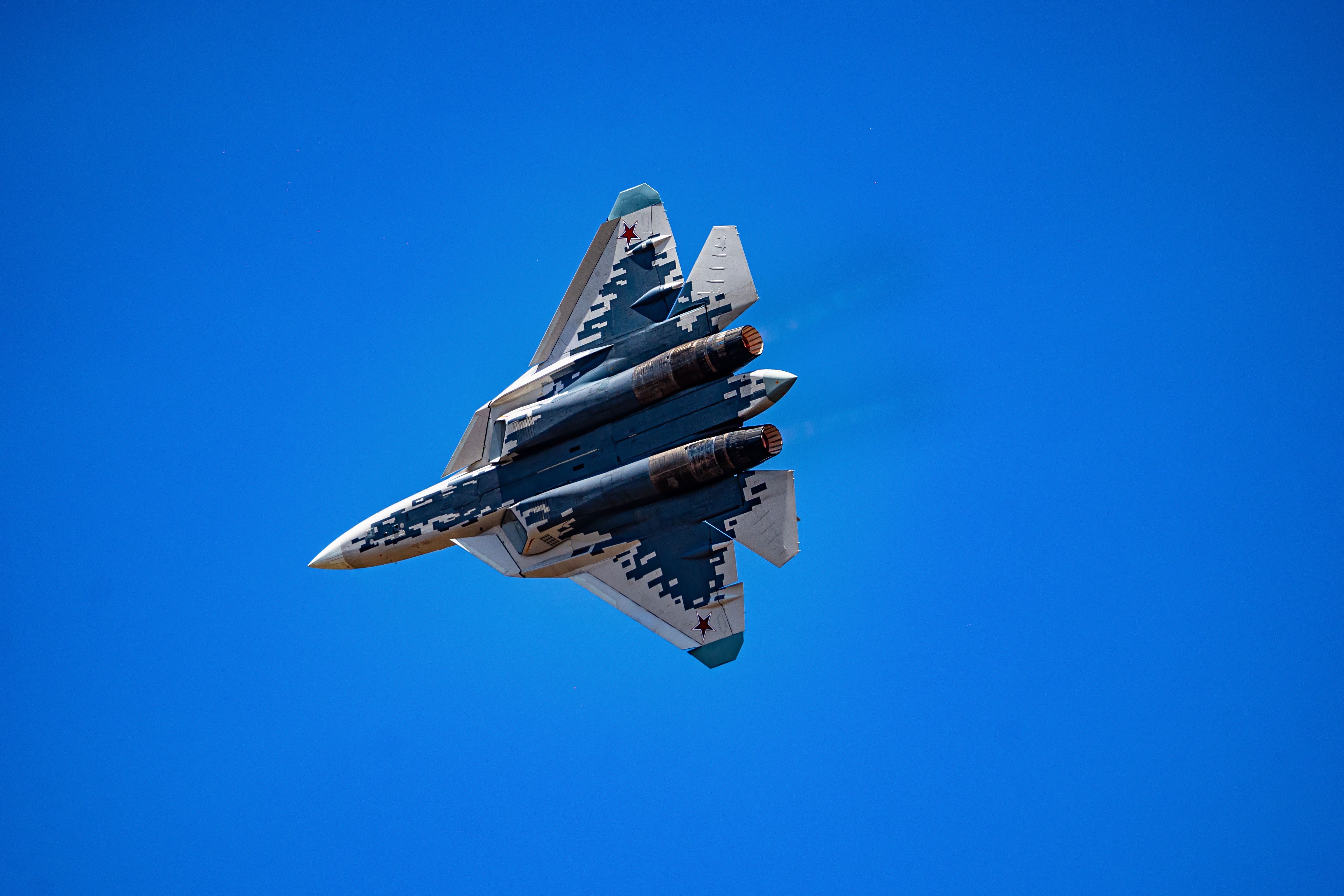
Technology and Border Conflict: Surveillance, AI, and the Future of Territorial Defence

In the current geopolitical scenario, where border tensions are no longer traced with conventional strategic monitoring techniques, the character of global border security and their impact is changing. Innovations and technological advances which could only be imagined once, deigned to belong to the science fiction genre forever, are now being employed in today’s conflict scenes.
Control over territory and its security was previously largely determined by manpower, geographical advantages, and conventional military tactics. However now, the nature of border security has changed significantly over the 21st century as technologically driven factors such as surveillance satellites, artificial intelligence (AI), unmanned aerial vehicles (UAVs) and integrated sensor networks are the primary forms of monitoring border statistics.
Technology has always been a significant factor in warfare, ever since the ‘gunpowder revolution’ of the 11th century. Technological advances have now shaped border dynamics and enabled military planners to effectively increase the lethality of their forces. When utilised properly, technology mended the existing military balance and gave the weaker side an advantage.
With increasing political instability, governments across the world are reassessing their strategic defence capabilities. Instead of relying solely on physical troop deployment, states are increasingly deploying data-driven surveillance systems and adjacently developing tech systems for detecting threats in real time. AI algorithms now process vast numbers of intelligence gathered from different sources, especially satellites, drones, sensors, etc., progressively faster to identify potential intrusions or military movements. These systems allow states to monitor contested areas across and around the border regions continuously while reducing any need for a large number of personnel on the ground.
Traditional border security structures were built on previous historical pasts, which shaped the complex geopolitical situations of the present era. However, that structure has undergone a robust change as features of traditional border security have seen an upgrade in the recent years with the implementation of high-tech weaponry including technologies assisted by AI based solutions, sensors, integration of cameras which have helped upgrade the border surveillance structure, high-resolution satellites integrated with the Advanced Geographic Information System (GIS) to monitor troop movements, etc. The potential effects of these advantages have been well noted in instances where the AI predictive analytics used by Indian Comprehensive Integrated Border Management System (CIBMS) have now enabled proactive reactions to possible threats by identifying and adjusting to invasion patterns. The previously mentioned integrated sensor technologies have also helped in building multi-layered surveillance systems across borders, along with the use of motion sensors, infrared cameras and seismic detectors adding a little extra layer of protection. These systems in place, strategically near the border regions, identify any unusual activity, notifying the concerned authorities. Another flexible and affordable solution to border surveillance has come up in the form of application of drones or Unmanned Aerial Vehicles (UAVs), which aid in comprehensive surveillance and monitoring of difficult terrains that cannot be monitored by humans, with cutting-edge sensors, providing real time surveillance, which helps in quick action in case of unexpected border incursions. These modern UAVs can also remain airborne for extended periods while transmitting real-time imagery to command centres, allowing military authorities to monitor contested areas continuously without relying on periodic patrols. Surveys of aerial surveillance technology even note that drones and other such airborne sensors offer unprecedented mobility and observational outreach that enables proper detection and tracking, including proper behavioral analysis of targets across large geographical zones. The Indian Army, for instance, uses the Skylark UNAV for short range aerial surveillance, which gives them real-time intelligence on events along the borders and any threats. The large-scale data processing and utilization by AI based Machine learning also helps with proper informed and organized decision making, which improves the capacity to actively address possible threats near the border regions. Computer vision algorithms can automatically recognize infrastructural changes or troop movements from drone footage, significantly accelerating the decision-making process. Pattern recognition and predictive analysis by these technologies also help in the identification of potential dangers and irregularities, which in turn also help with preventive measures. Certain border locations have also started implementing smart fences, which integrate surveillance technologies to stop unauthorised border crossings and help secure particular areas. This significant transformation of the border defence structure now reflects a broader shift towards what military theorists describe as “informationized warfare”, where the ability to collect and process data becomes a decisive strategic asset.
A big example of this rapid transformation has been seen in the Russia-Ukraine War of this decade, which emerged as one of the most technologically innovative conflicts of the 21st century. Since Russia’s full-scale invasion in 2022, both sides have gradually resorted to rapid adoption of new technologies to gain advantage in reconnaissance and border security. While Russia has tried to dominate the conflict with its superior conventional military power and tactics, Ukraine has had a streak of relying heavily on drones and AI-enabled systems to compensate for the gap in traditional military approaches. Despite anticipating a full-scale cyber war, major Russian attacks upon Ukrainian infrastructure have largely failed to materialize, giving the Ukrainian cyber system an edge, owing to its NATO strengthened cyber security systems. Scholars such as Magdalene Karalis have noted how this ushered in a new type of information warfare, especially the widespread use of Open-source Intelligence (OSINT). She explains how, by harnessing the capabilities of satellite imagery and daily day technologies such as smartphones and social media, Ukrainian forces have effectively ‘altered’ the traditional chain of attack, even outsourcing parts of the chain to civilians reporting Russian movements, thereby building a more extensive network, built on a greater access run structure. This conflict, growing from a series of border disputes to full scale war, can effectively be considered as the first long-term sustained conflict where all currently available and known uses of drones have been integrated into combined operations on both sides. Another major innovation introduced here has been the autonomous maritime drones, capable of striking naval targets. Ukraine’s “Sea Baby” unmanned surface vehicles emerged as a potent threat to conduct attacks against Russian naval assets in the Black Sea, targeting the “shadow fleet” tankers Darshan, Kairos and Virat in 2025, alongside a major December 2025 strike on a Project 636.3 Varshavyanka-class submarine in Novorossiysk, which, along with submerged “Sub Sea Baby” drones have continued to cripple tankers in Ukraine’s exclusive economic zone, escalating risks for Russian energy exports heavily.
The ongoing US-Israel led military operations against Iran also provide an important example of how technology is reshaping territorial security dynamics. Unlike the Russia-Ukrainian Conflict, this ongoing confrontation remains under the threshold of full-scale warfare. However, on the US-Israel front, as a part of the ongoing contestation, there have been demonstrations of highly sophisticated technological systems of the battlefield, as opposed to Iran's strategically framed asymmetric counter-responses, drawing lessons from its border disputes with Israel over the decades. Iran has translated these lessons into investing heavily in unmanned aerial vehicles as part of its asymmetric military strategy. While there has been a clear shift in the use of drones from the ‘War on Terror’ era, owing to lessons from the Ukrainian war, the US has deployed the LUCAS (Low-Cost Uncrewed Combat Attack System) as a significant move towards attrition, which remains a short-term and relatively weaker measure against the cost-effective and scalable Iranian Shahed drones. Iran developed this ecosystem of Shahed drones and cluster munitions to traffic as well as effectively infiltrate the US and Israeli air defence mechanisms, having the highest precision guidance known yet. Targeted drone attacks, with Iran’s use of drones with a few ballistic missiles, have been effective strategies in reducing the cost of offence for maintaining its conflict costs, while effectively raising the cost of defence for the US and Israel, even other partners involved. The use of AI-enabled surveillance systems have also enhanced the effectiveness of this monitoring campaign. Iran has reliably used the Chinese BeiDou network for real time military targeting while the US military, through its cyber operations and deployment of AI has enabled prioritisation of real-time targeting across a range of assets; a factor which remains as the key advantage of the US military in this conflict primarily.
The increasing integration of digital technologies and artificial intelligence into border security and military operations however still carry significant implications for the future of territorial defence. Technology is not like the conventional arms system, such as tanks, fighter jets, explosives, or submarines. As analysts have observed, such digital technologies are more enabling in nature, more similar to electricity or fuel than any individual weapons system. Moreover, most of these digital technologies are being produced by the private sector for commercial purposes, making them widely accessible and being subjected to constant innovation. In an era characterised by a number of border disputes and armed conflicts, this open accessibility usage of such technologies which are apparently being used in full-scale wars has led to a cycle of innovation, adaptation, and readaptation, which is only leading to prolong and stalemate the conflicts rather than bring a decisive end to it. In Ukraine, for example, Russia’s cyber-attacks on the satellite networks which Ukrainian forces depended on for communication and control were blunted as they shifted to other similar networks. Similar patterns of adaptations have also occurred in Nigeria, where the Boko Haram insurgency first exploited rising cellular network connectivity and then adapted to the Nigerian government’s use of these networks to gather intel on the group. There also have been similar cases in Somalia where, in spite of being the world’s least technologically driven area in case of military conflicts, internet and social media spaces have become key areas of confrontation between the insurgent group al-Shabaab and the Somali government & its backers. In all these conflicts, while the usage of digital technologies has put forward tactical advantages and anticipated territorial shifts, even military risks, these cycles of readaptation and response have only blunted, maybe even reversed these advantages. The result? Appearance of prolonged stalemates even as these technologies have become widely employed and used. Moreover, technological innovations such as the autonomous drones and unmanned systems are often significantly cheaper than traditional military equipment, as a result of which, several third-party agencies and non-state actors may increasingly gain access to such technologies which were previously limited to major world powers.
Although developments are necessary and the cornerstone for human progression, they also bring with them vulnerabilities. AI systems can always be manipulated or deceived through cyberattacks or electronic warfare. Autonomous weapons may even raise serious ethical concerns regarding the role of human judgement in military decision-making.
As these emerging technologies continue to evolve, territorial defence and border security will increasingly depend on control over information rather than control over landscape alone. Like fuel or electricity, it is impossible to imagine modern warfare effectively without AI systems or digital technology. However, at the end of the day, what must be kept in mind is that in the heavily militarised world as ours right now, it is still the human brain and not binary coding which determines the victor.
REFERENCES:
1. Bondar, Kateryna. “Ukraine’s Future Vision and Current Capabilities for Waging AI-Enabled Autonomous Warfare”. Washington DC, Centre for Strategic and International Studies (CSIS). Wadhwani AI Center. March 6th, 2025. https://csis-website-prod.s3.amazonaws.com/s3fs-public/2025-03/250306_Bondar_Autonomy_AI.pdf?VersionId=E2h8uqROea77udoc_og82HWsrfgfJRTZ
2. Nguyen, Kien, Clinton Fookes, Sridha Sridharan, Yingli Tian, Feng Liu, Xiaoming Liu and Arun Ross. “The State of Aerial Surveillance: A Survey”. Cornell University, January 13th, 2022.
https://arxiv.org/pdf/2201.03080
3. Stewart, Ruben. “The Shifting battlefield: technology, tactics, and the risk of blurring lines in warfare”. Humanitarian Law and Policy Blog. May 22nd, 2025.
4. Patil, Sameer. “The Future of War in the Age of Disruptive Technologies”. Expert Speak: Raisina Debates. Observer Research Foundation. April 26th, 2022.
https://www.orfonline.org/expert-speak/the-future-of-war-in-the-age-of-disruptive-technologies
5. Pollpeter, Kevin. “Ten Takeaways from the Russia-Ukraine War and Their Implications for a Taiwan Conflict”. China Aerospace Studies Institute, Air University. September 29th, 2025.
6. Chatham House. “Seven Ways Russia’s War on Ukraine Has Changed the World.” Chatham House (The Royal Institute of International Affairs). February 20, 2023 (updated June 1, 2023).
https://www.chathamhouse.org/2023/02/seven-ways-russias-war-ukraine-has-changed-world
7. Rawat, Rahul. “Beyond Technology: The ‘Way of War’ in the Iran Conflict”. Expert Speak: Raisina Debates. Observer Research Foundation. March 27th, 2026.
https://www.orfonline.org/english/expert-speak/beyond-technology-the-way-of-war-in-the-iran-conflict
8. Allen, Nate. “Digital Technology, Strategic Adaptation, and the Outcomes of Twenty-First Century Armed Conflict”. Carnegie Endowment for International Peace. June 17th, 2025. https://carnegieendowment.org/research/2025/06/digital-technology-strategic-adaptation-and-the-outcomes-of-twenty-first-century-armed-conflict
9. Dr. Pathak, Shreesh Kumar and Ms. Komal. “Technological Innovations In Border Surveillance: A look into India’s China strategy”. International Journal of Novel Research and Development (IJNRD), 9(3). March, 2024.
https://www.ijnrd.org/papers/IJNRD2403108.pdf
Photo by Igor Omilaev on Unsplash
(The views expressed are those of the author and do not represent the views of CESCUBE)

Adrija Bhattacharjee is an undergraduate student of International Relations with research interests spanning security studies, geopolitics, public policy, and international law. With her minor in World History, her work engages with themes involving hybrid and grey-zone conflicts, border security and strategic studies surrounding South Asia and the Middle East. She is also interested in global governance, humanitarian issues, and policy-oriented research that bridges academic analysis with contemporary geopolitical developments. Adrija enjoys exploring how evolving political realities shape state behaviour and security strategies in the twenty-first century, on a global level.