The Arctic Route vs SLOCs: How New Sea Lanes Reshape Global Maritime Strategy
The world enters an era where the hegemonic contention aggravates and the climate crisis worsens, shifting the maritime routes, the chokepoints, and the significance of the following. The Traditional Sea lines of Communication (SLOC) and the pivotal chokepoints impacting the flow of global trade, like the strait of Hormuz, the Strait of Malacca, Suez Canal, the Panama Canal, have had a significant role to play in the overall geopolitical scenario.
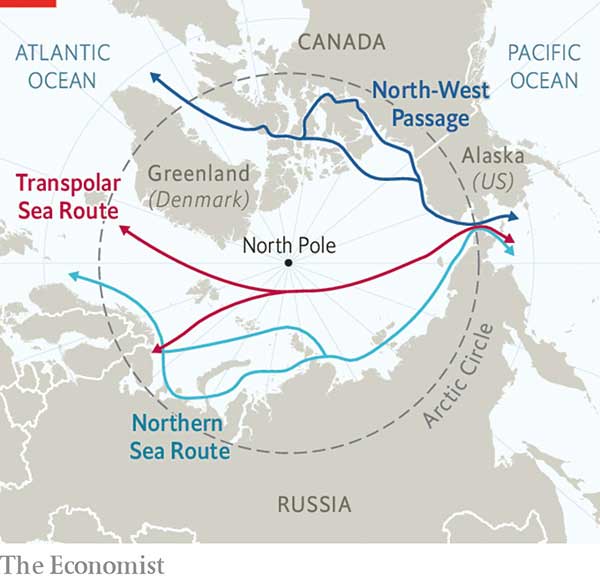
However, the last decade has witnessed the rise of a more significant contender, which has played a very crucial role in the current geopolitical decisions made by many of the countries in the Northern Hemisphere, namely the Arctic Route, especially the Northern Sea Route (NSR). The phenomenon of climate change and the melting of ice which has been a by-product has carved this route in the World Map. While the following phenomenon has created a popular short-cut, evident form the amount of shipping along the Northern Sea Route in 2025, it is also forcing the countries to change their maritime outlook and strategies, and is introducing new risks and rivalries, disrupting the current alliances.
The conflict for claiming the Arctic route stems from the seismic changes that it posits on the current trading lanes. A container ship sailing between Shanghai and Hamburg through the Suez Canal takes at least 30 days and covers around 20,000 kms, which reduces more than 35%, to 13,000 kms and 19 days when accessed through the Northern Sea Route. A similar example can be a travel from Yokohama to Rotterdam which takes 22 days if done through the Suez Canal, and can be reduced to 12 days if the Arctic is accessible. The difference that it creates in factors like fuel consumption and emissions is immense as it holds significant economic and environmental benefits.
However, the Northern Sea Route doesn’t stand as mere replacement, the traditional sea lines of communication still hold a major stake in the global village. The Suez Canal still managed global trade worth 522 million metric tonnes in 2024, in contrast to the 37.02 million tonnes, passing through the Northern Sea Route in 2025. However, the blockade faced at various chokepoints in the recent times due to different geopolitical disturbances can push the nations towards using the Northern Sea Route.
A Sea Route Born Out of Climate Change
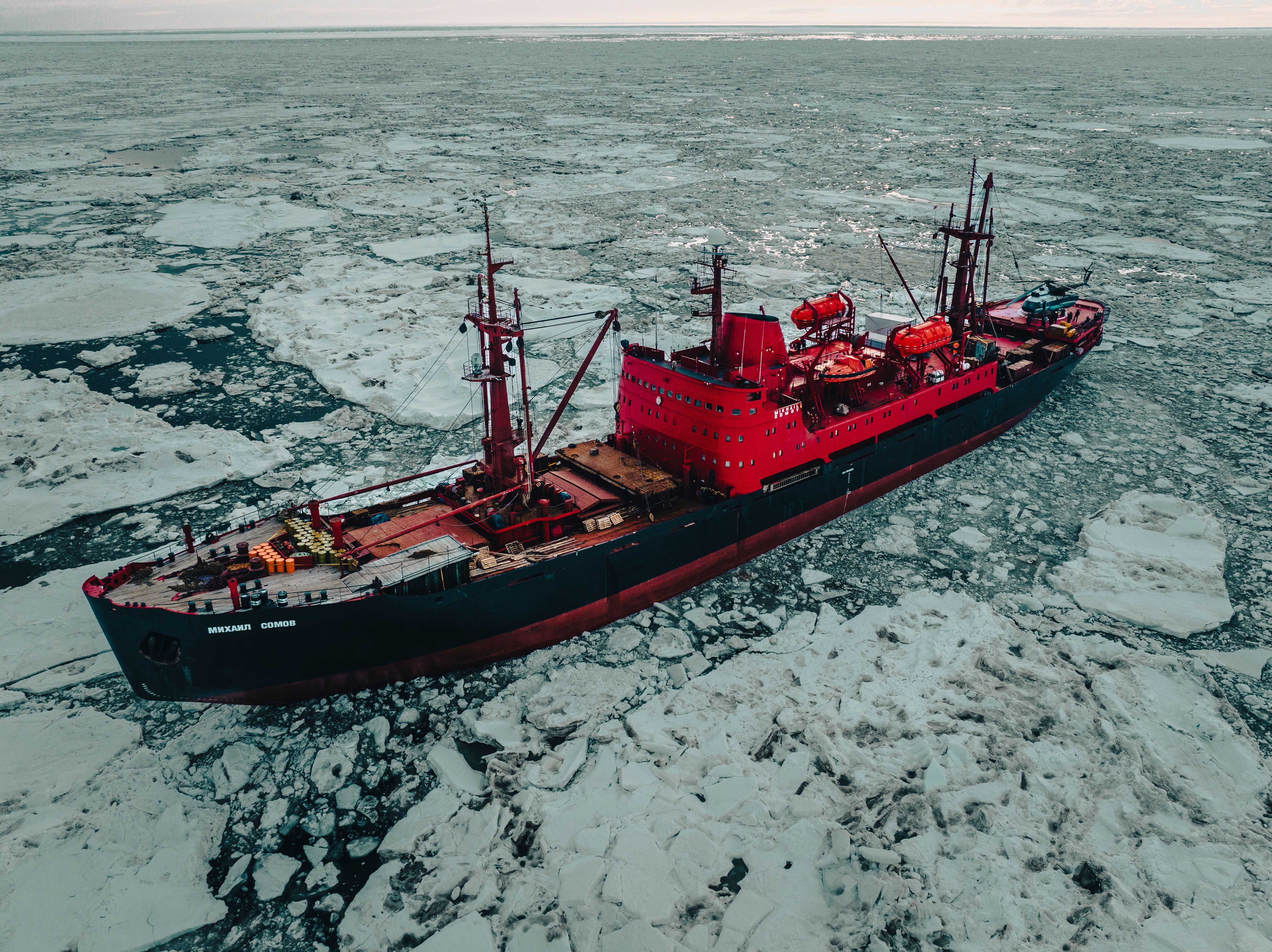
The Northern Sea Route moves along the Russia’s northern coastline from the Kara Sea to the Bering Strait, which is a 5600 km corridor which has been becoming increasingly convenient to use as the summer ice retreats. The Arctic Routes, which were once considered to be niche, requiring equipment like ice-strengthened tankers and bulk carriers which carried Russian hydrocarbons and is now hosting Chinese and Western containers as well. In 2025, 103 transit voyages carried approximately 3.2 million tonnes of cargo, with a record 14 Chinese-led voyages.
Russia’s cargo moving through the Northern Sea Route went above 37 million tonnes in 2025, majorly consisting of LNG, crude oil and condensates such as Yamal LNG. China’s role has been increasing as well, as the voyages to the Chinese Ports had a major share under what it calls the “Polar Silk Road”, which is crucial component of its broader Belt and Road Initiative (BRI)
The Economic Reality
The gains estimated via the use of the Arctic Route are impressive. The individual case studies with comparison to the normal routes taken via Suez shows how the Northern Sea Route cuts down at least 20%-30% of the transit costs in the peak summer months, due to the shorter distances covered, less fuel burn and less canal fees. The operators can slow-steam and still not get delayed which can be a sustainable method reducing emissions directly.
However, the hidden costs dilute the advantages that this alternative route has to offer. The icebreaker escort tariffs, which are considered compulsory for foreign vessels, extra insurance premiums, special ice-class ships, increase the expenditure. These expenditures coupled with the turbulent weather conditions, unpredictable ice flows, and a short window for travel, majorly between July and November, which increases operational hazard. Therefore, the route still remains unviable to fully replace the Suez Canal as a trading route, mainly because of the operational risks and Russian regulations.
The Geopolitical Ramifications
The Northern Sea Route is not a just a convenient commercial trade route, it is a strategic asset that is having a major impact on the current geopolitical alliances and rivalries. The route comes under the sovereign territory of Russia, as it invests billions in nuclear icebreakers, military bases, search and rescue centres on its Arctic coast. The Russian Northern Fleet patrol these waters, and any kind of foreign vessels require permission to access these waters, putting Russia in a position of strength as it holds control over one of the pivotal future trade routes.
China’s influence and engagement in the region is equally crucial. As it acts as one of the major allies of the Russian Federation, China has been taking advantage of the Northern Sea Route, as it collaborates on the infrastructure development, conducting record container voyages in 2025. Beijing has used the following route to tackle the uncertainty faced in the Traditional Sea Lines of Communications, located in the Indo-Pacific, increasing its Arctic influence without indulging into ay sorts of confrontations. This strengthening relation between China and Russia has bothered the U.S. as well, evident from its 2024 National Security Strategy, and the following updates, which identifies the China-Russia relations as a primary long-term threat, encouraging more NATO exercises, debates revolving the procurement of Ice-breakers and freedom-of-navigation.
The United States and most of its allies feel threatened as Arctic Rote carries the potential to act as a replacement of the SLOCs eventually, with concerns also regarding militarisation of the region. NATO has expanded with the inclusion of Sweden and Finland to increase its presence on the northern flank. However, the United States still oscillate between Indo-Pacific priorities and Arctic commitments. The smaller states close to the region battle the pressure of balancing sovereignty, protecting the environment, and the emerging economic opportunities.
This results in the creation of a Multipolar maritime order. Middle powers exercising autonomy over traditional chokepoints nervously watch the shift as the traffic diverts towards the northern flank. This has provided opportunities to the energy exporters who are getting new markets as Russian LNG reaches Asia faster, While Asian imports reduce due to the pertinent instabilities in the region. However, this diversification of trade also comes at a price, with dependence increasing on Chinese financing and Russian icebreakers as the climate changes rapidly.
Environmental and Operational Factors
As the climate change opens new trade routes, the increased shipping accelerates environmental degradation. The heavy fuel oil darkens ice as it emits Black carbon, which accelerates the melting process. There are also risks revolving around oil spills in a remote and fragile ecosystems, noise pollution that afflicts the marine life, and the existence of invasive species in ballast water. There are baseline regulations, which are provided by the Polar Code. However, persistent enforcement gaps and an absence of proper Arctic governance have left the ecosystem in a miserable condition.
These circumstances coupled with operational hazard like lighter ice, turbulent weather conditions, strong waves, sudden storms, etc, have increased. Moreover, a limited satellite coverage and underwater hazards, require special skills. These are the reasons that also keep the Insurance markets to maintain caution.
The Way Ahead
The projection about the future trends varies between the group of optimists who expect the Northern Sea Route to handle between 5-10% of the total trade as the ice-free window increases, and the pessimists, who highlight the geopolitical strain afflicting the region, the scale and dependency on the existing sea lines of communication like the Suez Canal, coupled with the existing gaps in the technical know-how along with other operational hazards, which creates the hesitation.
This leads most of the analysts to take a hybrid route for a prediction, where the Northern Sea Route is said to be a seasonal route specialised for Heavy commodities, LNG and a few container services between northern Europe, Russia and China, while traditional SLOCs are dependable for time sensitive delivery and high-volume cargo.
The naval strategies have started to change as well, with the U.S. coast guard and Navy investing in expanding their capabilities, while the Russian navy chase modernisation. China also invests in dual use voyages for both the scientific and commercial purposes. The commercial operators are testing alternative fuels and equipment such as ice-strengthened hulls on hybrid fleets. The International forums like the Arctic Council and the IMO work on updating the rules as they navigate a tightrope between hegemonic tensions.
Conclusion
The Arctic Route competing with the Traditional Sea Lines of Communication is not a zero-sum contest including a complete replacement. However, there are symptoms of the world changing its way, where the climate driven opportunities are held by geopolitical ramifications. While shorter sea lanes offer efficient and timely delivery avoiding chokepoints confrontations which can be witnessed in the Strait of Hormuz currently, a heavy investment in equipment like ice-capable vessels, polar infrastructure, and diplomatic guards are required.
The records for Chinese container transits for 2025, highlight how the Arctic is not just frozen backwaters, but a new route which is impacting global maritime strategies. Countries that are able to tackle the intricacies, balancing speed, sustainability and security, will have the command over the following era of world trade, as the ice melts and restructures the world trade map.
References
BLUNDEN, MARGARET. “Geopolitics and the Northern Sea Route.” International Affairs (Royal Institute of International Affairs 1944-) 88, no. 1 (2012): 115–29. http://www.jstor.org/stable/41428544.
Jayaprakash, Rajoli Siddharth. "Theorising the Drivers of India’s Engagement in the Northern Sea Route." Observer Research Foundation, December 4, 2025. https://www.orfonline.org/research/theorising-the-drivers-of-india-s-engagement-in-the-northern-sea-route.
Gupta, Prithvi, and Aneesh Parnerkar. "Understanding the Potential of the Northern Sea Route." Observer Research Foundation, September 18, 2024. https://www.orfonline.org/expert-speak/understanding-the-potential-of-the-northern-sea-route.
Balguerie Group. "Suez Canal: After a Dark Year, 2025 Could Mark the Start of a Revival." February 3, 2025. https://balguerie-group.com/en/suez-canal-2025-could-mark-the-start-of-a-revival/.
(The views expressed are those of the author and do not represent the views of CESCUBE)
Image Source: The Economist

Bhaskar Jha is a master's student in OP Jindal Global University. He is a budding researcher who has prior research experience gained at research centres and think tanks like the The Indian Netizens Co. And Center For Land Warfare Studies. He is a Political Science Gold Medalist and takes keen interest in Geopolitical hedging and Security Studies.