
Great Power Competition and Economic Warfare in West Asia’s Seabed Infrastructure
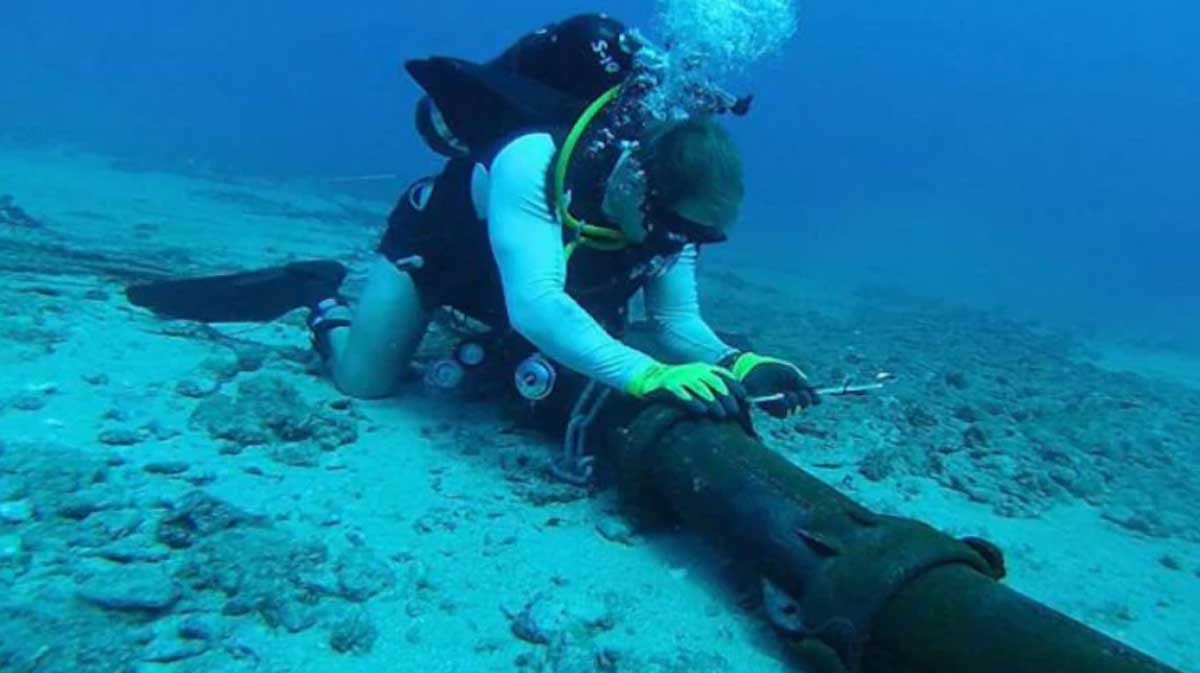
The geopolitical importance of West Asia has historically been characterised by the energy supply and maritime bottlenecks. Nonetheless, in the modern world economy, a new dimension of strategic rivalry has emerged beneath the sea. The global connectivity economy uses fibre-optic cables, subsea pipelines, and electrical interconnectors that form the unseen architecture of worldwide connectivity and carry the vast majority of international internet traffic. These systems support world finance, logistics of trade, cloud computing, and state communications. As geopolitical tensions in West Asia intensify, this vital undersea infrastructure (CUI) has become a strategic competitor and an object of economic warfare.
The maritime geography of the region (spanning the Red Sea, the Persian Gulf, and the Eastern Mediterranean) acts as a digital and energy bridge between Europe, Asia and Africa. This has centralised the infrastructure, making West Asia one of the most significant points of the global network of under-sea cables and energy routes. But it is the same focus that produces weaknesses. Any interference with these networks, be it through accidents, military action or intentional destruction may have cascading consequences on world communication and financial systems. The recent events in maritime warfare in the Red Sea have illustrated how kinetic warfare can unintentionally cut fibre-optic cables to other continents, affecting internet connectivity.1
With these changes, seabed infrastructure has become a sphere of great-power competition. States are becoming more interested in the digital connectivity routes and submarine cable landing stations as the tools of the geopolitical power. Egypt has used its geographic location as control over one of the most important data transits in the world, and Gulf states are in competition to be regional digital centres by investing huge sums of money in connectivity infrastructure. In the meantime, the Eastern Mediterranean is turning into a hot spot where maritime ideologies, energy finds, and the development of infrastructure can be found. This environment is further complicated by the asymmetric naval capabilities of Iran, which opens a potential of disruption by means of targeted disruption of maritime infrastructure when there is a conflict. This article discusses the issue of seabed infrastructure as one of the main centres of geopolitical rivalry in West Asia. It states that the strategic rivalry between digital and energy infrastructure is transforming regional power dynamics, with states trying to assume dominance over key connectivity pathways while addressing gaps created by sea-based chokepoints.
Seabed Infrastructure and Strategic Geography of Connectivity
Underwater fibre-optic cables are the main foundation of the world's digital economy. Although the presence of satellite is evident, over ninety per cent of international data traffic goes over the cables, which are laid at the ocean floor.2 The cables are useful in world financial transactions, governmental communications and running of digital platforms where international trade is enabled. Global connectivity thus relies heavily on the stability and safety of undersea infrastructure.
West Asia sits at the heart of this system. The shortest digital paths between Europe and Asia run along the Mediterranean and Red Seas, crossing the Middle East. This leads to the concentration of many submarine cables in this small sea route. TeleGeography estimates that there are a number of the largest international cable systems inside of the Red Sea before exiting Egypt and heading into the Mediterranean.3 The physical location of cables in a small geographical location makes them structurally vulnerable. A single cable break can be easily mitigated by diverting traffic to other networks. But at the same time, when several cables in a single corridor are disrupted, connectivity across entire areas can be seriously affected. These vulnerabilities have become more pronounced over the last few years, especially as the maritime conflicts in the region have increased.
These weaknesses have increased the strategic value of seabed infrastructure. Governments are becoming more aware that the ability to dominate cable landing stations, governmental approval procedures and sea transit pathways can enable significant geopolitical power. This has led to the development and safeguarding of infrastructure being considered a national security agenda in West Asia.
Egypt’s Geostrategic Leverage in the Global Cable Network
Egypt has a very strategic location on the submarine cable system in the globe. The small strip of land between the Mediterranean and the Red Sea serves as a strategic transit passageway of cables that line-link Europe and Asia. It is estimated that about seventeen percent of the world internet traffic goes over Egyptian territories and the huge majority of the data transfer between European and Asian markets is dependent on this route.4 The geographic edge provides Egypt with massive power in international digital connectivity. The submarine cable operators have to deal with a complicated regulatory system including various Egyptian authorities such as the National Telecommunications Regulatory Authority that regulates the technical requirements, the Ministry of Defence that provides security services, and the Suez Canal Authority that regulates the infrastructure passing through the canal channel.
The principal intermediary in this system is Telecom Egypt, a state-owned telecommunications operator. International cable operators typically require partnership agreements with Telecom Egypt when establishing cable connections through the country. The arrangement has brought the Egyptian state a lot of revenue as well as strengthening its position as a core point in the global digital networks.5 In addition to the economic gains, this stance gives Egypt a geopolitical advantage. Control of a key digital avenue can enable Cairo to influence the negotiations of global technology companies and these standalone infrastructure consortia. The connectivity concentration, however, has led other regional actors to seek alternative paths that avoid Egyptian territory, thereby reducing overdependence on a single strategic chokepoint.
Gulf Competition over Digital Excellence
In the case of Egypt, geographic centrality also offers an advantage, whereas Gulf states are making efforts to make themselves known as digital hubs in the region. Such competition is indicative of diversification strategies in the broader economy, shifting away from hydrocarbon-based economies toward technology-based development.
Saudi Arabia has become one of the major players in this field. The kingdom is trying to change into a giant digital connectivity centre through its Vision 2030 programme. The government plans to invest in large-scale data centre investments, subsea cable landing stations, and cloud computing infrastructure.6 By integrating the digital infrastructure with the new economic zones like NEOM, Saudi Arabia hopes to become a hub between the European, Asian, and African digital markets. An important element related to this plan is the development of large-capacity subsea cable infrastructure and hyperscale data centre infrastructure. They facilitate the processing and storage of large amounts of digital data, which helps to implement artificial intelligence and cloud capabilities. Considering both infrastructure and data processing, Saudi Arabia aims to gain more value in the global digital supply chain.
Other Gulf countries have complementary endeavours. The Fibre-in-Gulf (FIG) submarine cable system is one of several attempts to improve connectivity among members of the Gulf Cooperation Council (GCC). The system is built to connect several Gulf states via a high-capacity fibre network to minimise reliance on transit networks and increase the region's digital resilience. This new rivalry is an example of the digital infrastructure serving as a strategic asset, just as traditional energy sources do. The power to control data flows and connectivity networks is becoming the most important in determining economic power and geopolitical influence.
The Eastern Mediterranean: Energy Discoveries and Maritime Doctrine
The Eastern Mediterranean has also become another key arena of infrastructure contest. Over the last ten years, the region has seen major offshore gas discoveries that have changed the energy landscape. Areas like Zohr in the Egyptian waters and Leviathan and Tamar in the Israeli waters have opened up new prospects of the region to collaborate and export energy.7 But these developments have just increased the maritime disputes. The rivalry over claims to the exclusive economic zones (EEZs) has complicated efforts to build pipelines and other infrastructure to be used in the exportation of gas.
The Turkish maritime stategy is the focus of these tensions. The policy of Ankara is based on the doctrine of Blue Homeland (Mavi Vatan), which claims a wide range of Turkish presence in the Eastern Mediterranean. Turkish policymakers believe that maritime boundaries must be drawn along the mainland coast, not from islands, thereby questioning the current interpretation of the United Nations Convention on the Law of the Sea.8
This doctrine has seen strengthened maritime patrols and marine surveys in disputed areas of operation. Research ships of the Turkish naval protection have conducted exploration expeditions in Greek- and Cypriot-claimed areas. These actions have sounded alarm bells among neighbouring states, prompting them to warn that Ankara needs to remake the regional energy architecture to enhance its strategic leverage. This makes the geopolitical rivalries in the development of seabed infrastructure in the Eastern Mediterranean very intertwined. Diplomatic and military tensions have taken centre stage with energy pipelines, cable systems and offshore facilities.
Iran and the Logic of Asymmetric Disruption
Unlike the Gulf countries, which focus on the development of traditional infrastructure, Iran has focused military strength on forces that are meant to destroy maritime infrastructure in a military battle. Tehran's naval doctrine is based on asymmetric warfare, taking advantage of the Persian Gulf's and the Strait of Hormuz's limited geography. Iran has a fleet of small UAVs and submarines that can conduct secret missions in shallow water. Such platforms can launch naval mines, spy on the sea, or even disrupt subsea infrastructure. According to the analysts, these capabilities also allow Iran to have an efficient way of balancing the technological edge of its rivals.9
Maritime infrastructure vulnerability was felt during recent regional conflicts. Attacks on commercial ships in the Red Sea by missiles have demonstrated how ship damage can have an indirect impact on subsea cables as anchors pull over the seabed. There was a widely publicised event in 2024 that cut several of the largest cables simultaneously, leaving large parts of Asia and the Middle East without internet connectivity.10 These cases underscore the interdependence of maritime security and cyberspace infrastructure. The localised military action can also have global impacts when the main connectivity networks are damaged.
Alternative Corridors and the Search for Resilience
The weaknesses of current cable routes have prompted governments and technology firms to explore alternative connectivity routes. There is the Blue-Raman subsea cable system, which is meant to join Europe and India by passing through Israel, Jordan and Saudi Arabia, avoiding the conventional Egyptian transit route. The project represents a larger initiative to decentralise international data channels to mitigate the risk of exposure to geopolitical bottlenecks. It is possible to develop several routes that data may follow, which will help network operators to increase resiliency to unintentional disruptions and intentional attacks.
Besides fibre-optic networks, governments are also investing in high-voltage direct current interconnectors across borders. Through these projects, nations can share electricity via national grids, thereby enhancing energy security and integrating renewable energy sources. Nevertheless, they also present novel types of critical infrastructure that demand a strong defence against cyberattacks and physical sabotage.
Conclusion
Seabed infrastructure has become one of the most important spheres of geopolitical rivalry in West Asia. The global digital and energy economy is now based on fibre-optic cables, energy pipelines, and electrical interconnectors. Their presence along the region's maritime routes has made West Asia both more strategic and more vulnerable, as its strategic position can be easily exploited in times of conflict.
The domination of major cable transit routes by Egypt demonstrates how geography can be leveraged as a digital advantage. The Gulf states are making massive investments in connectivity infrastructure to ensure they have a presence in the global data economy, and Turkey's maritime doctrine can be seen as the increasing overlap of energy resources and the politics of infrastructure. Asymmetric naval capabilities of Iran create other risks since it can cause a crisis in the maritime infrastructure in case of the emergence of a crisis in the region.
These events show that the strategic rivalry defining West Asia is becoming less military-oriented and more non-military. The digital infrastructure and connectivity routes have become a major aspect of statecraft in the economy. As the international economy increasingly relies on digital networks, the security of seabed infrastructure is becoming an important issue for governments in the region and the international community.
References
1. Alan Mauldin, “The Red Sea: A Key Subsea Cable Crossroads Under Siege,” TeleGeography (blog), January 17, 2024, https://resources.telegeography.com/the-red-sea-a-key-subsea-cable-crossroads-under-siege.
2. Insikt Group, “Submarine Cable Security at Risk Amid Geopolitical Tensions &Amp; Limited Repair Capabilities,” July 17, 2025, https://www.recordedfuture.com/research/submarine-cables-face-increasing-threats.
3.Mauldin, “The Red Sea: A Key Subsea Cable Crossroads Under Siege.” https://resources.telegeography.com/the-red-sea-a-key-subsea-cable-crossroads-under-siege
4.Erin L. Murphy and Thomas Bryja, “The Strategic Future of Subsea Cables: Egypt Case Study,” November 12, 2025, https://www.csis.org/analysis/strategic-future-subsea-cables-egypt-case-study.
5.Capacity, “Telecom Egypt: The Global Digital Infrastructure Accelerator,” January 30, 2025, https://capacityglobal.com/news/telecom-egypt-the-global-digital-infrastructure-accelerator/.
6.“Saudi Vision 2030: Kingdom All Set to Become MENA’s ‘Digital Silk Road’ - Global Business Outlook,” Global Business Outlook (blog), February 17, 2026, https://globalbusinessoutlook.com/technology/saudi-vision-kingdom-all-set-become-menas-digital-silk-road/.
7.Arab Center Washington DC, “Gas And Geopolitics in the Eastern Mediterranean,” Arab Center Washington DC, October 1, 2025, https://arabcenterdc.org/resource/gas-and-geopolitics-in-the-eastern-mediterranean/.
8.Denizeau, “Mavi Vatan, the ‘Blue Homeland’: The Origins, Influences and Limits of an Ambitious Doctrine for Turkey,” Ifri, April 29, 2021, https://www.ifri.org/en/studies/mavi-vatan-blue-homeland-origins-influences-and-limits-ambitious-doctrine-turkey.
9.Fariborz Haghshenass, “Iran’s Asymmetric Naval Warfare,” Policy Focus, no. 87 (2008), https://www.washingtoninstitute.org/sites/default/files/pdf/PolicyFocus87.pdf.
10. Nidhi Singal, “Red Sea Cable Cuts Trigger Latency for Azure, Cloud Services Across Asia and the Middle East,” Network World, September 8, 2025, https://www.networkworld.com/article/4052813/red-sea-cable-cuts-trigger-latency-for-azure-cloud-services-across-asia-and-the-middle-east.html.
(The views expressed are those of the author and do not represent the views of CESCUBE)
Image Source: indiatoday.in

Rinto Sebastian Charles is currently pursuing a Master’s degree in International Studies at CHRIST (Deemed to be University), Bangalore. He has completed his Bachelor’s in English Language and Literature from Kerala University. His core interests lie in international relations, diplomacy and policy-oriented research. He also aspires to contribute to research-driven institutions, think tanks, and initiatives that engage with global governance and Indo-Pacific perspectives.