India’s Middle East Strategy in a Multipolar Gulf: Opportunities and Constraints
The tectonic plates of the Middle East's geopolitics are shifting under the pressure of a direct and intensifying conflict between Iran and Israel. As this intensifying conflict comes out into the open, threatening some of the most important maritime chokepoints of global importance, the illusion of a stable Gulf has completely disappeared. For India, this is the ultimate test of its doctrine of multi-alignment. The need to balance its deep security relationships with Israel against its vital energy relationships with Iran and other Gulf monarchies is a call for ruthless calculations. India needs to secure its transcontinental corridors while walking the tightrope of the most unforgiving geopolitics of the decade.
The Multipolar Gulf: Power Shifts and the Shadow of Escalating Conflict
It is now beyond doubt that the Middle East has decisively moved past the era of a unipolar American security umbrella. As Washington attempts to rebalance its global strategy, a new fiercely contested arena of multipolar politics has come into being.The Chinese government has grasped this opportunity with both hands by using its investments in transcontinental infrastructure and brokered détente between Saudi Arabia and Iran in 2023 to consolidate its position as a leading architect of geoeconomic politics.
Furthermore, it is now apparent that the middle powers of the Gulf states, namely Saudi Arabia and the UAE, are unapologetically asserting their new-found strategic autonomy. Instead of acting as passive clients to outside actors, Riyadh and Abu Dhabi are developing more diverse security strategies, looking to new markets in Asia, and using state-of-the-art cultural diplomacy to exert soft power influence far beyond their traditional area of influence. A glaring example of this new geopolitics is the late-2025 Saudi-Pakistan defense pact. Under toned by nuclear guarantees and indirectly enabled by Chinese military hardware, this new pact is indicative of a fundamental shift wherein Gulf states are now anchoring their national security within multi-aligned webs instead of solely depending upon Western actors.
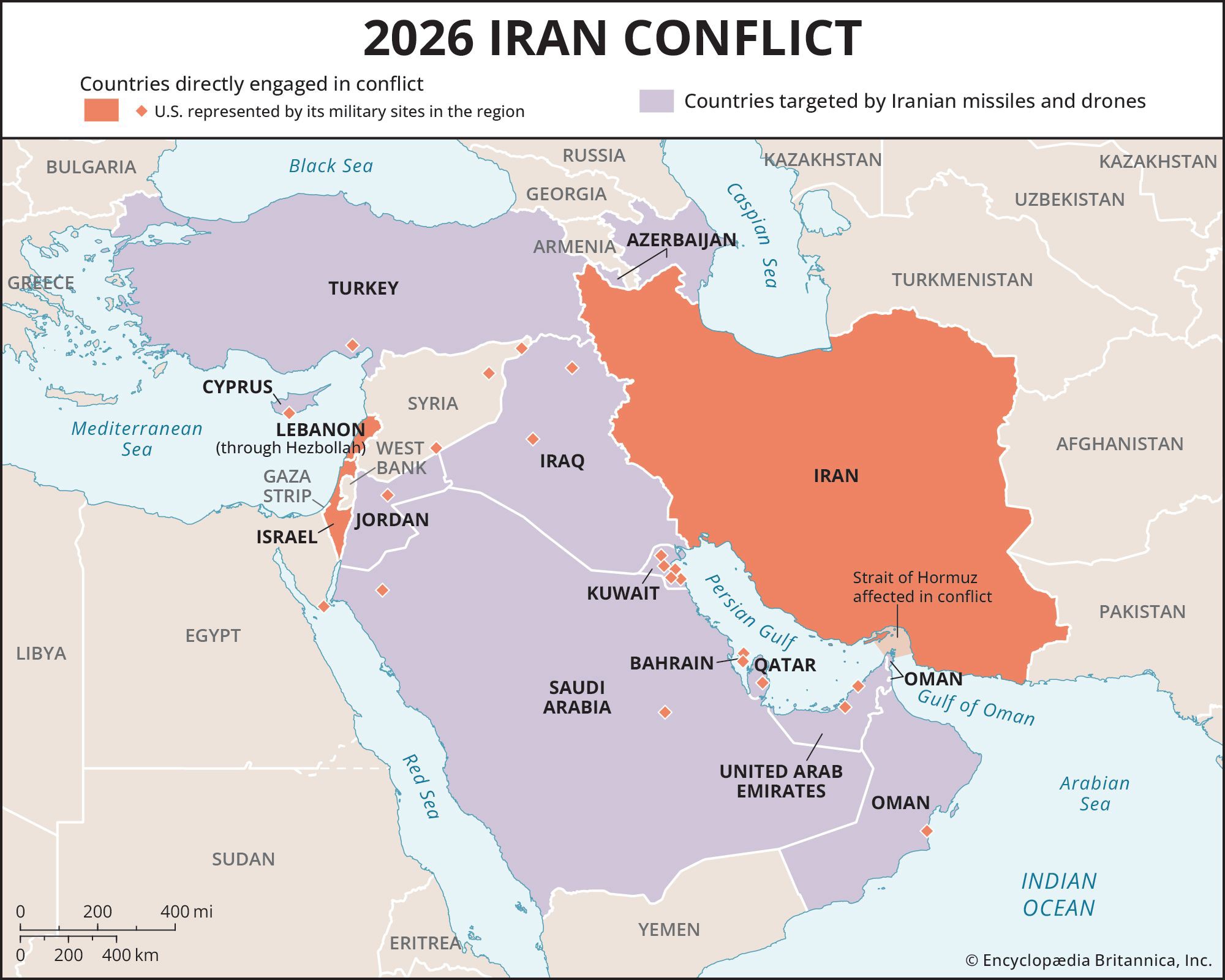
Nevertheless, this meticulously crafted multipolarity is presently facing an unprecedented stress test. The direct multi-domain conflict between the US, Israel, and Iran, which has erupted during the early part of 2026, has thrown a dark shadow on the geo-economic aspirations of the region. The asymmetric escalation of the conflict has instantly weaponized the vulnerabilities of the Gulf. With the barrages of missiles and drones targeting the critical infrastructure of the region, ranging from the critical energy transit chokepoint of the Strait of Hormuz to the critical desalination plants of the UAE and Bahrain, the illusion of insulated prosperity is now at an end. For India, the current conflict is an important reminder of the fact that the new multipolar alliances of the region are as fluid as they are transformative, and economic integration can never outpace the security realities.

Figure 1: Iranian strikes on energy, oil infrastructure and tankers in the Gulf (1–12 March 2026) (Source: ACLED)
India’s Strategic Framework: Multi-Alignment and Act West 2.0
India’s answer to the structural volatility of the region has taken the form of its "Act West" policy, demonstrating a masterclass in diplomatic pragmatism. Stripped of the ideological and historical baggage of the Cold War, New Delhi has ruthlessly implemented a doctrine of "de-hyphenation." By totally de-linking its bilateral relations with these states, India engages with the technology and defense sectors of Israel, seeks comprehensive strategic relations with Saudi Arabia and the UAE, and seeks to sustain relations with Iran even as the rising conflict of the 2026 wars between Washington, Tel Aviv, and Tehran puts these fault lines under severe strain. This is not the defensive non-alignment of the past; rather, it is an aggressive engagement in multiple directions driven entirely by supreme national interest.
"This strategic matrix has completely rewritten the existing rules governing Indian diplomatic engagement in the Gulf." For decades, the bilateral relationship has been defined almost exclusively in terms of hydrocarbon imports and diaspora labor remittances. Under Act West 2.0, these transactional relationships have been elevated into advanced security partnerships. Now, bilateral engagement in the Gulf is dominated by joint military exercises, technology transfers, and advanced maritime security cooperation in the Arabian Sea. What is significant is that these advances in hard power have been smoothly integrated with advanced cultural diplomacy, utilizing historical ties and soft power instruments to enhance trust levels at an institutional level with the Arab monarchies. By actively contributing to the security and cultural landscape of the Gulf, instead of passively consuming its oil, India has positioned itself as an indispensable stabilizer. This geopolitics has, in turn, enabled New Delhi to extract maximum geoeconomic value from rival blocs, thereby vindicating that in a fractured Middle East, "multi-alignment is not only a preference, but a survival imperative."
Opportunities: Economic Dividends and Connectivity That Can Still Deliver
While the overarching geopolitical situation is marked by turbulence, the Indian bilateralism in the Gulf region are remarkably resilient in their geoeconomics, reiterating that connectivity can yield immense dividends. The lead example in this regard is the Comprehensive Economic Partnership Agreement (CEPA) between India and the UAE. As it is set to enter its third year in early 2026, this agreement has worked to push trade between the two nations well past the $100 billion mark, diversifying trade in a fundamental manner. Non-oil trade, including items such as engineering goods, gems, and electronics, now forms more than half of this trade and has seamlessly aligned itself with the target of reaching $100 billion in non-oil trade alone by 2030.
Beyond physical goods, India is exporting digital public infrastructure. The integration of the Unified Payments Interface (UPI) and the operationalisation/expansion of the Local Currency Settlement System (rupee-dirham) have insulated significant portions of bilateral trade from dollar volatility.
Although the full India-Middle East-Europe Economic Corridor (IMEC) faces serious headwinds due to conflict in the Levant and beyond, direct India–Arabian Peninsula connectivity initiatives and bilateral investments continue. Sovereign wealth funds from Abu Dhabi and Riyadh have committed billions to Indian digital, renewable energy, and green hydrogen projects. Port modernisation (including Jebel Ali), submarine cables, and related infrastructure form a solid foundation. Even if the broader Europe-linked segments are delayed, the Gulf remains a highly lucrative standalone market for Indian investment, human capital, and technology exports.

Figure 2: India–Middle East–Europe Economic Corridor (IMEC) showing Eastern and Northern routes (Source: Atlantic Council)
Constraints: Geopolitical Tightropes and the Direct Impact of the Current Gaza Conflict
The shockwaves from the Gaza conflict (2023 onwards) and its transformation into a wider regional war culminating in the US and Israeli strikes on Iran from 28 February 2026, have exposed the limits of India’s multi-alignment. Maintaining robust defence and technological ties with Israel while preserving strategic relations with Arab monarchies remains a delicate balancing act, especially amid pressure on Arab states regarding Israel normalisation.
The most immediate constraint, however, is geoeconomic. The persistent state of asymmetric warfare in the Red Sea and the increasing disruptions in and around the Strait of Hormuz have weaponized the marine arteries that are the lifeblood of the Indian economy. While the Suez Canal is de facto out of action for conventional commercial vessels, the increase in transit times for vessels forced to make the longer journey around the Cape of Good Hope has led to a significant increase in freight costs and marine insurance premiums.
Moreover, the conflict has brought a halt to the geopolitical drive that is necessary for multilateral integration. The historical drive of the Abraham Accords has come to a standstill, which means that minilateral formations such as I2U2 (India, Israel, UAE, US) are at a complete standstill. Most importantly, the "Northern Corridor" of the IMEC project that aims to link up the Gulf states with Europe through Jordan and Israel is simply non-viable under the looming shadow of war. These are a harsh reminder that while India can forge robust bilateral relationships, grand infrastructure projects cannot outpace the violent realities of the terrain that it has to traverse.

Figure 4 Damage to desalination plants across the Gulf due to the 2026 conflict (Source: The New York Times, 14 March 2026)
Recent Developments and Case Studies: What Is Working and What Is at Risk
The recent series of diplomatic engagements has underscored a stark dichotomy between bilateral resiliency and minilateral paralysis. At one end of the spectrum, there is a litany of success stories. The India-UAE relationship remains the gold standard for bilateral resiliency. The operationalization of the Local Currency Settlement System, which has been expanded to 2026, has successfully insulated billions of dollars of bilateral trade from dollar-centric volatility. At the heart of India's energy security is its foundational relationship with Saudi Arabia, which has been resoundingly successful, insulated from geopolitical volatility emanating from the Levant by virtue of meticulous diplomatic compartmentalization.
On the risk side, challenges are concentrated in trans-regional architecture. The I2U2 grouping has seen several agricultural and clean-energy projects slow or stall amid the ongoing regional conflicts. The Red Sea and Hormuz crises have provided a real-time demonstration of supply-chain vulnerability: Indian exports to Europe have suffered significant delays and cost increases, showing how localised Middle Eastern conflicts impose transcontinental economic costs on India.
Outlook: Building Resilience Through Pragmatic Diplomacy in a Fractured Region References
Going forward, India’s multi-alignment doctrine must shift from its current form as a diplomatic balancing act to a more active structural resilience strategy. The illusion of a rapidly stabilizing and post-conflict Middle East has vanished. For New Delhi to future-proof its foreign policy in this region, which remains persistently volatile, it must ruthlessly focus on two strategic avenues:
India must focus on its geoeconomic anchoring to the middle powers of the Gulf region: UAE and Saudi Arabia by investing in technology transfer agreements, green energy projects, and cultural diplomacy. By anchoring itself within the economic diversification strategies of these monarchies, these two axes will be indispensable to New Delhi irrespective of the broader Middle Eastern inferno.
India must aggressively expand its independent maritime security domain in the Arabian Sea and the Western Indian Ocean. The projection of naval power to safeguard transcontinental maritime routes is no longer an additional strategy but has become an economic imperative. Ultimately, to master the multipolar Gulf region, India must recognize perpetual friction as the baseline reality and secure its vital interests through a mix of hyper-pragmatic statecraft and hard power deterrence.
References
1. AGSI. “India’s Balancing Act in the Middle East.” 2026. https://agsi.org/analysis/indias-balancing-act-in-the-middle-east/.
2. Al Jazeera. “India-Israel Axis: What Are the IMEC Corridor, I2U2 Grouping Modi Spoke Of?” February 26, 2026. https://www.aljazeera.com/news/2026/2/26/india-israel-axis-what-are-the-imec-corridor-i2u2-grouping-modi-spoke-of.
3. Atlantic Council. “The India-Middle East-Europe Economic Corridor: Connectivity in an Era of Geopolitical Uncertainty.” August 2025. https://www.atlanticcouncil.org/in-depth-research-reports/report/the-india-middle-east-europe-economic-corridor-connectivity-in-an-era-of-geopolitical-uncertainty/.
4. Chatham House. “Saudi Arabia and Pakistan’s Mutual Defence Pact Sets a Precedent for Extended Deterrence.” September 2025. https://www.chathamhouse.org/2025/09/saudi-arabia-and-pakistans-mutual-defence-pact-sets-precedent-extended-deterrence.
5. CNBC. “US-Israel-Iran Conflict Puts India’s Trade Route to Europe in Focus.” March 12, 2026. https://www.cnbc.com/2026/03/12/us-israel-iran-india-trade-europe.html.
6. Council on Foreign Relations (CFR). “Confrontation between the United States and Iran.” Global Conflict Tracker, updated March 2026. https://www.cfr.org/global-conflict-tracker/conflict/confrontation-between-united-states-and-iran.
7. Cyrill, Melissa. “India–UAE CEPA: Recent Updates Put ‘Utilization’ and Compliance Back in Focus.” India Briefing, December 2025. https://www.india-briefing.com/news/india-uae-cepa-compliance-updates-41508.html/.
8. Daily Pioneer. “West Asia: India’s Strategic Clarity Amid Selective Outrage.” n.d. https://dailypioneer.com/news/west-asia-india-s-strategic-clarity-amid-selective-outrage.
9. DD News. “India-UAE Hold Third CEPA Joint Committee Meeting; Bilateral Trade Exceeds $100 Billion.” November 27, 2025. https://ddnews.gov.in/en/india-uae-hold-third-cepa-joint-committee-meeting-bilateral-trade-exceeds-100-billion/.
10. Diplomatist. “India-Middle East Relations: Past, Present and Future.” 2026. https://diplomatist.com/india-middle-east-relations-past-present-and-future/.
11. Firstpost. “India-West Asia: Strategic Autonomy and the Modi Doctrine.” 2026. https://www.firstpost.com/opinion/india-west-asia-strategic-autonomy-modi-doctrine-13989340.html.
12. Institute of South Asian Studies (ISAS), NUS. “India and the Middle East War: Growing Pressure, Limited Options.” 2026. https://www.isas.nus.edu.sg/papers/india-and-the-middle-east-war-growing-pressure-limited-options/.
13. Jha, Aastha. “Iran-Israel-US ‘Triangle Trap’: Decoding India’s Stance Amid Rising Middle East Tensions.” Times of India, March 2026. https://timesofindia.indiatimes.com/india/iran-israel-us-triangle-trap-decoding-indias-stance-amid-rising-middle-east-tensions/articleshow/129550390.cms.
14. Middle East Council on Global Affairs. “IMEC’s Ambitious Gamble: Overcoming Geopolitical Obstacles in a Fractured Mediterranean.” 2026. https://mecouncil.org/publication_chapters/imecs-ambitious-gamble-overcoming-geopolitical-obstacles-in-a-fractured-mediterranean/.
15. New Lines Institute. “The Middle East in India’s Geoeconomic Order.” 2026. https://newlinesinstitute.org/middle-east-center/the-middle-east-in-indias-geoeconomic-order/
16. Reuters. “Saudi Arabia, Nuclear-Armed Pakistan Sign Mutual Defence Pact.” September 18, 2025. https://www.reuters.com/world/asia-pacific/saudi-arabia-nuclear-armed-pakistan-sign-mutual-defence-pact-2025-09-17/.
17. Singh, Sinderpal. “India’s Policy towards West Asia during the First Term of Prime Minister Narendra Modi.” ResearchGate, 2022. https://www.researchgate.net/publication/364508910_India’s_Policy_towards_West_Asia_during_the_First_Term_of_Prime_Minister_Narendra_Modi.
18. South China Morning Post. “Iran Conflict Puts India’s Cherished Middle East Neutrality to the Test.” 2026. https://amp.scmp.com/week-asia/politics/article/3345120/iran-conflict-puts-indias-cherished-middle-east-neutrality-test.
19. Society for Policy Studies (SPRF). “The Era of Strategic Multi-Alignment: Can India Sustain Autonomy Amid Competing Power Blocs?” 2026. https://sprf.in/the-era-of-strategic-multi-alignment-can-india-sustain-autonomy-amid-competing-power-blocs/.
20. The Diplomat. “Why India Is Right to Support the US and Israel in the Iran War.” March 2026. https://thediplomat.com/2026/03/why-india-is-right-to-support-the-us-and-israel-in-the-iran-war/.
21. Times of Israel (Blogs). “Beyond Israel-Palestine: The Iran Factor in India’s De-Hyphenated West Asia Policy.” 2026. https://blogs.timesofisrael.com/beyond-israel-palestine-the-iran-factor-in-indias-de-hyphenated-west-asia-policy/.
22. U.S. News & World Report. “How the Strait of Hormuz Globalizes the Iran War.” March 11, 2026. https://www.usnews.com/news/u-s-news-decision-points/articles/2026-03-11/how-the-strait-of-hormuz-globalizes-the-iran-war.
(The views expressed are those of the author and do not represent the views of CESCUBE)
Image Source: Britannica, March 2026

Tamanna is a third-year student at Banasthali Vidyapith. Trained in the sciences and deeply interested in international relations, she combines scientific rigor with contemporary international theory to develop a multidisciplinary understanding of global affairs. Her key professional experiences include serving as a Research Intern at the Centre for Land Warfare Studies, where she worked on Russian military technology, and interning at the National Museum, where she gained insight into cultural diplomacy and heritage-based soft power. She continues to explore how science, strategy, and culture interact to shape contemporary geopolitics.