India’s Space Defence Architecture: ASATs, Satellites, and Strategic Surveillance
The militarisation of outer space has transformed it into a critical frontier of national security and strategic competition. For India, space-based assets have become indispensable for intelligence, surveillance, reconnaissance, navigation, and multi-domain operations. This article examines the evolution of India’s space defence architecture, from the early civilian focus of ISRO to the integration of dual-use satellites, anti-satellite (ASAT) capabilities, and strategic surveillance systems. Particular attention is given to Mission Shakti (2019), which established India as the fourth nation with demonstrated ASAT capacity, and subsequent initiatives such as Project NETRA, the Defence Space Agency, Mission DefSpace, and the Indian Space Policy 2023. Together, these developments reflect India’s shift from viewing space as a domain of peaceful exploration to securing it as the “ultimate high ground” in defence strategy. By combining state initiatives with private sector innovation, India seeks to enhance deterrence, resilience, and operational effectiveness in an increasingly contested space environment.
Space is no longer an extension of modern discovery and scientific exploration rather it has become an indispensable part of modern military strategy and national security. Often referred to as the “fourth frontier” space today holds the same strategic importance once seas and choke points does in determining naval power and influence over trade. With modern forms of threats and warfare space serves as a form of intelligence gathering, reconnaissance, navigation, and coordination across multi domain operation. A credible space defence strategy [1] is not just about navigation and surveillance rather it is equally about building resilience in space system to guard against anti-satellite developments, cyber intrusion that can paralyse military operation and violate sensitive data. The new warfare has made it indispensable for states to invest in non-kinetic capabilities to deter or disable possible destructive intent by third parties in sabotaging national security. In this context countries are rapidly militarising the space to protect its share of the pie. The United States spent $49.5 billion on defence space projects, an increase of 7.7% since 2024, outpacing the collective $11.3 billion spent by other countries.[2] China meanwhile has launched 68 spacecraft in 2024 placing over 1060 satellites in orbit, an increase of 875 since 2015. Of this over 510 are capable of intelligence, surveillance and reconnaissance (ISR) providing China continuous monitoring over contested territories and national borders.[3] This growing strategic competition over space implied that it is no longer a benign common but it is arena where national power is projected.
India’s Exploration of Space
India initiated its space exploration in 1969 with the formation of the Indian Space Research Organization (ISRO) which initially emphasized on harnessing space technology for civilian activities and scientific exploration to position India as a capable member in the technological race. For decades Indian limited herself to using space for peaceful uses, aligning with its broader foreign policy stance amidst the geopolitical development happening at that time. However, with the changing nature of warfare and the increased militarization of space such as the dual use of satellite for both civilian and military activities, anti-satellite capabilities it necessitated the incentive to integrate space and defense. Moreover, t the increasing regional friction between India and its neighbors across the borders it has become important for the Indian armed forces to enhance their military capabilities by integrating space capabilities. This evolution is reflected in the development of dual use satellites, demonstration of anti-satellite capability through Mission Shakti, creation of tri-service Defense Space Agency (DSA) and Indian Regional Navigation Satellite System (IRNSS) to assist armed force in border surveillance. The growing private sector is acting as a push to Indian space capabilities by offering space launch vehicles and private satellite manufactures by startups.
Mission Shakti and its strategic importance
India demonstrated Anti-Satellite capability through Mission Shakti when Defense Research and Development Organization (DRDO) successfully neutralized a Indian satellite in the Low Earth Orbit within 3 minutes. The missile was launched from the Abdul Kalam Island in Orisha in 2019 was on of the most complex operation undertaken by the DRDO where it had to launch a missile from ground to hit a fast-moving satellite in the earth’s orbit. India’s demonstration of its kinetic space defense technology has strategic undertones. With this test India became the fourth country in the world with Anti-Satellite capability, capable to destroy, detect and disable satellite in the orbit in times of adversaries where these satellites are used for communication, surveillance, and navigation. By joining the elite group of ASAT capable states India signaled a direct message to its adversaries that it possesses the means to counter hostile satellite operations while simultaneously safeguarding India space assets thereby reinforcing India’s deterrence posture. Therefore, India’s successful ASAT demonstration highlights its ability to intercept an intercontinental ballistic missile[4] and if required deny adversaries the access to space-based systems in times of hostility.
Post Mission Shakti space-defence developments
Post Mission Shakti there have been a growing development towards building an indigenous space situational awareness system, accelerated development of counter-space capabilities while expanding the domain of dual-use satellite for enhanced surveillance, deterrence, and reconnaissance. There is also a push for comprehensive space policy and private sector players in defense-space technology. Since Mission Shakti India has therefore accelerated efforts to develop a comprehensive space defence architecture that combines its cutting-edge technology with surveillance, resilience, and dual usage of satellite system. In September 2019 ISRO launched Project NETRA to develop indigenous Space Situational Awareness (SSA) which could enable operators to detect and predict potential risk factors in space or earth’s orbit to safeguard Indian satellite from accidental collision and hostile actions from belligerent motives. It allowed India to strengthen its ability to securitise its access to its space asset while improving tracking of the increasingly contested space as a domain. Post 2019 India has expanded its reliance on dual-use satellite system that serves for both defence and civilian purpose. A key example of such development had been the Indian Regional Navigation Satellite System which provides navigation to not only civilian purposes but also armed forces, thereby acting as a force multiplier improving operational effectiveness while being cost effective. Parallel to these India is also actively expanding its military satellite network. Building on the experience during Operation Sindhoor where satellite surveillance proved to be a critical asset the central government is to fat track the 52 dedicated defence satellite including radar, signal intelligence and elector-optical satellites.[5] [6]This would act as a critical asset to the space-defence domain where such satellites would be useful for producing high-resolution surveillance over India’s vast land and maritime boundaries and critical contested zones offering early warning signs of hostile mobilisation and round-the-clock coverage of sensitive zones to monitor developments.[7] For a country like India with vast land and maritime borders with security challenges from China, Pakistan and Bangladesh space based surveillance offers the armed forces strategic edge and effectiveness far beyond ground surveillance can achieve. These satellites will be able to track difficult terrains, detect vehicle and motion, naval vessel markings and track movements through cloud cover or at night. Critical institutional developments have complemented such successes. To integrate space into defence the government has launches the Mission DefSpace in 2022 involving the DRDO, ISOR, armed forces and private industry. By identifying 75 challenges the mission aims to attract Indian startups and private players for offering innovation solutions for defence space capabilities. [8] [9] Moreover the Indian Space Policy 2023 has further formalised the entry of private sector in space by classifying distinct responsibilities for ISRO, New Space India Limited and the Indian National Space Promotion and Authorisation Centre (IN-SPACe) which acts as a single window for regulating and promoting the entry of private companies.[10] Together these measures highlights a shift in India’s approach towards space- from a primarily civilian and scientific exploration to integrating defence and private sector innovation to improve deterrence and surveillance.
Conclusion
The militarisation of space is a defining reality in contemporary geopolitics. As great powers struggle to expand their space based military infrastructure, the balance of power would determine on who can secure a bigger portion of the pie while simultaneously securing their assets. India’s approach towards space has shifted from socio-economic reasons to a strategic assertion of deterrence and building resilience in the evolving competition over the “ultimate high ground.” India’s development in the defence-space arena reflects the broader reality of how space has turned into a fourth frontier of defence and national security and those who fails to secure it risks vulnerability towards their national security.
[1] Einhorn, Bruce, and Sana Pashankar. “US Defense Fuels Expanding $613 Billion Global Space Economy (1).” Bloomberg Law, July 22, 2025. https://news.bloomberglaw.com/federal-contracting/us-defense-fuels-expanding-613-billion-global-space-economy-1.
[2] Einhorn, Bruce, and Sana Pashankar. “US Defense Fuels Expanding $613 Billion Global Space Economy (1).” Bloomberg Government, July 22, 2025. https://news.bgov.com/federal-contracting/us-defense-fuels-expanding-613-billion-global-space-economy-1.
[3] “China’s Military Goes All out in Space.” The Economic Times. Accessed August 19, 2025. https://economictimes.indiatimes.com/news/defence/chinas-military-goes-all-out-in-space/articleshow/122496208.cms’from=mdr.
[4] “Mea: Statements?: Press Releases.” Wayback Machine. Accessed August 20, 2025. https://web.archive.org/web/20190410104320/https://www.mea.gov.in/press-releases.htm’dtl%2F31179%2FFrequently_Asked_Questions_on_Mission_Shakti_Indias_AntiSatellite_Missile_test_conducted_on_27_March_2019.
[5] Support@swadeshishodh, Author: support@swadeshishodh, and Author: “Space as the next Battlefield: Bharat’s Evolving Military Space Strategy Post-ASAT.” Swadeshi Shodh Sansthan, August 13, 2025. https://swadeshishodh.org/space-as-the-next-battlefield-bharats-evolving-military-space-strategy-post-asat/.
[6] Bureau, The Hindu. “India to Fast-Track 52 Military Satellites for Better Surveillance at Borders.” The Hindu, June 30, 2025. https://www.thehindu.com/sci-tech/india-to-fast-track-new-military-satellites-for-better-surveillance-at-borders/article69755996.ece.
[7] Kumar, Anil, India Strategic Staff/ Agency, and Send an email. “India’s Strategic Expansion in Military Space.” India Strategic, April 13, 2025. https://www.indiastrategic.in/indias-strategic-expansion-in-military-space/.
[8] Chaudhary, Ayushee. “Dual Use Domain.” Dual Use Domain, 2023. https://www.sps-aviation.com/story/?id=3385&h=Dual-Use-Domain.
[9] Press Information Bureau, December 9, 2022. https://www.pib.gov.in/.
[10] Federation, International Astronautical. “Indian Space Policy 2023: Emergence of India as Global Space Hub.” IAF. Accessed August 23, 2025. https://www.iafastro.org/events/iac/iac-2023/iaf-global-networking-forum/thursday-5-october/indian-space-policy-2023-emergence-of-india-as-global-space-hub.html.
(The views expressed are those of the author and do not represent the views of CESCUBE).
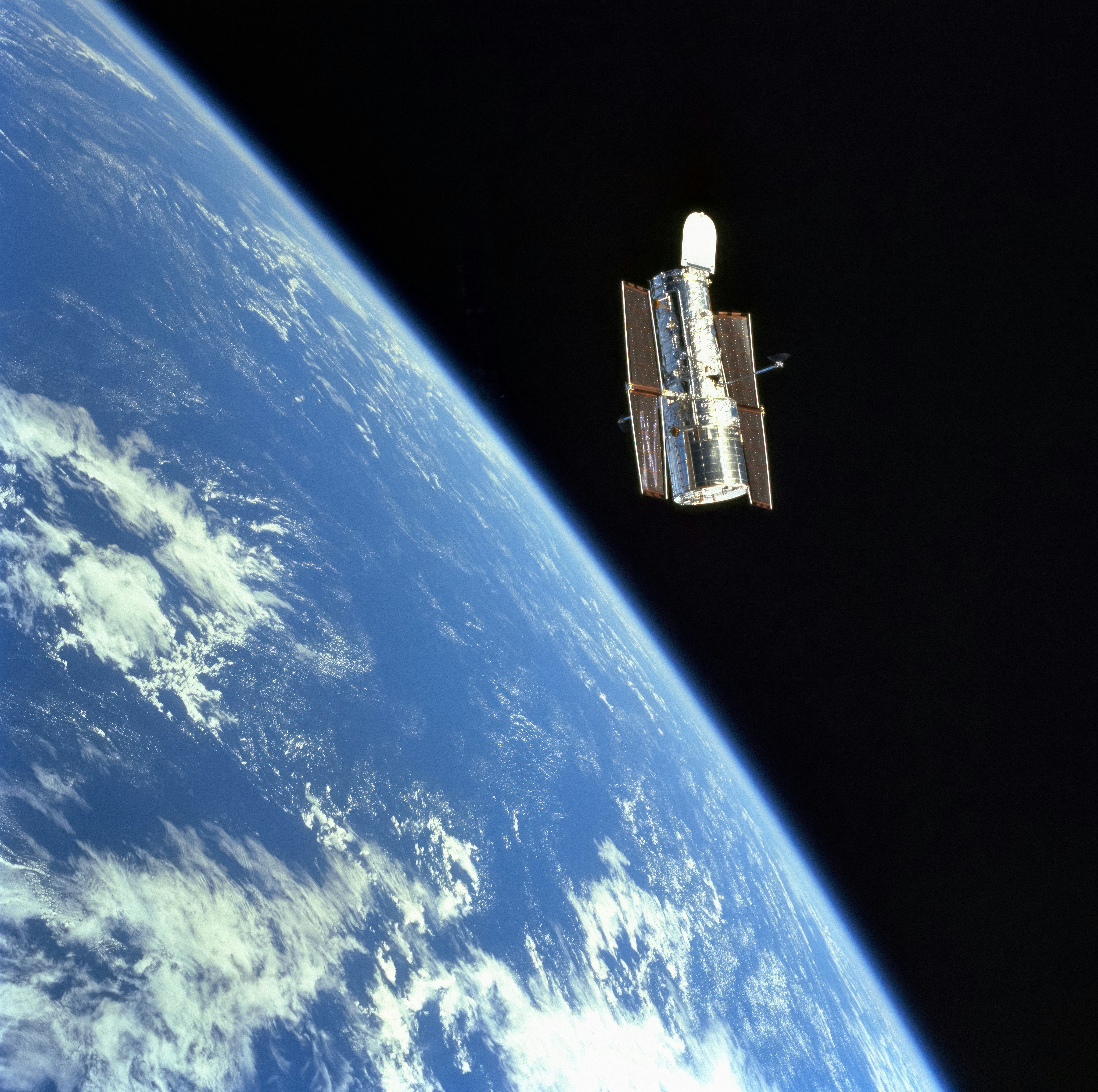
Photo by NASA Hubble Space Telescope on Unsplash

Sibani is an OSINT-trained geopolitical risk analyst with over a year of experience in real-time threat monitoring, intelligence reporting, and regional security analysis across Asia, Africa region. Her academic background in International Relations, supported by certifications in OSINT and intelligence analysis, has enabled her to deliver time-sensitive, evidence-backed assessments. She has worked with ICWA, CEAS, and Geostrata, using tools like satellite imagery and social media to monitor geopolitical risks. She is particularly interested in China's regional behavior, border tensions, and maritime strategies.