
Building India’s Military Industrial Complex
The article highlight the achievements and challenges of India’s Military–Industrial Complex, exploring the efforts of the country to transition into a defence exporter. Several acquisition, structural and institutional reforms in the defence sector are addressed, and the gaps in such measures are also underscored, to paint a complete picture of the current state of India’s Defence Industry.
In the 21st century, a country’s strength is no longer just measured by the magnitude of its arsenal, but its ability to design, create, and supply cutting edge defence technologies on a large scale, and in swift measure. The future of warfare lies in artificial intelligence, unmanned systems, cyber competence and space - based technologies. However, the delivery of the same requires a proficient industrial base to innovate and achieve. Here lies the foundation of the Military – Industrial Complex, a tripartite relationship between the armed forces, the industry, and the government[1].
A highly important element of gaining autonomy in defence production and development remains the global arms market. According to the Stockholm International Peace Research Institute (SIPRI) report on international arms transfers, India was the world’s second largest importer with 8.3% share of global imports in 2020 – 2024. Despite a decrease of 9.3% from the previous numbers of 2015-2019, India remains reliant on Russia and the western supplies (France, USA, Israel) for armaments[2]. Henceforth, what is required is lesser reliance and greater export competitiveness if India wishes to cement its place in the global market.
In India, the public sector has historically dominated the production, as well as research and development (R&D) of the Indian Military – Industrial complex, even though the private players are gradually coming into play. However, the major challenge that confronts the system is the disassociation between the armed forces, the government, and the industry, the three core pillars of national security. They operate in isolation, rather than in synchrony, leaving evident gaps in defence production. The private sector, despite arching with innovation, faces hurdles in navigating a slow, bureaucratic system and the manifest red – tapism. The armed forces have limited access to the indigenous technologies, in spite of the evolving battlefield requirements. Lastly, the government policy fails to translate into ground level integration required to initiate change[3]. To tackle such challenges, including a lack of manufacturing incentive and technological depth, government has initiated several reform measures to reverse India’s import dependency, under the broad ambit of the Make in India initiative and the Aatmanirbhar Bharat Abhiyan.
Institutional and Acquisition reforms
In 2019, the post of Chief of Defence staff was created, with a key responsibility of ‘promoting the use of indigenous equipment by the services.’ Furthermore, the government refined the defence procurement process under the Defence Acquisition Procedure (DAP) 2020 to prioritise domestic companies over the foreign (Behera 2024). It puts an emphasis on indigenously designed weapon systems and provides a boost to MSMEs. To guarantee that significant defence purchases are done from Indian suppliers with local design and development, it highlights the "Buy (Indian–Indigenously Designed, Developed and Manufactured)" category[4].

Source: (Behera 2024)
Additionally, to enhance the manufacturing capacity of the sector, Defence Industrial corridors are being set up in Uttar Pradesh and in Tamil Nadu. It establishes a strong ecosystem for defence manufacturing is created by bringing together public sector initiatives, private industry, and MSMEs in strategically chosen areas intended to support domestic production of defence and aerospace-related goods. As special economic zones, these corridors provide expedited approval processes, simplified regulatory frameworks, and financial incentives to draw in both foreign and local investment. By lowering reliance on imports, promoting innovation, and encouraging the expansion of MSMEs and auxiliary sectors, the corridors directly help the "Make in India" campaign[5]. The corridors are legally controlled by a thorough structure that guarantees ease of doing business, including clear procurement regulations and single-window clearance procedures, which have already drawn over ?17,000 crore in investments as of 2024.
Another strong reform in place has been the liberalisation of FDI (Foreign Direct Investment) in defence. The cap on foreign direct investment was increased to 74% for new defence industry licenses through an automated process, and to 100% with government approval for access to cutting-edge technology. This is meant to increase indigenous manufacturing by luring in foreign investment and technology. Other such measures include a simplified “Make” Process which reserves certain projects for MSMEs; Innovations for Defence Excellence (iDEX) which provides grants and funding to innovators, startups, MSMEs, and academic institutions to support the development of defence and aerospace technologies; and portals such as Srijan Portal, offset portal and more, which promote indigenisation[6].
Current state of the Defence sector
From ?2.53 lakh crore in 2013–14 to ?6.81 lakh crore in 2025–26, India’s defence budget has steadily increased. The defence output reached its highest level in 2024–2025, with a total ?1.50 lakh crore, more than three times the ?46,429 crore recorded in 2014–15. The 34-fold increase in India's defence exports from ?686 crore in 2013–14 to ?23,622 crore in 2024–25 highlights the progress in development of a self-sufficient and internationally competitive defence sector.[7]. The rising acceptance of Indian products in the global market and the capacity of the Indian defence sector to participate in the global supply chain are reflected in the 42.85% growth in exports by the Defence Public Sector Undertakings (DPSUs) in financial year 2024–2025. While the equivalent statistics for FY 2023-24 were Rs 15,209 crore and Rs 5,874 crore, respectively, the private sector and DPSUs contributed Rs 15,233 crore and Rs 8,389 crore to defence exports in 2024-25[8]..
However, several challenges remain underway. India still faces high import dependence on critical technologies, such as jet engines, radars, propulsion systems etc. Defence R&D is still limited and heavy reliant on DRDO, with little collaboration with the private sector or academia. The country is confronted with procurement and bureaucratic hurdles, as well as financial constraints. Lastly, skill and technology gap must also be addressed by the government.
Conclusion
India has to address the structural issues that continue to limit its domestic defence manufacturing if it is to achieve real self-reliance. With a focus on vital technologies like jet engines, sophisticated electronics, and AI-driven defence systems, a major increase in R&D spending is imperative. Long-term technological missions cantered on specialized fields will lessen vulnerability, while increased collaboration between DRDO, commercial companies, universities, and start-ups under programs like iDEX can aid in reducing the over-reliance on imports. At the same time, procurement reforms need to provide guaranteed orders for domestic systems and quicker, time-bound decision-making. India should take an iterative approach, deploying indigenous systems gradually while increasing capabilities, rather of aiming for "perfect" platforms right once[9].
The establishment of a strong industrial ecosystem is equally crucial. With the support of increased testing facilities and expedited certification procedures, defence corridors in Tamil Nadu and Uttar Pradesh must develop into true clusters that incorporate SMEs, start-ups, and international partners. India's defence basis will also be strengthened by developing cooperative R&D partnerships with friendly nations and localizing the production of vital subsystems. Competitiveness will also be boosted by increasing the private sector's engagement through incentives, sovereign guarantees, and simpler export finance access. Last but not least, India will be able to decrease its dependency on imports and establish long-term technical leadership by investing in human capital through defence-focused centres of excellence in cutting-edge technologies like robotics, space, and quantum communication[10].
References:
[1] Verma, Anoop. 2025. “India's Military-Industrial Complex: Unite the soldier, scientist & state to propel strategic autonomy, lead in global markets.” ET Government, 3 June. https://government.economictimes.indiatimes.com/news/defence/indias-strategic-leap-uniting-soldier-scientist-state-for-defense-innovation/122208640
[2] George, Matthew, Katarina Djokic, Zain Hussain, Pieter D Wezeman , and Seimone T Wezeman. 2025. TRENDS IN INTERNATIONALARMS TRANSFERS, 2024. Stockholm International Peace Research Institute. https://doi.org/10.55163/XXSZ9056
[3] Verma, Anoop. 2025. “India's Military-Industrial Complex: Unite the soldier, scientist & state to propel strategic autonomy, lead in global markets.” ET Government, 3 June. https://government.economictimes.indiatimes.com/news/defence/indias-strategic-leap-uniting-soldier-scientist-state-for-defense-innovation/122208640
[4] Behera, Laxman Kumar. 2024. “India’s Defence Industry: Achievements and Challenges.” Observer Research Foundation. https://www.orfonline.org/research/india-s-defence-industry-achievements-and-challenges
[5] News, Indian Defence. 2025. Indian Defence News. 8 June. Accessed August 27, 2025. https://www.indiandefensenews.in/2025/06/govt-to-approve-new-defence-industrial.html
[6] Bureau, Government of India - Press Information. 2025. Government of India - Press Information Bureau. 15 August. Accessed August 27, 2025. https://www.pib.gov.in/FactsheetDetails.aspx’id=149238&ModuleId=16.
[7] Bureau, Government of India - Press Information. 2025. Government of India - Press Information Bureau. 15 August. Accessed August 27, 2025. https://www.pib.gov.in/FactsheetDetails.aspx’id=149238&ModuleId=16.
[8] Bureau, Government of India - Press Information. 2025. Government of India - Press Information Bureau. 15 August. Accessed August 27, 2025. https://www.pib.gov.in/FactsheetDetails.aspx’id=149238&ModuleId=16.
[9] Behera, Laxman Kumar. 2024. “India’s Defence Industry: Achievements and Challenges.” Observer Research Foundation. https://www.orfonline.org/research/india-s-defence-industry-achievements-and-challenges
[10] Behera, Laxman Kumar. 2024. “India’s Defence Industry: Achievements and Challenges.” Observer Research Foundation. https://www.orfonline.org/research/india-s-defence-industry-achievements-and-challenges
(The views expressed are those of the author and do not represent the views of CESCUBE).
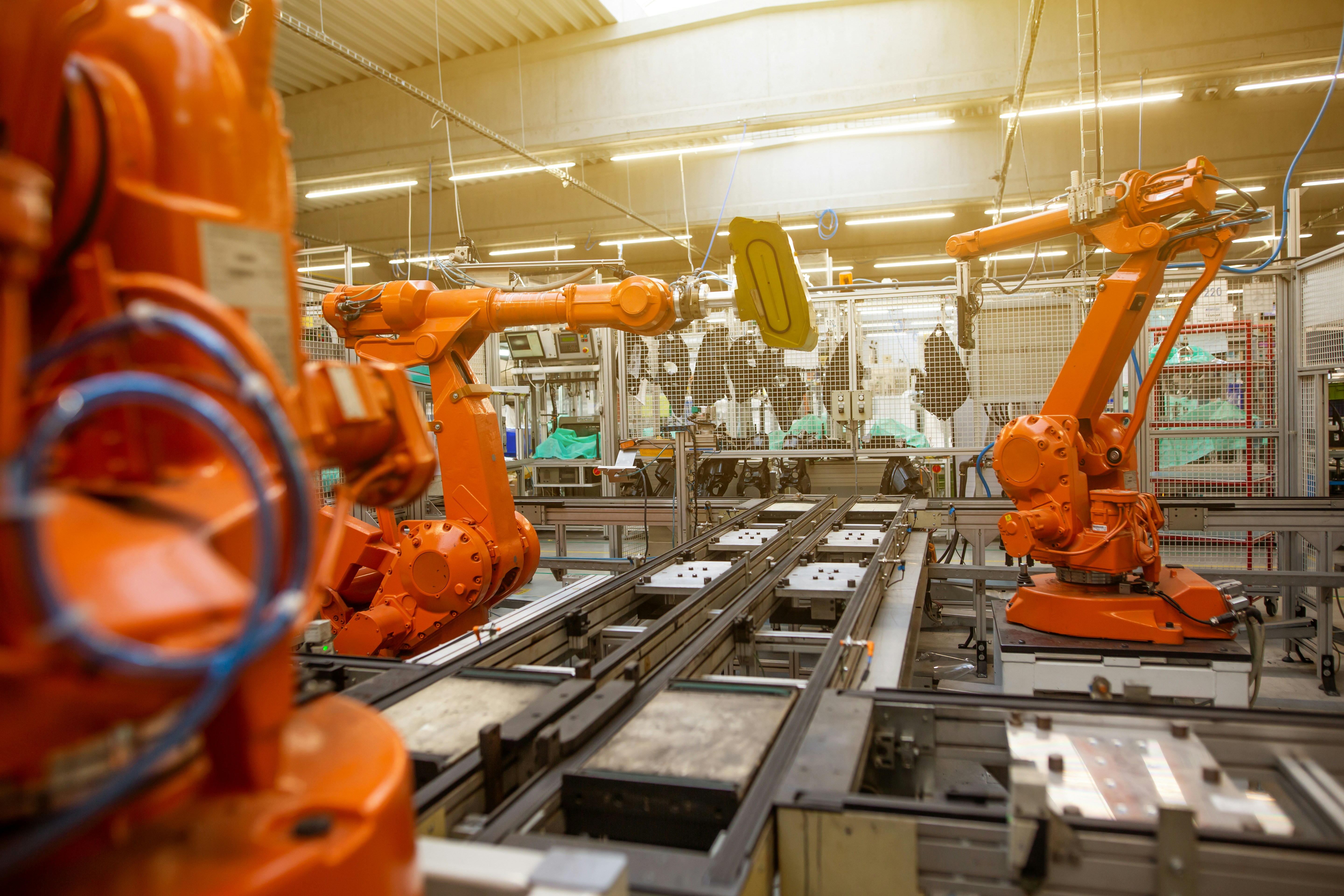
Photo by Simon Kadula on Unsplash

Anvi Srivastava is a Political Science student at Lady Shri Ram College for Women, with deep interests in international relations, public policy, and the intersections of gender and politics. An avid writer with a strong inclination toward research, she is also deeply committed to social justice, gender equality, and civic leadership. Her work aims to reflects a blend of academic inquiry and grassroots engagement, with a focus on creating inclusive and intersectional approaches to governance and public discourse.