Turkey's ambitions for Greater Turkey
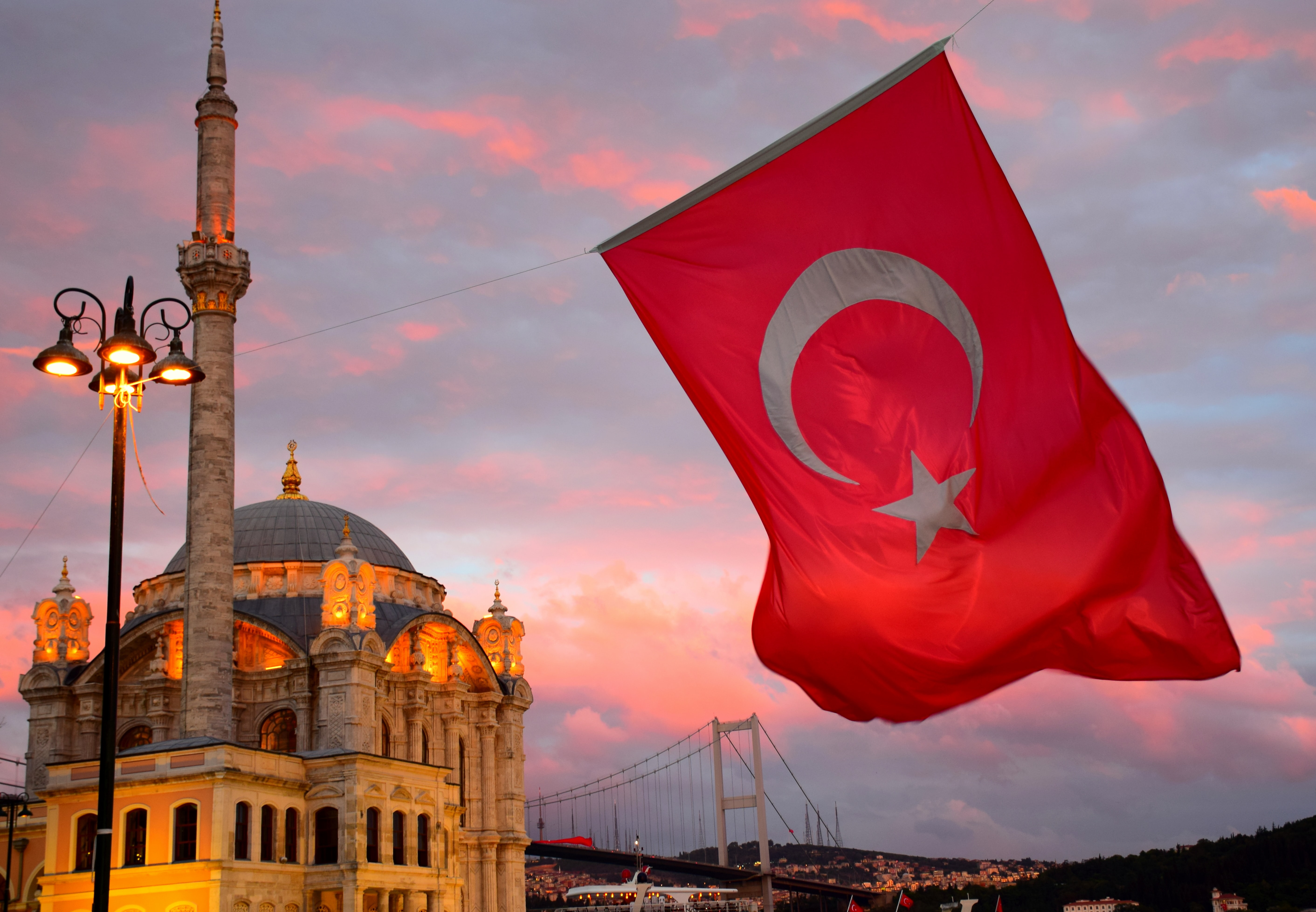
Turkey’s economy is at an all-time staggering low with its currency Lira below $7.60 and a per capita income of barely $8900. The country is suffering from a double-digit inflation and high unemployment rates due to the sharp impact of the coronavirus pandemic. It is amidst all this, that Turkey’s Recipe Tayiip Erdogan has come forward with his program of “Making Turkey great again”, pushing ahead in its military, diplomatic, geostrategic, and economic interests. He declared his next immediate step is to bring Turkey amongst the world’s top ten world powers.
Turkey’s new ambition can be understood by focusing on its past five years. It launched military incursions in Syria, northern Iraq, Libya and even engaged in naval stand-offs with Greece. Turkey has had an omnipotent presence in the Middle Eastern region. Its strategic hard power is considerable. We can say so on the basis of the following facts such as; it is the second largest standing army in NATO stationed at Ankara. Turkey has known to have supplied armed drones and military training to Azerbaijan and weapons to the Libyan government. It also enjoys the supremacy on account of its many bases in Iraq which have facilitated frequent cross border movements and even a strong military presence in Qatar.
Turkey’s new ambition seems to have stemmed its root from Erdogan’s foreign policy objectives. It has been pointed out that Turkey went from the motto of “zero problems with neighbors” to a new “zero neighbors without problems”. His foreign policy has been suggested to have had “Neo-Ottoman” undertones in the sense that it aims to establish an empire spread across Europe, western Asia and much of North Africa. However much to its distaste, Erdogan’s attempt at making turkey a regional power has faced critical backlash. Turkey’s hope of joining the EU and building stronger ties in its Arab neighbourhood could not be much of a success as mistrust and popular uprisings swept the region of any scope in cooperation. Scholars suggest that instead of gaining friends, turkey’s actions have alienated many of its friends and the only country which can be currently considered its ally is Qatar.
Despite these, the plan of a new Turkey gained some progress when Turkey’s support in the Libyan civil war turned the tide away. Similarly, its support to Azerbaijan exposed limits of Russian influence in the Caucasus region. Turkey has also successfully established itself as an alternative transport route in the west that would enable the central Asian countries to bypass Russia and Iran’s corridors. Turkey’s position as a transit hub also holds significant importance in the region, which has become a point of admiration.
The country has also had long standing goal which has popularly been called the pan-Turkism or Neo-Ottamanism. The clear picture of this scenario is evident in Turkey’s deepening alliance with Azerbaijan. This new feature not only ensures Turkey’s prominence but also gives it a clear access to the Caspian Sea, allowing it to cut its dependence on Iran and Russia. Turkey also gained access to Turkmenistan’s energy reserves, strengthening its position as a regional energy source. The proposed Trans- Caspian pipeline holds immense potential as the southern gas corridor against the European one. Turkey is also expanding on its infrastructural front across Caspian Sea which would open it to Kazakhstan and the port of Khorgas on the Chinese border. This not only means a new access route for the Caucasian nations but also translates as a direct challenge to Russia’s hold in the region as a traditional infrastructural legend of the land. Another good news that Turkey enjoys in the region is that Kazakhstan also wishes a greater role for Turkey to balance out the Russian and Chinese influence. Kazakhstan does not believe in the cause of either of the two countries on account of their aggression against Ukraine and maltreatment of the Muslim Uighur minority in Xinxiang.
All these changes have however occurred in a changed Middle Eastern environment. With the United States brokering Abraham accords, it is to likely render some considerable changes for Turkey. Erdogan who presented himself as the protector of Muslim rights seems to have faced a blow as Israel undergoes a fundamental transformation in the Arab world. If no anomaly in relations exist, where and how can Turkey cultivate cooperation becomes a question of concern. Turkey’s expansionism has therefore faced the expected wrath of rivals. Both Russia and Iran, noticing the extent of Turkey’s fleet in the Caspian Sea undertook joint naval drills with considerably larger naval assets during the Nagorno-Karabakh war negotiation when Turkey was occupied. It is also important to point out that the very significance turkey enjoys is due to its access to the Nakhichevan corridor, which remains in the hands of Russia.
As we try to map Turkey’s shifting alliance and circle of action amongst its enemies and frenemies, it is imperative we recognize its efforts to establish itself as a: stand-alone power”. Such a policy change must be understood in line to Erdogan’s authoritarian rule and very much his powerful personality. The revolution for a greater turkey cannot be separated from the man behind it coming into force. This is prominent in the way he rules. The Turkish republic witnesses a concentration of power in the hands of elites and the very transformation of turkey’s international image from a harmless European ally to an anti- west coming of the age power signifies its Neo-Ottoman character. To further its big dream, Turkey needs resources to amplify its efforts, in contrast to which the economy that is, currently under crisis with a continuously plummeting Lira.
Turkey’s assertiveness must be located and understood because of certain pre-occurring events in the changing world order. No change is a completely transparent move. It was with reduced interest from the United States and ineffectiveness on the part of European Union, that the narrative of a strong Turkey emerged. So far, Erdogan has been successful in turning away the public eye from domestic issues to the national concern of geopolitics and territoriality. Therefore, it would not be wrong to argue that Erdogan attempts to neutralize the foundation of a solid Turkish Anatolia to a more soluble Turkish state who is both an ally of the west and an independent Caucasian power have been a considerable success anyway. His ambitious plan is, hence, something we all must wait for to unfold.
References
1.Bekdil, B. (2020, october 25). Erdo’an’s Costly “Make Turkey Great Again” Program. Retrieved from https://besacenter.org/erdogan-neo-ottoman: https://besacenter.org/erdogan-neo-ottoman/
2.Danforth, N. (2016, october 23). Turkey’s New Maps Are Reclaiming the Ottoman Empire. Retrieved from foreignpolicy: https://foreignpolicy.com/2016/10/23/turkeys-religious-nationalists-want-ottoman-borders-iraq-erdogan/
3.Dorsey, J. M. (2021, February 24). Turkey signals sweeping regional ambitions. Retrieved from the daily star: https://www.thedailystar.net/opinion/news/turkey-signals-sweeping-regional-ambitions-2050125
4.Friedman, G. (2014, august 12). Turkey's Geographical Ambition. Retrieved from stratfor: https://worldview.stratfor.com/article/turkeys-geographical-ambition-0
5.Goldman, M. (2021, january 31). Review – Erdo’an’s Empire: Turkey and the Politics of the Middle East. Retrieved from E-international relations: https://www.e-ir.info/2021/01/31/review-erdogans-empire-turkey-and-the-politics-of-the-middle-east/
6.Hedlund, S. (2021, april 9). Turkey’s push for greater influence in Central Asia. Retrieved from Geopolitical intelligence services: https://www.gisreportsonline.com/turkeys-push-for-greater-influence-in-central-asia,politics,3482.html
7.patel, L. (2021, January 12). Erdogan’s great game: Soldiers, spies and Turkey’s quest for power. Retrieved from Financial times: https://www.ft.com/content/8052b8aa-62b9-40c9-a40c-d7187d5cd98a
8.Peterson, S. (2020, november 16). How Turkey’s use of military power furthers Erdo’an’s ambitions. Retrieved from csmonitor: https://www.csmonitor.com/World/Middle-East/2020/1116/How-Turkey-s-use-of-military-power-furthers-Erdogan-s-ambitions
Pic Courtesy-Meg Jerrad at unsplash.com
(The views expressed are those of the author and do not reflect the views of CESCUBE.)

Aastha Saluja is a graduate from lady Shri Ram college, Delhi University and is currently pursuing her masters in politics with specialization in international relations at Jawaharlal Nehru University. Her area of interest includes emerging trends of the Indo -pacific region and challenges of democratization and economic development post Cold War.