Takeaways from Kamala Harris Visit to Southeast Asia
As the world slowly coming with the terms of the Taliban takeover in Afghanistan, many observers said that the unexpected US debacle on Afghan soil gathers semblance of its pack up from Saigon, Vietnam. The scathing rupture in US credibility, that it tried to maintain for so many years, has also become apparent. The allies all over the world set in motion to analyze the commitments, Washington putting forward, with the fear of abandonment becoming a reality in their calculation. However, America at the crucial juncture could not let the potential subsidiary in its Indo-pacific scheme to wonder in substantive confusion over its reputation, that too, when the security threats extracting from China’s hegemonic design are not a distant possibility.
Vice President of the United States of America has undertaken a tour of Southeast Asia to reassure about the continuance of Washington’s long-term strategic partnership with the residing countries. The trip of Kamala Harris to Singapore and Vietnam has been planned as a supplement after the Defense secretary Llyod Austin and Deputy Secretary of State Wendy Sherman have taken the tour of Southeast Asia including stops in Singapore and Vietnam. The purpose of the trip was to strengthen partnerships with the Singapore and Vietnam and with the Southeast Asia altogether. The effort of these consistent trip is to shoutout America’s return in the Southeast Asia and to stem the re-engagement with “a critically important region in the world”, which have struck with a steady halt during President Trump tenure and got a slow start with the coming of Biden into the white house.
Vice President speech in the Singapore started with the reference of Afghanistan, to shrug off the doubts of America’s declinist turn, similarly reiterating that ‘we have achieved what we went there to do’, highlighting USA’s multidimensional approach to ‘continue to advance our interests in other regions, including this region’. After an aversive episode of ‘America first’ and unduly rhetoric for need united against the communist China, US leadership seems poised with the local awareness of the desire of a more positive program of American engagement, which will reinstate America as sole security provider in the wider Indo Pacific where “some of its closest allies and strongest of partners resides”. USA have endured interest and the commitments in the region and these commitments inadvertently includes security. Nevertheless, the vice president echoed the security aspects of US commitment to the region in the ‘free and open Indo-pacific vision’ and a South china Sea free from Beijing Coercion is the most defining factors that come along with freedom of navigation in the neutral waters of these maritime estate. Kamala Harris shows concern over ‘Beijing continued coercion’ and ‘intimidation to make claims’ of most of the South China Sea. The visit of the Changi Naval Base and mentioning of the U.S. Navy ship, The USS Tulsa, represent the U.S. ever deepened and enduring security partnership in the region. In the Singapore, Vice President could be seen reassuring the Southeast Government that despite its intention to remain strongly engaged in region it does not force countries to choose between itself and China. However, the focus shall continue to include the energy, climate, economic cooperation, the primary goal is to secure the region from China’s coercion by capacity building program of its allies.
Earlier, it has been the Quad and South Korea that largely comprised the US’s strategic plans in the Indo-Pacific, but the timely sense prevailed in the US’s leadership that it would alone not suffice the requirements of the Washington’s ‘Free and Open Indo-Pacific’ desires. Not only the Southeast Asia goes unnoticed but critically at the point when it was head-to-head with China over South China Sea dispute. The Kaleidoscopic nature of South China Sea, put it right into the epicenter of the Indo-Pacific security structure with an unavoidable invitation to the Southeast Asian states to the party. Vice President in her address attacks China saying ‘China continues to undermine rule-based order and threaten the sovereignty of nations’ and calls Vietnam to join the United states against China’s ‘bullying’ in the strategically important seaway.
Despite all the efforts the U.S. strategy in the Southeast Asia still lacks coherence with its larger Indo-Pacific strategy, the co-vary between both still unproven due to the misalignment in the perception between policymakers in Washington and their Southeast Asian partners, occurred majorly due to the President Trump’s less receptive approach towards the regional aspirations. Vice President though, talks about the ‘ASEAN’ as a pivotal regional structure for the Indo-Pacific maritime security but the absence of Thailand and Philippines, America’s treaty allies, from this itinerary is striking. The proposal of strengthening partnership with the Southeast Asian nations still lacks clear roadmap, the trip provides no answer how US will deepen its engagement and how it will address multiple concern regarding the region. Invisibility of any ‘AUKUS’ type structure, in which USA instigating the development of the Nuclear-Powered Submarine (SSNs) for the Australia with the help of United Kingdom, is a matter of worry for regional actors. The capacity building program in the Southeast Asia cannot be successful without technology transfer and financial assistance as most of the Southeast Asian allies lacks the same.
Despite multiple claims of the regions prior status to the US regional security structure, the Biden administration’s Southeast Asia policy largely regarded as disappointing, which is deeply troubled and follows the footsteps of its predecessor Trump. The Kamala Harris trip however, do not fix the trouble for Biden Southeast Policy, it can regulate the skepticism brewed regarding its absence in the Southeast Asia.
Notes
1. Kamala Harris’ Southeast Asia Visit Shows Biden’s Southeast Asia Policy Still Lacks a Clear Roadmap – The Diplomat: https://thediplomat.com/2021/08/kamala-harris-southeast-asia-visit-shows-bidens-southeast-asia-policy-still-lacks-a-clear-roadmap/
2. Why Biden has been a disappointment to Southeast Asia so far | South China Morning Post: https://www.scmp.com/comment/opinion/article/3136344/why-biden-has-been-disappointment-southeast-asia-so-far
3. Kamala Harris joins diplomatic charm offensive in South East Asia - BBC News: https://www.bbc.com/news/world-asia-58277226
4. Remarks by Vice President Harris on the Indo-Pacific Region | The White House: https://www.whitehouse.gov/briefing-room/speeches-remarks/2021/08/24/remarks-by-vice-president-harris-on-the-indo-pacific-region/
5. What did Kamala Harris’ trip do for US engagement in Southeast Asia?: https://www.brookings.edu/podcast-episode/what-did-kamala-harris-trip-do-for-us-engagement-in-southeast-asia/
6. Kamala Harris’s south-east Asia trip reveals limits of US strategy | US foreign policy | The Guardian: https://www.theguardian.com/us-news/2021/aug/27/kamala-harriss-south-east-asia-trip-reveals-limits-of-us-strategy
7. In Southeast Asia, Kamala Harris Rebukes China - The New York Times: https://www.nytimes.com/2021/08/24/world/asia/kamala-harris-singapore-vietnam.html
8. Kamala Harris, Southeast Asia and the balancing act nations face between US and China | South China Morning Post: https://www.scmp.com/news/china/diplomacy/article/3146691/kamala-harriss-southeast-asia-visit-highlights-balancing-act
9. Kamala Harris joins diplomatic charm offensive in South East Asia - BBC News: https://www.bbc.com/news/world-asia-58277226
10. Kamala Harris tries to improve Southeast Asia ties as China prods from sidelines: https://www.livemint.com/politics/policy/kamala-harris-tries-to-improve-southeast-asia-ties-as-china-prods-from-sidelines-11629981884537.html
11. Kamala Harris ends Asia tour with fresh jab at China https://www.thehindu.com/news/international/kamala-harris-ends-asia-tour-with-fresh-jab-at-china/article36127019.ece
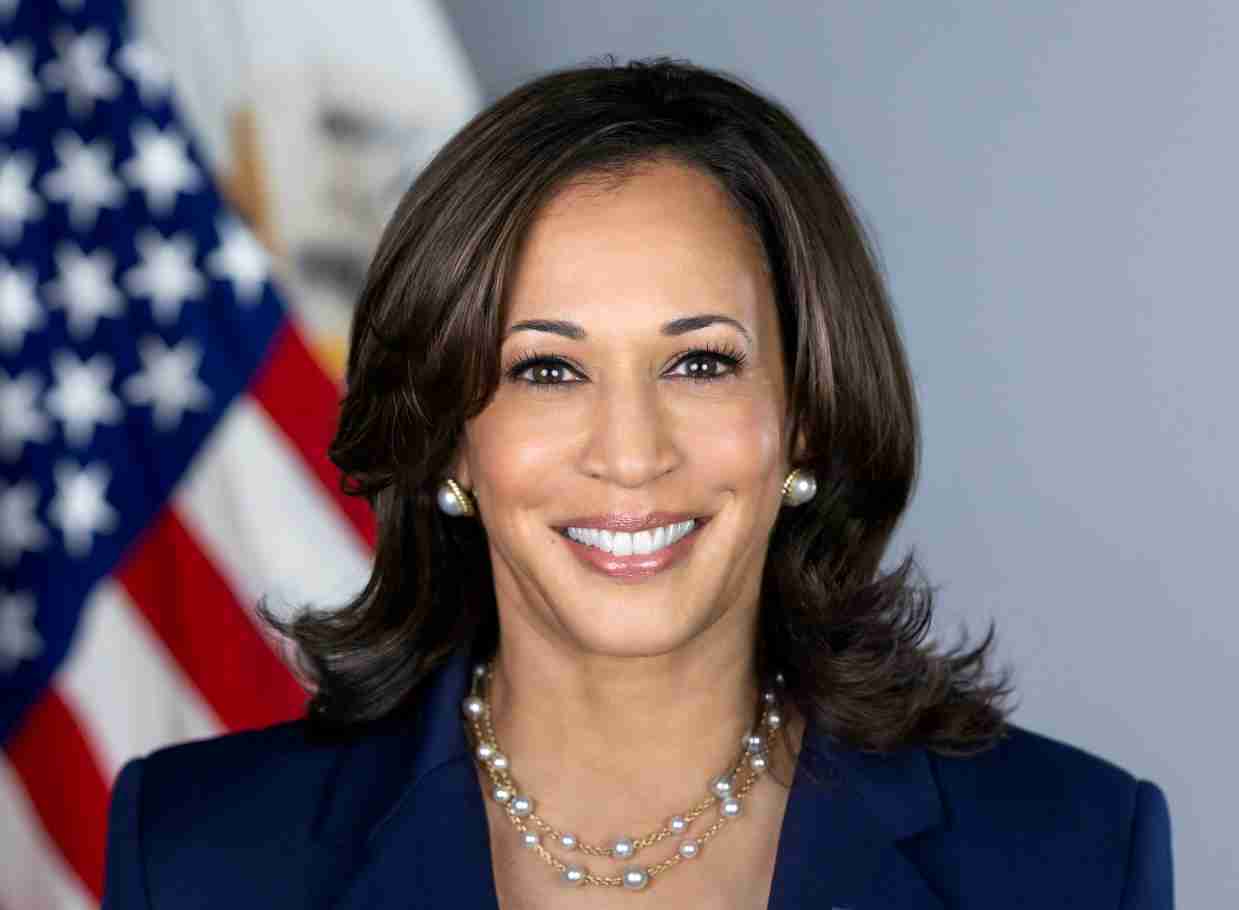
Pic Courtesy- The Whitehouse official webpage
(The views expressed are those of the author and do not represent views of CESCUBE.)

Gaurav Sen is a graduate from Delhi University. He is currently doing his Masters in International relations from Jawaharlal Nehru University, New Delhi. His research area includes IR theories, Great Power competition in Indo-Pacific, Maritime Security, Emerging Warfare Concepts, and Military Strategies.