Orbital Militarization and India’s Maritime Security: From Surveillance to Strategic Response
The current framework of security has incorporated Earth’s orbit and outer space as areas of militarization in the pursuance of safeguarding national interests. While the Outer Space Treaty of 1967 has prevented the nuclearization of space, conventional weapons and a wide range of military assets continue to be deployed for Intelligence, Surveillance, and Reconnaissance (ISR) purposes. This has progressed the rise of a security nexus between space-based assets and maritime capabilities. As a key maritime nation in the Indian Ocean Region (IOR), it is imperative that India makes advances in militarization of orbit/space to secure its interests the region. India’s 7,500-kilometer-long coastline in IOR region which is the hub of global commerce and crucial to its strategic interests makes it an area of priority. The blending of naval strategies with space-based ISR capabilities can assist India in countering grey zone tactics. This article aims to examine how India can and should develop and operationalize a space-based ISR framework to enhance naval domain awareness and counter grey-zone tactics in the Indian Ocean Region (IOR).
Orbital Militarization: Theoretical Framework
The conceptual framework of orbital militarization draws a distinction between the weaponization of space namely, the deployment of weapons in orbit and its militarization, which refers to the use of space for purposes such ISR, missile warning, and other strategic or offensive capabilities[1]. In this context, orbital militarization refers to the placement and development of military technologies in Earth’s orbit and beyond, including systems such as ballistic missiles and hypersonic glide vehicles that transit through outer space during their flight[2].
Since the 1950s, satellites have been used for peaceful purposes, though many of these had hidden military applications. Military satellites are not classified as weapons, but serve an essential task of gathering intelligence and supporting military operations. The militarization of space has also included the deployment and testing of space weapons, which involve both kinetic and non-kinetic capabilities.[3]
Space-based weapons are generally divided into three categories: Earth-to-Space, Space-to-Space, and Space-to-Earth systems. Kinetic weapons aim to physically destroy targets in space and on Earth. Earth-to-Space systems include orbital anti-satellite (ASAT) weapons. Space-to-Space systems involve co-orbital ASAT platforms. Space-to-Earth capabilities are represented by the Fractional Orbital Bombardment System (FOBS). Non-kinetic weapons, in contrast, can disrupt or damage space assets without making direct physical contact. Earth-to-Space non-kinetic systems include jammers and lasers. Space-to-Space systems may use co-orbital jammers, high-powered microwaves, and lasers that can cause temporary or permanent effects. Space-to-Earth non-kinetic weapons consist of high-powered lasers that target land, sea, or air, although atmospheric interference creates significant challenges. Space-based downlink jammers are often included in this category[4].
India’s Orbital Capabilities
Historically a pacifist nation in its approach towards space militarization, India has slowly started to take a larger initiative in space security. Mission Shakti (2019) signalled this shift when India successfully displayed its anti-satellite (ASAT) capabilities. Riding on this momentum, India also institutionalized Defence Space Agency (DSA) in 2019, aiming to coordinate and integrate space military operations, enhancing ISR capabilities and creation of ISRO-DRDO alliance[5]. With these developments, India has attempted complement its military-based satellite command structures like the GSAT-7 series which provide a dedicated communication to all branches of the military. The surveillance front has also been boosted with the deployment of new reconnaissance satellites such as the EMISAT and RISAT series. The Electromagnetic Intelligence Satellite (EMISAT) primarily detects and intercepts radar and other electronic signals[6]. Radar Imaging Satellite or RISAT mainly captures images through its synthetic aperture radar (SAR). Crucially, both of these satellites work in all weather and terrain conditions. Furthermore, the increasing importance of space situational awareness (SSA) prompted the deployment of project NETRA, an indigenous early warning system for tracking space debris as well as other potential hazards to Indian assets in the space[7].
Space and defence manufacturing has also undergone privatization, with the Indian government now working in tandem with the private sector in order to increase quality and efficiency of manufactured assets. To formalize this, Government of India rolled out the Indian Space Policy in 2023[8]. Also, India has started working with other nations to augment its space security program. A collaborative initiative has been taken with USA titled INDUS-X project which aims to foster partnership in areas like satellite navigation, SSA, and ISR capabilities[9]. Strides have been made in navigational capabilities as well. The NavIC or the Indian Regional Navigation Satellite System is an indigenous satellite-based navigation system. Built by ISRO, NavIC offers real-time positioning, navigation, and timing services across India and 1,500km beyond its geographical borders[10].
The Role of ISR in Securing the IOR & Countering Grey Zone Tactics
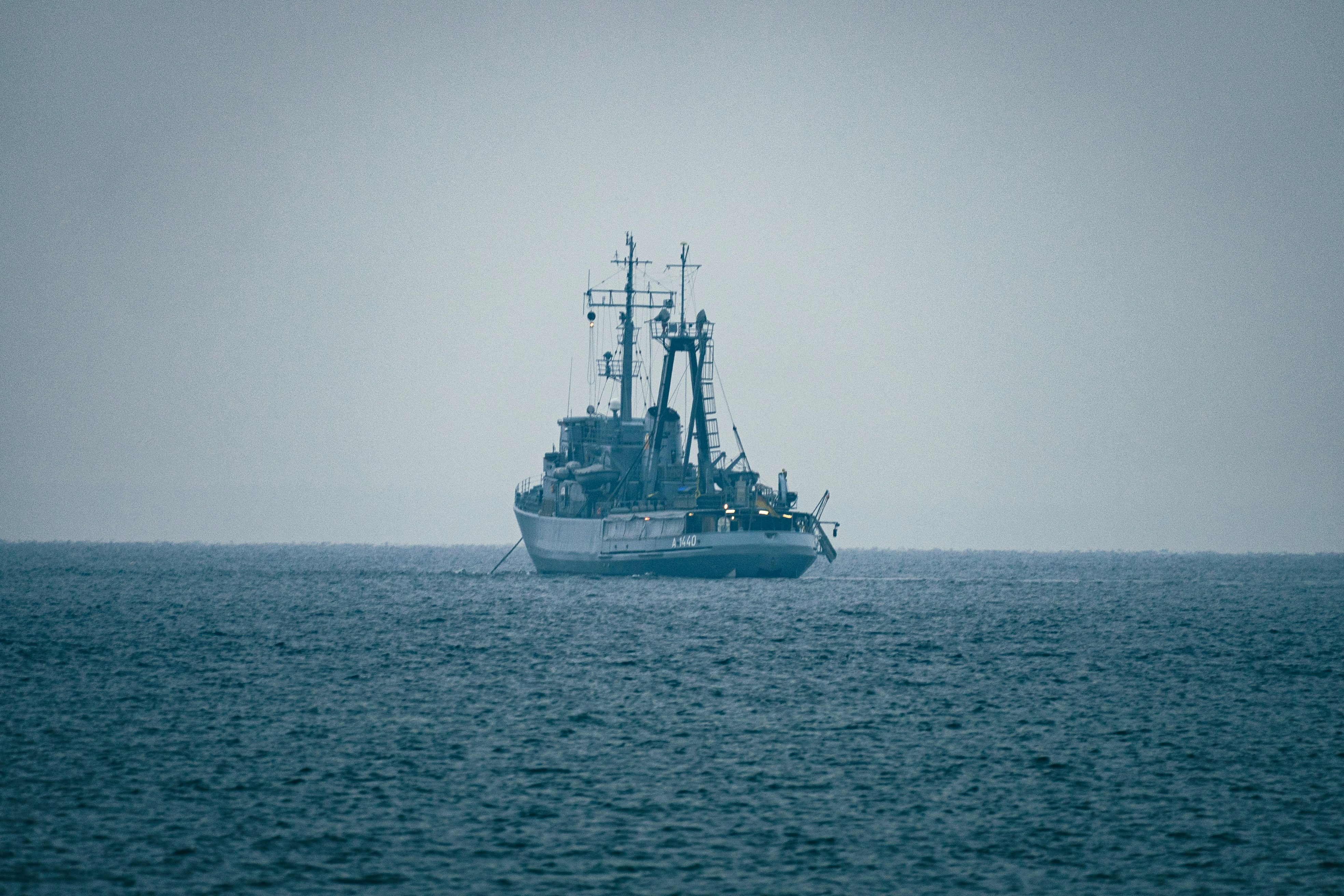
The Indian Ocean Region (IOR) is a high priority area when it comes to securing India’s maritime interests. Threats in the IOR region represent a key challenge, not only to India’s maritime security but also the flow of trade and energy security. From Indian standpoint, the region is susceptible to both, traditional threats like that from Chinese incursions and non-traditional threats such as that from transnational crimes by smaller entities[11]. The heightened Chinese presence in the IOR represents a huge concern to India’s maritime security. China has deployed a different tactic in the IOR as compared to the South China Sea. It has used its civilian fishing and research vessels and has placed them far-off regions of the Indian Ocean. The Indian government has suspected these vessels serve as the ‘eyes and ears of the Chinese Navy. These Chinese vessels often switch off their Automatic Identification System (AIS) despite being mandatory under international maritime law, operating in the dark, creating suspiciousness about their intentions[12]. China has also been shadowing Indian naval vessels in the IOR[13]. IOR is also susceptible to non-traditional threats of drug trafficking, piracy, cyber-attacks among others. IOR has become an illegal drug trafficking corridor due to its central location between production hubs of Golden Triangle (Myanmar, Laos, Thailand) and Golden Crescent (Afghanistan, Pakistan, Iran) and drug markets of Asia, Africa and Europe[14]. Piracy and sea robbery can disrupt the smooth functioning of maritime trade and the general security in IOR. There is also a risk of cyber-attacks to maritime infrastructure such as the one on the Jawaharlal Nehru Port Trust (JNPT) container terminal in Nhava Sheva, Maharashtra[15].
To deal with these threats effectively, India must strengthen its maritime security framework. Traditional naval assets cannot deal with these changing threats alone. The requirement is that of a sophisticated, integrated network with space-based ISR to monitor and respond to the treats in the larger Indian Ocean. Information Management and Analysis Center (IMAC) is critical to securing the IOR. IMAC is the hub for exchange of crucial maritime information in real time, enhancing maritime domain awareness (MDA)[16]. Space-based assets such as the RISAT satellites can help provide IMAC with real-time imagery and data on vessel movements and possible threats. Similarly, EMISAT satellites can provide electronic intelligence by intercepting radar emissions and communication signals. Also, the NavIC navigation system can provide GPS positioning. This will help build a multi-faceted surveillance structure.
However, India must turn its surveillance capabilities into a broader strategic response to effectively counter grey-zone tactics. Early warning systems rely on timely satellite monitoring and signal intelligence. These systems are vital for taking preventive actions against emerging threats in the Indian Ocean Region (IOR)[17]. It is equally important to monitor high-risk areas constantly to deter opportunistic grey-zone operations and reduce the chances of surprise attacks. Strategic responses should also include appropriate countermeasures, like tracking hostile vessels, issuing targeted warnings, or creating limited exclusion zones when needed.
Despite this, there are still significant gaps in India's response capabilities. Satellite coverage, while improving, does not yet have the density and revisit rates necessary for real-time monitoring across the vast Indian Ocean[18]. Integration of intelligence, surveillance, and reconnaissance (ISR) across services is inconsistent. The Navy often leads, while the Army and Air Force lag behind in using space effectively. However, there is no fully unified command structure for space-based operations. The Defence Space Agency (DSA) is still a developing organization with limited resources and authority compared to agencies in the U.S. or China. The private sector, energized by the Indian Space Policy (2023), is still working on improving its technological capabilities. The operational delays in satellite miniaturization and data processing can hinder quick responses. These limitations indicate that although India can identify and highlight grey-zone activities, its ability to swifty translate ISR into effective and appropriate responses remain restricted
Conclusion
India has acknowledged the growing nexus of space capabilities and maritime security. It has made gradual progress in the realm of ISR, developing satellite series of EMISAT and RISAT, improved communication capabilities with projects like NETRA and NavIC, and built a consolidated framework with DSA, IMAC and Indian space policy. Steps have been taken to accelerate the progress, such as the inclusion of private sector and forging alliances with global powerhouses like US. India has thus emerged into the space and ISR sector as an important player. However, there is still a long way go, with limitations in satellite density, institutional capabilities and real-time response capacities. This restricts India’s ISR effectiveness in countering threats and grey-zone tactics in key areas like IOR.
Looking ahead, India must improve both its technological assets but also strategic capabilities. It must integrate its growing orbital resources into a unified framework that enables deterrence, denial, and control in the Indian Ocean Region. Doing this will help India move beyond a surveillance-driven approach and take on a proactive strategic role. This will help expose hostile actions, strengthen maritime domain awareness, and influence the IOR security environment in its favour. In a time when grey-zone tactics blur the lines between peace and conflict, India's ability to use space-based ISR for maritime security will be crucial for maintaining stability and positioning itself as the net security provider in the region.
References:
[1] UNIDIR, United Nations Institute for Disarmament Research, Project Ploughshares Canada, The Simons Centre for Peace and Disarmament Studies, Patricia Lewis, Ernie Regehr, and Jennifer Allen Simons. 2003. Outer Space and Global Security. United Nations. https://unidir.org/files/publication/pdfs/outer-space-and-global-security-307.pdf.
[2] Bernat, Pawe? and Polish Air Force University. 2019. “The Inevitability of Militarization of Outer Space.” Safety & Defense. Vol. 5–1.
[3] Wehtje, Betty. 2025. “Increased Militarisation of Space – a New Realm of Security.” Beyond the Horizon ISSG. March 6, 2025. https://behorizon.org/increased-militarisation-of-space-a-new-realm-of-security/.
[4] Gleason, Michael P., Peter L. Hays, and CENTER FOR SPACE POLICY AND STRATEGY. 2020. “SPACE AGENDA 2021: A ROADMAP FOR ASSESSING SPACE WEAPONS.” Report. CENTER FOR SPACE POLICY AND STRATEGY. https://aerospace.org/sites/default/files/2020-10/Gleason-Hays_SpaceWeapons_20201006_0.pdf.
[5] Banerji, Anuttama. “The Slow Militarization of India’s Space Sector.” The Diplomat, September 23, 2023. https://thediplomat.com/2023/09/the-slow-militarization-of-indias-space-sector/.
[6] “Isro Launches Emisat-satelliteisro Launches Emisat-satellite.” n.d. Drishti IAS. https://www.drishtiias.com/daily-news-analysis/isro-launches-emisat-satellite.
[7] “NETRA Project & Space Junk.” n.d. Drishti IAS. https://www.drishtiias.com/daily-news-analysis/netra-project-space-junk.
[8] Admin. 2023. “Space Policy 2023- Indian Private Sector’s Guide to the Galaxy – DGS Associates.” May 31, 2023. https://dgsassociates.in/space-policy-2023-indian-private-sectors-guide-to-the-galaxy-2/.
[9] “INDUS-X at One: A Year of Bilateral Breakthroughs.” n.d. United States Institute of Peace. https://www.usip.org/publications/2024/09/indus-x-one-year-bilateral-breakthroughs.
[10] Pandey, Anvesha. 2024. “What Is NavIC - Working, Features, and Why It Was Developed!” TrackoBit (blog). July 23, 2024. https://trackobit.com/blog/what-is-navic-and-how-does-navic-work#How_Does_NavIC_Work.
[11] Singh, Arvinder and Centre for Joint Warfare Studies. 2018. “SECURITY CHALLENGES IN THE INDIAN OCEAN REGION.” CENJOWS. Vol. XII–XII. https://cenjows.in/wp-content/uploads/2022/03/Security-Challenges-In-The-Indian-Ocean-Region-by-Col-Arvinder-Singh.pdf
[12] Bhatt, Pooja. 2020. “China’S Gray Zone Tactics in the Indian Ocean.” South Asian Voices. March 19, 2020. https://southasianvoices.org/chinas-gray-zone-tactics-in-the-indian-ocean/.
[13] Laskar, Rezaul H, and Rahul Singh. 2023. “Chinese Vessels Shadow Indian Ships in Asean Drill, Say Officials | Latest News India.” Hindustan Times, May 8, 2023. https://www.hindustantimes.com/india-news/chinese-surveillance-vessel-and-maritime-militia-ships-observed-during-inaugural-asean-india-naval-drill-in-disputed-south-china-sea-region-101683570601076.html.
[14] Anto, Marshall, I. 2025. “Addressing the Intersection of Drug Trafficking, Piracy, and Illicit Fishing in the Indian Ocean Region.” July 1, 2025. https://www.ejsss.net.in/article_html.php’did=15883&issueno=0.
[15] Correspondent, Our, Our Correspondent, and Indian Transport &Amp; Logistics. 2022. “Indian Transport & Logistics.” Indian Transport & Logistics. February 23, 2022. https://www.itln.in/shipping/cyber-attack-cripples-jnpt-container-terminal-1344448’infinitescroll=1.
[16] Dwivedi, Nayan. 2024. “Upgrading India’s Maritime Vigilance: Indian Navy’s IMAC to Transform into ‘National Maritime Domain Awareness Centre.’” Swarajya, January 3. https://swarajyamag.com/news-brief/upgrading-indias-maritime-vigilance-indian-navys-imac-to-transform-into-national-maritime-domain-awareness-centre
[17] “India Accelerates Space Surveillance to Counter China: Inside the 52-Satellite Defence Push.” n.d. https://www.indiandefensenews.in/2025/07/india-accelerates-space-surveillance-to.html?
[18] “Eyes in Orbit: Rethinking India’s Strategic Blind Spot in Low Earth Space,” The Diplomat, June 2025, https://thediplomat.com/2025/06/eyes-in-orbit-rethinking-indias-strategic-blind-spot-in-low-earth-space/
(The views expressed are those of the author and do not represent the views of CESCUBE)
Photo by Daniel Seel on Unsplash

Mohammad Mustafa Ayez is a postgraduate in Conflict Analysis and Peacebuilding from Jamia Millia Islamia, New Delhi. His interests lie in international security, geopolitics, and modern warfare, with a focus on understanding contemporary global challenges. Passionate about research and learning, he aims to bridge academic insights with practical perspectives in conflict resolution and peacebuilding.