India’s Strategic Leverage in the Philippines-China Confrontation at Second Thomas Shoal (2023–2025)
The South China Sea continues to be among the most disputed maritime zones in the modern international system, a mixture of unresolved claims to sovereignty, dense commercial shipping routes, and strategic priorities on both regional and extra-regional powers. Despite the pre-existing tensions in this region, 2023 and 2025 period experienced a critical escalation in the form of conflict, as well as the nature, especially between the Philippines and the Peoples Republic of China (PRC) in Second Thomas Shoal, also referred to as the Ayungin Shoal in the Philippines. Simultaneously, the interactions shifted to symbolic claims of presence and low-level interference to repeated acts of kinetics such as ramming, water-cannon assault, boarding actions, and serious injuries of the military forces.
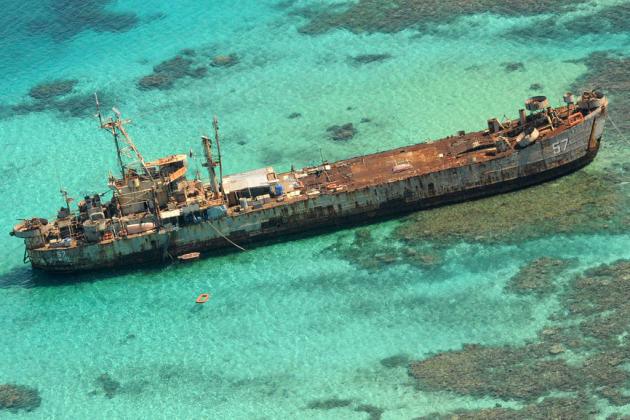
The second Thomas Shoal has gained a new strategic importance due to the long-standing Philippine effort to resupply the BRP Sierra Madre, a grounded naval ship that has taken the form of a literal demonstration of Philippine sovereignty since 1999. The further attempts of China to interfere with such resupply missions became more aggressive, and it indicated a change in the operational posture of the Beijing towards the deterrence by presence rather than coercion by force. These advances revealed a sharp imbalance between the constantly developing Chinese maritime forces and the small defence forces of Southeast Asian claimant states. In this worsening state of security, India became an incidental, although often forgotten, participant. Conventionally careful in its approach to the issues over the South China Sea, India rebalanced its position during this time by integrating defence export with mainstream diplomatic identification in favour of international maritime law. The sale of the BrahMos supersonic cruise missile system to the Philippines and the uptake of bilateral relations to the level of Strategic Partnership were the shift towards normative approval to material and institutional participation.
This essay argues that India’s reaction to the Philippines-China standoff at Second Thomas Shoal is an example of strategic defence diplomacy as a tool of middle-power statecraft. India increased its strategic capacity in the Western Pacific by offering asymmetric deterrence services and diplomatically conciliating with Manila on the legal principles of the maritime order, without making formal commitments of alliance. The essay focuses on the dynamics of the escalation at Second Thomas Shoal, the defence export policy of India, and its convergence with the Philippines in terms of diplomacy and evaluates the consequences of the same to the security architecture of the region as well as the development of the Indo-Pacific order.
Escalation at Second Thomas Shoal and the Evolution of Grey-Zone Conflict
Second Thomas Shoal plays a unique role into the controversies surrounding the South China Sea, due to the existence of the BRP Sierra Madre that has been intentionally grounded by the Philippines to maintain a permanent military deployment into its exclusive economic zone. The rationale of China has been long-term to force the abandonment of this outpost without the open armed conflict leading to international intervention. Chinese attempts to achieve this goal have become highly focused and intensive in terms of both scope and approach since 2023.
The presence of the severe increase in the number of the Chinese coast guard and maritime militia vessels, as reported by the Asia Maritime Transparency Initiative suggests, in the case of the Philippine resupply operations, is unmistakable. By 2023, Chinese ships were frequently in outnumbering Philippine ships two to one, which not only played a symbolic role but also contributed to the formation of manoeuvres that would continuously limit the freedoms of the Philippine movement and increase the probability of collisions and confrontation 1. More variable than the quantitative growth was the qualitative reform of Chinese strategies.
Traditional grey-zone tactics, including blocking, shadowing and close-proximity sailing, were gradually replaced by more risky techniques aimed at causing physical damage. The use of water cannons with a high pressure, intentional ramming and rough interventions became the Norwegian characteristics of the fighting on the shoal. These strategies have ambiguated the distinction between law and military action and, as a result, have complicated the task of categorising the incident according to the current international legal systems.
The events that took place in 2024 became a critical inflexion point. In March, Chinese water cannon attacks left the Philippine supply vessels and wounded their crews in a state of great destruction. These acts, in June, when the Chinese Coast Guard boarded Philippine ships, seized weapons and caused severe injuries to Filipino seafarers 2. These escalations marked a new point of departure, an indication of readiness to use direct physical force against uniformed officers and maintain the pretence of an action taken in accordance with domestic law. At the same time, China enshrined this coercive position through the law 3. This legal justification and kiinetic coercion were incorporated into newly promulgated China Coast Guard enforcement guidelines, which were issued in June 2024. This move restricted Manila even more in terms of its strategic choices, which are codified in the United Nations Convention on the Law of the Sea (UNCLOS). To the Philippines, such developments highlighted the constraints of diplomatic protest and urgent need to obtain credible deterrent capabilities.
India’s Defence Exports and the Strategic Logic of Asymmetric Deterrence
India’s move to sell the BrahMos supersonic cruise missiles to the Philippines should be placed within a growing strategic context. Although the contract was closed in 2022, the supply of the system in 2024-2025 coincided with the most active confrontation at the Second Thomas Shoal. Worth some US$375million, the sale was the biggest defence sale India had made so far and a milestone in its shift to a key arms importer becoming a new defence supplier 4. The BrahMos missile system has enhanced aspects for the Philippines, unlike the conventional deterrence mechanism, the BrahMos has an asymmetric deterrence feature, which is specifically designed to defend the coastline and anti-ship activities. The missile is capable of speeds approaching Mach 2.8, so that under the limitations of the Missile Technology Control Regime, the export version has a range of at least 290 kilometres, which is enough to reach vital sea approaches off Luzon and the disputed West Philippine Sea 5.
The presence of BrahMos batteries in northern Luzon enables Manila to enhance its capabilities to apply costs to naval escalation by increasing the risks associated with using large surface vessels in disputed waters. According to military tests, even a small number of such missiles will make operational planning of the People’s Liberation Army Navy quite complicated and will require more attention to prevent open naval intervention in aid of coast guard missions 6. In this aspect, the BrahMos is not an offensive weapon, but rather a multiplier of deterrence that restricts the actions of adversaries. In the case of India, the export has more than just short- term military implications on its strategic importance. The transaction justifies the Indian home defence-manufacturing ecosystem and supports more-over goals in the programme of Make in India. It is also an indication of a change in the Indian readiness to interact materially in the Chinese maritime periphery, which shows hardening of Indian strategic thought process after the relations between India and China worsened following the 2020 border conflicts. At the same time, proper data to target and surveillance makes the BrahMos system effective, and thus the dependence of the Philippines on external maritime domain awareness capabilities can be identified. Such dependence opens the way to even more strategic interaction, incorporating bilateral defence exports into multilateral activities like the Indo-Pacific Partnership for Maritime Domain Awareness within the Quad 7.
Diplomatic Alignment and the Normative Dimension of Indian Strategy
The material interaction between India and the Philippines was strengthened due to significant changes in the field of diplomacy. Traditionally, India had adopted a low profile stance regarding South China Sea disputes, giving emphasis to the liberty of navigation and peaceful settlement, without accepting any particular claimant status. This has changed in June 2023, as India followed the Philippines in demanding the respect of the binding nature of the 2016 UNCLOS arbitral award 8. This direct identification carried a significant amount of normative weight. The arbitral decision, declaring the broad claims of China as invalid including the maritime ones will continue to serve as a major law review point to challenge the stance of Beijing. By supporting the decision, India offered diplomatic reinforcement to Manila and also placed itself as a supporter of the rule of the law at sea. This position also added to the credibility of India among other states of ASEAN, which feared coercive revisionism and biased interpretations of international law. Diplomatic intercourse grew thick and fast. The culmination of high-level visits, agreements on cooperation in coast guard relations and defence dialogues led to the strengthening of bilateral relations into a Strategic Partnership with the state visit of President Ferdinand Marcos Jr. to India in August 2025 9.
The Indian and Philippine collusion are indicative of other regional trends, which can be characterised as the Chinese aggressiveness. In the case of the Philippines, a long-term coercion weakened previous predictors of accommodation and encouraged the diversification of security relations. In the case of India, the development of China's naval strength in the Indian Ocean and the Western Pacific stimulated the idea of a long-term strategic confrontation. The India- Philippines relationship can therefore serve as a case study of how coercive behaviour can hasten counter-balancing process among states at a geographical distance and at the same time share a strategic interest.
Implications for the Indo-Pacific Security Architecture
The expanding Philippine security role of India has broader implications with regard to the emerging Indo-Pacific security formation. Though not as a proper member of the US-Japan- Australia-Philippines so-called Squad, India plays a key bridging role. Offering critical deterrent capacities without joining treaty partnerships, India can help to maintain the situation in the region but maintains her long-standing policy of strategic independence. The reaction of China to the action of India has been neutral yet eye opening. The fact that official warnings were issued regarding destabilisation and that further efforts were made to depict India as being on the same side as the U.S. containment policies show that Beijing was worried about the growing power of New Delhi.
Meanwhile, China has aimed to retain diplomatic relations with Manila, which highlights its wish to avoid further development of external bonds and the outlook of being surrounded. In a wider context, the participation of India demonstrates the growing relevance of middle powers in the processes of determining the final results of Indo-Pacific security. Defence exports in conjunction with diplomatic and legal alignment provide an opportunity to fight coercion without repeating the politics of Cold War alliances. This style fits the Indian preference of loose alliances and issue-driven coalitions so that it can facilitate the establishment of regional order but not engage in any binding security assurance.
Conclusion
The tension in the Second Thomas Shoal between 2023 and 2025, due to the increase in tensions, formed the circumstances that led to a major change in India's Indo-Pacific involvement. India had progressed beyond rhetorical dedication to material security cooperation by exporting the BrahMos missile system and taking a stance on international maritime law alongside the Philippines. This policy improved the strategic advantage of India and strengthened the principles of a rules-based maritime order. The practise of India serves as a portent of the future of defence diplomacy as a tool of middle-power politics in hotly disputed maritime domains. This leverage will, however, be maintained through further involvement, such as provision of maritime domain awareness, defence industrial cooperation, and further economic relationships. Whether this approach by India will be sustainable and durable will ultimately depend on how it is able to combine material capabilities with diplomatic credibility and normative consistency. India is an example of how to conduct calibrated involvement in an Indo-Pacific where coercive competition and fractured security arrangements have increasingly characterised the international system.
References
1. “Tracking Tensions at Second Thomas Shoal | Asia Maritime Transparency Initiative,” Asia Maritime Transparency Initiative, January 30, 2024, https://amti.csis.org/tracking-tensions-at-second-thomas-shoal/
2. “Shifting Tactics at Second Thomas Shoal | Asia Maritime Transparency Initiative,” Asia Maritime Transparency Initiative, August 22, 2024, https://amti.csis.org/shifting-tactics-at-second-thomas-shoal/
3. CRS, “China-Philippines Tensions in the South China Sea,” CRS Reports, January 23, 2024, https://www.congress.gov/crs_external_products/IF/PDF/IF12550/IF12550.4.pdf
4. “India’s Increased Defence and Security Engagement With Southeast Asia,” IISS, n.d., https://www.iiss.org/online-analysis/online-analysis/2024/04/indias-increased-defence-and-security-engagement-with-southeast-asia/
5. Harsh V. Pant, “BrahMos for Philippines: A Symbolic Win in the Choppy Indo- Pacific,” orfonline.org, April 23, 2024, https://www.orfonline.org/research/brahmos-for-philippines-a-symbolic-win-in-the-choppy-indo-pacific
6. Aaron-Matthew Lariosa, “Philippine Marine Corps Unveils First BrahMos Missile Battery,” USNI News, November 7 2025, https://news.usni.org/2025/11/07/philippine-marine-corps-unveils-first-brahmos-anti-ship-missile-battery
7.“Fact Sheet: 2024 Quad Leaders’ Summit,” U.S Mission Vietnam, September 21, 2024, https://vn.usembassy.gov/fact-sheet-2024-quad-leaders-summit/.
8. Ministry of External Affairs (India), “Statement on Award of Arbitral Tribunal on South China Sea Under Annexure VII of UNCLOS.” https://mea.gov.in/press-releases.htm’dtl/27019/Statement_on_Award_of_Arbitral_Tribunal_on_South_China_Sea_Under_Annexure_VII_of_UNCLOS
9.Ministry of External Affairs (India), “Declaration on the Establishment of a Strategic Partnership with the Philippines”, https://www.mea.gov.in/bilateral-documents.htmdtl/39939/Declaration_on_the_Establishment_of_a_Strategic_Partnership_between_the_Government_of_the_Republic_of_India_and_the_Government_of_the_Republic_of_the_
(The views expressed are those of the author and do not represent the views of CESCUBE)
Image Source: The Strategist "High noon at Second Thomas Shoal"
https://www.aspistrategist.org.au/high-noon-at-second-thomas-shoal/

Rinto Sebastian Charles is currently pursuing a Master’s degree in International Studies at CHRIST (Deemed to be University), Bangalore. He has completed his Bachelor’s in English Language and Literature from Kerala University. His core interests lie in international relations, diplomacy and policy-oriented research. He also aspires to contribute to research-driven institutions, think tanks, and initiatives that engage with global governance and Indo-Pacific perspectives.