
Analysing Civilisational Determinism: Evidence from BRICS
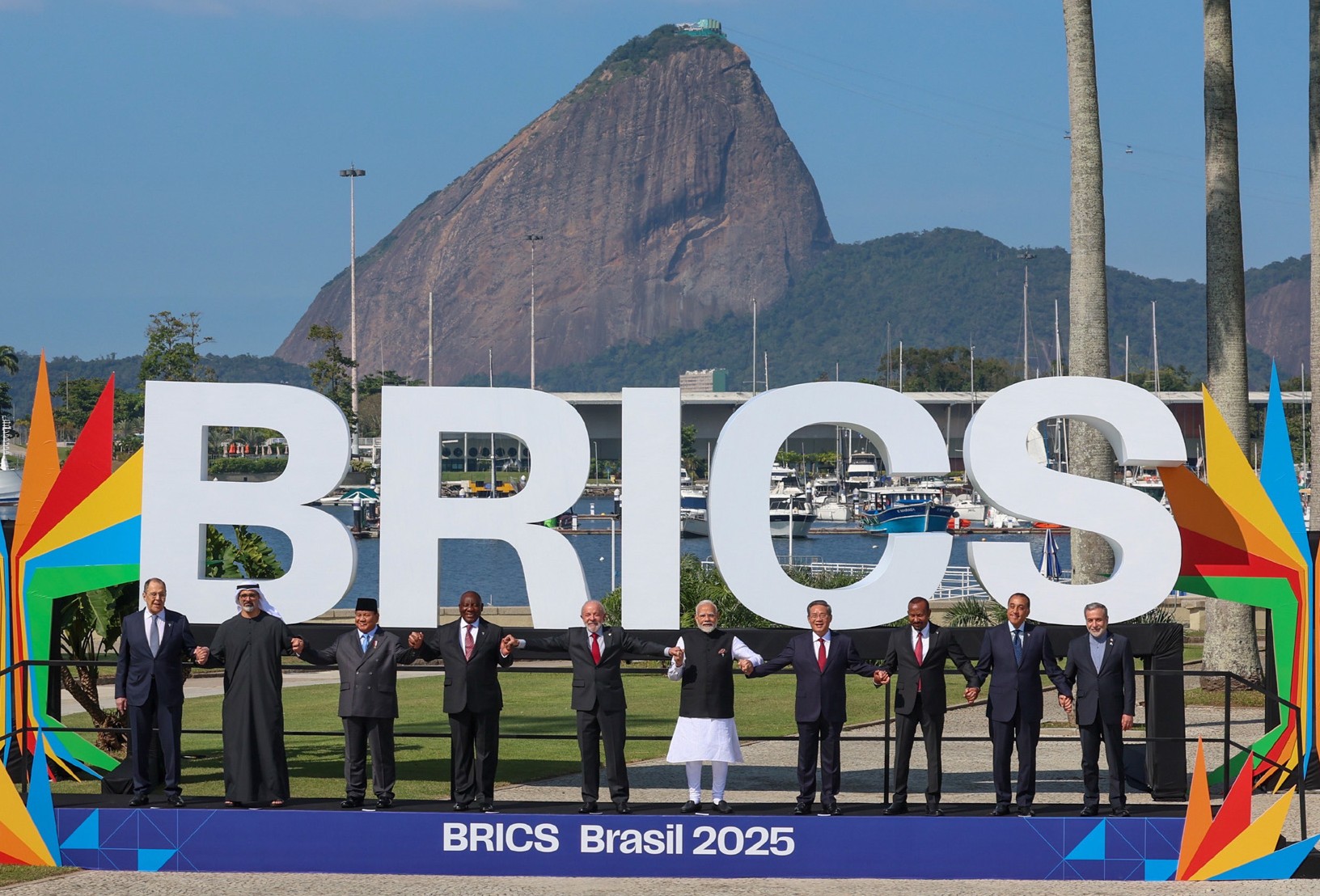
This paper critically examines whether BRICS constitute a civilizational challenge to Western liberal internationalism, as suggested in some scholarly debates. Drawing on constructivism, institutionalism, realism, and postcolonial theory, the study argues that group do not functions as a cohesive civilizational bloc in the sense proposed by Huntington. Rather than being driven by shared cultural, religious, or civilizational identities, BRICS is shaped by pragmatic national interests, strategic positioning, and collective efforts to reform global governance. The expansion of BRICS, encompassing culturally diverse states such as Saudi Arabia, Iran, Egypt, Ethiopia, and the UAE, demonstrates that the coalition is not grounded in civilizational alignment but in a common desire for multipolarity, development cooperation, and greater representation in global institutions. Case studies, including China’s engagement with Western arms control regimes, India’s hedging strategy, and the Iran–Saudi rivalry, further reveal that cultural narratives do not determine geopolitical behaviour. Instead, state actions reflect historical contingencies, security needs, and economic priorities. The findings challenge Huntington’s “Clash of Civilisations” thesis and suggest that the emerging world order is better understood through Amitav Acharya’s concept of a multiplex world one characterised by pluralism, interdependence, and cross-civilizational collaboration rather than civilizational confrontation.
Introduction
The Shanghai Cooperation Organisation (SCO) and BRICS are often demonstrated as a challenge to Western liberal internationalism in a civilizational sense. However, the original mandate behind the formation of BRICS was to reform the global financial architecture and provide a counterbalance to Western-dominated institutions, such as the International Monetary Fund (IMF) and the World Bank (Duggan,2015). The SCO was formally established in 2001, evolving from the "Shanghai Five" mechanism, which initially focused on resolving border disputes and military trust-building among China, Russia, Kazakhstan, Kyrgyzstan, and Tajikistan. The mandate behind the formation of the Shanghai Cooperation Organisation (SCO) was to strengthen regional stability and address common security threats, particularly terrorism, separatism, and extremism, while also fostering economic and cultural cooperation among member states (Al-Qahtani,2006). So why does this question of Civilisation clash arise in the first place? The answer could be rendered from both sides. The West might be using it to consolidate its own forces, and the East might be pursuing the discourse of post-westernisation to legitimise the formation of its own institution. It could also be argued that this Distinction between the West and the East is problematic in the first place. Amitav Acharya (2014) referred to the emerging world order as a “multiplex.” A multiplex world is, by its very nature, a world shaped by many civilisations. In this global landscape, international affairs can no longer be understood through the lens of Western civilizational dominance. Instead, a multiplex order ideally emerges from continuous interaction, exchange, and mutual learning among diverse civilisations and states, rather than from any presumed confrontation between a Western “liberal civilisation” and non-Western civilizational powers (Acharya, 2017). This is not to suggest that global politics will be devoid of conflict or that cultural differences will cease to influence disputes. Instead, it highlights that attributing these conflicts solely to non-Western civilizational states that embrace exclusivist identities or reject universal norms is an oversimplification. Framing global politics through the dichotomy of “civilised” Western states versus the “uncivilised” East reproduces a misleading binary and obscures the complex, interconnected dynamics of an increasingly pluralistic world (Acharya,2017).
On the other hand, there is an argument that posits both groupings promote an alternative vision of world order, grounded in sovereignty, multipolarity, and cultural pluralism (Singh, 2006). Civilizational narratives articulated by China, India, Russia, and newer participants, such as Saudi Arabia and Iran, function as normative tools that legitimise critiques of Western dominance. Yet, these emerging orders are far from cohesive: geopolitical rivalries, border tensions, Trade incompatibility, ideological differences, and competing national visions (The BRICS Rivalry, 2023) restrict the ability of these institutions to act as unified civilizational blocs. BRICS and the SCO may not trigger the kind of civilizational “clash” that Huntington predicted, but they undeniably advance a pluralist challenge that diffuses global authority away from the West. Even though their discourse is uneven and sometimes fragmented, it plays a significant role in reshaping the normative foundations of contemporary international relations (Seif-Amirhosseini,2013).
Theoretical Framework
The theoretical framework underpinning this analysis draws on constructivist critiques of civilizational determinism, institutionalist understandings of cooperation, realist emphasis on national interest, and postcolonial theory’s interrogation of Western knowledge structures to challenge Huntington’s thesis of civilizational conflict.
Constructivist scholars argue that identities are fluid, historically contingent and socially constructed rather than fixed along religious or cultural lines, which helps explain why putative “civilisations” such as the Sinic or Islamic worlds display deep internal divisions (Gupta & Gupta, 2023), overlapping identities and competing national trajectories that contradict Huntington’s rigid categorisations.
Institutionalism further shows that states routinely cooperate across cultural boundaries when multilateral platforms such as BRICS, offer material benefits, enhance collective problem-solving and provide alternatives to Western-dominated institutions (Ullah, Haider, & Gohar, 2024).
Realist theory emphasises that states prioritise national interests and strategic autonomy over cultural affinities, a pattern evident in the behaviour of all BRICS members, as seen in India’s hedging strategy (Tellis,2025), China’s participation in Western arms control regimes, and Iran and Saudi Arabia joining the same bloc despite their long-standing rivalry.
Postcolonial theory adds a crucial layer by exposing how Huntington’s civilizational map reproduces Eurocentric assumptions that homogenise non-Western societies and depict them as culturally bound, conflict-prone “Others.”
BRICS, with its diverse membership and emphasis on development, multipolarity and reform of global governance, directly challenges these Western-centric narratives by asserting alternative pathways to modernity and cooperation that do not conform to civilizational binaries. Taken together, these theoretical perspectives demonstrate that contemporary global politics is shaped far more by pragmatic interests, institutional incentives and historically constructed identities than by immutable civilizational blocs, thereby exposing the conceptual limitations of Huntington’s civilizational paradigm.
End of History vs Clash of Civilisations
The end of the Cold War marked a turning point in global history. Scholars and policymakers alike were confronted with two pressing questions: how to interpret the collapse of communism, and what kind of world would emerge next. Two contrasting but influential theories attempted to answer these questions (Singh,2006).
The first was Francis Fukuyama’s famous “End of History” thesis. Fukuyama argued that liberal democracy had effectively triumphed over totalitarianism not just in the present moment, but for the foreseeable future. He claimed that liberal democracy represented “the end point of mankind’s ideological evolution” and the “final form of human government,” thus signalling the “end of history.” For Fukuyama, “history” was not merely a series of events, but a unified evolutionary process shaped by the experiences of all societies over time. His thesis was widely criticised, however, for appearing to legitimise the Western political system, particularly that of the United States. (Fukuyama,1989, as cited in Singh, 2006).
Just four years later, in 1993, Samuel P. Huntington offered a vastly different vision of the post–Cold War world. In his influential article “The Clash of Civilisations?” he rejected Fukuyama’s optimism and outlined a more conflict-ridden global future. Huntington claimed that the key forces driving international politics would no longer be ideological or economic divisions, but cultural identities rooted in civilisation. He argued that people naturally gravitate toward others who share their “ancestry, religion, language, values, and institutions,” and distance themselves from those who do not. As a result, the old Cold War blocs; Western, Communist, and Non-Aligned were giving way to new alignments based on civilizational identity (Huntington,1993, as cited in Singh, 2006).
Huntington identified seven or eight major civilisations; Western, Confucian/Sinic, Japanese, Islamic, Hindu, Slavic-Orthodox, Latin American, and possibly African. Although conflicts may occur within each civilisation, he insisted that the most significant and dangerous clashes will arise along the “fault lines” separating them. According to him, the sharpest future conflicts will be between the West and China, and between the West and Islam, especially as Western power declines and these other civilisations gain confidence. Latin America and Africa, he suggested, are likely to gravitate toward the West, though for different cultural and economic reasons. Hindu, Japanese, and Slavic-Orthodox civilisations, meanwhile, function as “swing civilisations,” capable of aligning in various directions depending on geopolitical circumstances (Huntington,1993, as cited in Singh, 2006).
Case Study - BRICS
While Huntington’s focus on cultural self-identity reflects a post-Soviet search for belonging, his claim that civilizational affinities overshadow all other motivations must be viewed cautiously in a world increasingly shaped by transnational risks. Contemporary global challenges, such as climate change, pandemics, economic instability, food insecurity, and natural disasters, have fostered a sense of shared responsibility that transcends ethnic, national, and civilizational boundaries (Rizwi, 2011). In this context, BRICS has emerged not as a civilizational bloc united against the West, but as a coalition seeking fairer and more inclusive responses to global common problems. Its initiatives ranging from the New Development Bank’s support for infrastructure and sustainable development to collective commitments on climate action, renewable energy, and public health cooperation (Ryabkov,2025) demonstrate a practical orientation toward solving universal challenges rather than advancing an “Orientalist” alternative to the West. Even its calls for reforming global governance target inequities within institutions like the IMF, World Bank, and UN Security Council, aiming to make them more representative rather than overturning them. Moreover, the diversity of its membership, especially after the 2023 expansion to include culturally and ideologically varied states such as Saudi Arabia, UAE, Egypt, Iran, and Ethiopia, shows that BRICS is not grounded in civilizational identity. Instead, it functions as a platform for multipolarity, development cooperation, and global problem-solving. Far from embodying a clash of civilisations, BRICS illustrates how states with different historical and cultural backgrounds can collaborate to address shared global concerns in an increasingly interconnected world (Ryabkov, 2025).
BRICS offers a compelling empirical counterpoint to Huntington’s civilizational framework, particularly his tendency to conflate religion with civilisation and to draw rigid cultural “fault lines” (Huntington,1993). As scholars such as J.N. Dixit have noted, no major religion fully captures the civilizational identity of the diverse societies that claim affiliation with it; civilisations are shaped by far more complex forces, including social practices, technological capabilities, economic structures, historical experiences, and creative traditions that transcend religious boundaries. BRICS exemplifies precisely this multidimensional character. Its members; Brazil, Russia, India, China, and South Africa, along with the newly expanded states represent vastly different religions, languages, political systems and cultural traditions. Yet, they cooperate on shared developmental goals without regard to civilizational demarcations. Their collaboration on finance, climate change, global health, multilateral reforms, and technological cooperation demonstrates that cultural boundaries are porous and that civilisations frequently intermingle, especially in regions like Asia, where identities have historically overlapped (Singh, 2006). The very existence of BRICS as a cross-civilizational coalition undermines Huntington’s assumption that cultural blocs are destined to clash. Instead, it shows that states situated in different civilizational zones can build institutional partnerships, pursue common interests, and articulate shared visions for global governance thereby revealing the fluid, interconnected, and evolving nature of culture that Huntington’s rigid map fails to capture (Singh, 2006).
Huntington’s claim that civilizational “fault lines” have replaced ideology, national interest, and power politics as the primary sources of conflict overlooks the enduring centrality of the nation-state in shaping global alignments (Huntington, 1993). Historically, patterns of conflict and cooperation have been driven far more by strategic calculations, security concerns, and developmental priorities than by civilizational affinities (Huntington, 1993, as cited in Singh, 2006). The evolution of BRICS strongly reinforces this point. Its members did not join the grouping because they share a common religion, cultural identity or civilizational heritage indeed, they differ profoundly on all these counts but because BRICS serves their national interests. Brazil seeks greater voice in global governance and access to development financing; Russia uses BRICS to diversify partnerships amid Western sanctions; China views it as a platform to expand economic outreach and counterbalance Western-dominated institutions; South Africa leverages BRICS for African representation and investment; and India employs BRICS as a hedging strategy to protect its strategic autonomy while balancing relations with both the West and China (Ullah, Haider, & Gohar, 2024). The cooperative agenda of BRICS spanning development banks, climate initiatives, health cooperation, trade facilitation, and technology reflects pragmatic state interests rather than civilizational alignments (Duggan, 2015). In this sense, BRICS directly challenges Huntington’s thesis by demonstrating that states continue to act primarily in accordance with national objectives and strategic benefits, rather than being driven by any presumed cultural or civilizational destiny.
Moreover, the behaviour of key BRICS members further undermines the notion that the group represents a civilizational front opposed to the West. China, for instance, is often portrayed by Huntington as part of a distinct Confucian civilisation destined to clash with the West (Huntington, 1993, as cited in Singh, 2006) has, in practice, strengthened its bilateral relationship with the United States and increasingly supported Western-led arms control and non-proliferation regimes, such as the NPT, CTBT, MTCR, and NSG (Singh, 2006). This pattern illustrates that central BRICS states work within, and sometimes reinforce, existing global norms rather than rejecting them wholesale. BRICS, as a grouping, therefore, cannot be viewed as an anti-Western civilizational coalition; instead, it operates within the broader framework of international institutions while seeking reforms that make global governance more equitable and representative. Its engagement reflects pragmatism, interdependence and national interest rather than ideological confrontation, further disproving Huntington’s assumption that cross-civilizational cooperation is inherently unstable or conflict-prone.
Huntington’s assertion that Sinic societies are naturally coalescing around China is also contradicted by empirical reality (Huntington, 1993). Taiwan and Singapore two of the most significant Sinic societies in Asia have not aligned themselves with Beijing, nor have they joined institutions such as BRICS that China actively shapes. In fact, Taiwan faces an existential security threat from China, making the idea of Sinic cultural solidarity untenable. This divergence highlights the limitations of Huntington’s tendency to subsume China under a broad category of “Confucian civilisation” (Huntington, 1993, as cited in Singh, 2006), overlooking the profound political, ideological, and economic transformations that define contemporary China. What China represents today is not a Confucian revival leading a civilizational bloc, but a hybrid model of a socialist market economy deeply integrated with global capitalism and reliant on Western technologies, markets, and financial structures (Singh, 2006). The absence of Taiwan and Singapore from BRICS, far from revealing a civilizational alignment, demonstrates that strategic, political, and national interests not cultural identity determine state behaviour. These further underscores why BRICS should not be conceptualised as a civilizational coalition, and why Huntington’s civilizational determinism fails to capture the complex, interest-driven dynamics of twenty-first-century international relations.
Huntington’s classification of the Islamic world as a single, coherent civilisation also collapses under closer scrutiny. As Joseph S. Nye Jr. observes, the Islamic world has long been marked by profound internal divisions, to the point that a “civil war” has been unfolding within it, politically, ideologically, and sectarianly (Samson,2016). Huntington’s assumption that Muslim-majority states will naturally band together under a unified Islamic “core” ignores the stark reality that no great power exists within the Muslim world capable of providing such leadership, and that the political trajectories of these states are shaped by divergent national interests rather than by any overarching religious identity. The rivalry between Iran and Saudi Arabia illustrates this contradiction vividly (Haynes, 2021). Despite both being influential Islamic republics, both being deeply tied to notions of the ummah, and both now being members of BRICS, their relationship has historically been defined by strategic hostility rather than civilizational solidarity. Their competition for regional influence, opposing ideological orientations, sectarian divisions (such as Sunni vs. Shia), and conflicting geopolitical alignments all attest to the fact that a shared religion does not automatically translate into unified civilizational action (Gupta & Gupta, 2023).
Their simultaneous entry into BRICS is therefore not an expression of Islamic unity, but rather a reflection of pragmatic national calculations: Iran seeks avenues to circumvent Western sanctions and diversify partnerships. At the same time, Saudi Arabia aims to expand its economic footprint, secure investment avenues, and assert greater autonomy in global governance (Ullah, Haider, & Gohar, 2024).
Their participation in BRICS thus demonstrates that states join such groupings not because they belong to a single “Islamic civilisation,” but because BRICS serves their respective national interests. This dynamic reveals a significant flaw in Huntington’s civilizational thesis: it overstates the degree of cultural cohesion. It understates the decisive role of state interests, strategic priorities, and power politics in shaping international alignments.
Conclusion
The analysis presented in this study demonstrates that BRICS and the SCO do not embody a civilizational clash with the West but rather reflect a broader transformation toward a multipolar world order. While Western and non-Western discourses have at times framed these organisations in civilizational terms, empirical evidence reveals that their formation, expansion, and functioning are driven primarily by pragmatic national interests, developmental aspirations, and the quest for a more balanced and multipolar global system. Constructivist insights reveal that civilizational identities are fluid and cannot be neatly mapped onto geopolitical alignments. Realist perspectives reinforce the notion that states continue to prioritise sovereignty, autonomy, and material interests. Institutionalism emphasises the importance of cooperation in addressing global challenges, while postcolonial theory highlights the limitations of Eurocentric frameworks that oversimplify non-Western agency. BRICS illustrates how states with divergent histories, religions, and political systems can collaborate on shared concerns such as development financing, climate change, health security, and global governance reform. Similarly, the SCO emerged not as an anti-Western civilizational alliance but as a regional mechanism to address transnational security threats and foster stability. The divergent trajectories of Sinic societies, the Iran–Saudi rivalry, and China’s engagement with Western-led regimes further undermine Huntington’s thesis. Ultimately, the behaviour of BRICS and SCO members underscores that global politics in the twenty-first century cannot be understood through rigid civilizational binaries. Instead, the emerging world order is characterised by pluralism, overlapping identities, and complex interdependencies, where cooperation and competition coexist without descending into a clash of civilisations.
References: -
1. Al-Qahtani, M. (2006). The Shanghai cooperation organization and the law of international organizations. Chinese Journal of International Law, 5(1), 129-147.
2. Acharya, A. (2017). After liberal hegemony: The advent of a multiplex world order. Ethics & international affairs, 31(3), 271-285.
3. Duggan, N. (2015). BRICS and the evolution of a new agenda within global governance. In The European Union and the BRICS: Complex relations in the era of global governance (pp. 11-25). Cham: Springer International Publishing.
4. Haynes, J. (2021). Introduction: The “clash of civilizations” and relations between the West and the Muslim world. In A Quarter Century of the “Clash of Civilizations” (pp. 1-10). Routledge.
5. Rizvi, F. (2011). Beyond the social imaginary of ‘clash of civilizations’?. Educational Philosophy and Theory, 43(3), 225-235.
6. Ryabkov, S. (2025). BRICS and the Challenges of the International System Ahead. Insight Turkey, 27(1), 63-74.
7. Singh, S. R. (2006). The “Clash of Civilisations” Theory: An Overview from the South. India Quarterly, 62(2), 38-98.
8. Samson, S. A. (2016). Joseph Nye, Jr.: Understanding Global Conflict and Cooperation.
9. Samuel, H. (1993). The clash of civilisations. Foreign affairs, 72(3), 22-49.
10. Seif-Amirhosseini, Z. (2013). A Critical Reassessment of Huntington’s “Clash of Civilizations” Thesis. American Journal of Islam and Society, 30(2), 42–76. https://doi.org/10.35632/ajis.v30i2.306
11. Gupta, S., & Gupta, S. (2023, November 11). Nation bigger than 200-cr Ummah. Muslims don’t get it, and that makes them powerless. ThePrint. https://theprint.in/national-interest/nation-bigger-than-200-cr-ummah-muslims-dont-get-it-and-that-makes-them-powerless/1840908/
12. The BRICS rivalry. (2023, May 30). Wilson Center. https://www.wilsoncenter.org/blog-post/brics-rivalry
13. Tellis, A. J. (2025, August 7). India’s Great-Power Delusions: How New Delhi’s grand strategy thwarts its grand ambitions. Foreign Affairs. https://www.foreignaffairs.com/india/indias-great-power-delusions
14. Ullah, I., Haider, S. M., & Gohar, M. (2024). BRICS expansion: Prospects and challenges. Research Journal of Human and Social Aspects, 2(1), 52-64.
(The views expressed are those of the author and do not represent the views of CESCUBE)
Image Source: Press Information Bureau

Saurav Kumar is currently pursuing a Master’s in International Relations at South Asian University, New Delhi. He completed his graduation in Political Science from Jamia Millia Islamia, New Delhi. As a student of International Relations, he is keen to explore diverse dimensions of geopolitics, geoeconomics, security studies, conflict transformation, and peacebuilding. With a particular interest in area studies, his focus lies in South Asian and West Asian studies.