India’s Evolving ISR Capabilities as Space Gets Militarised
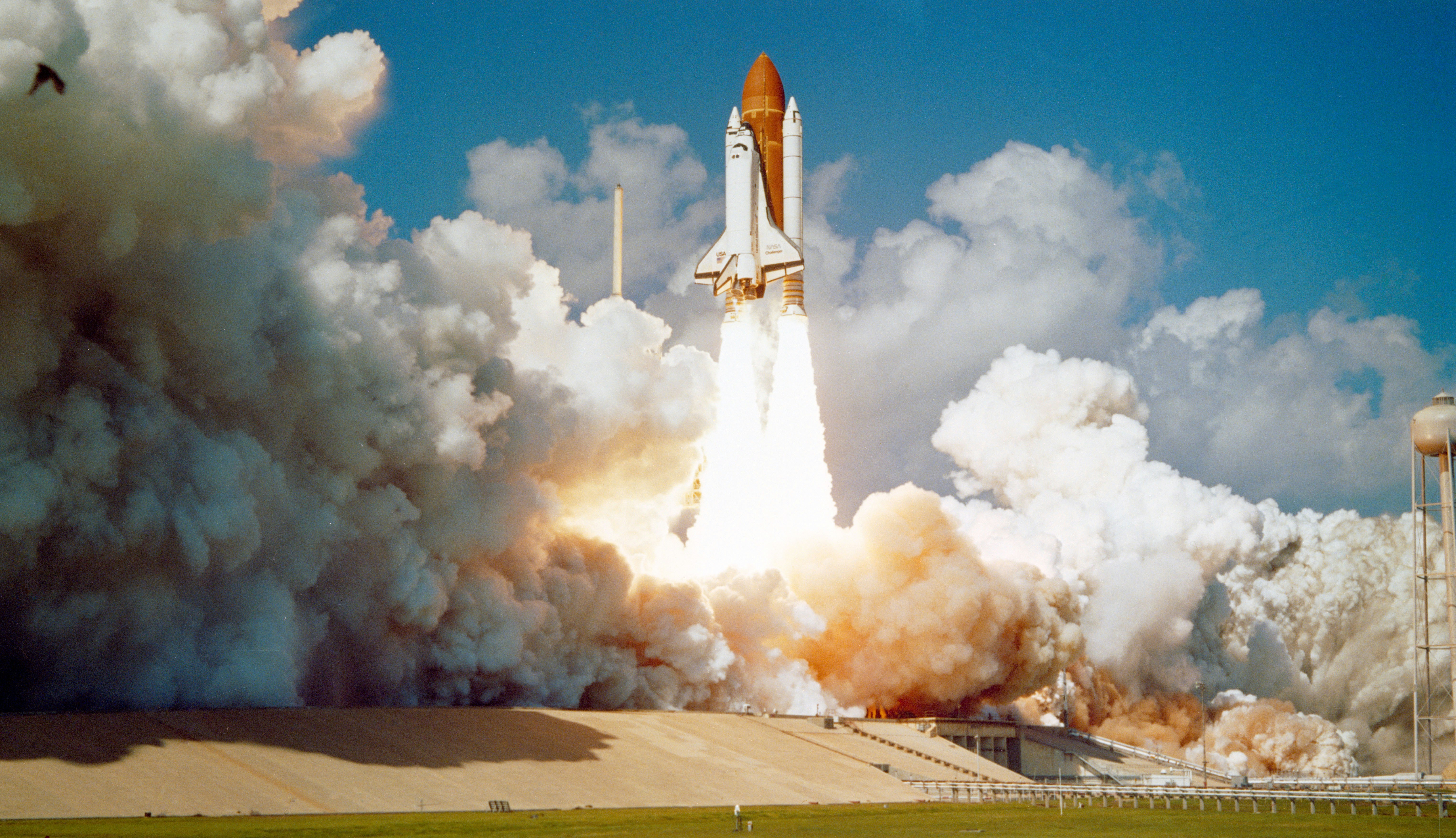
The space technology in the contemporary times has been advancing on an exponential scale gradually evolving into one of the most pivotal domains affecting our lives. Space which was categorised as Res Communis in 1967 now stands as a crucial paradigm with major superpowers taping into the potential that it has to offer. The confrontations both for and facilitated by this domain remain a major development of the last few decades as the space technology stands as a major stakeholder that stands responsible for surveillance, communication, gathering intelligence, ranging from the GPS tracker used by common man to providing precise targeting systems to facilitate military warfare.
The modern times have witnessed a shift from the traditional boundaries in multiple domains, with the current hostile environment pushing these developing technologies into military warfare. With countries evolving, coordinating efforts at a multi-dimensional level, preparing for both traditional and non-traditional threats, advancing in technology and strategies to excel in all land, sea, air and cyberwarfare, space technology remains a major enabler inciting a space race.
The utilisation of space for national security go back to the first satellites that orbit the earth, as space was one of the major battlefields in the Cold War Era. While USSR and the US were waging and managing conflicts in various regions, the uncertainty of the time period pushed both the countries to indulge into a space race with more than 50% of the total satellites launched by both the countries for the purpose of military reconnaissance with sole purpose of gathering intelligence. Now with more countries entering this arena, having the resources, technological development and schematics to survive this modernisation of warfare, the space race has invigorated alarming the rest of the world.
With China, Russia and the US advancing in this domain ranging from surveillance-based satellites to Anti-Satellite Weapons, preparing for Orbital, Electromagnetic, Cyber and Space-to-Ground/Ground-to-Space warfare, specialising in both kinetic weapons and non-kinetic instruments, it gives an impetus to other countries like India to dedicate a majority of their resources to keep up with the major superpowers, especially amidst the turmoil that afflicts their security.
Space in Multi Domain Operations
As one of the countries with the Kinetic Anti-Satellite weapons, with a strong hold on technology and the space race finds itself sharing borders with it, India tackling constant tensions from Pakistan in an uncertain environment with instability pertaining in countries like Nepal and Bangladesh, has taken a more alerted approach in the last few years especially after the current Operation Sindoor Saga. The country sacrificing a rather passive approach of Observe-Orient-Decide-Act (OODA), for the first time indulged in talks integrating the various domains of warfare, investing in Intelligence, Surveillance and Reconnaissance (ISR), evident in the released Joint Military Space Doctrine in the Combined Commanders Conference (September 14-16, 2025).
This meet was a culmination of events that reflected India’s recognition of space as a potential battlefield such as the establishment of the Defence Space Agency (DSA), and Defence Space Research Agency (DSRA), which supports DSA with the required research, the attempt at transitioning the Indian Air Force into Indian Air and Space Force, encompassing plans of launching in the course of next 7-8 years, with the DSA’s role evolving taking full command over activities conducted in and regarding space.
However, this step will take a gradual step-by-step dividing the vastness of this paradigm into sub domains, which is evident in India’s approach to enhance its understanding and advancement, as it attempts to integrate the concept of ISR, focuses on precision targeting and missile defence, followed by the stepping into fusing AI into the battlespace networks.
Integrating Intelligence Surveillance and Reconnaissance (ISR) in Multi Domain Operations
Intelligence, Surveillance and Reconnaissance (ISR) remain one of the major aspects of India’s Multi-Domain operations, where space technology helps in yielding intelligence by ensuring battle-transparency at all times. This collaboration of orbital data and terrestrial systems that generates a common operating picture helps us tackle the problem of uncertainty and the concept of security dilemma that reigns heavily in the Indian Subcontinent due to a tumultuous history with countries like Pakistan, Bangladesh and China.
India’s ISR schematics have evolved over a long period of time from mere dual-use satellites to constellations committed to military utilisation, starting with projects like GSAT-7 (Rukmini) which ensured encrypted communication for the Indian Navy. This was followed by emboldening our Space Based Surveillance (SBS) system launched in 2001 with 4 satellites-Cartosat 2A, Cartosat 2B, Eros B, and Risat 2, by establishing the SBS II, launching six satellites- Cartosat 2C, Cartosat 2D, Cartosat 3A, Cartosat 3B, Microsat 1 and Risat 2A.
The recent projects that help India gather intelligence include the Cartosat-3 which provides 0.28m panchromatic resolution, making it the most advanced Earth Observation Satellite in India, the RISAT-2BR1 and RISAT-2BR2 which offer all-weather day-night surveillance, and the EMISAT which has been providing significant electronic intelligence (ELINT) by locating enemy radars, improving India’s situational awareness.
These together create the foundation for the third phase of the Space-Based Surveillance programme of India which has been fast forwarded after the recent skirmish with Pakistan, collaborating with private manufacturers to create a constellation of 52 satellites (21 satellites developed by ISRO and 31 developed by private manufacturers) by 2029-2030 in the Low-Earth, Medium-Earth and Geostationary Earth Orbit. These satellites will also be equipped with advanced features, high resolution imaging, and Satellite Aperture Radar to facilitate operation on all weather conditions, finding existing underground bunkers as well.
The satellites will be providing a coordinated action, with the ground systems like the Integrated Air command and Control System (IACCS) to complement it, enabling a fusion of satellite data to enhance battlespace awareness.
With China assisting Pakistan offering resources to battle India, this system of surveillance to bridge the extracting loop of OODA, makes India both independent and more well-versed in tackling the out-numbering foes in our neighbourhood by giving us coverage of the China and Pakistan borders and major chokepoints in the Indian Ocean Region. The importance of ISR was also highlighted in Operation Sindoor where the Cartosat-2 series satellites helped us track the troop movements of the Pakistani Army.
While gap persist in technological sub domains like thermal infrared imaging, currently compensated by India’s dual-use satellites, the constant initiatives by the DSA manifesting in the SBS III to have a constellation of our own dedicated to military expeditions help us tackle problems persisting because of elements like ASATs, jammers etc.
Precision Targeting: Providing an Orbital Guidance for Offensive Efficiency
While there are elements both existing and advancements following up to ensure a firm ISR framework, another major sub domain to look out for while investing in space-enabled warfare is a more precise targeting system enabling a stronger and efficient system of offensive action. While India is an ardent believer of peace and diplomacy, evident from a history of following the “No First-Use Policy”, the recent skirmishes with its neighbours have portrayed how offense can sometimes be the best defence.
India’s precision targeting system is majorly guided by the The Indian NavIC (Navigating with Indian Constellation) developed as a backdrop of the Pokhran, which highlighted the requirement of self-dependency in navigation technology. The first NavIC Satellite, IRNSS-1A followed by a full constellation completed in 2018, enables a self-dependent navigating system with the capacity of assisting precision-guided missiles systems and other defence projects. It provides accurate Positioning, Navigation and Timing (PNT) of the Indian region extending to 1500 km around its borders as well. The system consists of seven satellites across the Low Earth, Medium Earth and Geostationary Orbit, providing PNT accuracy of up to 20 metres enabling manoeuvres in a multi-dimensional arena.
Operation Sindoor was another factor highlighting both the efficiency of India’s precision targeting and the need of expanding and advancing more in this sub-domain, where the Cartosat-2C with its high-resolution imagery guided the BrahMos cruise missile strikes dismantling Pakistan’s Logistical structures with negligible collateral. Even post-URI surgical strikes were facilitated by the Cartosat’s imagery in identifying the terrorist launchpads.
The NavIC system will further find more advancement under the developing SBS III program satellite with SAR enabled satellites which will enable all-weather, day-night tracking of data over the borders and Indian Naval elements in the Indian Ocean Region.
When talked about multi domain operations, the precision also encompasses a fusion with cyber-security which ranges from degrading enemy satellite links to create an opening to detect and defend an adversary’s attempts at indulging in electronic warfare. The NaviC’s L-5 band frequency enables a pivotal mechanism of defence against cyberattacks, as it encompasses message authenticating mechanisms for authentication and anti-spoofing, also tackling ionospheric delays to ensure more accuracy.
India’s advancing offensive potential backed by a firm mechanism of ISR is a major development facilitated by the incorporation of space in multi-domain operations. However, a country that finds itself surrounded by nuclear nations with strong military arsenals, a firm defence system is a necessity.
AI Enabled Battlespace Networks
India has seen tremendous development in the ISR sector with its plan to expand the number of satellites, dedicating constellations to military utilisation, a path similar to the offensive precision and defensive sector, which grow with indigenous projects. However, with the advent of new battle spheres, India’s preparedness for mitigating unusual threats depends on how it adapts to these spheres. One of the major examples of this can be the advent of AI whose integration into warfare in various domains gradually provides a significant edge to the ones employing this significant element.
While AI remains a completely new domain, India has adapted and started acting towards integrating it in all the domains of warfare. The institutional initiatives like Defence AI Council (DAIC) and Defence AI Project Agency (DAIPA) currently work on AI utility, along with DRDO’s Centre for Artificial Intelligence and Robotics which handles the resource and development. This is complemented by the annual 100 crore funding that supports military AI projects.
AI has the capability to exponentially advance the Indian Air Force’s approach to the gathered data from the surveillance and intelligence gathering equipment. By integrating inputs from various sensors, infrared systems, high resolution images of the satellites, the Synthetic Aperture Radar, and Signals Intelligence (SIGNIT), It can act based on its own from the intelligence gathered from the surveillance, by automatically detecting targets, unusual activity and track ongoing missions. AI can be a firm counter against false alarms, enabling constant surveillance and handing off of targets to manned authorities more quickly and efficiently, eventually emboldening India’s awareness.
This is achievable if IAF creates automatic systems, integrating data from multiple sensors and radars, followed by developing tools to continuously refine the AI model. AI-backed ISR has had a major impact on conflict ridden zones, where its speed, accuracy, and efficiency from detecting a target to engaging it.
One of the current projects that reflect this is Project Akashteer which integrates data from all kinds of sensors, infra-red systems, and satellites and engage targets fusing AI and manned systems. The upcoming projects like Project Sudarshan Chakra also showcase the importance of AI and India’s steps to integrate an AI-enabled battlespace network.
Conclusion
The ever-evolving battlespace posits new challenges to the developing nations every now and then. With a shortage of both resources and time, efficiency and accuracy matter the most. In the contemporary times, as the advancing countries are taking an integrated Multi Domain approach, with the arenas expanding, now including cyber and space warfare, the scarcity of resources and capital compared to the superpowers, forces India to look at cost effective methods and innovative ideas to adapt to the changing environment.
Moreover, the current conditions in the neighbourhood, with continuous battles with Pakistan, and China asserting its might by threatening the North-Eastern region, followed by the continuous turmoil in countries like Bangladesh and Nepal, has pushed India to make advancements at a faster pace. The situation also gets worse as pressure levied by the Trump tariffs and laws like CBAM, CSRD and CSDDD from EU make imports costlier.
While India had been collaborating with countries like Russia, Israel and France, the political instability of France and the continuous war with a reduced credibility of Russia and Israel has forced it to make indigenous advancements, evident from projects like Project Kusha, Project Sudarshan Chakra and Project Akashteer, that showcase an aspiration to match with the state-of-the-art equipment of the superpowers with Indigenous developments.
India, while owning a strong Arsenal reflecting in Operation Sindoor, advancing from dual-use satellites to independent constellations, indigenous air missile defence systems, Project Shakti which made India only the fourth nation to own an Anti-Satellite weapon, have a long path ahead. While India initiates integrating space and AI in a multi-dimensional approach to warfare, with inaugurating institutions like the DSA, DRSA, DAIC, DAIPA, etc, it still lags behind the major countries like Israel, China, Russia, and the US who have been the pioneers and advancing in the following field for a longer time now. With the arms race gaining pace with new domains like Space and Cyberwarfare find itself on the forefront, acting as proxies to major hot wars, advancing and innovating does not just provide a firm defence to a hostile neighbourhood, but also offers a pathway to become a renowned superpower that it aims to be.
References
Centre for Land Warfare Studies (CLAWS). "Modern Warfare: India’s AI & ISR Boost in Military Capabilities." March 25, 2025. https://claws.co.in/modern-warfare-indias-ai-isr-boost-in-military-capabilities/.
Indian Space Research Organisation (ISRO). "Satellite Navigation Services." Accessed March 17, 2026. https://www.isro.gov.in/SatelliteNavigationServices.html.
Katoch, Lt. General P.C. (Retd). "ISR: The Essential Force-Multiplier." SP's Land Forces, Issue 05, 2013. https://www.spslandforces.com/story/?id=269.
Katoch, Lt. General P.C. (Retd). "Joint Military Space Doctrine." SP's Naval Forces, September 27, 2025. https://www.spsnavalforces.com/experts-speak/?id=835&h=Joint-Military-Space-Doctrine.
Mishra, Tarun. "What is India’s SBS-3 Programme and How It Strengthens Surveillance over Pakistan?" WIONews, December 11, 2025. https://www.wionews.com/photos/what-is-india-s-sbs-3-programme-and-how-it-strengthens-surveillance-over-pakistan-1765443473735.
(The views expressed are those of the author and do not represent the views of CESCUBE)

Bhaskar Jha is a master's student in OP Jindal Global University. He is a budding researcher who has prior research experience gained at research centres and think tanks like the The Indian Netizens Co. And Center For Land Warfare Studies. He is a Political Science Gold Medalist and takes keen interest in Geopolitical hedging and Security Studies.