China – US: The Battle for Undersea Supremacy
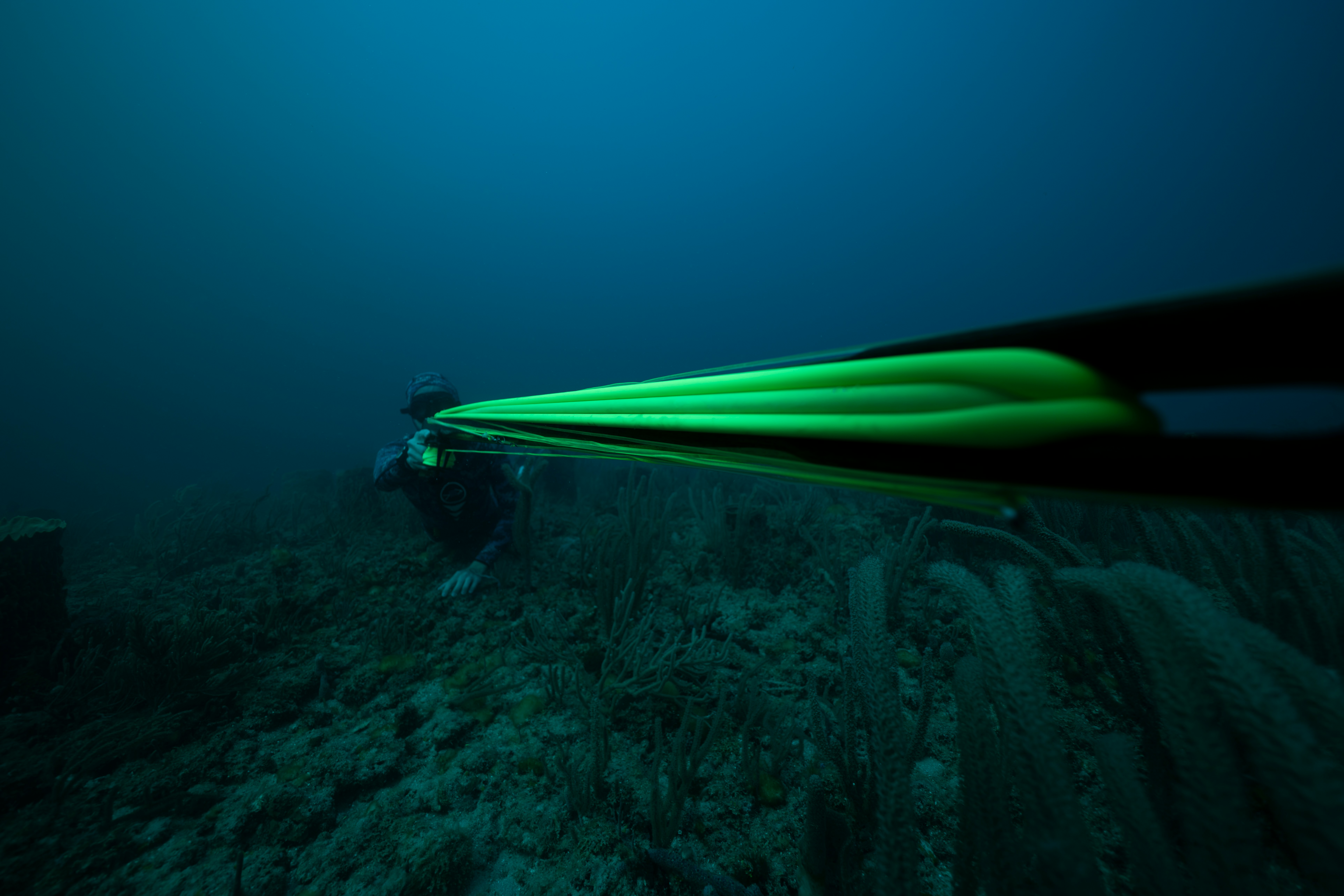
Undersea cables are the new frontier of competition between China and the United States and the fight is towards achieving dominance. Superiority, if achieved by either in this realm could lead to military and economic dominance for decades and direct and dominate the geopolitics.
Significance of Undersea Cables
These cables which are buried deep underwater span a length of 1.4 million kilometers and are central to global communications. As of today, nearly 99 percent of the intercontinental data travels through these cables. They are responsible for 10 trillion dollars’ worth of daily transactions. It is not only financial they are also responsible for emails, texts, video calls as well as monitoring seismic activity and other intelligence sharing in disaster management. No surprises that both the United States and China want to carve out their own sphere of influence.
Dominant Players of the Undersea Cable Industry
The dominant players in the Undersea Cable Industry are SubCom, a US company which is a key supplier and deployer of cables for IT giants such as Google. NEC Corporation, a Japanese company specializing in offering systems, components and services to various industries. Alcatel Submarine Networks (ASN) a subsidiary of Nokia, with an estimated base of 800,000 km of submarine cable systems deployed. ASN has been able to establish a strong presence in countries such as United States, United Kingdom, Norway and France. These companies have been around for a century and are considered pioneers of the undersea cable industry.
China is a relatively new player in this arena with starting only in 1997 with the laying of the FLAG Europe Asia cable, which stretches over 28,000 kilometers connecting 13 countries in three continents. As per the latest records, China has 19 subsea cables with nine landing stations. It has three main telecom operators China Telecom, China Unicorn and China Mobile. China Telecom and China Unicorn have ownership in more than 47 and 60 subsea cables respectively.
Another important Chinese player is the Huawei Marine Networks (HMN) Tech, a subsidiary of Hengtong Jiangsu Group, has 134 projects around the world with its presence clearly visible in Asia, Africa and Latin America, Southeast Asia. According to the telegeography data, HMN Tech has now become one of the fastest players when it comes to laying undersea cables. It currently manages the reconstruction and maintenance of around 25 percent of global subsea cables.
Geopolitics of Sub Sea Cables
The US-China relations have witnessed the lowest ebb ever seen. The two countries have come face to face over the war in Ukraine, China’s stance on Taiwan and most recently the US’ tech policies which are aimed at keeping China at the periphery of the cutting-edge technologies. The spillover from strained relations has had ripple effects in this realm too.
The United States along with other likeminded nations has accused HMN Tech of espionage activities leading to HMN Tech losing out on key subsea cable projects. One of them was the Southeast Asia – Middle East- Western Europe 6 or the SeaMeWe-6. This involved the laying of a $600 million cable which would transport data from Asia to Europe at superfast speeds. HMN Tech’s bid of $500 million, believed to be a third cheaper than the price set by SubCom paved the way for the Chinese consortium to win the project. This would have been the biggest project undertaken by HMN Tech, cementing it as the fastest growing subsea cable builder. However, the United States’ intervention proved pivotal. It ran a successful campaign which led the contract being presented to SubCom on the pretext on Chinese spying and further incentives.
The campaign included offering grants worth $3.8 million to several telecom companies in return for them choosing SubCom. Diplomatically, the US State Department through its embassies warned other countries about the security threats posed by HMN Tech and their close links to the People’s Liberation Army (PLA).
The successful freezing out of HMN Tech from the SeaMeWe-6 was followed by another attempt which produced similar results. This time it was the cable linking the three Pacific Island Nations of Nauru, Kiribati and the Federated States of Micronesia (FSM) known as the East Micronesia Cable. The United States, Japan and Australia jointly announced that they would be involved in laying the cable bypassing the Chinese firm.
There has been a tit for tat move from China too. It threw a spanner in Meta’s works in the Southeast Asia- Japan 2 cable. The cable supposed to stretch from Singapore through Southeast Asia, Hongkong and mainland China before entering South Korea and Japan. China has consistently delayed in providing the license for the cable to pass through the South China Sea citing the possible insertion of spy equipment in the cable by the Japanese Manufacturer NEC.
Theoretical Lens to the Battle
The rivalry here between the United States and China can also be understood through the theory of “Weaponized Interdependence”. This was given by Henry Farrell and Abraham Newman. The theory states that states having a central position in global economic networks tend to weaponize these structures for coercive ends.
Both United States and China are vying for dominance in this realm. The United States aims to preserve its hegemony and stymie the rise of China. Meanwhile, China on the other hand wants to free itself from the shackles of Western encirclement and establish its footprint in the subsea cable sphere. This leads to a structural clash. United States is using its alliances and market force to promote players like SubCom while China through its state-led strategies is trying to unsettle the apple card. Eventually, both are aiming at unilateral dominance outcomes of which would be deeply worrying.
Outcomes of US- China Subsea Cable Battle
The ongoing rivalry between the two major powers in the realm of subsea cables might lead to the fragmentation of the global internet where platforms and companies might have to align with either the infrastructure dominated by Western nations and other by China led networks. The stakeholders’ choices then would not be driven by innovation but geopolitical necessities. Smaller and developing nations might bear the brunt of this digital divide. These nations depend on the bigger players to build their digital infrastructures. Getting sandwiched between the offers of United States and China might lead to these nations losing their digital sovereignty and can encounter prolonged delays in getting access to essential connectivity.
This polarization of the digital infrastructure could usher the “militarization” era as well. Sabotage and exploitation through tampering and surveillance will likely increase. The consequences of this run deeper. As mentioned above, subsea cables are a medium to $10 trillion daily financial transactions. Any disruption would cripple global trade and even emergency services. The global communication systems in zones which are conflict-prone may deteriorate because of the militarization of the subsea cables.
Keeping the examples of SeaMeWe-6 and East Micronesia Cable in mind, rising costs and slower rollouts of subsea cable projects is yet another critical disruption. The rising geopolitical tensions will see nations/ stakeholders prioritize strategic control over efficiency.
Way Forward and Policy Recommendations
At the heart of the growing rivalry between the United States and China in the realm of subsea cables, lies a lacuna of a structural bilateral dialogue on digital infrastructure. Areas such as arms control and trade have had mechanisms in place, but this sphere remains largely unregulated. As tensions have mounted, so does the probability of miscalculation and escalation. Both nations must ensure that a dedicated space for dialogue is established for subsea cable security, espionage apprehensions and strategic restraint. Such a forum will lead to transparent communications, confidence building measures and consensus on red lines to avoid. As the two most powerful nations, a sense of responsibility must prevail, not only to look after their own interests but the stability of the world order. Strategic rivalry between the two cannot be avoided but managing it with restraint and maturity is essential. In Parallel, there is an urgent need for a multilateral framework involving all key global actors to set transparent norms and governance standards for subsea cable infrastructure. Regional Subsea Cable Consortiums in the Indo Pacific, Latin America, and Africa should be prioritized enabling local ownership of connectivity needs and reducing dependence on global powers. Additionally, to ameliorate global resilience, the establishment of a subsea cable resilience fund, jointly funded by economic powerhouses such as US and China, would provide financial and technical assistance during geopolitical disruptions or natural disasters.
Conclusion
The rivalry if left unchecked could have grave consequences triggering fault lines in communications and commerce. It is imperative that both these nations along with other stakeholders recognize the gravity of the situation and exercise restraint through dialogue and diplomacy to build an inclusive and secure digital infrastructure.
Pic Courtesy- Photo by Michael Worden on Unsplash
(The views expressed are those of the author and do not represent the views of CESCUBE.)

Shashank Semwal has completed his Master's from the Jindal School of International Affairs in Diplomacy, Law and Business. He is currently working as an Assistant Manager at OP Jindal Global University. His research interests mainly include Chinese foreign policy.