Baluchistan Protests: Unavoidable Quagmire
The unveiling of the China-Pakistan Economic Corridor (CPEC) in 2015 positioned Gwadar in Pakistan's mainstream media as the starting point for a new era of Chinese investments that will alter the course of Pakistan's and the region's fates. Despite being the most resource-rich of Pakistan's four provinces, Baluchistan is one of the least developed. Fishing is the main source of income in the province, yet Baluchistan has the poorest access to drinking water, power, and even the region's key resource, gas. Since the second week of November, protests in Gwadar, Baluchistan, have been ongoing against major development plans for the port city as part of the China-Pakistan Economic Corridor.
The local Baloch people in Gwadar lacked access to water, electricity, and other basic services before CPEC was introduced. Despite the flood of billions of dollars in Chinese investment into their hometown, they still lack those fundamental essentials. Rather than uplifting the local community, the flood of investments has had the reverse effect: locals have begun to lose their sources of income as a result of the development activity. Despite Baluchistan's strict conservatism, a considerable number of female demonstrators have taken to the streets. Another notable feature of the demonstration is that it is being led by a Jamat-e-Islami leader. The JI has long been a staunch supporter of Pakistan's military establishment. Desperate villagers in Gwadar have rallied around Maulana Hidayat-ur-Rehman, a religious scholar living in the port town, in numbers reaching in the tens of thousands. His Gwadar Ko Huqooq Do Tehreek, or "Give Rights to Gwadar Movement," has gained traction in restive Balochistan province, where criticising Chinese-funded projects is frowned upon and regarded as anti-state.
They argue that they are not only being excluded, but that their current livelihood is also under jeopardy. Fishing is the main source of income for the residents in the area. They have lost their jobs. Locals expressed their displeasure and outrage that Pakistani government officials were not backing their case and were making statements in favour of the Chinese fisherman, and requested that the licences be revoked. However, it appears that the Foreign Ministry has recently responded to one of the demonstrators' demands, namely that the government address the issue of unlawful trawling in the Gwadar Sea, which is routinely carried out by Chinese vessels. In this sense, the entire Pakistani fishing community is protesting the Chinese deep-sea trawlers. Gwadar's port development is the CPEC's key strategic project, and Chinese participation there predates the CPEC by at least a decade. General Pervez Musharraf, who ruled for ten years, marketed it as a vital energy corridor that would give China with an alternative to the sea route for its oil imports from the Middle East. It is now a critical component of President Xi Jinping's Belt and Road Initiative.
Gwadar, the focal point of CPEC and the "jewel in the crown" of Beijing's Belt and Road Initiative (BRI), has become increasingly secure over time. Baloch terrorists battling the government have launched attacks in Gwadar, seeing the CPEC as an enticing target. Since 2015, the number of security forces in Balochistan has expanded dramatically, particularly in Gwadar. Following the deterioration of the general security situation in Balochistan province, security in Gwadar town has been toughened up to the point where the port town now resembles a military cantonment with security troops deployed in and around it. One of the reasons for the tight security in Gwadar is because Baloch separatists have openly opposed CPEC since its inception, calling it a threat to Baloch identity.
The Chinese, perhaps more than their Pakistani counterparts, are anxious about the ongoing protests in Gwadar. Because of its direct access to the Indian Ocean and the Arabian Sea, Gwadar is vital to China's geoeconomics and geostrategic goals. As a result, the Chinese are keeping a careful eye on happenings in Balochistan, particularly in Gwadar. Gwadar has the potential to make China's Belt and Road Initiative a success in the region, but it might potentially backfire if things don't go as planned. If the BRI fails in Pakistan, China's "iron brother" who has backed CPEC wholeheartedly, the entire project will be jeopardised. That is why Chinese officials have been pressuring their Pakistani counterparts to provide a secure environment in Baluchistan in order to carry with CPEC projects.Increased security, on the other hand, has backfired by raising local animosity, as previously indicated. Separatist rebel organisations like as the Baloch Liberation Army and others have targeted Chinese interests in and around Gwadar as a result of the exclusion. The number of attacks has increased since the CPEC began operations. In 2019, an attack on the Serena occurred during a visit by an official Chinese group. As a result, Pakistani troops have been sent to the port city in greater numbers. One of the protesters' demands is for the number of checkpoints to be lowered.
Gwadar, which provides China with strategic access to the Arabian Sea and the Indian Ocean, is being developed as a dual-purpose port for use by the PLAN (Chinese Navy) and is intended to expand China's presence in the Indian Ocean region, alongside Kyaukpyu in Myanmar and Hambantota in Sri Lanka, has been the matter of concern for India. China's presence in Gwadar is also a source of anxiety for the United States, which has critical military interests in the region. The fear will persist, given China's ambitions in the Indo-Pacific and Pakistan's close military connections with it.
Notes
1. Protests erupt in Pak's Gwadar amid growing backlash against China's belt, road projects - World News: https://www.indiatoday.in/world/story/protests-pakistan-gwadar-backlash-china-belt-road-projects-cpec-1879215-2021-11-21
2. Pakistan: Protests in Gwadar against China's CPEC projects, anti-Imran Khan slogans hurled: https://www.republicworld.com/world-news/pakistan-news/pakistan-protests-in-gwadar-against-chinas-cpec-projects-anti-imran-khan-slogans-hurled.html
3. Pakistan senate body concerned over slow progress on CPEC amid protest in Gwadar: https://www.aninews.in/news/world/asia/pakistan-senate-body-concerned-over-slow-progress-on-cpec-amid-protest-in-gwadar20211130171430/
4. Protests intensify in Pakistan's Gwadar against China's CPEC projects- The New Indian Express: https://www.newindianexpress.com/world/2021/nov/24/protests-intensify-in-pakistans-gwadar-against-chinas-cpec-projects-2387588.html
5. Protests erupt in Pakistan's Gwadar amid growing backlash against CPEC | Business Standard News: https://www.business-standard.com/article/international/protests-erupt-in-pakistan-s-gwadar-amid-growing-backlash-against-cpec-121112100529_1.html
6. Pakistan seeks to calm protesters at Chinese Belt and Road port project | Financial Times: https://www.ft.com/content/0bd3988d-96d6-47a2-8006-1810cd90c151
7. Gwadar Protests Highlight CPEC’s Achilles’ Heel – The Diplomat: https://thediplomat.com/2021/12/gwadar-protests-highlight-cpecs-achilles-heel/
8. Gwadar protests highlight exploitative nature of Chinese investments in Pak: Report | www.lokmattimes.com: https://www.lokmattimes.com/international/gwadar-protests-highlight-exploitative-nature-of-chinese-investments-in-pak-report/
9. Chinese project at Balochistan port: local protests and global concerns | Explained News,The Indian Express: https://indianexpress.com/article/explained/chinese-project-at-balochistan-port-local-protests-global-concerns-7666867/
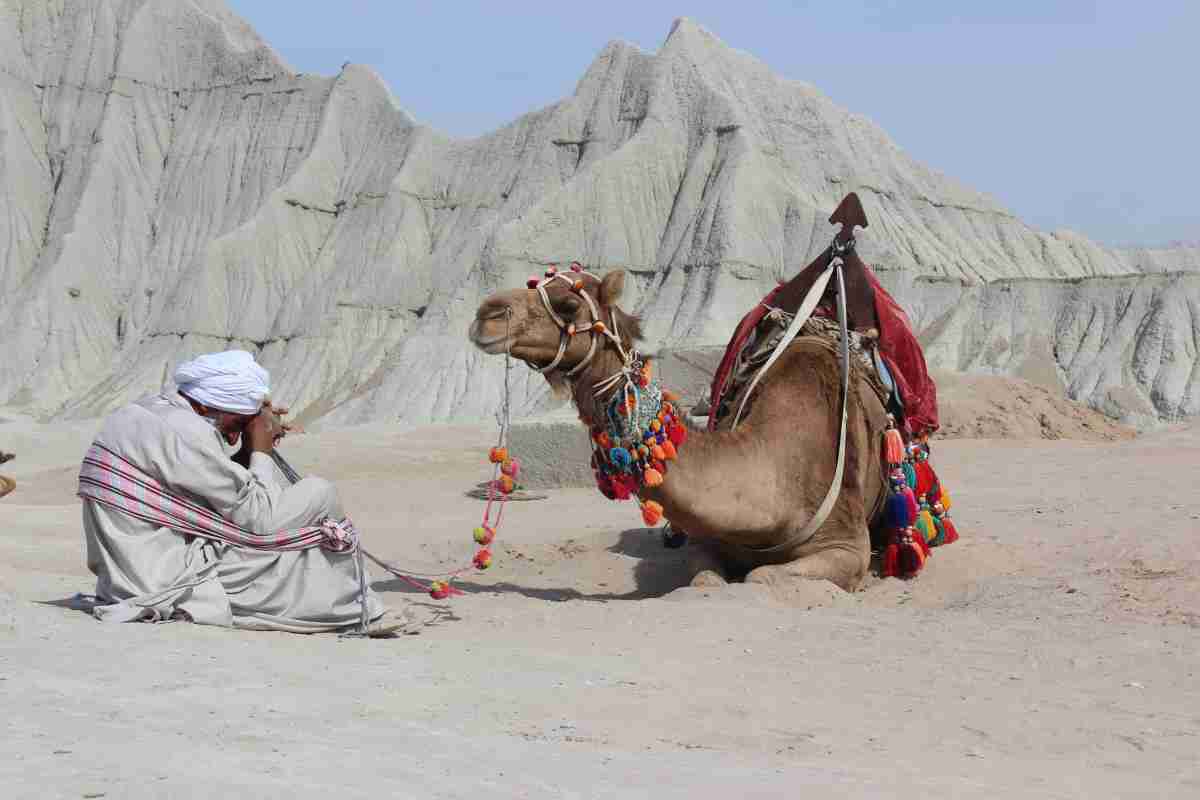
Pic Courtesy-Dahlia Delmoradi at unsplash.com
(The views expressed are those of the author and do not represent views of CESCUBE.)
Gaurav Sen is a graduate from Delhi University. He is currently doing his Masters in International relations from Jawaharlal Nehru University, New Delhi. His research area includes IR theories, Great Power competition in Indo-Pacific, Maritime Security, Emerging Warfare Concepts, and Military Strategies.