Kazakhstan and the Perils of Geopolitics
The question of Kazakhstan remains crucial as the Biden Administration tries to strike a reasonable balance among many foreign policy challenges. The country that is recognised as a nuclear-free zone by the United States and Russia, but is surrounded by four nuclear-armed states: China, Pakistan, Russia, and India, as well as aspirant Iran. A country endowed with natural resources but doomed to be a battleground for big power rivalry. When Kazakhstan is confronted with widespread protests, Russian tanks are seen roving the country under the patronage of surging China, while the United States appears to be taking a back seat.
Kazakhstan's fast and tumultuous start to the year surprised even the most seasoned Central Asia watchers. President Kassym-Jomart Tokayev's unexpected decision to request the deployment of the Collective Security Treaty Organization (CSTO) to assist in the restoration of security in the country has contributed to the shock of the country's acute and widespread violence and protests. The prospect of a Russian-led military deployment in Kazakhstan has been viewed through the lens of Russian geopolitics and President Vladimir Putin's goals, but this misses the extent to which this is about Kazakhstani developments. Kazakhstan has long been regarded as one of the most stable and successful countries in the region bordering modern Russia. Despite the fact that this façade was endowed with Yet, there were flaws beneath it. Tales of widespread corruption plagued the ruling class. Protests would erupt on a regular basis, a symptom of significant dissatisfaction in areas of the country that had not reaped the same benefits as the capital city. However, the country had a strong NGO community and an active (though tightly controlled) media, and it was seen as a location where a certain amount of openness was tolerated. The administration would accept some dissent as long as it never questioned the government's power. Despite its vast natural wealth, the country appeared to be heading down a different road. Nazarbayev, the father of the nation who led his country out of the Russian-Soviet yoke, legally stepped down as president in January 2019, turning over authority to Tokayev, a longtime member of his inner cabinet. President Nazarbayev, on the other hand, remained influential, serving as Chairman of the National Security Council. His family and friends continued to wield considerable power and control over significant portions of the country's riches. The smooth transition to Tokayev, on the other hand, was hailed, but it was never obvious how much had changed.
Fearing that the country's unrest would spiral out of control and that his own security forces would fail, Tokayev summoned the CSTO. Initially, Russia appeared to disregard Kazakhstan's troubles, with presidential spokesperson Dmitry Peskov telling reporters, "We are certain that our Kazakh friends can independently address their own problems." While Russia's subsequent conduct in sending troops into Kazakhstan as part of the CSTO mission appears to contradict the Kremlin's words, it is a response to developments on the ground and requests from Kazakhstani authorities. This isn't an informal invasion or a strategy for Russia to firmly establish itself in Kazakhstan in order to reclaim control of the country. Kazakhstan will almost certainly always be linked to Moscow, regardless of who is in control. Treaties, geography, infrastructure, and population bind the country to Russia. Regardless of who is in power in Nursultan, a good working relationship with Moscow is required. While there has clearly been an increase in anti-Russian sentiment in the country in recent years as the administration has worked to build its own national identity and pride, Moscow remains a vital partner. Instead, both Nazarbayev and Tokayev have sought to find a middle ground between Russia and China, utilising Kazakhstan's natural resources to build an independent,'multi-vector' foreign policy that tries to strike a balance between the two.
The well-staged Russian intervention looked to be based on a heated power struggle between President Tokayev and Nursultan Nazarbayev, the ailing warhorse. The gradual disintegration of the security infrastructure operated by the former President's loyalists demonstrates this. Karim Massimov, a Nazarbayev protégé and former Prime Minister as well as the country's security leader, was the first to fall. Multiple messages have been transmitted by Russia's aggressive post-Soviet assertion in Kazakhstan. The key message to the US and the rest of the western world is one of deterrence. Moscow is far from diminishing as a global military power, a message that NATO, which is encircling Russia across many geographies, can only ignore at its peril. Second, it demonstrates Russia's determination to thwart a US return in Eurasia following the Biden administration's shambles.
Surprisingly, the jury is still out on whether Russia's bold move is intended to send a message to China, which shares a border with Kazakhstan and threatens to intrude into Moscow's backyard, at least economically, but which might easily morph into competing political power. Moscow's vision of the Eurasian Economic Union and China's Belt and Road Initiative (BRI) across the Eurasian landmass are already locked in a low-intensity struggle. If events are viewed solely through the lens of a confrontation between the West and Russia, current circumstances may cause Kazakhstan to veer away from the Western path it has been attempting to follow. A better result might be reached if the focus is on the factors that led to the violence in the first place, and efforts are placed on encouraging the government to try to address those concerns. While India should resist interfering in a sovereign state's internal issues, there may be opportunities to establish independent bonds with Kazakhstan's winners in the future if the situation stays unsettled. With China on Kazakhstan's trail, forming connections with the Russians, whose goals in Eurasia conflict with China's, could be a smart idea. This would be consistent with President Vladimir Putin's recent visit to India, as well as the 2+2 dialogue held at the same time.
References
1. Russia wins by capping intense power struggle in Kazakhstan - Daijiworld.com: https://www.daijiworld.com/news/newsDisplay?newsID=913554
2. The Bloodshed In Kazakhstan, The Power-Struggle Within, What Putin Is Up To And What It Means For The World: https://www.forbes.com/sites/melikkaylan/2022/01/07/the-bloodshed-in-kazakhstan-the-power-struggle-within-what-putin-is-up-to-and-what-it-means-for-the-world/?sh=25b529736288
3. Kazakhstan Lies at the Center of the New Great Power Competition | The National Interest: https://nationalinterest.org/blog/buzz/kazakhstan-lies-center-new-great-power-competition-176952
4. Kazakhstan in Crisis: It’s About the Country, Not Big Power Politics | Royal United Services Institute: https://rusi.org/explore-our-research/publications/commentary/kazakhstan-crisis-its-about-country-not-big-power-politics
5. A power struggle in Kazakhstan - The Washington Post: https://www.washingtonpost.com/podcasts/please-go-on/a-power-struggle-in-kazakhstan/
6. In Kazakhstan’s Street Battles, Signs of Elites Fighting Each Other - The New York Times: https://www.nytimes.com/2022/01/07/world/asia/kazakhstan-protests.html
7. Is A Battle For Power Raging Within Kazakhstan's Government?: https://www.rferl.org/a/kazakhstan-government-power-struggle-toqaev/31646096.html
8. Are we looking at an internal elite power struggle in Kazakhstan? | DW News - latest news and breaking stories | DW | 08.01.2022: https://www.dw.com/en/are-we-looking-at-an-internal-elite-power-struggle-in-kazakhstan/av-60369626
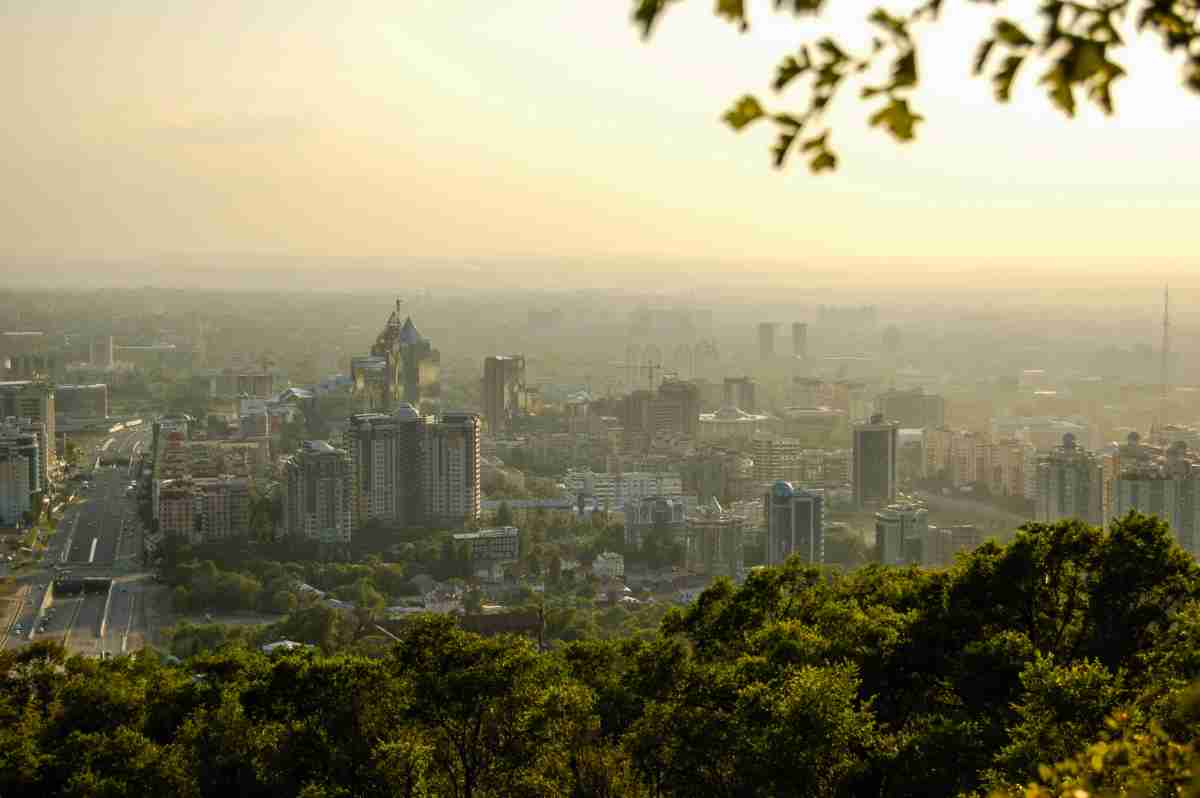
Pic Courstey-Alexander Serzhantov at unsplash.com
(The views expressed are those of the author and do not represent views of CESCUBE.)

Gaurav Sen is a graduate from Delhi University. He is currently doing his Masters in International relations from Jawaharlal Nehru University, New Delhi. His research area includes IR theories, Great Power competition in Indo-Pacific, Maritime Security, Emerging Warfare Concepts, and Military Strategies.