
LIVE DISPATCH
Beyond Consultation: BIMSTEC's Emerging Role in Regional Intelligence and Security Cooperation Maritime India: Security, Trade, and Great Power Competition Between the Desert and the Savannah: Conflict and the Political Economy of Instability in the Sahel Beyond Ukraine: Understanding Putin's Vision of Russian Power The Politics of Ali Khamenei's Funeral Silicon Sovereignty: How Semiconductors Are Redrawing Global Power Hierarchies Operation Sindoor and the Changing Dynamics of India–Pakistan Security The Negative Impact of US–Iran War on the Pacific Region Generative AI, Labour Sovereignty, and the Geoeconomics of India's Service Economy BRICS Expansion and the Multipolar Moment: Opportunity or Strategic Contradiction? India's AI Diplomacy and the Future of Strategic Technologies Foot-Dragging as Feminism: Iran, South Korea, and the Ungovernable Body Lethal Autonomous Weapons Systems and the Governance Deficit: Challenges to International Humanitarian Law and Accountability Beyond Proximity: Why the UAE Occupies a Growing Place in Iran’s Strategic Calculus Great Power Rivalry and the Crisis of the United Nations Why Fiji Matters: The New Geopolitics of the Indo-Pacific Islands Ten Years After Brexit: Regret, Reform, or Reversal? The Long Shadow of 1953: Understanding the Iran–US Conflict Sports, Strategy and Statecraft of Mega Sporting Events as Geoeconomic Instruments: Qatar 2022 to Saudi Arabia 2034 Border Fencing and National security: India’s Strategy along the Bangladesh Border Hardening the Quad: From Strategic Dialogue to Operational Cooperation Lingering Effects of the Bush Doctrine on Contemporary US Foreign Policy The Maghreb of States: Identity, Sovereignty, and the Limits of Non-Interference India’s BRICS 2026 Chairmanship Navigating a tightrope Amidst the Chinese Geopolitical Rise Beyond the Battlefield: Understanding Unconventional Security Challenges in Contemporary Geopolitics The Control Paradox: How Proxy Warfare Enables Strategic Deniability While Constraining Strategic Control Trapped in Deterrence: Nuclear Stability and the Persistence of Conflict in South Asia The Return of Unipolarity? U.S Strategic Primacy and the Future of the Global Order Extended Deterrence Under Strain: Credibility, Assurance, and the Stability-Instability Paradox in the Indo-Pacific Supply Chains and Complicity: The Role of Global Corporations in Forced Labour in Xinjiang The Distant Threat: Is Israel Constructing a Strategic Rival in Pakistan Island Militarisation and Techno-Diplomacy: Turkey’s Eastern Mediterranean Fault Lines Amid India-Greece Alignment India’s Security Scenario: An Assessment of its Continental and Maritime Challenges The Geopolitical Architecture of European Defence: Navigating NATO Synergies, Transatlantic Retrenchment, and the Hybrid Threat Landscape The Artemis Accords and the Future of Global Space Governance AI and the Securitization of Critical Infrastructure: Implications of India's AI Summit Beyond Rhetoric: Evaluating the Effectiveness of International Sanctions on China’s Treatment of Uyghur Muslims The Emerging Maritime Rivalry in the Western Indian Ocean: India’s Response to Extra-Regional Powers India's Maritime Grand Strategy on Trial : The IRIS Dena Incident and the Indian Ocean Question Mistrust to Partnership: India-US Relations Through the Lens of Game Theory Beyond Consultation: BIMSTEC's Emerging Role in Regional Intelligence and Security Cooperation Maritime India: Security, Trade, and Great Power Competition Between the Desert and the Savannah: Conflict and the Political Economy of Instability in the Sahel Beyond Ukraine: Understanding Putin's Vision of Russian Power The Politics of Ali Khamenei's Funeral Silicon Sovereignty: How Semiconductors Are Redrawing Global Power Hierarchies Operation Sindoor and the Changing Dynamics of India–Pakistan Security The Negative Impact of US–Iran War on the Pacific Region Generative AI, Labour Sovereignty, and the Geoeconomics of India's Service Economy BRICS Expansion and the Multipolar Moment: Opportunity or Strategic Contradiction? India's AI Diplomacy and the Future of Strategic Technologies Foot-Dragging as Feminism: Iran, South Korea, and the Ungovernable Body Lethal Autonomous Weapons Systems and the Governance Deficit: Challenges to International Humanitarian Law and Accountability Beyond Proximity: Why the UAE Occupies a Growing Place in Iran’s Strategic Calculus Great Power Rivalry and the Crisis of the United Nations Why Fiji Matters: The New Geopolitics of the Indo-Pacific Islands Ten Years After Brexit: Regret, Reform, or Reversal? The Long Shadow of 1953: Understanding the Iran–US Conflict Sports, Strategy and Statecraft of Mega Sporting Events as Geoeconomic Instruments: Qatar 2022 to Saudi Arabia 2034 Border Fencing and National security: India’s Strategy along the Bangladesh Border Hardening the Quad: From Strategic Dialogue to Operational Cooperation Lingering Effects of the Bush Doctrine on Contemporary US Foreign Policy The Maghreb of States: Identity, Sovereignty, and the Limits of Non-Interference India’s BRICS 2026 Chairmanship Navigating a tightrope Amidst the Chinese Geopolitical Rise Beyond the Battlefield: Understanding Unconventional Security Challenges in Contemporary Geopolitics The Control Paradox: How Proxy Warfare Enables Strategic Deniability While Constraining Strategic Control Trapped in Deterrence: Nuclear Stability and the Persistence of Conflict in South Asia The Return of Unipolarity? U.S Strategic Primacy and the Future of the Global Order Extended Deterrence Under Strain: Credibility, Assurance, and the Stability-Instability Paradox in the Indo-Pacific Supply Chains and Complicity: The Role of Global Corporations in Forced Labour in Xinjiang The Distant Threat: Is Israel Constructing a Strategic Rival in Pakistan Island Militarisation and Techno-Diplomacy: Turkey’s Eastern Mediterranean Fault Lines Amid India-Greece Alignment India’s Security Scenario: An Assessment of its Continental and Maritime Challenges The Geopolitical Architecture of European Defence: Navigating NATO Synergies, Transatlantic Retrenchment, and the Hybrid Threat Landscape The Artemis Accords and the Future of Global Space Governance AI and the Securitization of Critical Infrastructure: Implications of India's AI Summit Beyond Rhetoric: Evaluating the Effectiveness of International Sanctions on China’s Treatment of Uyghur Muslims The Emerging Maritime Rivalry in the Western Indian Ocean: India’s Response to Extra-Regional Powers India's Maritime Grand Strategy on Trial : The IRIS Dena Incident and the Indian Ocean Question Mistrust to Partnership: India-US Relations Through the Lens of Game Theory
ADVERTISEMENT
Security October 15, 2021 5 min read 2088 Reads

AUKUS & QUAD- Under the same roof?
K
By Khyati Singh
Author • Centre for Security & Strategic Studies
AUKUS & QUAD- Under the same roof?
Share Analysis:
EXECUTIVE SUMMARY & STRATEGIC TAKEAWAYS

Structural realism is the theory of international realism that invites suspicion over the 'relative gains' to the allies in an alliance. Military gains are valued most for the national interest, and it's likely to create a feud in a coaliti...

ADVERTISEMENT

The public debates have been fueled by the complete disregard of the Quad's first authority in the regional security net and the neglect of the partner's queries. While France has been furious, both Quad- India and Japan remain silent and appear to have accepted the 'Fait Acompli' by the United States. However, the Quad has been successful in gathering the anti-China movement under its fold, and it has been unsuccessful in transforming itself into a military alliance against China; therefore, India traditional reluctance to forge a military alliance and the USA eagerness to transform Quad into substantial opposition of China's military might has generated a desire of AUKUS like a pact. AUKUS illustrates American willingness to share its advanced technologies with allies as a way to buttress its security against a common threat perception. While there are many ways to understand the implications of the AUKUS, the responses of the Quad countries can be the most illustrative.

Being the most prominent member of Quad, India appears reluctant to welcome the defence pact. It is somewhat akin to its tacit agreement to the deal, which traditionally tended to be adversarial of any military alliance in its backyard. The materialization of the pact owing to the arrangement had severe repercussions on India's regional position, which is sometimes viewed as the dominating regional force in the Indian Ocean. If it gets to sail in the waters of the Indo-Pacific soon, the Nuclear Submarines would likely drift the Indian Ocean under Canberra's thumb, replacing India. Therefore, the development is set to severe India's standing in the region, showing that its neutrality is a departure from its traditional position. Thus, India's position is understandable. Even if Indian officials do not welcome the AUKUS, they view the pact as the regional balancer that strengthens India's Indo-Pacific partners. India's strategy remains to strangle China's behaviour, and repeated dismay related to China's aggression has made India let go of the short-term goals for long-term strategic ambitions.

On the other hand, Japan is battling with the natural emergence of China, welcoming the creation of AUKUS, its seas the AUKUS as one of the various multilateral frameworks such as ASEAN and the QUAD, which contributes to the peace and stability of the Indo-Pacific region. Japan and Australia are the traditional USA military allies, and the nuclear submarines in the Australian Royal navies do not expedite the security dilemma in Japan as it does in the case of India. Thus, Japan welcomes the greater 'radius of actions' of Australia as it opens more avenues for both the countries in the Indo-Pacific.

As in the case of wondering over the candidate of technology transfer, Australia is a wise pick. Modern arms sale agreement accounts for more than the transferring of the equipment. These agreements include provisions for the continued supply of spare parts and, often, maintenance and personnel training. While the technology sharing agreements could close intellectual property and manufacturing techniques, countries usually share their cutting-edge technology when the sharer and recipient face a common threat. The sharer is confident the recipient will remain an ally for the long haul. The confidence cannot provide assurance, which championed the strategic autonomy mandate; therefore, Australia, which fights China, seemed the right candidate for the technology transfer. The forever hesitancy of the Quad to formulate the regional military alliance, supplied by the strong opposition by India, paved the ground for AUKUS to ventured where Quad was reluctant to make forays.

Many scholars believe that the AUKUS won’t derail the unity of Quad as it seeks to complement it. Rather than buttering China’s strategic mind, countries of the Quad would continue to cooperate. But Quad has too much on its agenda faces the challenge to limit itself as a talk shop without actual work. Though there may arrive contention on issues here and there, the larger goal of containing China is well intact in the head and hearts of the nations. Both QUAD and AUKUS are ultimately on the lines of better cooperation for a greater good that at first hand fulfils the self-interest while helping to keep the established world order in place. The rest developments can only be speculated based on assumed state behaviours. However, how far the current results will work is for the time to tell.


References

1.       AUKUS from an Indian Perspective | Asia-Pacific Leadership Network

https://www.apln.network/analysis/commentaries/aukus-from-an-indian-perspective

2.      Don’t Count Your Submarines Before They’re Built - War on the Rocks

https://warontherocks.com/2021/09/dont-count-your-submarines-before-theyre-built/

3.      India, the Quad and AUKUS - Lawfare

https://www.lawfareblog.com/india-quad-and-aukus

4.     The Quad could end up running out of steam - Outline

https://outline.com/3ERU9W

5.      The Political Fix: Will Quad membership and a ‘minilateral web’ protect India against China? - by Rohan Venkataramakrishnan - The Political Fix

https://thepoliticalfix.substack.com/p/the-political-fix-will-quad-membership

6.     AUKUS a game of musical chairs in Indo-Pacific – Asia Times

https://asiatimes.com/2021/09/aukus-a-game-of-musical-chairs-in-indo-pacific/

7.      What AUKUS Really Means

https://foreignpolicy.com/2021/09/18/aukus-australia-united-states-submarines-china-really-means/


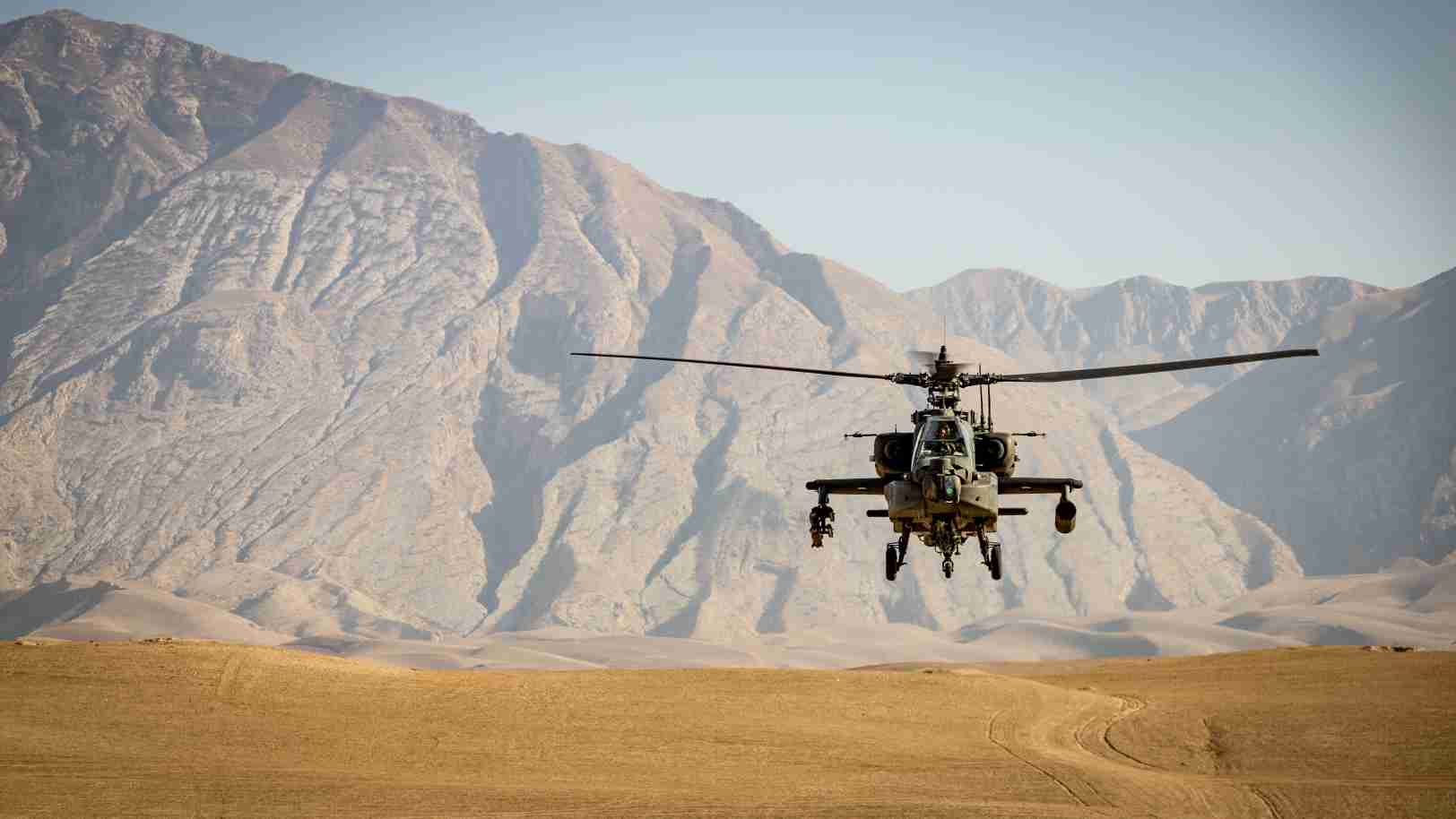
Pic Courtesy-Andre Klimke at unsplash.com

(The views expressed are those of the author and do not represent views of CESCUBE.)



K
About Khyati Singh →

Khyati Singh has a Masters in International Relations from Jawaharlal Nehru University. Her research interest includes AI, Great Debates, Grand Theories, International Relations, and Post Colonial Literature in IR.
ADVERTISEMENT

Related Strategic Analysis

The Politics of Ali Khamenei's Funeral
Geopolitics
Rishika Robert Aug 9, 2026

The Politics of Ali Khamenei's Funeral

On July 4, Tehran's Grand Mosalla Mosque saw millions gather ahead of the multi-day state funeral procession of Supreme Leader Ali Khamenei. However, in a crucial game of optics, the funeral also revealed Iran's current political standing i...

1 min read 1052